What a High Wear-Resistant Ceramic Pulley Is
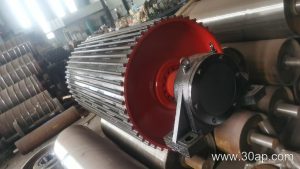
A high wear-resistant ceramic pulley is a conveyor pulley whose shell is fitted with ceramic tiles, usually bonded into a rubber or epoxy layer, so that the belt contact surface resists abrasion far better than plain steel or standard rubber lagging. In practice it is a ceramic-lagged conveyor pulley used where slip, grit, and continuous scraping would quickly wear through ordinary surfaces. It is not a separate pulley type such as a drive, tail, or bend pulley; rather, it is a surface treatment applied to the pulley that suits the duty.
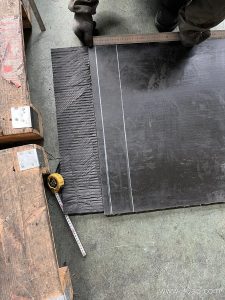
The ceramic surface is normally built from small alumina tiles set in a staggered pattern with raised studs or dimples. The gaps between tiles let water and fine dust escape, and the hard tile faces grip the conveyor belt without needing aggressive tension. Because the tiles carry the wear, the pulley shell underneath stays protected for much longer in abrasive service.
How the Ceramic Surface Is Built
Ceramic lagging is applied to the pulley shell in several common ways. The tile layer can be vulcanized into a rubber backing, cold-bonded with a two-part adhesive, or set into an epoxy bed. Whichever method is used, the tile pattern, bond strength, and edge sealing matter as much as the tile hardness, because a loose tile can damage both belt and pulley.
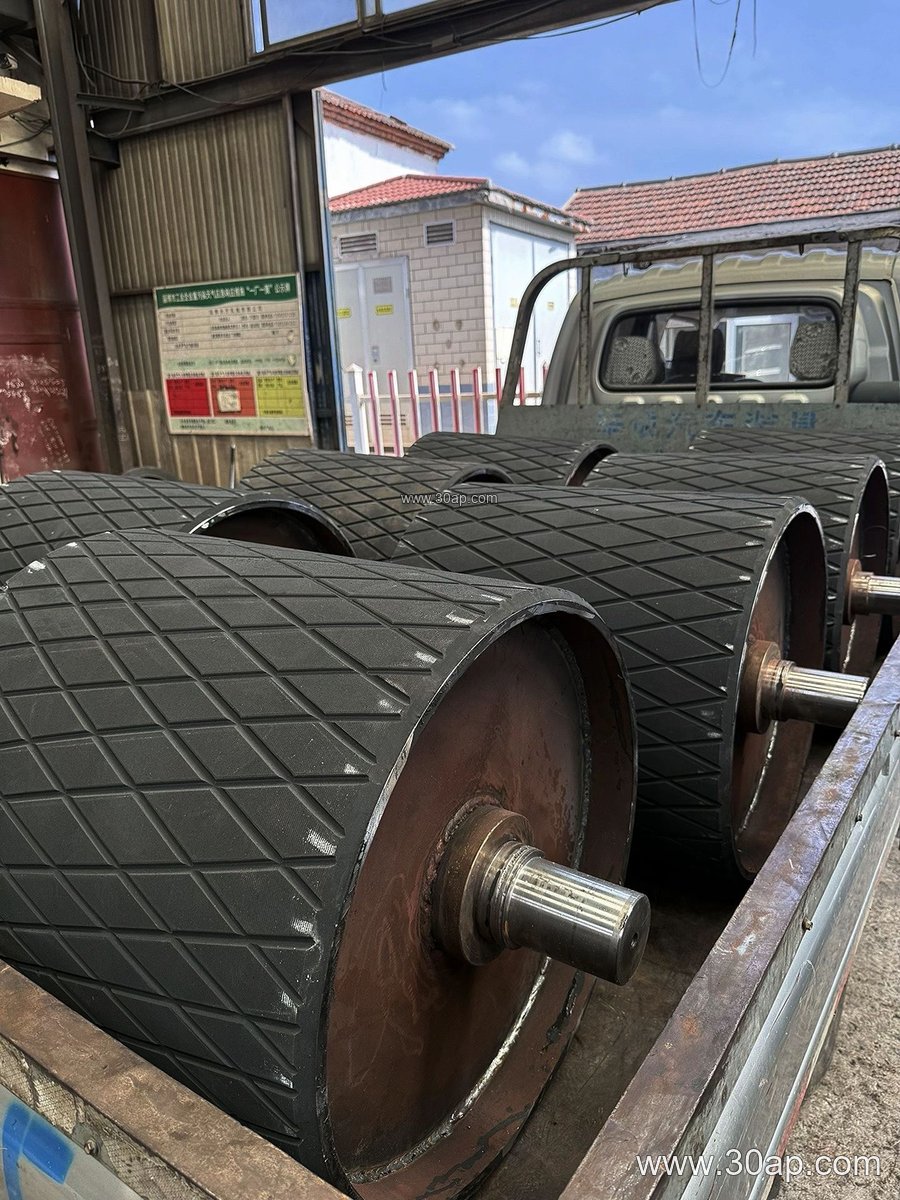
- Tile pattern with raised grip points for wet or dusty belts
- Rubber or epoxy backing to absorb impact and spread load
- Sealed tile edges to stop water ingress and peeling
- Balanced shell and machined face for smooth rotation
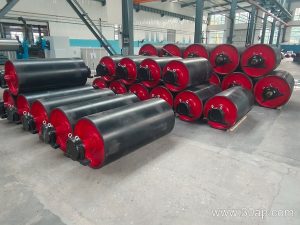
The shell itself is usually a welded steel drum with machined end discs, a shaft sized by torque and load rather than by belt width alone, and bearing housings matched to the conveyor bracket. Common shaft diameters include Ø80, Ø100, Ø120, Ø140, and Ø160, but the final value is set by the drive calculation.
Where Ceramic Lagging Earns Its Place
Ceramic pulleys are most useful where the belt carries sharp, gritty material or works in damp conditions. In a sand and gravel plant, a ceramic-lagged drive pulley keeps grip on a wet belt that would otherwise slip on rubber. In a coal preparation plant, the same surface resists fine coal dust and slurry. Cement plants handling clinker and limestone, power station coal handling, and iron ore or copper ore conveyors are also typical settings.
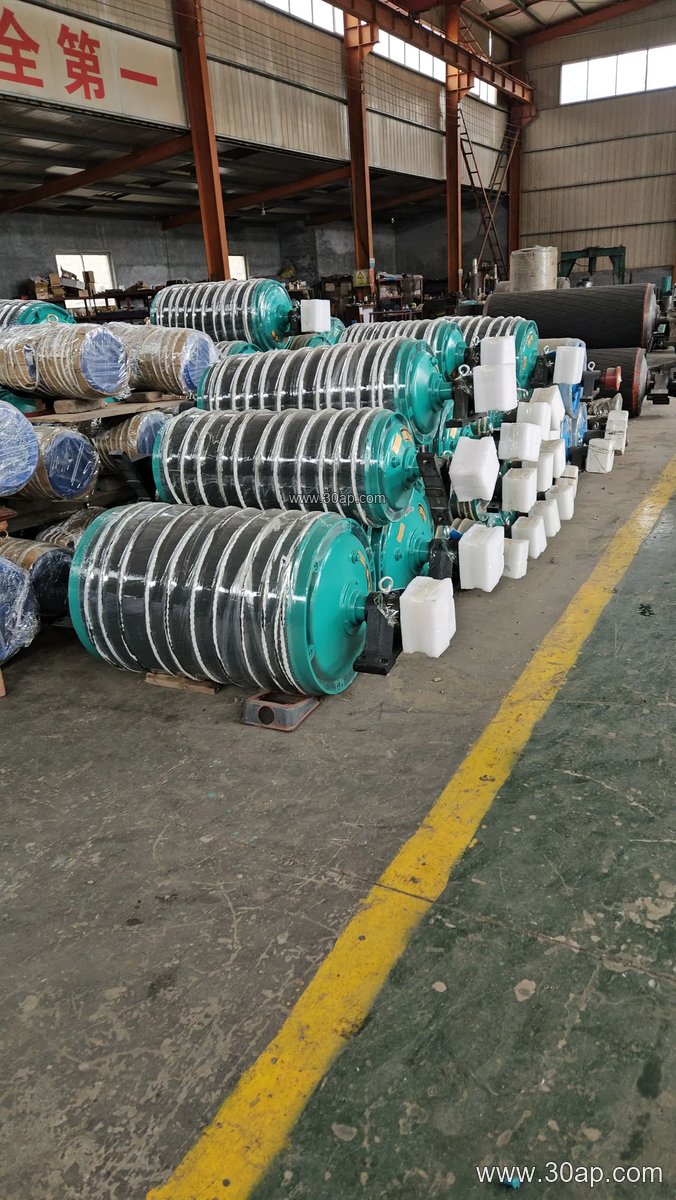
At the head or drive position, the ceramic face helps transmit torque without excessive belt tension. At a tail or tensioning position, it limits wear from a belt that may be misaligned or carrying carryback. A bend pulley with ceramic lagging can extend service life where the belt wraps at a sharp angle, though the bend pulley is chosen for its own duty and not as a substitute for a drive pulley.
Matching the Pulley to the Conveyor
Selection starts with the belt width, which sets the face width, and then with the duty, which sets the diameter and shaft. Face width is normally slightly wider than the belt; typical reference values are shown below and are design guides, not fixed rules.
| Belt width | Typical face width | Example diameter range |
|---|---|---|
| B500 | about 600 mm | Ø250 to Ø400 |
| B650 | about 750 mm | Ø315 to Ø500 |
| B800 | about 950 mm | Ø400 to Ø630 |
| B1000 | about 1150 mm | Ø500 to Ø800 |
| B1200 | about 1400 mm | Ø630 to Ø1000 |
| B1400 | about 1600 mm | Ø800 to Ø1250 |
One belt width can pair with several pulley diameters; the right combination depends on belt speed, wrap angle, torque, and the space available around the conveyor bracket. Common ceramic lagging thicknesses are 8, 10, 12, 15, and 20 mm. Larger diameters such as Ø1000, Ø1250, Ø1400, Ø1600, and Ø1800 appear on high-capacity trunk conveyors, while B400 and B500 lines often use Ø200 to Ø315 pulleys with lighter lagging.
What Buyers Should Check
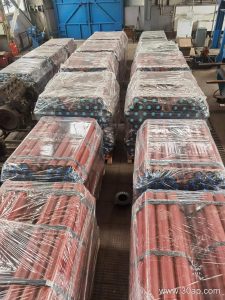
Ask for the tile specification, the bonding method, and the pattern drawing before ordering. Confirm that the pulley face width, shaft diameter, and bearing size suit the actual conveyor bracket and belt tension. Check that the lagging is balanced and that the tile edges are sealed. For a high wear-resistant ceramic pulley, the real test is not the tile hardness alone but how well the whole surface stays fixed to the shell under shock, moisture, and continuous running. A ceramic pulley costs more than a plain one, so it belongs where abrasion and slip are the real problem, not on every conveyor in the plant.