What a Conveyor Support Bracket Does
A conveyor support bracket is the structural link between the conveyor frame and the rollers that carry the belt. It holds the idler roller at the correct height, angle, and spacing so the conveyor belt runs smoothly under load. In a quarry, a cement plant, or a coal handling system, these brackets are often the least visible parts of the line, yet they determine how well the belt tracks and how long the rollers last.
The bracket is usually a fabricated steel part made from angle steel, channel steel, or bent steel plate. Its geometry sets the trough angle for the carrying side or the flat profile for the return side. Because it fixes the roller position, a poorly matched bracket can cause belt misalignment, edge wear, and spillage even when the rollers themselves are in good condition.
Common Types and Where They Fit
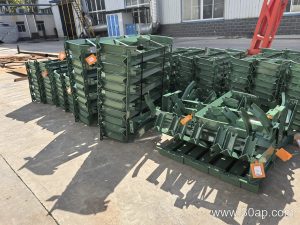
Different positions on a conveyor call for different bracket forms. The main carrying brackets are trough-type brackets, often called troughing idler brackets, which hold three rollers in a trough shape. Transition brackets sit near the head and tail to ease the belt from flat to troughed. On the return side, flat return brackets and V-return brackets support the belt after it has discharged. Impact brackets are used at loading points, and self-aligning brackets help correct minor tracking errors.
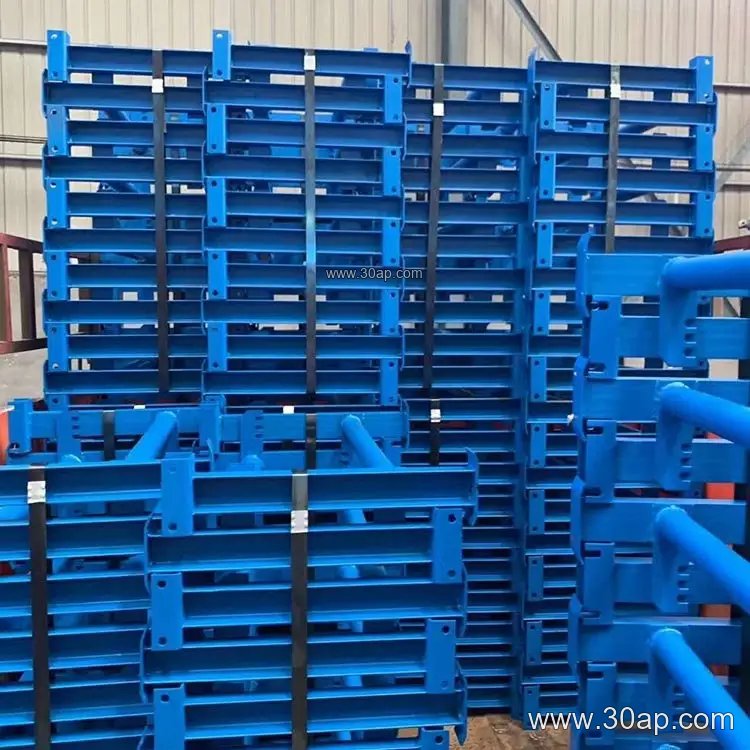
- Troughing bracket — carrying side, three-roller arrangement
- Transition bracket — gradual change of belt profile near pulleys
- Return bracket — flat or V-shaped support on the return strand
- Impact bracket — reinforced support below the loading chute
- Self-aligning bracket — small tracking corrections
- Adjustable bracket — trough angle can be changed on site
Drive pulleys, tail pulleys, and bend pulleys are separate components and are not interchangeable with brackets. A bracket supports rollers; a conveyor pulley drives or redirects the belt. Keeping that distinction clear helps when ordering spares.
Structure and Materials
Most brackets are welded assemblies. The crossbeam length and mounting hole spacing change with belt width and trough angle, so they are determined by design rather than fixed for every conveyor. Common belt widths include B500, B650, B800, B1000, B1200, B1400, B1600, B1800, B2000, B2200, and the bracket must match the frame and roller spacing used on that width.
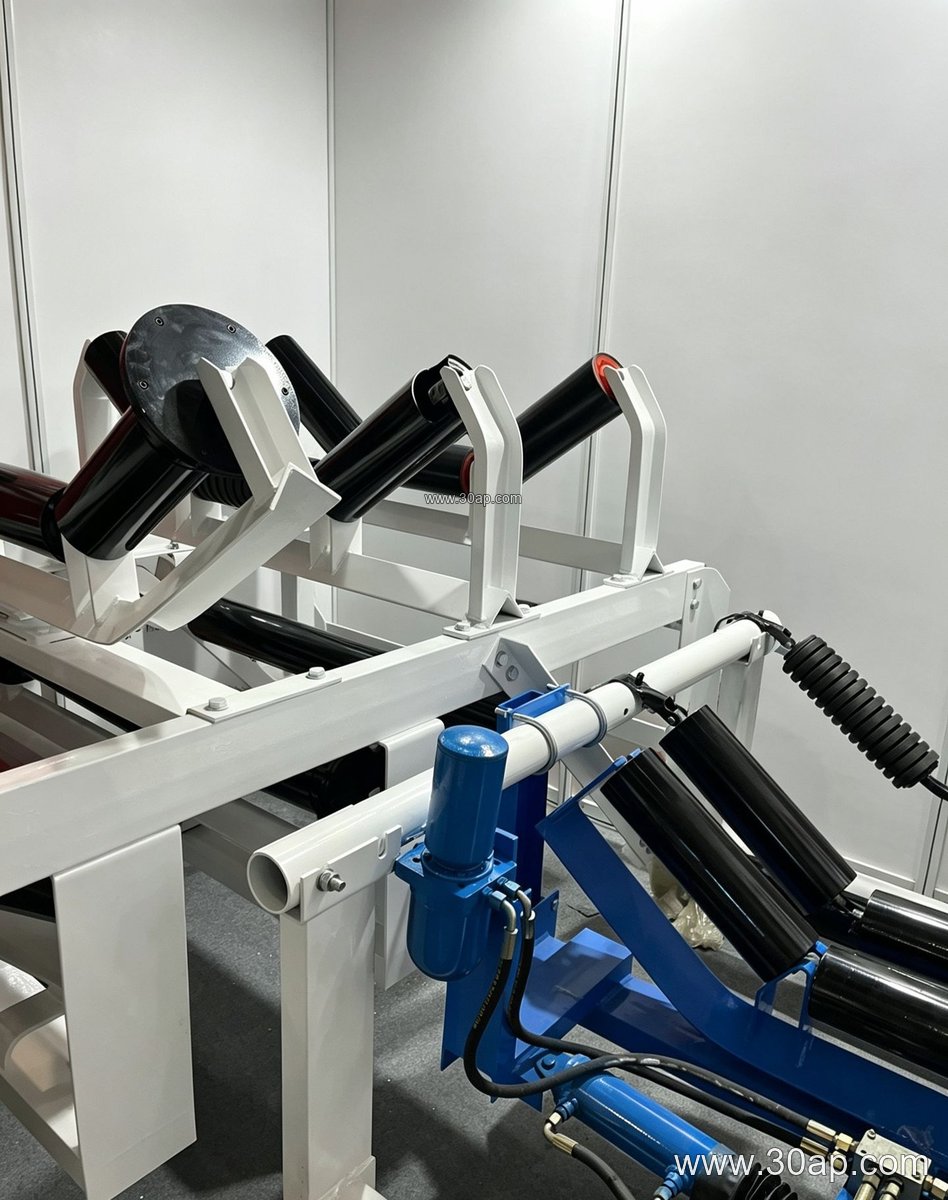
Trough angles are usually 20, 30, 35, or 45 degrees. Adjustable brackets allow the angle to be set within this range during installation. Forward-leaning brackets, common at about 1.5 to 2 degrees, are used to encourage self-centering of the belt. Roller diameters such as Ø89, Ø108, Ø133, Ø159, and Ø194 are matched to the belt load and speed, not to belt width alone.
| Parameter | Typical Range |
|---|---|
| Belt width | B500 to B2200 |
| Trough angle | 20°, 30°, 35°, 45° |
| Roller diameter | Ø89, Ø108, Ø133, Ø159, Ø194 |
| Material | Angle steel, channel steel, bent plate |
Buying Advice
Before ordering, confirm the belt width, the roller diameter, the trough angle, and the frame hole pattern. Ask whether the bracket is fixed or adjustable, and check the finish and weld quality if the conveyor works outdoors or in a dusty plant. For a coal yard or a limestone crushing line, corrosion protection and easy roller replacement matter as much as the initial fit.
Inspect brackets during routine maintenance. Bent or loosened brackets disturb belt tracking and shorten roller life. Replacing a worn bracket early is usually simpler than correcting the belt damage that follows.