What a Rubber-Lined Pulley Does on a Conveyor
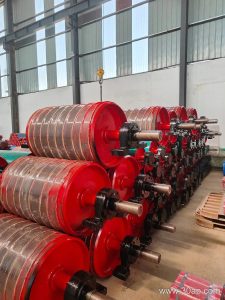
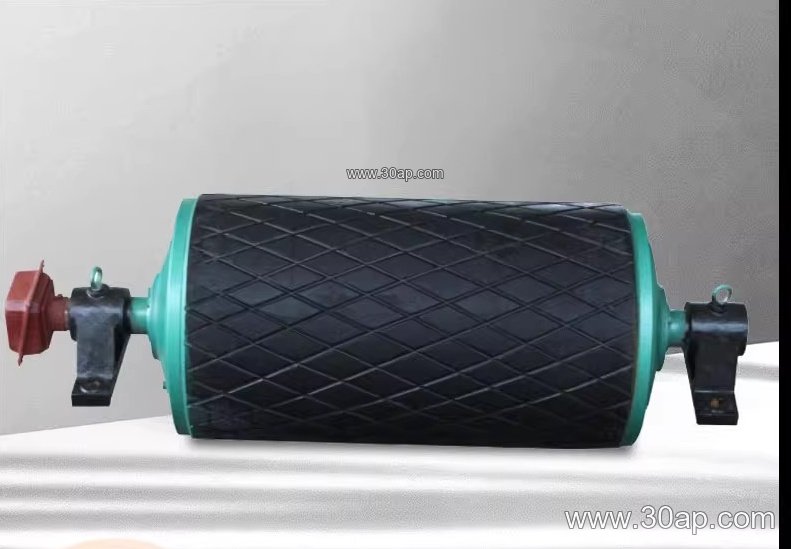
A rubber-lined pulley is a conveyor pulley whose shell is covered with a rubber layer to raise friction between the drum surface and the conveyor belt. In a typical arrangement, the pulley transmits drive torque, holds belt tension at a tail or take-up position, or changes belt direction at a bend point. The rubber covering is the defining feature: it protects the shell, improves grip, and helps the belt run with less slip under load. This matters in dusty, wet, or abrasive service such as a coal preparation plant, a limestone quarry, or a cement clinker line.
Note that drive, tail, and bend pulleys are separate roles. A rubber-lined drive pulley is chosen for traction; a tail pulley mainly guides and supports the returning belt; a bend pulley changes direction. They are not interchangeable, and the lining requirement follows the duty.
How the Lining Is Built
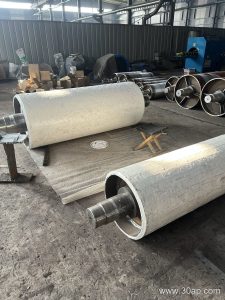
The shell is usually a welded steel cylinder machined at the ends, fitted with shafts, bearing housings, and a locking assembly. Rubber is applied in one of several ways:
- Hot-vulcanized rubber – cured onto the shell for a strong bond, common in heavy-duty drives.
- Cold-bonded rubber – adhesive-fixed sheet, practical for repairs and moderate duties.
- Cast rubber – molded directly, often with a patterned surface.
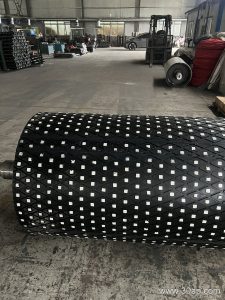
Surface patterns include plain sheet, diamond, herringbone, and ceramic-studded rubber. Plain or diamond lining suits general grip; herringbone helps shed water and fine dust; ceramic-lined rubber is used where abrasion is severe. Lining thickness commonly falls in the 8–20 mm range, with 10 mm and 12 mm frequent on medium belts and 15–20 mm on larger driven drums.
Where It Fits in the Plant
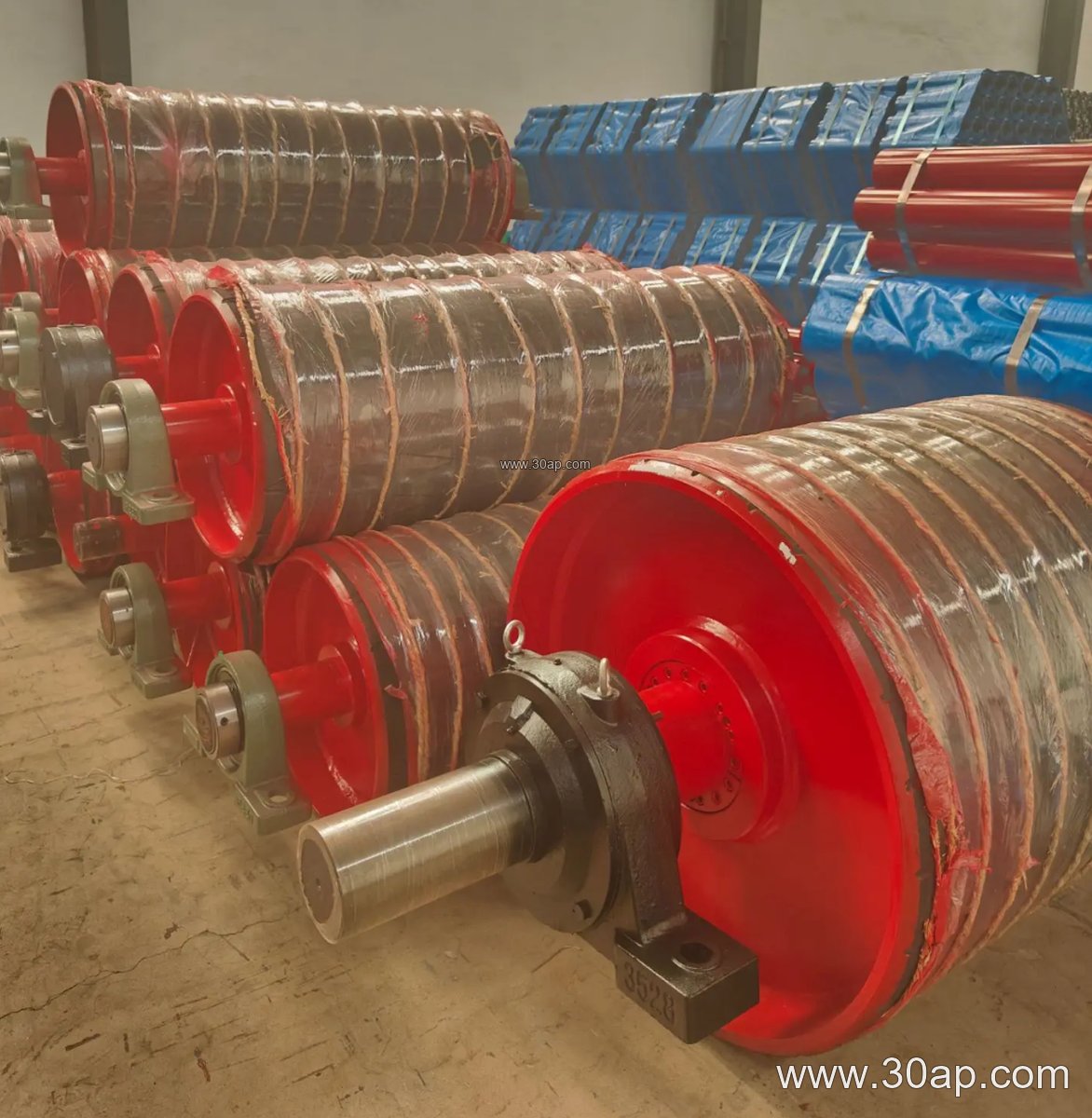
Rubber-lined pulleys appear wherever belt grip and shell wear matter. In a coal handling system, the head drive pulley with diamond rubber is a common sight. In a sand and gravel line, the tail pulley may carry a thinner plain lining to reduce material build-up. In a power plant coal yard or a port bulk terminal, larger drums with hot-vulcanized lining are used on long conveyors. The same principle applies to a fertilizer plant or a grain silo, where a smooth, well-bonded lining keeps the belt tracking without marked slippage.
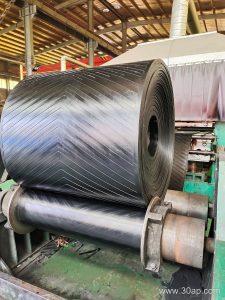
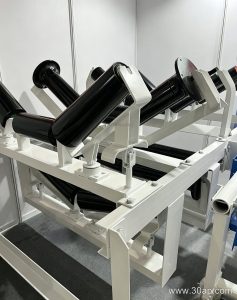
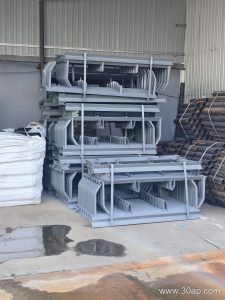
The pulley works together with the conveyor belt, conveyor idler rollers, and conveyor brackets. A poorly aligned bracket or a worn idler roller can cause edge loading that no lining can correct, so the whole station should be checked.
Common Reference Dimensions
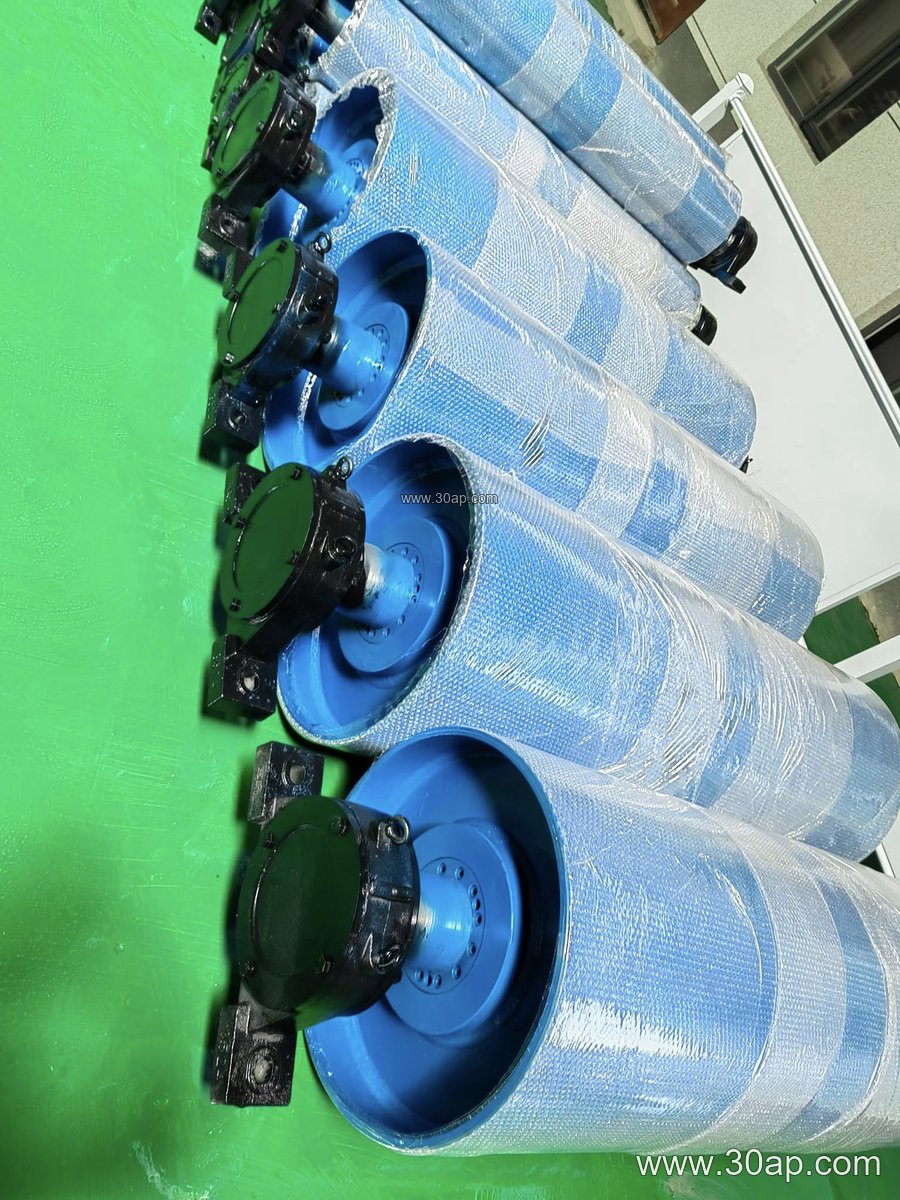
Belt width, pulley diameter, face width, and shaft diameter are selected together, not copied from a single table. The figures below are common reference points, not mandatory pairings.
| Belt width | Typical face width | Example diameter |
|---|---|---|
| B400 | about 500 mm | Ø200–Ø315 |
| B500 | about 600 mm | Ø250–Ø400 |
| B650 | about 750 mm | Ø315–Ø500 |
| B800 | about 950 mm | Ø400–Ø630 |
| B1000 | about 1150 mm | Ø500–Ø800 |
| B1200 | about 1400 mm | Ø630–Ø1000 |
| B1400 | about 1600 mm | Ø800–Ø1250 |
Shaft diameters such as Ø80, Ø100, Ø120, Ø140, and Ø160 are common, but the correct size comes from torque and bearing load. A B1200 belt can be paired with different diameters depending on wrap angle and belt speed; a B800 × Ø500 drum and a B1400 × Ø800 drum are both normal configurations. Do not assume one belt width locks in one diameter or one shaft size.
Buyer Checklist
- Confirm the pulley role: drive, tail, take-up, or bend. The lining spec follows the job.
- State belt width, belt speed, and motor power so the supplier can size the shell and shaft.
- Choose the surface pattern for the material: plain for general use, diamond or herringbone for wet or dusty conditions, ceramic for high abrasion.
- Ask about lining thickness and bond method, and whether the drum is balanced.
- Check bearing type, locking assembly, and whether the conveyor bracket interface matches the existing frame.
- Plan periodic inspection of lining wear and belt tracking; replace or re-line before the shell is exposed.
A rubber-lined pulley is a small part of the conveyor but a decisive one for traction and belt life. Matching the lining to the duty, and the dimensions to the actual load, keeps a quarry, coal plant, or cement line running with fewer stoppages.