What a Conveyor Carrying Bracket Does
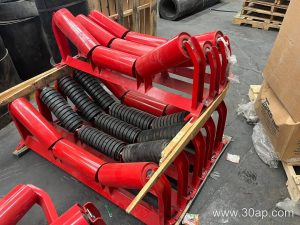
A conveyor carrying bracket is the structural support that holds the idler rollers on the load-bearing side of a belt conveyor. It keeps the conveyor belt in the correct trough shape, maintains alignment, and transfers the weight of the material to the conveyor frame. In industries such as mining, coal preparation, cement plants, power station coal handling, and aggregate quarries, this bracket is a small but critical component for continuous operation.
Also called a carrying idler bracket or troughing bracket, it is distinct from return brackets, impact brackets, and self-aligning brackets, which serve different positions or functions on the conveyor. This article focuses on the standard carrying bracket used under the loaded belt.
Construction and Mounting
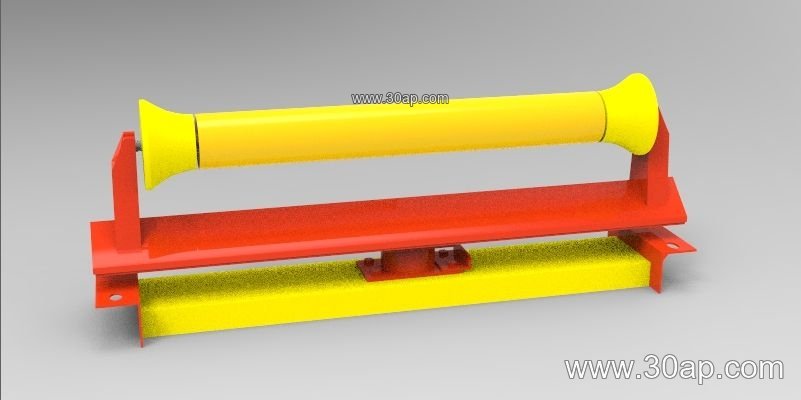
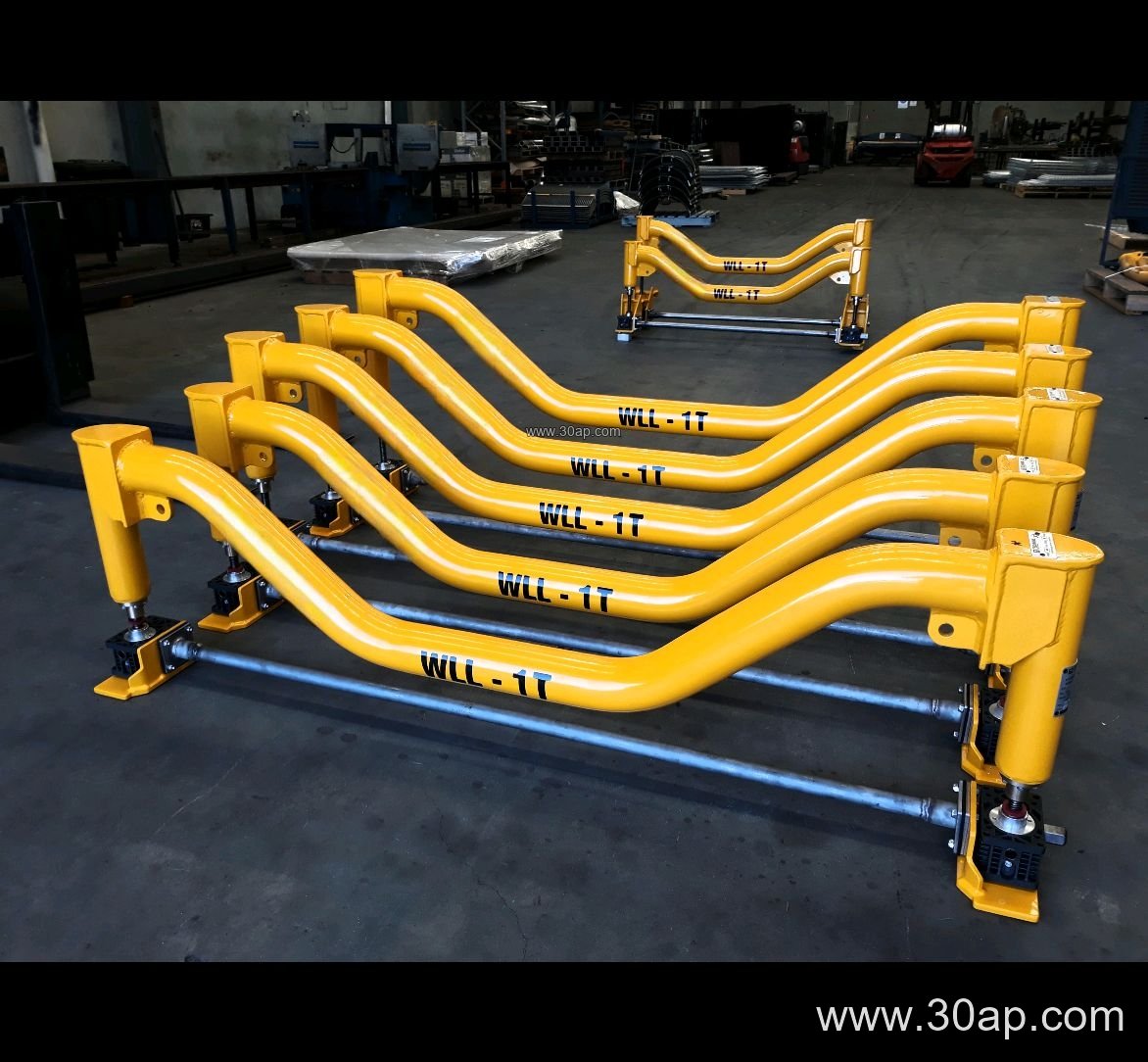
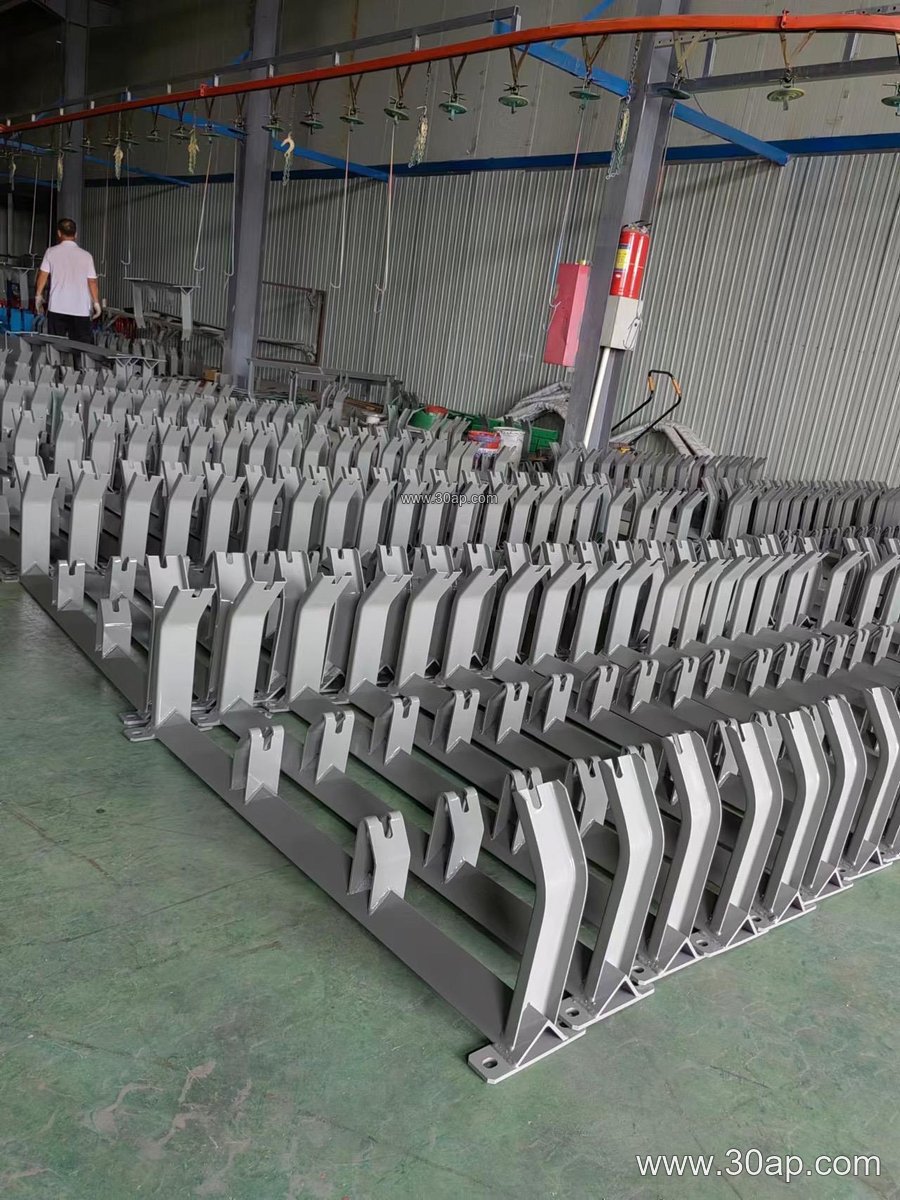
Most carrying brackets are fabricated from angle steel, channel steel, or folded steel plate. The design typically includes mounting slots or holes that allow the idler roller shafts to sit at a fixed trough angle. The bracket is bolted or welded to the conveyor frame stringers. Common trough angles are 20, 30, 35, and 45 degrees; adjustable versions allow the angle to be changed within a range to suit material characteristics. A slight forward tilt of about 1.5 to 2 degrees is sometimes used in forward-tilt brackets to help center the belt.
Installation position is along the carrying side of the conveyor, spaced at regular intervals determined by belt width, material weight, and load conditions. The bracket must be aligned squarely with the conveyor centerline to avoid belt mistracking.
Typical Applications
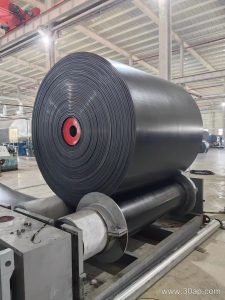
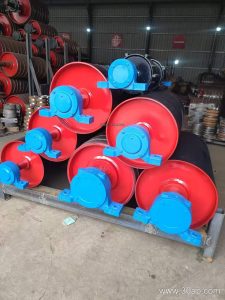
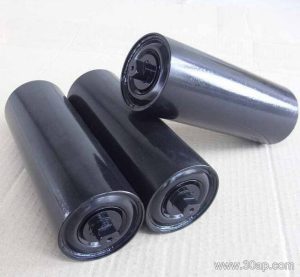
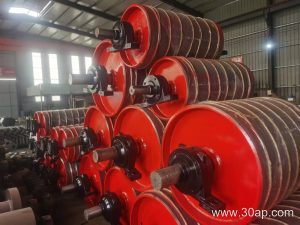
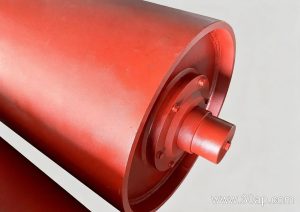
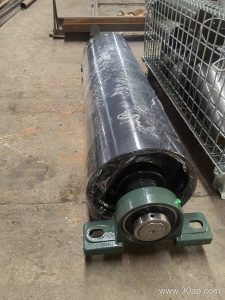
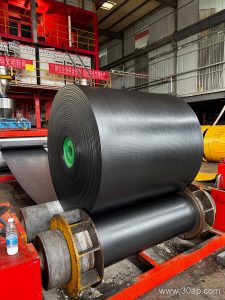
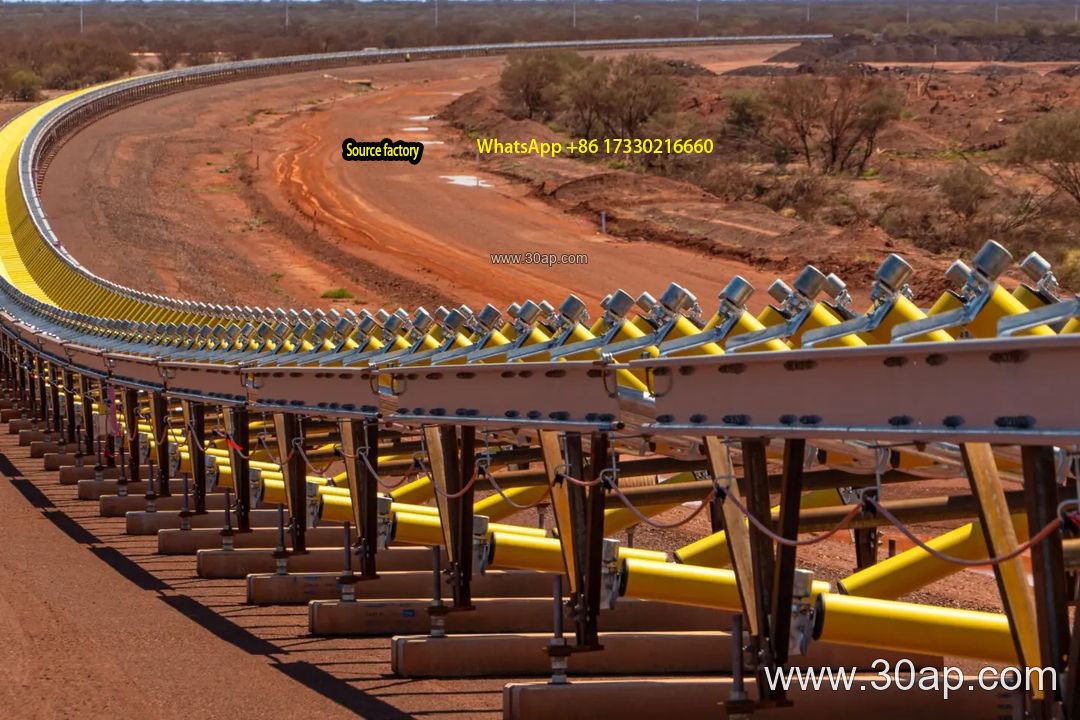
In a limestone quarry, carrying brackets support three-roller troughing sets under a 1200 mm belt handling blasted rock. At a coal-fired power plant, they hold idlers beneath the coal conveyor that feeds the bunkers. The bracket works together with the conveyor belt, idler rollers, and conveyor pulleys to form a complete conveyor system. In cement plants and sand and gravel lines, the same bracket type is used for abrasive materials, often with reinforced frames.
Matching Bracket to Belt and Roller
Selection depends on belt width, roller diameter, and trough angle. The table below lists common reference combinations; these are not mandatory pairings, and final specifications should be confirmed with the conveyor designer.
| Belt Width (mm) | Typical Trough Angle (degrees) | Common Roller Diameter (mm) |
|---|---|---|
| B500 | 20, 30 | Ø89 |
| B650 | 30, 35 | Ø89, Ø108 |
| B800 | 30, 35 | Ø108, Ø133 |
| B1000 | 35, 45 | Ø108, Ø133, Ø159 |
| B1200 | 35, 45 | Ø133, Ø159 |
| B1400 | 35, 45 | Ø159, Ø194 |
| B1600 | 35, 45 | Ø159, Ø194 |
Note that a single belt width can accommodate different trough angles and roller diameters depending on load and belt speed. Mounting hole spacing and crossbeam length vary with belt width and trough angle; they are not fixed values.
Buyer Checklist
- Confirm the required trough angle and whether a fixed or adjustable bracket is needed.
- Check that the bracket material and thickness suit the material being conveyed (e.g., abrasive rock, coal, cement).
- Verify mounting dimensions against the existing conveyor frame and idler roller shaft size.
- Consider forward-tilt or self-aligning features only if belt mistracking is a known issue; these are separate bracket types.
- Ensure the bracket is compatible with the selected idler roller diameter and belt width.
For maintenance, inspect brackets for wear, corrosion, or deformation during routine idler replacement. A bent or loose bracket can cause belt edge damage and premature roller failure. Replacing worn brackets in time helps maintain the efficiency of the entire conveyor line.