How to Select a Conveyor Belt for Mineral Processing
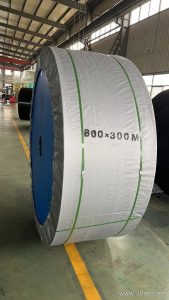
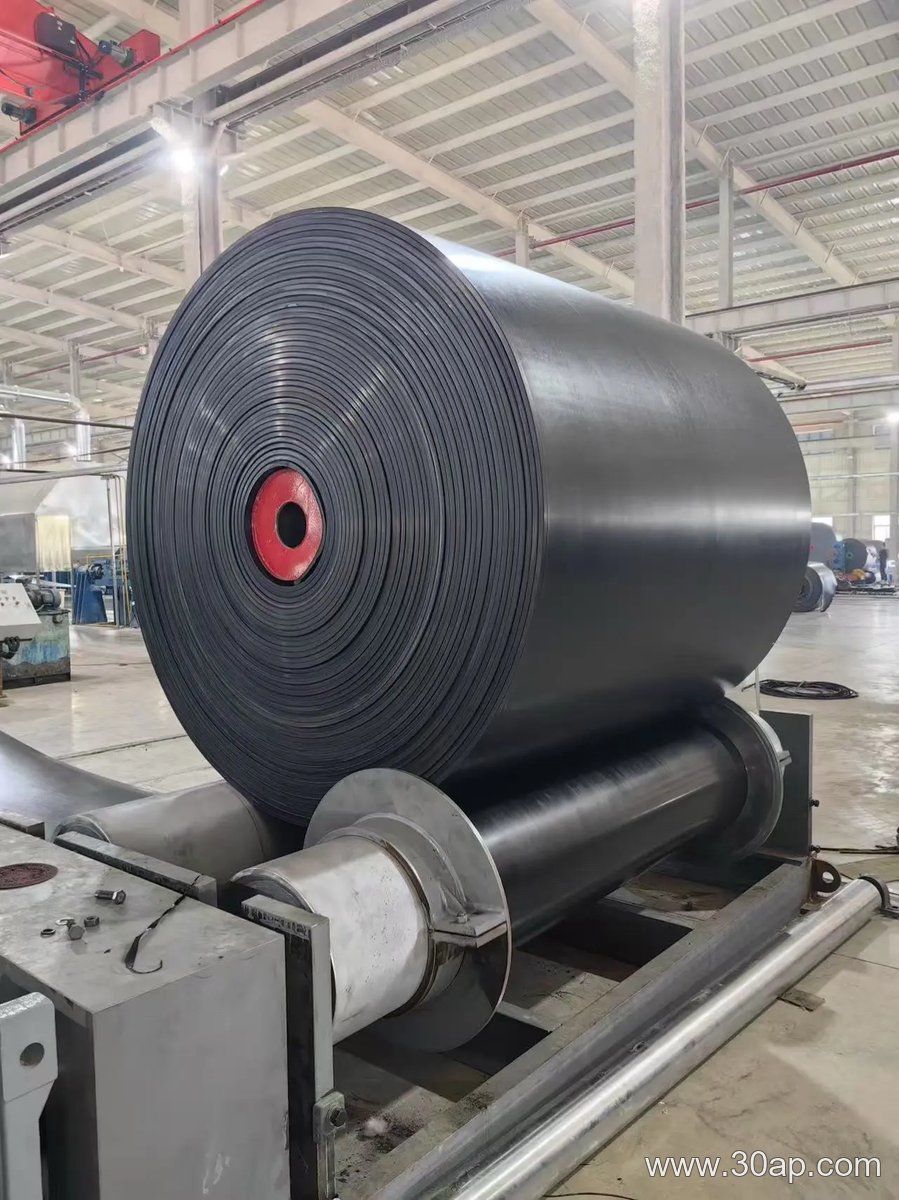
Many plant operators assume that any heavy black belt will handle ore, but a conveyor belt is an engineered component whose cover compound, carcass, and splice must match the material, speed, temperature, and operating environment. In a mineral-processing plant, for example, a belt moving copper ore at 3 m/s in ambient conditions faces different stresses than one carrying hot clinker at 1.5 m/s. The following decision path helps you specify a belt that lasts.
Step 1: Characterize the Material
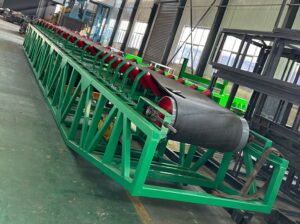
Start with abrasion and impact. Sharp, heavy lumps require a thick, cut-resistant cover; fine, oily concentrates may need a belt that releases sticky material. Use the material’s lump size, density, and moisture content to estimate impact energy at the loading point. A heavy-duty conveyor belt with a high-abrasion cover is often appropriate for primary crushed ore, while a standard belt may suffice for dry, fine tailings.
Step 2: Match Speed and Capacity
Higher speed reduces belt width for a given tonnage but increases wear at loading and discharge. Calculate the required belt width using the material’s bulk density and surcharge angle, then check that the selected speed keeps the load stable. For steep inclines, a corrugated sidewall conveyor belt can replace a wider flat belt, but only if the material does not contain large, sharp lumps that could damage the sidewalls.
Step 3: Account for Temperature
Standard rubber covers are typically suitable for ambient to about 60°C. Above that, heat-resistant compounds are needed. For sinter, coke, or cement clinker, verify the maximum continuous temperature and any intermittent peaks. A steel plant conveyor belt may use a heat-resistant cover and a steel-cord carcass, but the same belt is not automatically right for a mineral-processing plant handling wet ore.
Step 4: Review Operating Conditions
- Dust and fines: consider covers that resist silica abrasion.
- Oil or chemical exposure: select an oil-resistant compound.
- Loading frequency: impact idlers and skirt rubber reduce belt damage.
- Maintenance access: a splice-friendly belt reduces downtime.
Document these four inputs—material, speed, temperature, and conditions—before requesting quotations. That data lets a supplier recommend a specific cover grade, carcass type, and thickness rather than a generic belt.
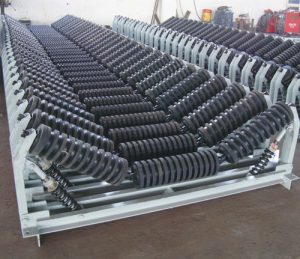
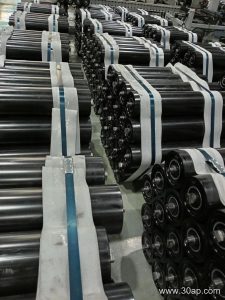
In a cement plant, an idler roller often fails not because it was poorly made, but because it was selected without matching the applicable standard and grade to the actual duty. The roller may meet a general dimensional norm yet still have a bearing housing, shaft, or shell that cannot tolerate dust, heat, and continuous loading. Choosing by standard and grade is therefore an engineering decision, not a catalog formality.
What purpose do idler roller standards serve?
Standards for idler rollers typically define dimensions, tolerances, load ratings, and test methods so that rollers from different suppliers can interchange and perform predictably. Common reference frameworks include ISO and national conveyor equipment standards, which address roller diameter, shaft end configurations, and load-bearing capacity. These documents do not certify a specific product; they provide a shared basis for specification and verification.
Grades, by contrast, describe performance levels within a standard—such as bearing precision class, seal type, or shell wall thickness. A grade intended for a clean package-handling line should not be assumed equivalent to one for a cement clinker conveyor.
How do standards and grades apply in a cement plant?
A cement plant conveyor moves abrasive, fine, and often hot material. In that setting, the relevant standard clauses usually concern:
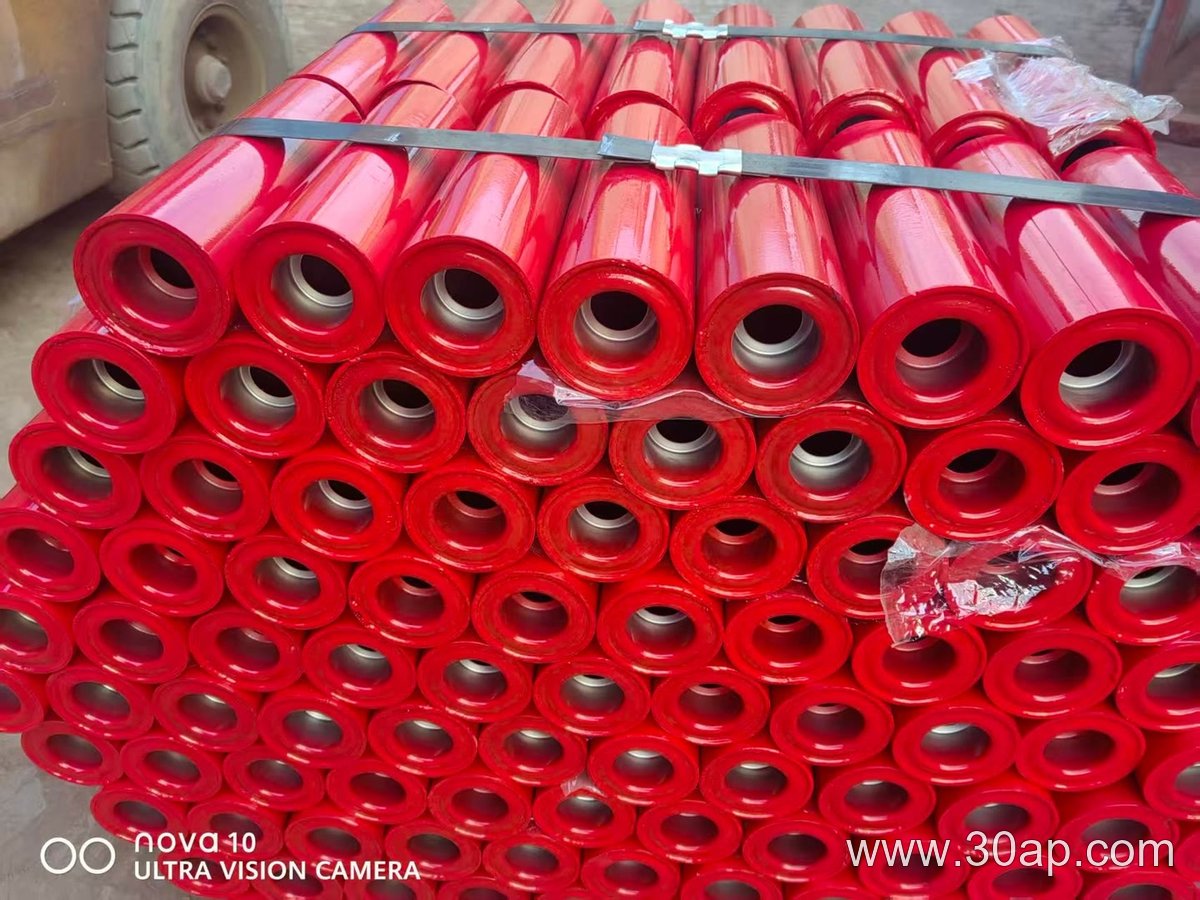
- Radial load capacity and fatigue life of the bearing housing
- Sealing effectiveness against cement dust
- Roller concentricity and balance at operating speed
- Material and coating choices for abrasion and temperature
An engineer might specify a heavier grade of idler roller for the return strand, where fines accumulate, than for a clean transfer point. The standard gives the baseline; the grade matches the environment.
Practical selection example (hypothetical)
Assume a cement plant needs to replace rollers on a 1,200 mm wide belt moving clinker at 2.5 m/s. The specification could state: roller diameter per the applicable ISO series, bearing housing grade with labyrinth or contact seals, and a load rating verified against the calculated belt tension. Actual values must come from the conveyor designer and the chosen standard edition.
FAQ
Does a standard grade mean the idler roller is certified?
No. A grade indicates a performance level defined by a standard or manufacturer. Certification requires independent assessment, which is separate from grade selection.
Can I use one grade across the whole cement plant?
Not always. Different conveyor sections expose idler rollers to different dust, load, and temperature conditions, so a single grade may be over- or under-specified.
Conveyor Pulley Design Trade-Offs in Mixed-Product Manufacturing
On a general manufacturing line that handles cartons, totes and occasional bulk containers, the conveyor pulley sits at the center of a quiet compromise. A heavier pulley improves flywheel effect and belt tracking stability, but it also increases shaft load, bearing size and the effort required during maintenance. A lighter pulley reduces those burdens, yet may flex under high tension or lose grip when the belt is wet. The practical question is not which extreme is better, but which combination of drum construction, lagging and locking method matches the duty cycle.
Where the Engineering Trade-Offs Appear
Three decisions dominate most conveyor pulley projects: how the drum is built, how the surface grips, and how the pulley connects to the shaft.
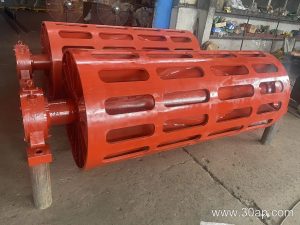
- Drum construction: A cast-welded pulley can combine a cast hub with a welded shell, offering good concentricity and moderate weight. A heavy-duty welded pulley favors thicker plate and reinforced end discs for high tension, at the cost of additional mass.
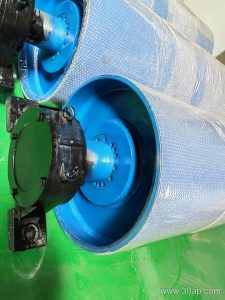
- Lagging: Rubber or polymer lagging raises friction, but the extra thickness changes the effective diameter and must be considered in belt speed calculations. Grooved lagging can improve water shedding, though it may collect debris in dusty environments.
- Shaft attachment: Keyed hubs are simple and serviceable. Shrink discs or locking assemblies distribute load more evenly, but require careful bore tolerance and are less forgiving during field replacement.
A hypothetical 1000mm drive pulley on a medium-duty line might use a welded drum with plain rubber lagging and a keyed hub. If the same line later adds washdown or outdoor transfer, the design may shift toward a cast-welded pulley with grooved lagging and a locking assembly. Each change trades initial simplicity for a different maintenance profile.
Why Diameter and Balance Matter Together
Increasing pulley diameter reduces belt bending stress and can extend splice life, but it also raises torque requirements and may not fit existing guarding. Balance quality becomes more important as speed rises; an unbalanced conveyor pulley can excite the belt and frame even when static dimensions are correct. During specification, engineers should confirm the expected belt tension, speed range and environmental exposure before selecting a construction type, rather than treating any single feature as universally superior.
Practical Checks Before Ordering
- Verify the shaft and hub fit against the actual driven load, not only the motor rating.
- Confirm lagging hardness and groove pattern suit the conveyed material and cleaning method.
- Plan lifting points and withdrawal space so the conveyor pulley can be serviced without dismantling adjacent equipment.
These checks keep the design grounded in the line’s real operating conditions and help avoid a pulley that is technically adequate but difficult to maintain.
Q235 Conveyor Bracket: The Material Grade That Quietly Governs Support Life
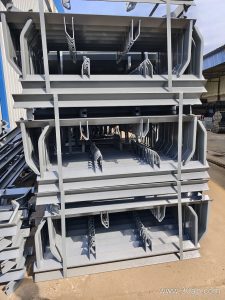
When specifying a conveyor bracket for a cement plant, engineers often focus on dimensions and bolt patterns. Yet the steel grade behind that bracket—such as Q235—sets a hard ceiling on strength, weldability, and temperature resistance. In a hot clinker transfer point, a bracket that performs well at ambient temperature may yield or creep when the surrounding structure reaches 200–300°C. The design trade-off is straightforward: Q235 offers excellent ductility and low cost, but its yield strength drops sharply above 200°C.
What the “Q235” Designation Actually Tells You
Q235 is a Chinese structural steel grade. The “Q” stands for yield strength, and “235” indicates a minimum yield of 235 MPa at room temperature. That number matters because a conveyor bracket often carries the combined weight of idlers, belt, and material, plus dynamic impact from lump clinker. If the bracket is made from Q235 and the local temperature exceeds 200°C, the allowable stress must be reduced according to recognized design codes. A hypothetical calculation: a bracket with a 50 mm × 10 mm cross-section at 250°C might see its effective yield strength fall by roughly 15–20%, requiring either thicker steel or a different grade.
Comparison: Q235 vs. Low-Alloy Alternatives
- Q235 conveyor bracket: Good for ambient to moderate temperature (up to ~200°C), easy to weld, economical. Not ideal for sustained heat near kiln discharge.
- Q345 conveyor bracket: Higher yield strength (345 MPa), better for heavy loads, but still requires temperature derating above 300°C.
- Heat-resistant bracket (e.g., 16MnR or similar): Designed for elevated temperatures, but costs more and may need controlled welding procedures.
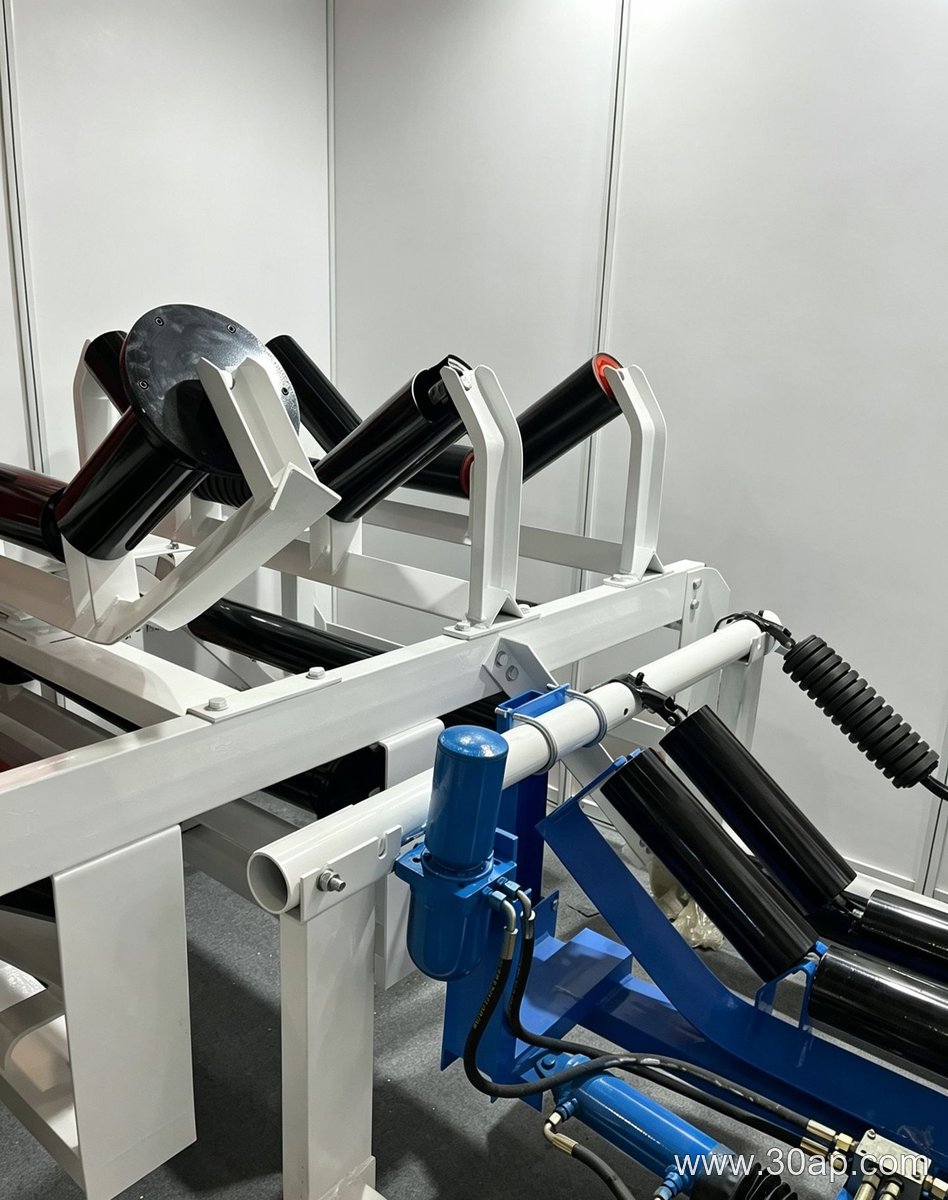
In a cement plant, the decision often hinges on the actual skin temperature of the transfer chute or support beam. If a conveyor bracket sits within 300 mm of hot clinker, Q235 may be inadequate unless protected by a heat shield or insulating pad. A self-aligning idler bracket in that zone would also need its pivot components to tolerate thermal expansion without binding.
FAQ
Can I use a Q235 conveyor bracket outdoors in winter? Yes. Q235 retains good toughness at low temperatures, though impact testing may be required for critical applications below -20°C.
Does bolt grade matter as much as bracket steel? Yes. A high-strength bracket can still fail if the bolts lose preload at elevated temperature. Match bolt material to the bracket’s service temperature.
How do I know if my bracket is overloaded? Look for permanent deformation, cracked welds, or elongated bolt holes. These signs suggest the bracket has exceeded its yield strength, often due to temperature or unexpected impact loads.