What Is a Striped Lagged Pulley
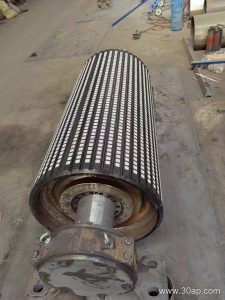
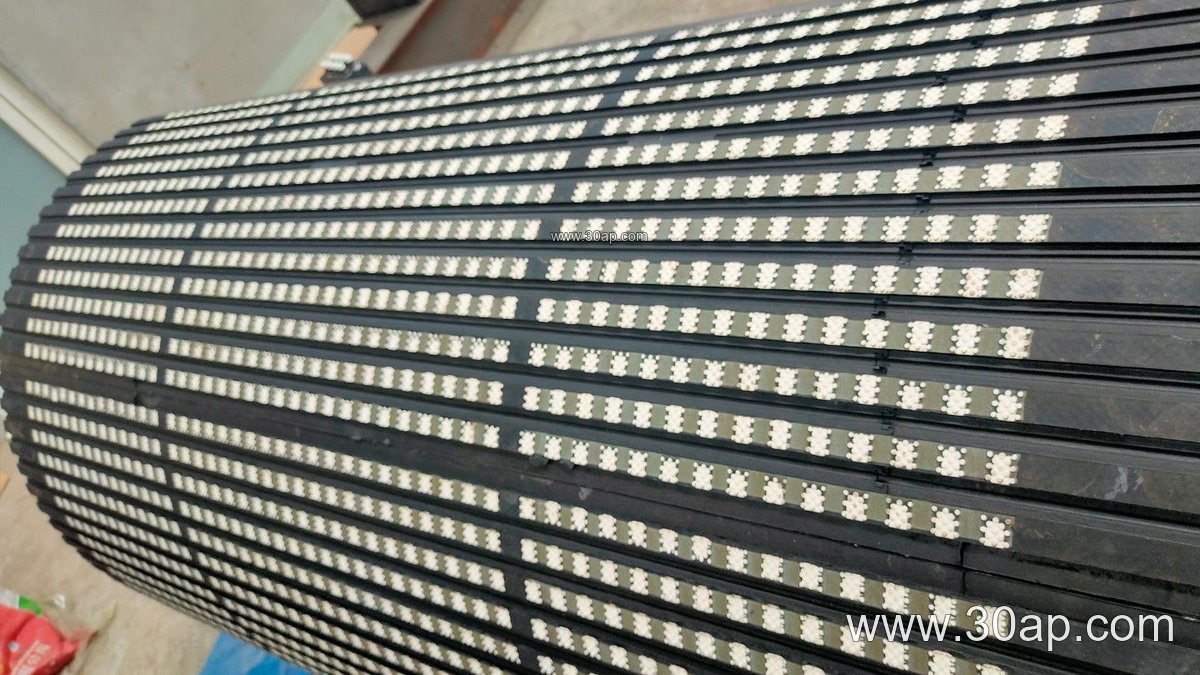
A striped lagged pulley is a conveyor pulley whose shell is covered with a rubber or ceramic lagging that features a striped pattern, usually in the form of grooves or ribs running parallel or at a slight angle to the pulley axis. This surface pattern is a subtype of lagged pulley surfacing, distinct from smooth lagging or diamond and herringbone profiles. The stripes help channel water and fine debris away from the contact zone, improving grip between the pulley and the conveyor belt in wet or dusty conditions. In a conveyor system, the striped lagged pulley is typically used as a drive pulley, where torque transmission is critical, though it can also serve in tail or bend positions when extra traction is needed. It should not be confused with other pulley types such as drive, tail, or bend pulleys, which are defined by their location and function rather than their surface pattern.
Construction and Surface Details
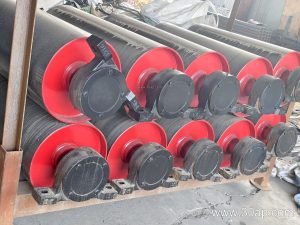
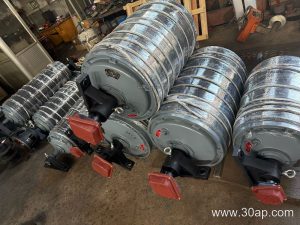
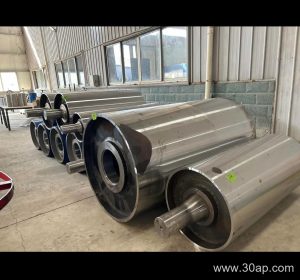
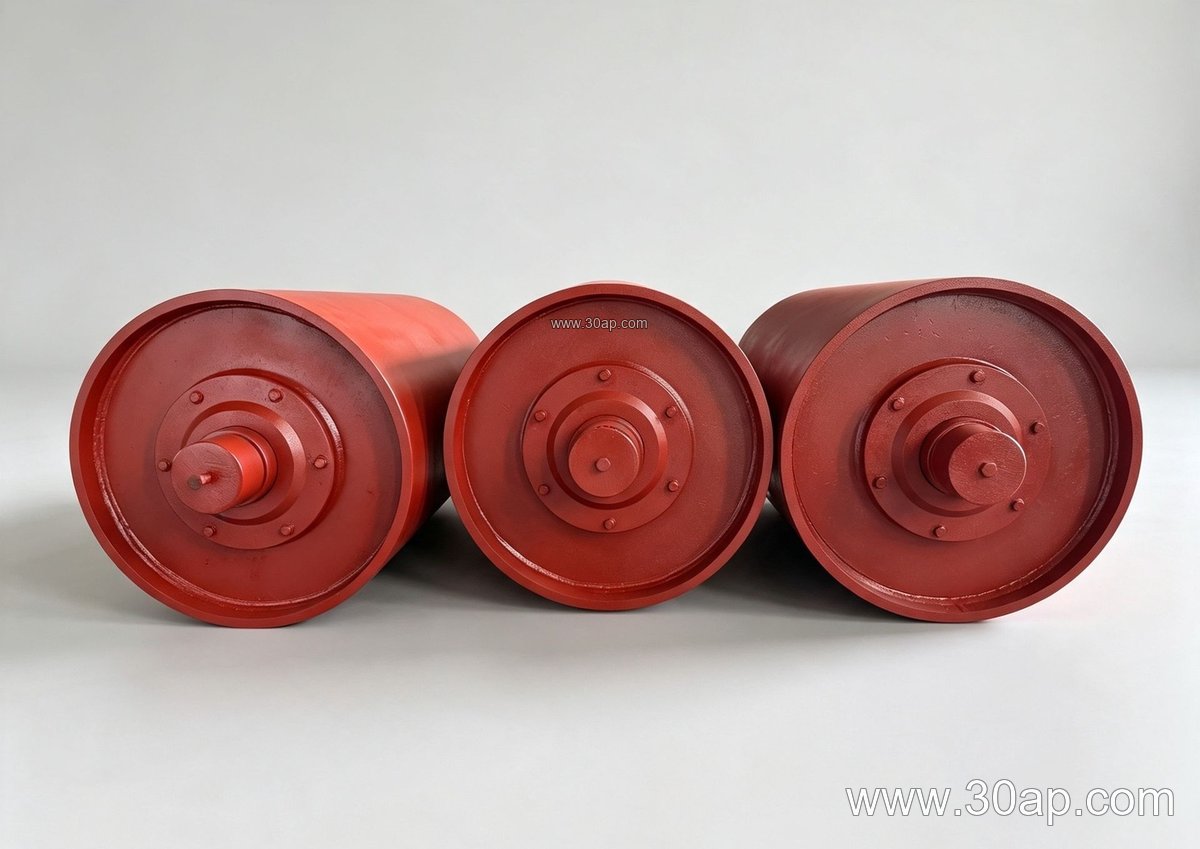
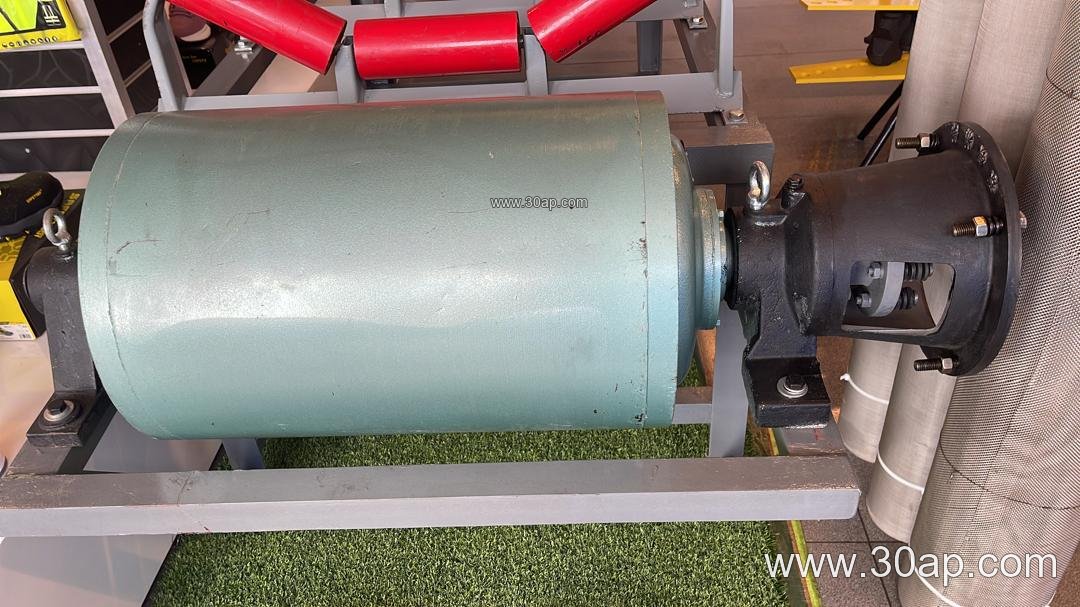
The base of a striped lagged pulley is a welded steel drum with machined end discs and a shaft sized to the torque and load requirements. Lagging is applied either by hot vulcanization, cold bonding, or as bolt-on strips. The striped pattern is created by grooving the rubber layer or by arranging ceramic tiles with raised ribs. Common lagging thicknesses are 8, 10, 12, 15, and 20 mm, selected according to belt tension and environmental conditions. The pulley face width usually exceeds the belt width by 50 to 200 mm to allow for belt misalignment; for example, a B800 belt often pairs with a pulley face of about 950 mm, and a B1200 belt with roughly 1400 mm. Diameters commonly range from Ø200 to Ø1800, but the final choice depends on belt speed, torque, and available space. Shaft diameters are determined by drive calculations, not by belt width alone.
Where Striped Lagging Helps
In a limestone quarry, a striped lagged drive pulley on the main haulage conveyor can maintain grip when limestone dust and occasional rain make the belt slick. At a coal preparation plant, the same pulley type on a tail pulley helps prevent belt slippage under wet coal conditions. The striped surface is also useful in tunnel excavation conveyors, where muck and water are present. While a bend pulley or idler roller may handle direction changes, the striped lagged pulley focuses on traction. It is not a replacement for a drive pulley or a tail pulley, but rather a surface option applied to those functional positions.
Specification and Selection Notes
Buyers should provide belt width, pulley diameter, shaft diameter, lagging thickness, and the desired stripe pattern. The table below gives common reference combinations; they are not fixed pairings.
| Belt Width (mm) | Typical Pulley Face (mm) | Common Diameter Range (mm) | Lagging Thickness (mm) |
|---|---|---|---|
| B500 | 600 | Ø200–Ø400 | 8–12 |
| B650 | 750 | Ø250–Ø500 | 10–15 |
| B800 | 950 | Ø315–Ø630 | 10–15 |
| B1000 | 1150 | Ø400–Ø800 | 12–20 |
| B1200 | 1400 | Ø500–Ø1000 | 12–20 |
| B1400 | 1600 | Ø630–Ø1250 | 15–20 |
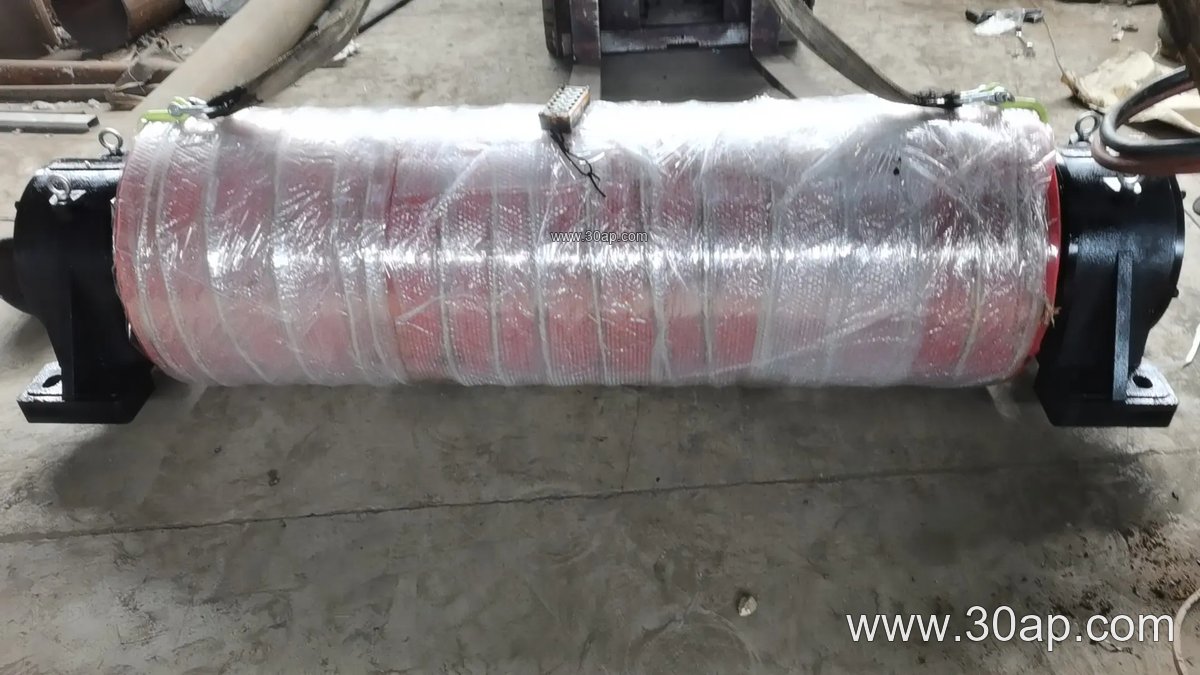
For a B800 × Ø500 drive pulley, a 12 mm striped lagging is often sufficient; a B1200 × Ø1000 pulley may use 15 mm or 20 mm lagging in abrasive service. Shaft sizes such as Ø80, Ø100, or Ø120 are common for medium-duty pulleys, but the final shaft diameter must be calculated from torque and bending loads. Always confirm that the pulley bracket and conveyor bracket dimensions match the shaft and bearing assembly.
Installation and Maintenance Tips
Align the striped lagged pulley carefully with the conveyor belt to avoid edge wear. Check lagging wear periodically; worn stripes lose their drainage effect and traction drops. Keep the pulley surface clean and ensure that the conveyor belt tension is correct. When replacing lagging, match the stripe pattern and thickness to the original specification to maintain balanced grip. In dusty plants such as cement works or power station coal yards, inspect the pulley more frequently for embedded debris that can damage the stripes.