What an Impact Idler Bracket Does
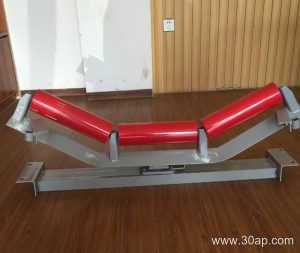
An impact idler bracket is the mounting frame that holds the impact idler rollers directly beneath a conveyor belt’s loading point. In a quarry, a coal washing plant, or a crushing and screening line, material drops onto the belt with force. The bracket keeps the impact rollers at the correct height and angle so the conveyor belt is supported through that shock instead of sagging between ordinary carrying idlers. It is also called an impact roller bracket or buffer idler support frame, and those names describe the same component.
The bracket is not a pulley. Drive pulleys, tail pulleys, and bend pulleys transmit or redirect belt motion, while this frame only carries and positions rollers. Keeping that distinction clear helps when ordering spare parts for a conveyor.
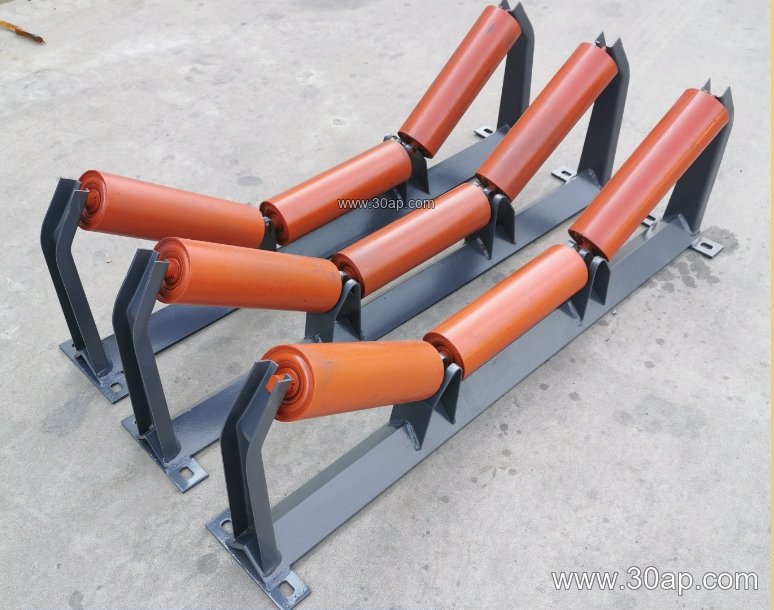
Construction and Mounting Position
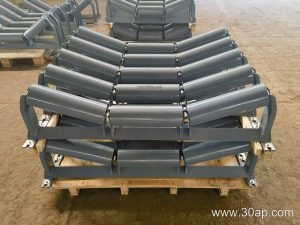
Most impact idler brackets are fabricated from angle steel, channel steel, or folded steel plate. The frame is welded or bolted and then drilled to match the mounting hole spacing of the roller shafts. Because impact zones take repeated shock, the bracket usually has a heavier section than a standard carrying bracket, and the roller seats are reinforced.
Installation is normally just downstream of the chute or transfer point, where the falling material first contacts the belt. The frame is fixed to the conveyor stringer with bolts so that the impact rollers sit slightly above the line of the normal troughing idlers, cushioning the load without creating a step the belt must climb.
Common Configurations
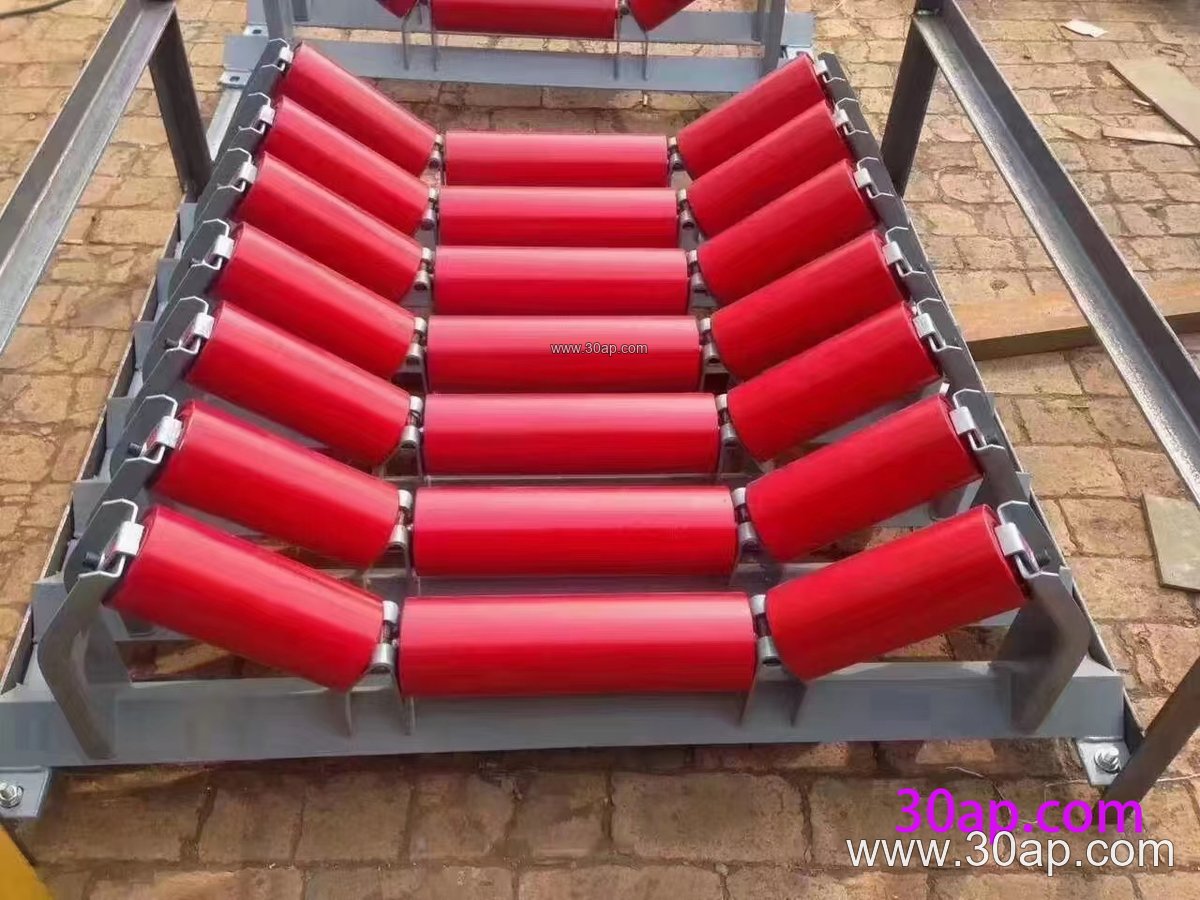
Impact brackets follow the trough angle and belt width of the conveyor. Typical combinations are shown below; these are reference arrangements, not fixed rules, and actual dimensions are confirmed by design.
| Belt width | Trough angle | Typical roller diameter | Bracket style |
|---|---|---|---|
| B650 | 30 degrees | Ø89 | Fixed impact bracket |
| B800 | 35 degrees | Ø108 | Fixed impact bracket |
| B1000 | 35 degrees | Ø133 | Adjustable impact bracket |
| B1200 | 45 degrees | Ø133 | Adjustable impact bracket |
| B1400 | 35 degrees | Ø159 | Fixed or adjustable |
| B1600 | 45 degrees | Ø159 | Fixed or adjustable |
Belt width does not dictate a single trough angle or roller diameter. A B1000 conveyor may run at 30 or 35 degrees depending on the material and belt speed, and the bracket must match whichever the conveyor uses. A fixed bracket holds one trough angle; an adjustable bracket can be set between common angles such as 20, 30, 35, and 45 degrees during installation. Some designs also allow a small forward tilt of about 1.5 to 2 degrees to help center the belt.
Where It Is Used
The loading zone of a belt conveyor is the main application. In a limestone mine, the discharge from a primary crusher feeds the belt through a chute, and the impact bracket protects the belt from large lumps. In a power plant coal yard, the same frame sits under the transfer tower where coal drops from one conveyor to the next. Cement plants, sand and gravel lines, and tunnel spoil handling conveyors use the same logic wherever drop height and lump size are significant.
The bracket works together with the impact idler roller, the conveyor belt, and the surrounding conveyor bracket system. If the impact zone is long, several brackets are spaced along the loading area so the shock is spread over more rollers.
Buyer Checklist
- Confirm belt width, trough angle, and roller diameter before ordering, and check that the mounting hole spacing matches the conveyor stringers.
- Decide between fixed and adjustable brackets; adjustable frames suit conveyors where the trough angle may be tuned later.
- Check the steel section and weld quality, since impact zones see repeated shock loads.
- Match the bracket to the impact roller shaft size, not just the roller diameter.
- Plan spare brackets for high-wear transfer points so downtime stays short.
A correctly chosen impact idler bracket is a small part of the conveyor, but it decides how well the belt survives its hardest moment at the loading point.