What Conveyor Bracket Fabrication Covers
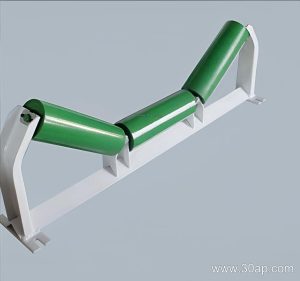
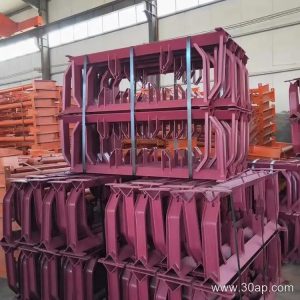
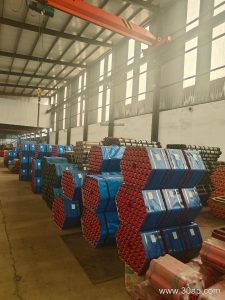
Conveyor bracket fabrication is the cutting, bending, drilling, and welding work that turns steel stock into the support frames holding a conveyor belt and its idler rollers in place. In a coal preparation plant or a limestone quarry, these brackets carry the troughing rolls on the carrying side and the return rolls underneath, keeping the belt profile stable along the whole run. The fabricated assembly is often called a conveyor frame bracket or idler support bracket, and it is a structural part rather than a rotating one.
Accurate fabrication matters because a bracket that is slightly out of square will twist the rolls, wear the conveyor belt edge, and push the idler roller out of alignment. For that reason, the work starts with a clear drawing that fixes the belt width, trough angle, roll diameter, mounting hole spacing, and crossbeam length together.
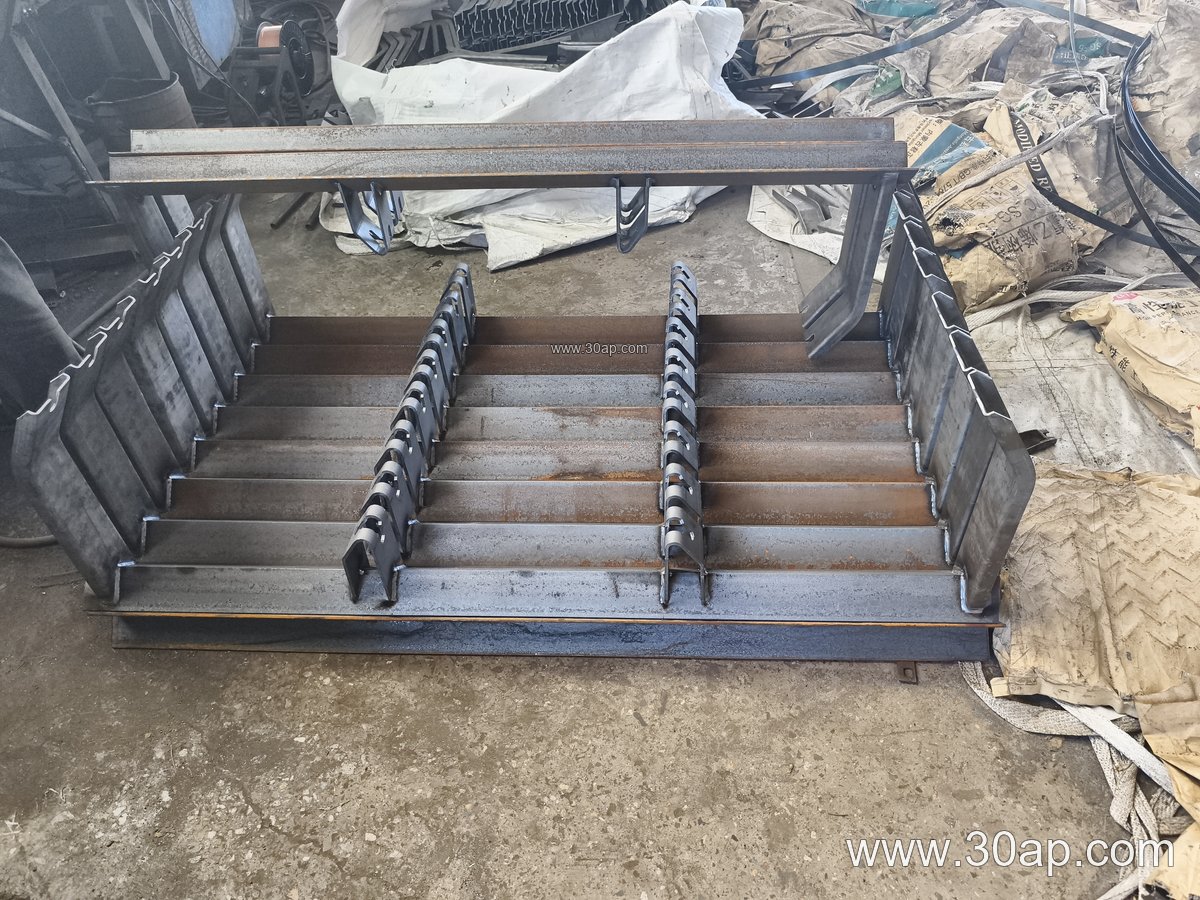
How the Bracket Is Built
Most support frames are made from angle steel, channel steel, or folded steel plate. The sequence usually runs as follows.
- Cut the channel or angle to the crossbeam length required by the belt width and trough angle.
- Punch or drill the holes that locate the idler roller ends, keeping hole spacing consistent across the batch.
- Bend the end plates or roll seats to the specified trough angle, typically 20, 30, 35, or 45 degrees.
- Weld the seat, gusset, and crossbeam together on a jig so each frame matches the next.
- Clean, drill drain points where needed, and apply a protective coating.
Adjustable versions add slotted holes or pivoting seats so the trough angle can be changed on site. Fixed versions are simpler and stiffer, which suits long straight runs in a cement plant or power station coal yard.
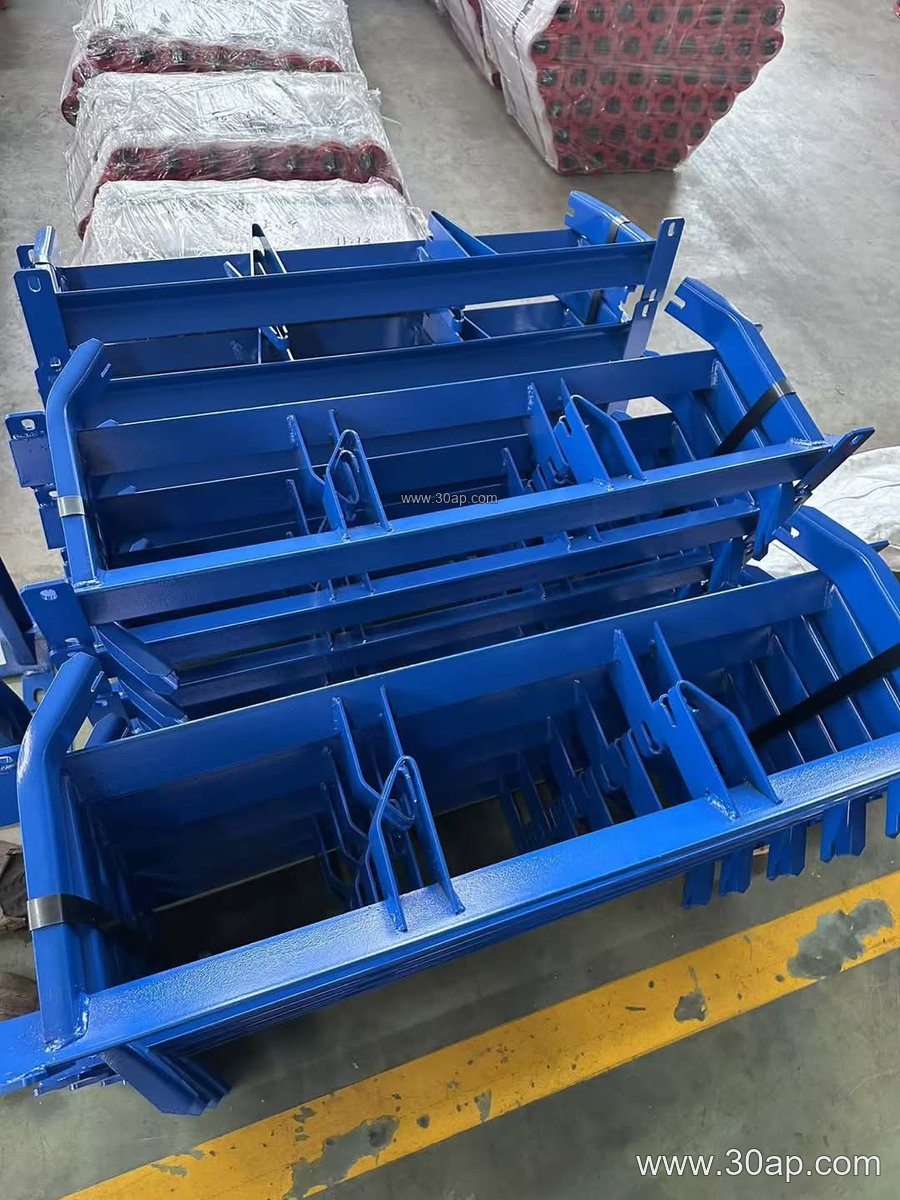
Types and Where They Sit
The main fabricated forms follow the belt line. Troughing brackets support the carrying side and set the trough angle. Transition brackets sit near the head and tail pulleys and guide the belt from flat to troughed. Return brackets hold the lower rolls, with V-shaped return frames helping to center the belt. Impact brackets sit under loading points and carry cushion rolls. Self-aligning brackets allow small lateral corrections on the return strand.
When comparing a troughing frame with a return frame, the difference is the seat geometry and the load direction, not the fabrication method. Both are welded steel structures sized to the same belt width family, but only the carrying frame sets the trough angle that shapes the belt.
Common Reference Dimensions
The values below are typical ranges used for planning, not fixed supply commitments. Hole spacing and crossbeam length are always determined by the belt width, trough angle, and roll diameter together.
| Item | Common Reference Values |
|---|---|
| Belt width | B500, B650, B800, B1000, B1200, B1400, B1600, B1800, B2000, B2200 |
| Trough angle | 20, 30, 35, 45 degrees; adjustable frames cover several of these |
| Roll diameter | Ø89, Ø108, Ø133, Ø159, Ø194 |
| Material | Angle steel, channel steel, folded steel plate |
| Frame style | Fixed or adjustable |
A B800 frame with a 35 degree trough and Ø108 rolls is a common combination, as is a B1200 frame at 45 degrees with Ø133 rolls. That does not mean a given belt width can only use one angle or one roll size; the layout, load, and belt speed decide.
Buyer Checklist
- Confirm the drawing shows belt width, trough angle, roll diameter, hole spacing, and crossbeam length, not just a type name.
- Ask whether the frame is fixed or adjustable, since adjustable seats add flexibility at transfer points and curves.
- Check the steel section and weld quality, especially at the roll seats where vibration is highest.
- Match the bracket to the actual idler roller end fitting so the roll sits without shimming.
- Confirm the coating suits the site, whether dusty quarry air, wet washdown, or corrosive fertilizer handling.
Good conveyor bracket fabrication is quiet work, but it decides how long the conveyor belt and every idler roller last. A square, well-drilled frame keeps the belt tracking straight and the rolls turning freely, which is what a plant notices over months of running.