What a Conveyor System Idler Does on the Line
A conveyor system idler is the rotating roller assembly that supports the conveyor belt along its carrying and return runs. It is not a drive component; it does not pull the belt. Its job is to hold the belt in a stable profile, reduce friction, and keep material moving without spillage. In a sand and gravel plant, a row of idlers under a loaded belt may look simple, but each one carries a share of the belt, the material, and the dynamic loads from loading points. That is why idler selection deserves attention before a conveyor is assembled.
The same component is often called an idler roller or carrying idler, depending on the plant’s language. These are equivalent names for the same product family. Drive pulleys, tail pulleys, and bend pulleys are different parts of the conveyor and are not interchangeable with idlers.
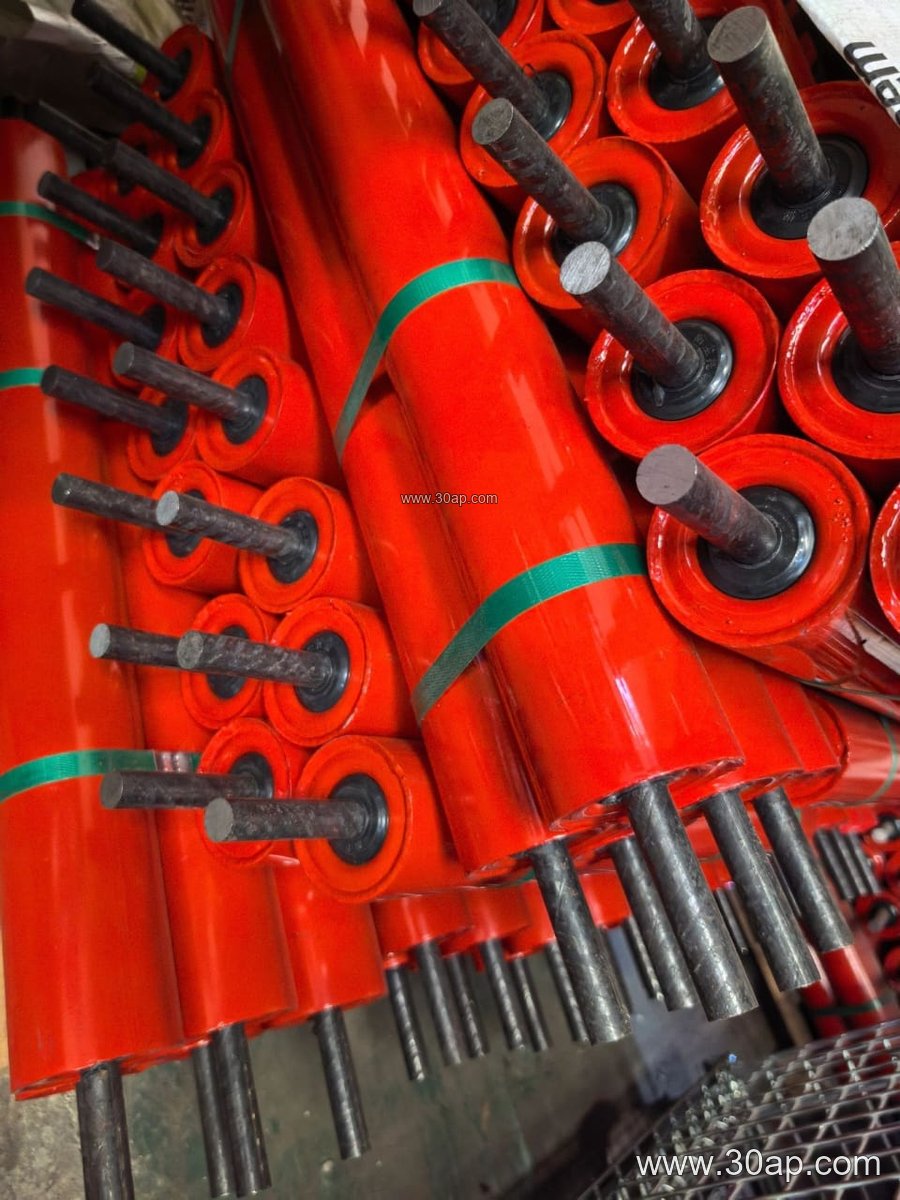
How an Idler Roller Is Built
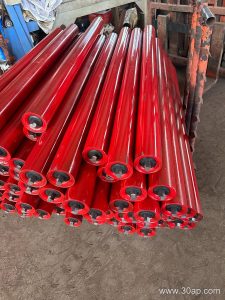
Most idlers share a common structure: a steel tube shell, a shaft, bearing housings at each end, and a sealing arrangement to keep dust and water out. The shell may be plain steel, nylon-coated, ceramic-lined, or fitted with rubber rings for impact absorption. Bearings are commonly 6204, 6205, 6305, 6306, 6308, or 6310, matched to the roller diameter and load rather than to belt width alone. A labyrinth seal or a contact seal protects the bearing cavity, and this detail often decides service life in dusty coal handling or cement plants.
The roller length follows the belt width, trough angle, and idler arrangement. For a three-roll troughing set, common roller lengths are roughly 200 mm for B500, 250 mm for B650, 315 mm for B800, 380 mm for B1000, 465 mm for B1200, 530 mm for B1400, 600 mm for B1600, 670 mm for B1800, and 750 mm for B2000. These are reference examples, not fixed pairings; side rollers and center rollers can differ.
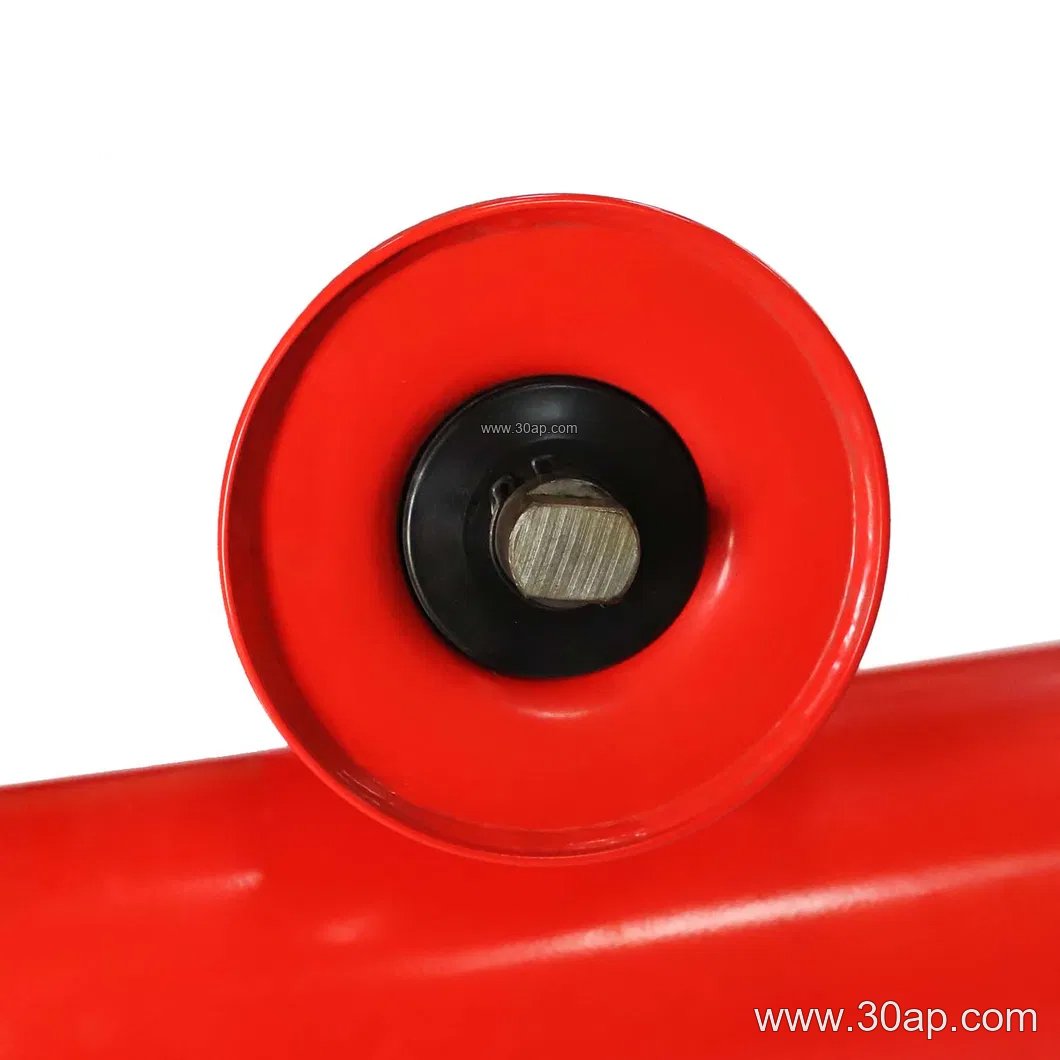
Common Idler Types and Where They Sit
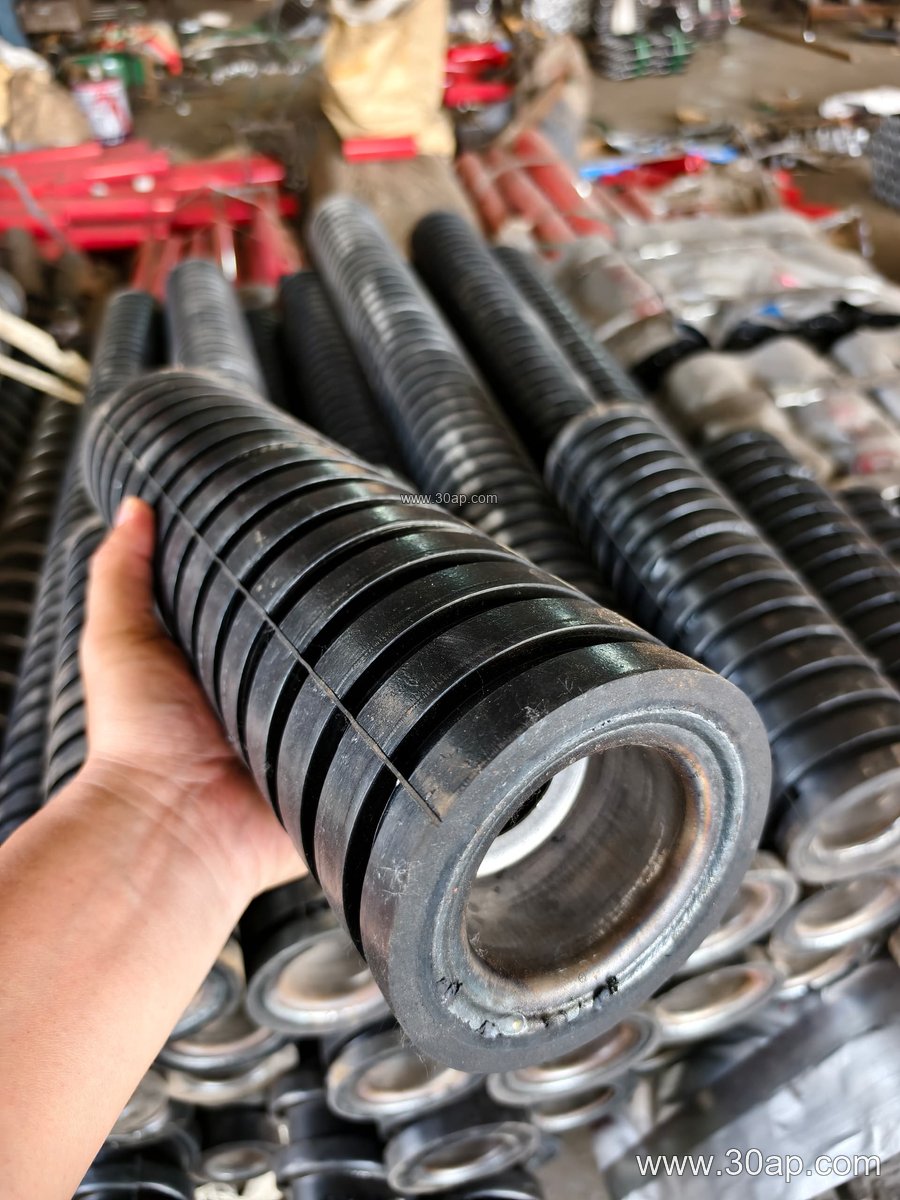
Troughing idlers, also called carrying idlers, form the belt into a trough so bulk material stays centered. They are usually supplied as single-roll, two-roll, or three-roll sets, with trough angles of 20, 30, 35, or 45 degrees. A transition idler is placed near a pulley to ease the belt from flat to troughed shape. Return idlers support the empty belt on the lower run; flat return idlers and V-return idlers are common choices. Impact idlers with rubber rings are used under chutes and transfer points, while spiral idlers help shed sticky material. Self-aligning idlers, including friction and tapered types, correct belt tracking on long runs.
Reference Dimensions for Planning
The table below gives typical values for discussion with a supplier. Final sizes depend on the conveyor design, belt speed, and loading conditions.
- Roller diameter range: Ø63, Ø76, Ø89, Ø102, Ø108, Ø127, Ø133, Ø159, Ø178, Ø194, Ø219 mm
- Belt width range: B400, B500, B650, B800, B1000, B1200, B1400, B1600, B1800, B2000, B2200, B2400
- Trough angle options: 20°, 30°, 35°, 45°
- Forward tilt for tracking: commonly about 1.5° to 2°
- Shell options: steel tube, nylon, ceramic, rubber ring
Where Idlers Are Used
Idlers appear wherever a conveyor belt runs. In a limestone quarry, they carry crushed rock from the primary crusher to the stockpile. In a coal washing plant or a power station coal yard, sealed idlers resist fine dust and moisture. Cement plants use them on clinker and raw meal lines, and steel mills use them on sinter and coke conveyors. Port terminals, tunnel muck removal, fertilizer plants, and grain elevators all rely on the same basic component, though the shell and seal choice changes with the environment.
What Buyers Should Check Before Ordering
Start with the belt width and the trough angle, then confirm the roller diameter and shaft size from the conveyor drawing. Ask how the idler will be mounted, since a conveyor bracket or frame detail affects fit. Check the bearing designation and seal type for the site conditions; a dusty coal yard and a wet aggregate line have different priorities. For impact zones, specify rubber-ring impact idlers rather than standard troughing rolls. For long conveyors, discuss spacing and alignment, because uneven idler height causes belt tracking problems that no single roller can fix.
Finally, keep the language precise. An idler roller is not a conveyor pulley, and a bend pulley cannot replace a return idler. Matching the right subtype and dimensions to each section of the conveyor is the practical way to protect the belt and keep the line running.