What a Spiral Idler Does on a Conveyor
A spiral idler is a return-side roller with a helical strip of steel wrapped around its shell. Instead of a smooth cylindrical surface, the roller carries a continuous spiral fin that sweeps the belt as it turns. This simple feature makes the spiral idler, also called a spiral return roller, useful in plants where sticky material clings to the conveyor belt and builds up on plain rollers. The spiral fin breaks the contact pattern between belt and roller, so fines and moisture have less chance to accumulate.
You will see these rollers in quarry and aggregate lines, coal washing plants, cement works, and power station coal handling. They are also found in fertilizer and grain conveyors, where dust and residue are a daily issue. In each case the goal is the same: keep the return strand cleaner and reduce the drag that comes from material wrapping around a smooth roller.
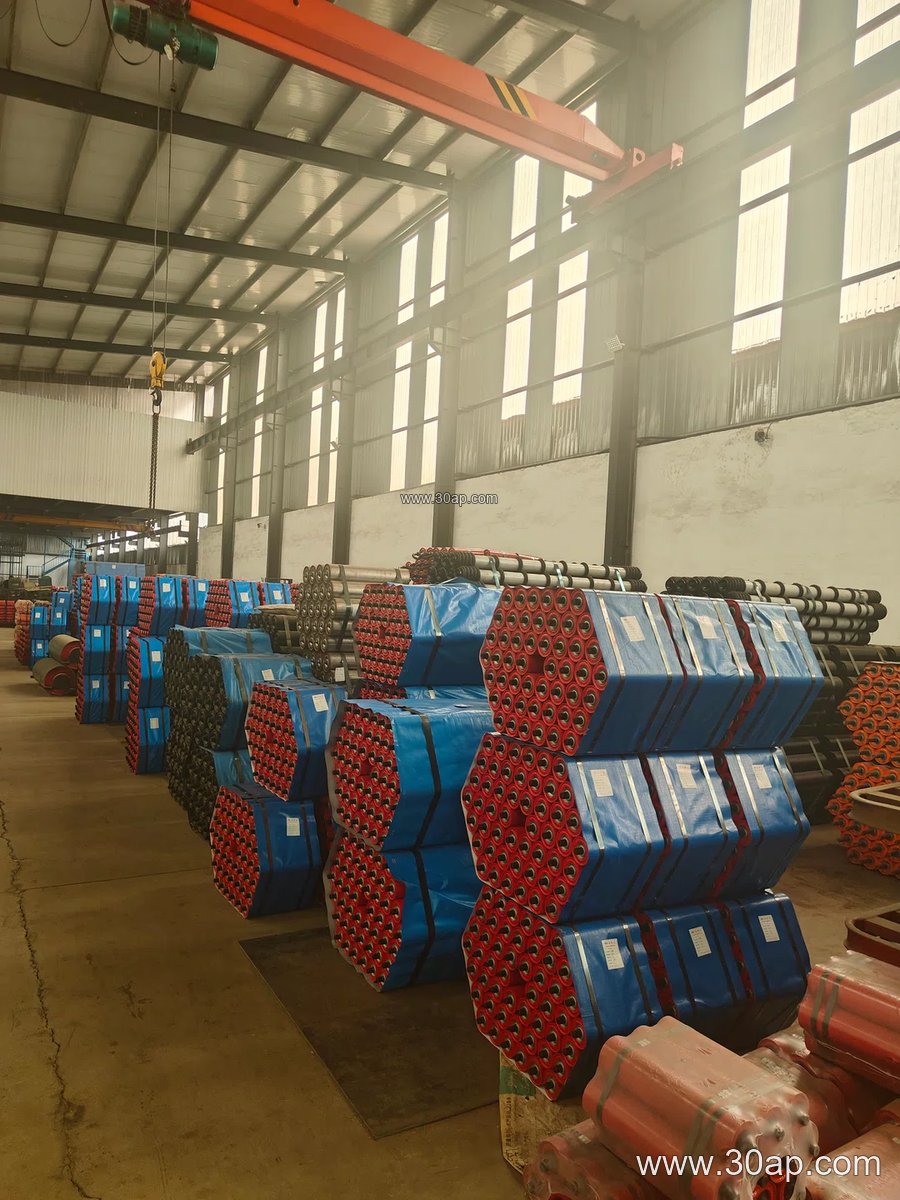
Construction and Common Configurations
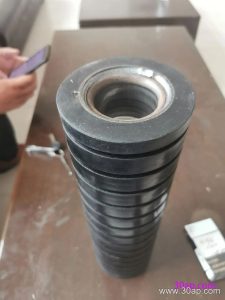
The body is usually a steel tube with welded bearing housings at both ends, fitted with sealed ball bearings. The spiral fin is welded or formed onto the shell. Roller surfaces can be plain steel, nylon, ceramic, or rubber-covered depending on the duty. Bearing sizes commonly range from 6204 and 6205 on smaller rollers up to 6308 and 6310 on heavier units, matched to the shaft and load rather than to belt width alone.
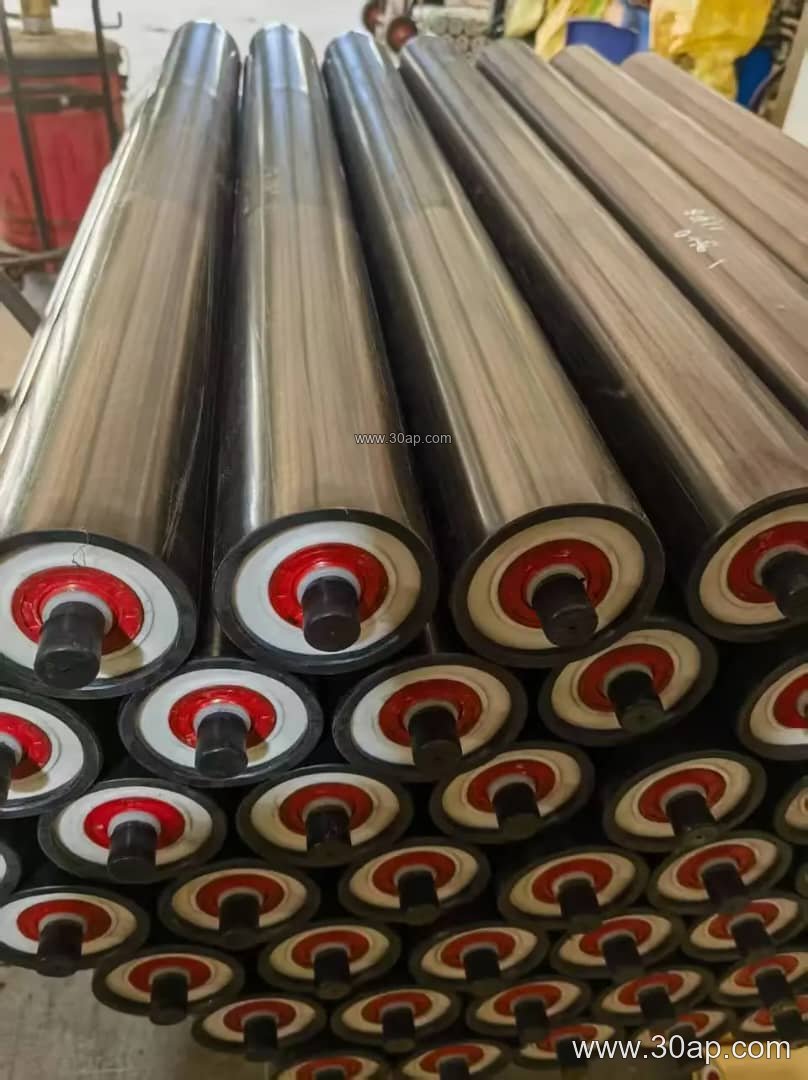
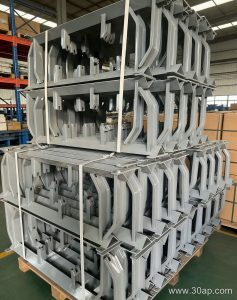
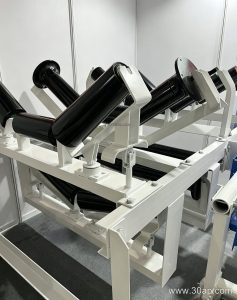
Spiral idlers are normally supplied as single rollers for the return run. They are not a substitute for a bend pulley or a tail pulley, which are driven or redirecting components with their own shafts and lagging. The spiral idler is a free-turning support roller, and it works alongside the conveyor pulley and conveyor bracket that make up the return station.
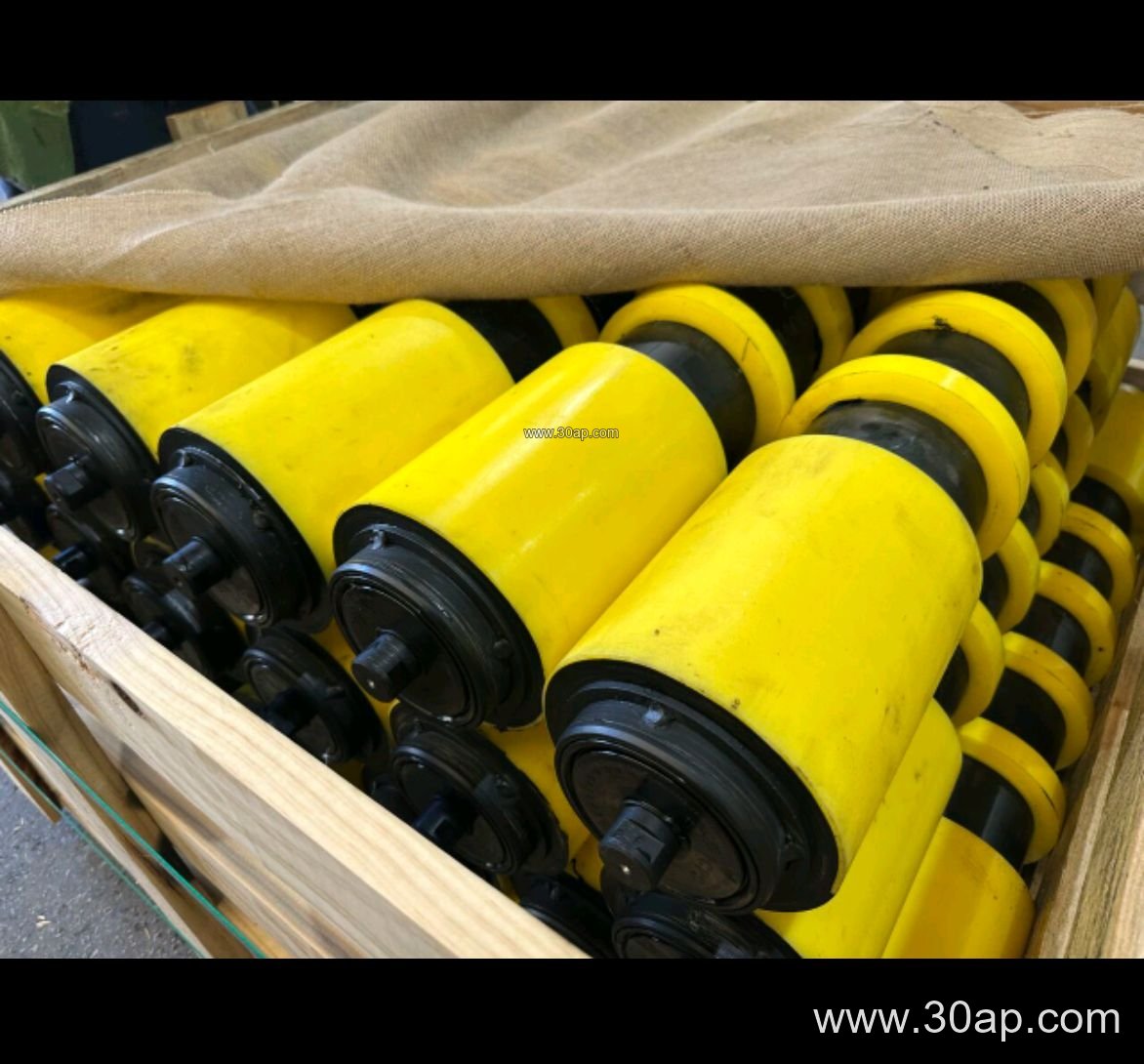
Typical reference data
The figures below are common examples, not fixed rules. Final sizes are set by the conveyor design.
| Parameter | Common options |
|---|---|
| Roller diameter | Ø76, Ø89, Ø102, Ø108, Ø127, Ø133, Ø159 mm |
| Belt width | B500, B650, B800, B1000, B1200, B1400, B1600 mm |
| Roller surface | Steel tube, nylon, ceramic, rubber ring |
| Bearing | 6204, 6205, 6305, 6306, 6308 |
| Mounting | Single return roller in a bracket or frame |
Roller length follows belt width and the return frame design. A three-roll troughing set, for example, might use roller lengths of about 200 mm at B500, 315 mm at B800, or 465 mm at B1200. Spiral return rollers are usually sized separately, and the length should be confirmed against the actual frame.
Where It Fits in the Conveyor Layout
The spiral roller belongs on the return strand, under the belt after the material has been discharged. It is often placed just behind the head pulley, where the belt is still dirty, and at intervals along the return run. In a coal preparation plant or a limestone quarry, this position catches carryback before it reaches the tail pulley. In a cement plant, the same roller helps control fine dust that would otherwise pack onto smooth return rollers.
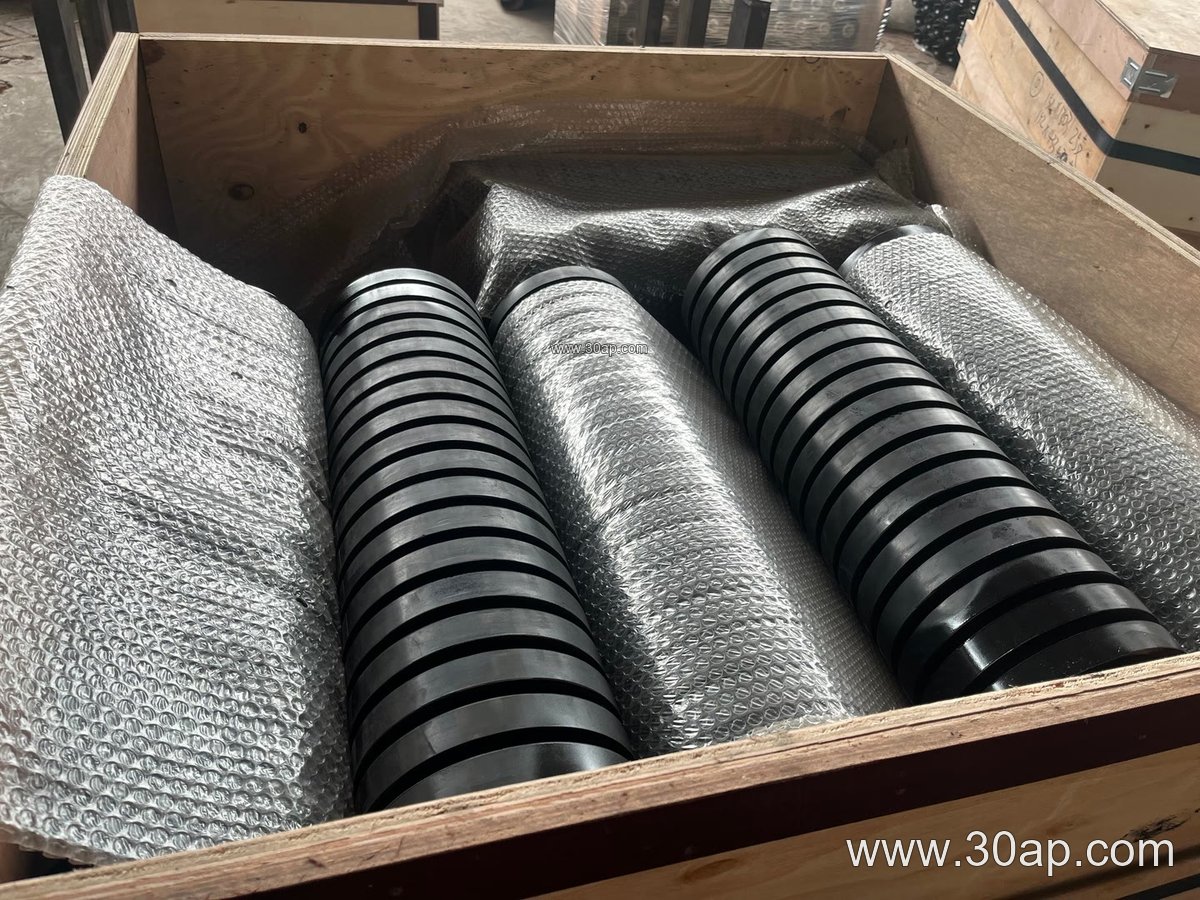
It is not a replacement for a troughing idler on the carrying side, nor for a buffer idler at a transfer point. Those roles need different profiles and, in the case of impact, rubber rings or a cushioned design. A spiral roller is also not an aligning idler; belt tracking is handled by self-aligning rollers or by adjusting the conveyor pulley and frame.
Selection Points for Buyers
- Material condition: Choose a spiral roller where sticky fines, mud, or fibrous residue are a known problem. For dry, clean belts, a plain return roller may be enough.
- Diameter and bearing: Match the shaft and bearing to the calculated load and speed. A larger roller diameter does not automatically suit every belt width.
- Surface: Rubber-covered or ceramic-faced variants can help in abrasive service, while nylon offers a lighter option.
- Frame fit: Confirm the roller length, shaft ends, and bracket spacing. The conveyor bracket and return frame must accept the chosen shaft.
- Sealing: In dusty or wet plants, bearing protection matters more than the spiral itself. Ask how the housing is sealed.
Maintenance Notes
Check the spiral fin for wear and for material packed between the fin and the shell. A roller that stops turning will flat-spot the belt and wear the fin quickly. Keep the return strand clear and inspect bearings for noise or heat at routine shutdowns. When replacing a worn unit, record the roller diameter, shaft size, and installed length so the new spiral idler matches the existing return station.