What a Guide Idler Bracket Does on a Conveyor
A guide idler bracket is the mounting component that holds a training or guide idler in the correct position relative to the conveyor belt. Its purpose is not to carry the main material load, but to keep the belt centered and to correct minor tracking drift before it becomes a problem. In a quarry, a coal washing plant or a cement kiln feed line, a belt that wanders off its pulleys quickly damages edges, spills material and shortens the life of the conveyor belting.
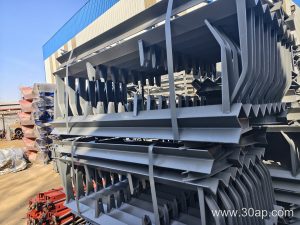
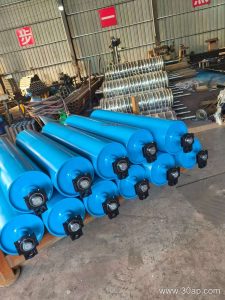
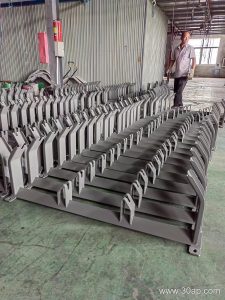
The bracket is usually a fabricated steel part. Common materials are angle steel, channel steel and folded steel plate. The guide idler bracket (also called a training idler bracket or self-aligning idler bracket) is often built so that the idler can pivot or be adjusted, allowing maintenance staff to correct belt tracking without replacing the whole frame.
Construction and Mounting Position
A typical unit consists of a base plate or clamp that fixes to the conveyor frame, a vertical or inclined support, and a spindle or hinge that carries the guide idler roller. Some designs include a swivel action so the idler tilts when the belt touches it, creating a self-correcting effect. Others are fixed and rely on accurate shimming during installation.
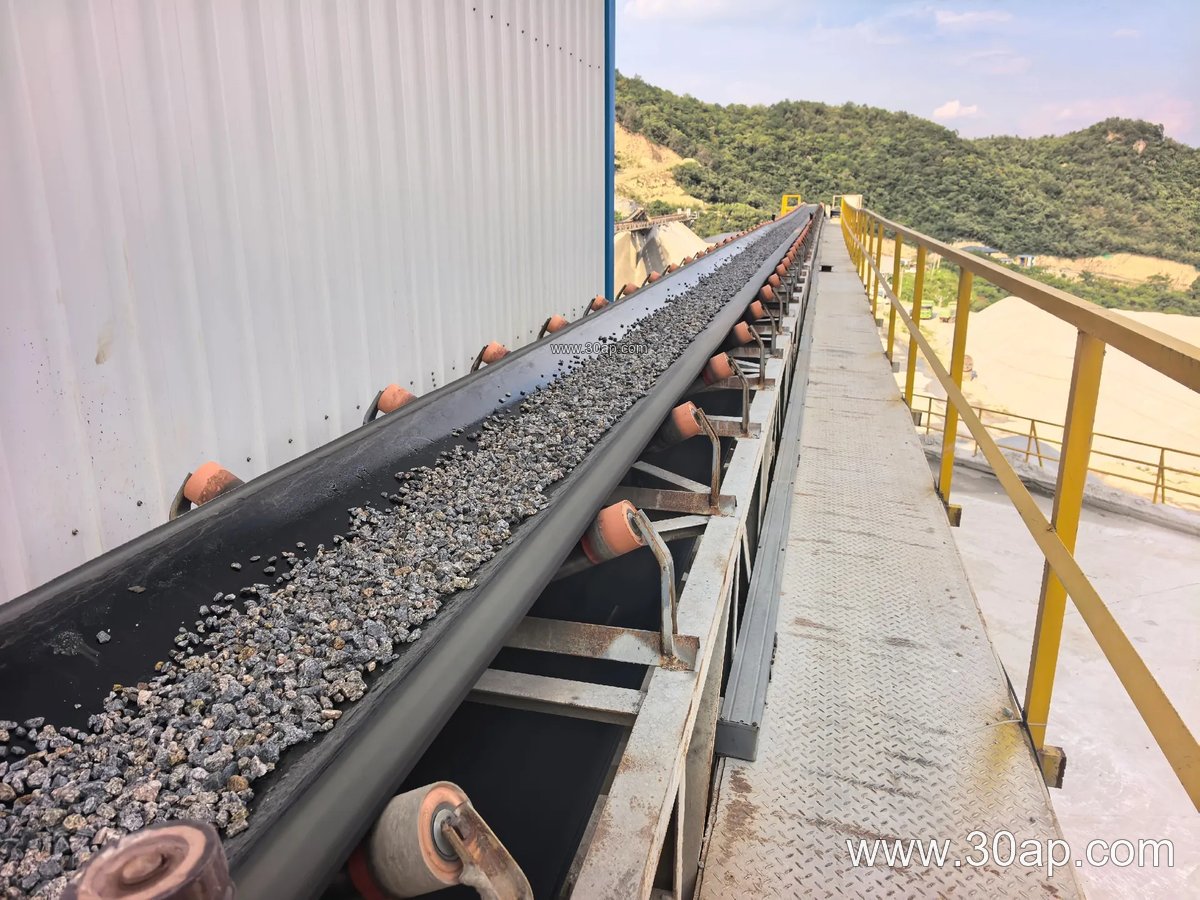
- Fabricated from angle or channel steel, often welded and drilled for standard idler shafts.
- Mounting holes and beam length vary with belt width and trough angle; they are not one fixed dimension.
- Adjustable versions allow small changes in angle and position after the belt is running.
- Fixed versions are simpler and are set once during alignment.
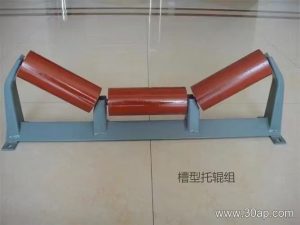
Placement matters. Guide brackets are usually installed on the carrying side near the tail or before the drive, and sometimes on the return strand where the belt tends to misalign. They should not be confused with the brackets that hold the main troughing idlers, although both may appear on the same conveyor frame.
Where It Fits in Bulk Material Handling
In a limestone mine or a sand and gravel line, the belt often runs slightly off-center after loading. A guide idler bracket near the loading point helps bring the belt back before it reaches the conveyor pulley. In a power plant coal yard or a fertilizer granulation plant, the same component protects the belt edges and reduces spillage.
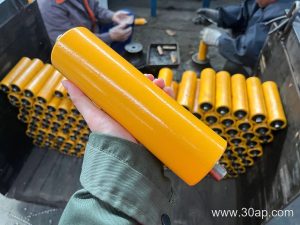
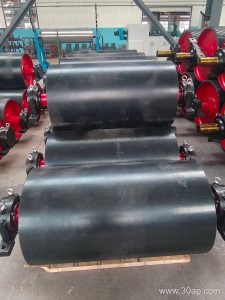
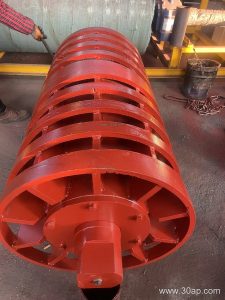
It works together with the conveyor belt, the idler roller and the conveyor pulley. It is not a substitute for a bend pulley or a drive pulley; those handle tension and direction, while the guide bracket handles lateral position. A properly set bracket also reduces uneven wear on the troughing idlers and on the return rollers.
Common Reference Dimensions
The table below shows reference ranges often used in design discussions. Actual values depend on the conveyor frame, belt width, trough angle and shaft size, so they should be confirmed against the project drawing rather than treated as fixed combinations.
| Item | Common reference values |
|---|---|
| Belt width B | B500, B650, B800, B1000, B1200, B1400, B1600, B1800, B2000, B2200 |
| Trough angle | 20°, 30°, 35°, 45°; adjustable brackets can be set within a range |
| Idler diameter | Ø89, Ø108, Ø133, Ø159, Ø194 |
| Material | Angle steel, channel steel, folded steel plate |
| Example combinations | B800 with 35° and Ø108; B1200 with 45° and Ø133; B650 with 30° and Ø89 |
These are indicative examples only. A wide belt does not automatically require a single trough angle or one roller diameter. The bracket hole spacing and crossbeam length follow the belt width and the frame design.
Buyer Checklist
- Confirm the belt width and the idler shaft diameter before ordering.
- Decide whether a fixed or adjustable guide bracket suits the maintenance plan.
- Check the mounting hole pattern against the existing conveyor bracket or frame.
- Match the bracket material to the environment; dusty or wet plants may need heavier fabrication and better corrosion protection.
- Ask for the drawing of the mounting interface, not only the bracket outline.
In a steel sintering line or a tunnel spoil conveyor, a small alignment error at the guide idler bracket can lead to belt edge damage within days. Choosing the right bracket and setting it correctly is a low-cost way to protect the conveyor belt and the idler roller assembly.