What a 315mm Diameter Conveyor Pulley Is
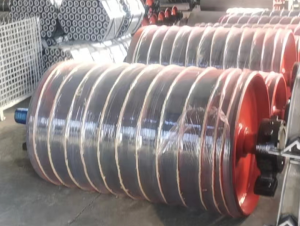
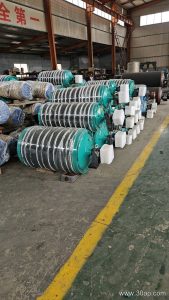
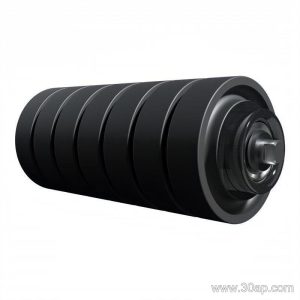
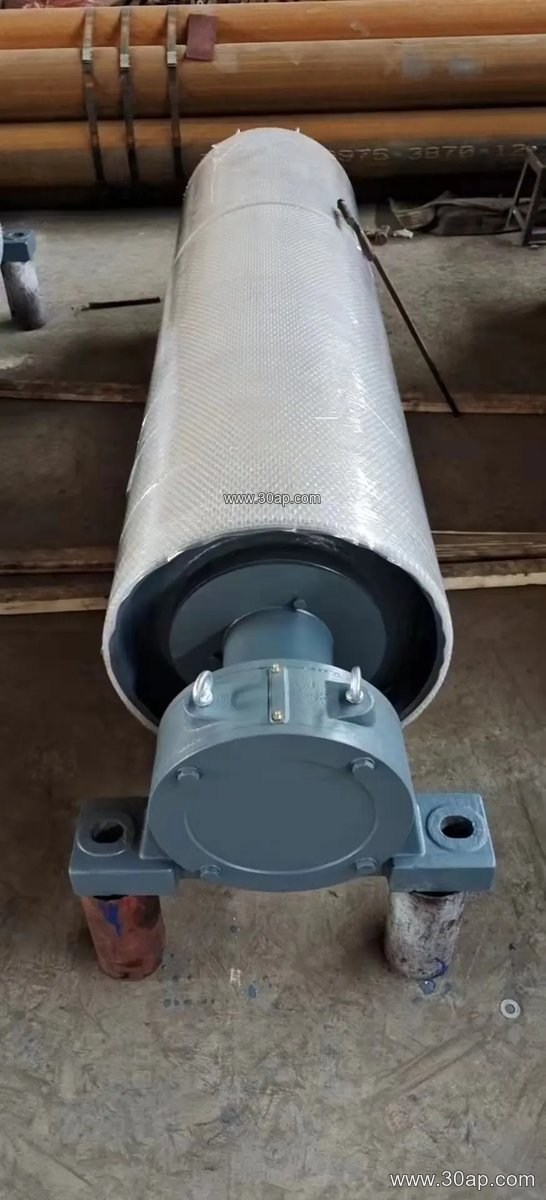
A 315mm diameter conveyor pulley is a mid-sized drum that guides and supports the conveyor belt at a transfer, tension, or bend point on a bulk handling line. With a nominal shell diameter of Ø315, it sits between small tail drums and the larger head pulleys used on high-capacity trunk conveyors. In a 315mm diameter conveyor pulley, the drum rotates on a shaft carried by bearings in the conveyor bracket, while the belt wraps the shell and picks up traction or direction change.
This diameter is common on aggregate and cement circuits, where a bend or tension location needs more wrap than a small snub drum can offer but does not justify a Ø500 or Ø630 head pulley. It also appears in coal handling galleries and power plant coal yards where space around the belt line is limited.
How the Drum Is Built
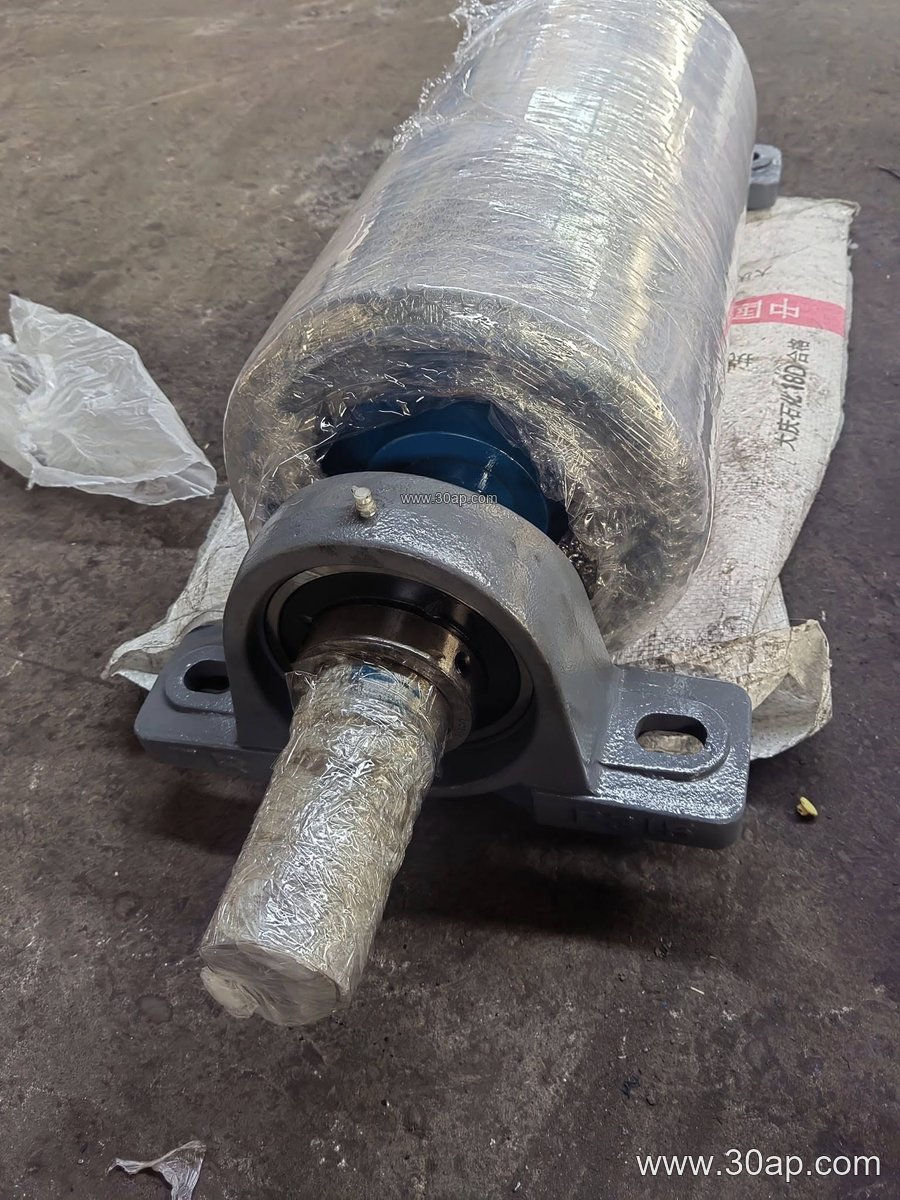
The pulley is normally a welded assembly: a rolled steel shell, two end discs, a hub, and a through shaft. Shaft ends are machined for bearing seats and coupling or keyed connection. Larger face widths may call for internal stiffening rings to keep the shell round under belt tension.
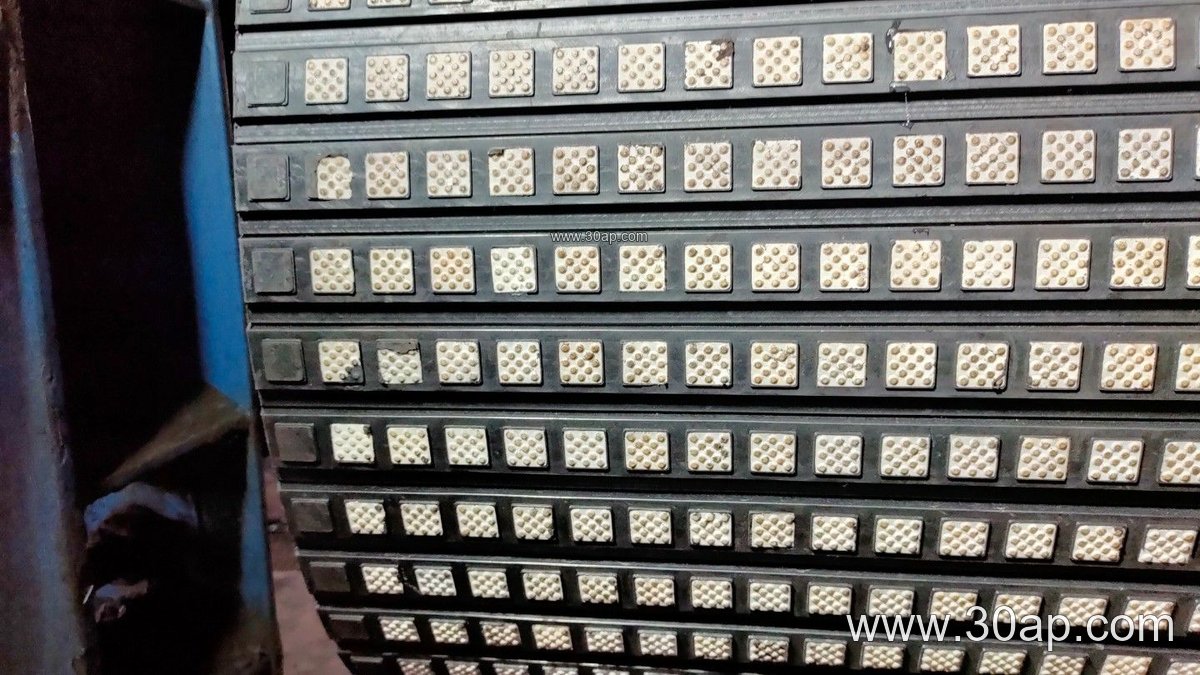
The shaft is sized from torque and radial load, not from belt width alone. Typical shaft diameters in this size class run from Ø80 to Ø140, though the final value depends on the drive layout and bearing span. Surface finish matters as much as geometry: a plain face suits non-drive positions, while rubber lagging improves grip on a drive or tension drum.
Face Width and Belt Match
The shell face is usually wider than the belt so the belt does not run off the edge. Reference values in this range include:
- B650 belt, about 750 mm face
- B800 belt, about 950 mm face
- B1000 belt, about 1150 mm face
- B1200 belt, about 1400 mm face
These are reference pairings, not fixed rules. A B800 conveyor can use a Ø315 drum at a bend station, while the same belt width may carry a Ø500 head pulley elsewhere on the same line.
Where It Fits on the Conveyor
This drum is rarely the main drive. It is more often a bend pulley that increases wrap angle around a drive drum, a tension pulley on a take-up carriage, or a snub drum ahead of a loading point. On a crushing and screening plant, a 315mm diameter conveyor pulley may steer the belt around a structural column. In a coal preparation plant it can act as a return-side direction change where headroom is tight.
Do not confuse it with a tail pulley. A tail pulley sits at the loading end and often runs smaller, while a drive pulley at the head carries the motor torque and usually has a lagged face. The 315mm drum can serve as a bend or tension pulley, but the three positions are not interchangeable in function or bearing selection.
Surface Options and Lagging
Surface treatment should follow the duty. For a non-drive bend pulley, a plain steel face is often enough. Where slip or wear is a concern, lagging helps:
- Cold-bonded rubber, 8 to 12 mm, for general grip
- Hot-vulcanized rubber, 10 to 15 mm, for heavier duty
- Diamond or herringbone groove patterns to shed water and fines
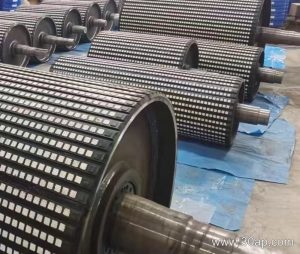
- Ceramic lagging for abrasive iron ore or sinter service
A lagged drum needs a slightly larger diameter allowance, so confirm the finished outside diameter before ordering bearings or brackets.
Buyer Checklist
Before requesting a quotation, gather the belt width, the pulley position, the belt speed, and the expected belt tension. Confirm the shaft diameter with the bearing and bracket supplier, since a Ø315 shell can be paired with several shaft sizes. Ask for the face width, lagging type and thickness, bearing type, and the balancing class. For a 315mm diameter conveyor pulley used in a dusty quarry or a coal yard, specify seals and lubrication access that suit the environment. Check that the conveyor bracket and idler roller layout leave clearance for the drum and its take-up travel.
| Parameter | Typical Reference |
|---|---|
| Shell diameter | Ø315 mm |
| Belt width range | B650 to B1200 |
| Face width | About 750 to 1400 mm |
| Shaft diameter | Ø80 to Ø140 mm, by load |
| Lagging thickness | 8, 10, 12, 15 mm |
| Common positions | Bend, tension, snub |
Treat every figure above as a starting point for discussion. Final dimensions should come from the conveyor design, the belt tension calculation, and the bearing life target for the specific installation.