What the Feed-End Pulley Does
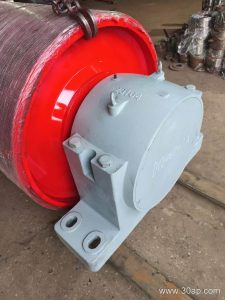
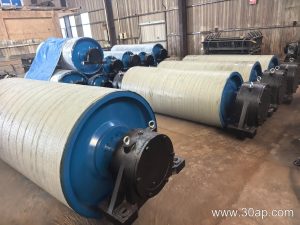
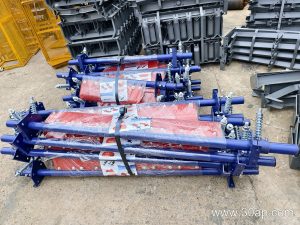
The feed-end pulley is the tail pulley at the loading point of a conveyor. It supports the returning belt as material is fed onto it. Unlike a drive pulley that transmits power, or a bend pulley that changes belt direction for tensioning, the feed-end pulley mainly guides and supports the belt at the start of the carrying run. In quarry or cement plant circuits, it often works with conveyor idlers and brackets to keep the belt aligned under the hopper.
Construction and Surface Options
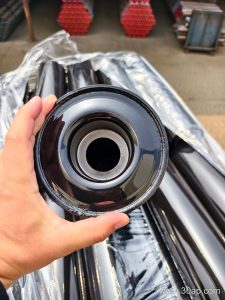
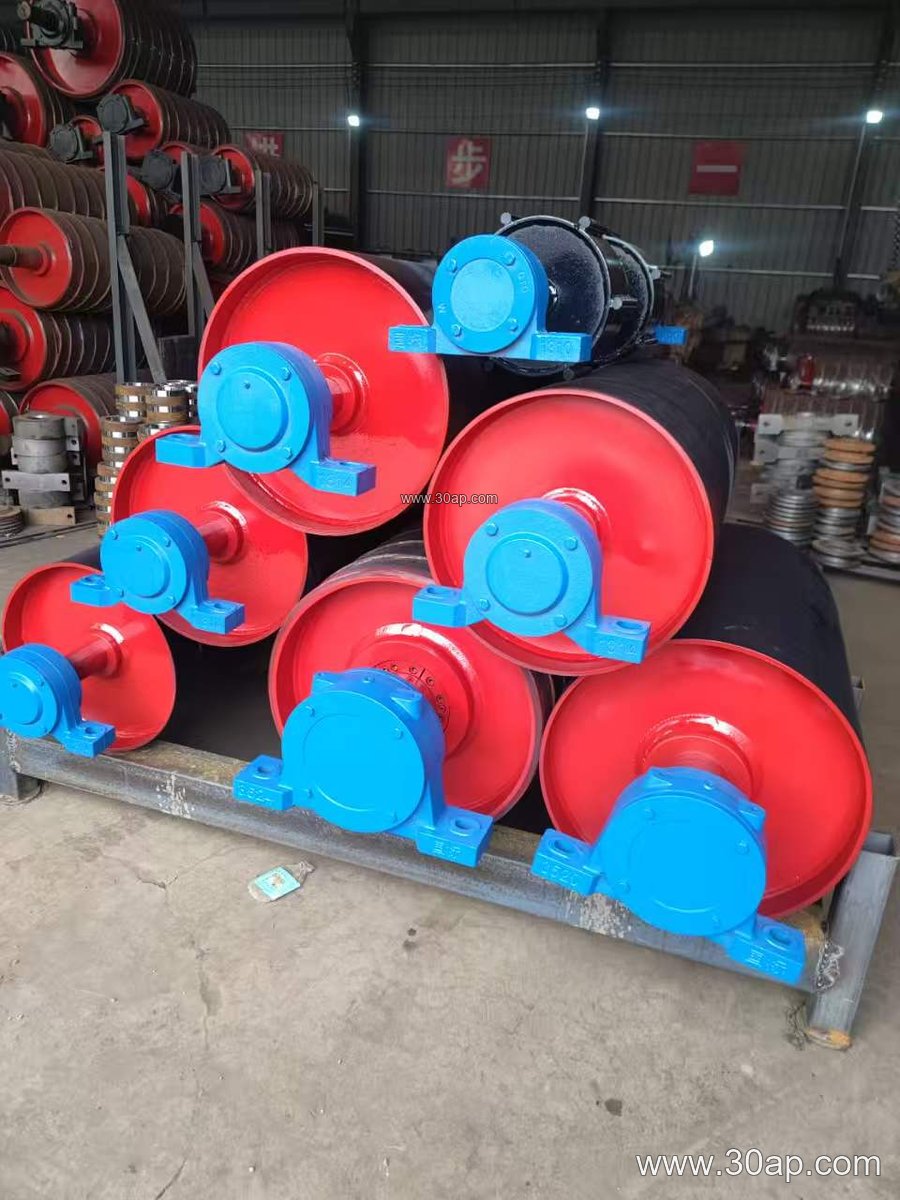
These pulleys are built around a steel drum with welded or shrink-fitted shafts. The shell can be plain or covered with rubber, ceramic, or other lagging to improve grip and wear resistance. Common surface forms include plain, hot-vulcanized rubber, cold-bonded rubber, diamond grooved, chevron grooved, and ceramic lagging. Lagging thickness is often 8, 10, 12, 15, or 20 mm, selected according to material abrasiveness and belt speed.
Shell width is usually wider than the belt. For example, a B800 belt might use a shell around 950 mm wide, while a B1200 belt could use about 1400 mm. Diameter choices range from Ø200 to Ø1800, with common sizes such as Ø400, Ø500, Ø630, Ø800, and Ø1000. These are reference values, not fixed matches; final dimensions depend on belt tension, shaft load, and space constraints.
Where It Fits in the Plant
In a coal washing plant, the feed-end pulley sits under the feed chute and receives the belt after it passes over the carrying idlers. In a limestone mine or aggregate line, it helps stabilize the belt at the transfer point. It is not a substitute for a drive pulley or a tail pulley with a tensioning function; those roles belong to different pulley types. A bend pulley, for instance, is used to route the belt around corners, while the feed-end pulley stays at the loading zone.
Key Parameters for Buyers
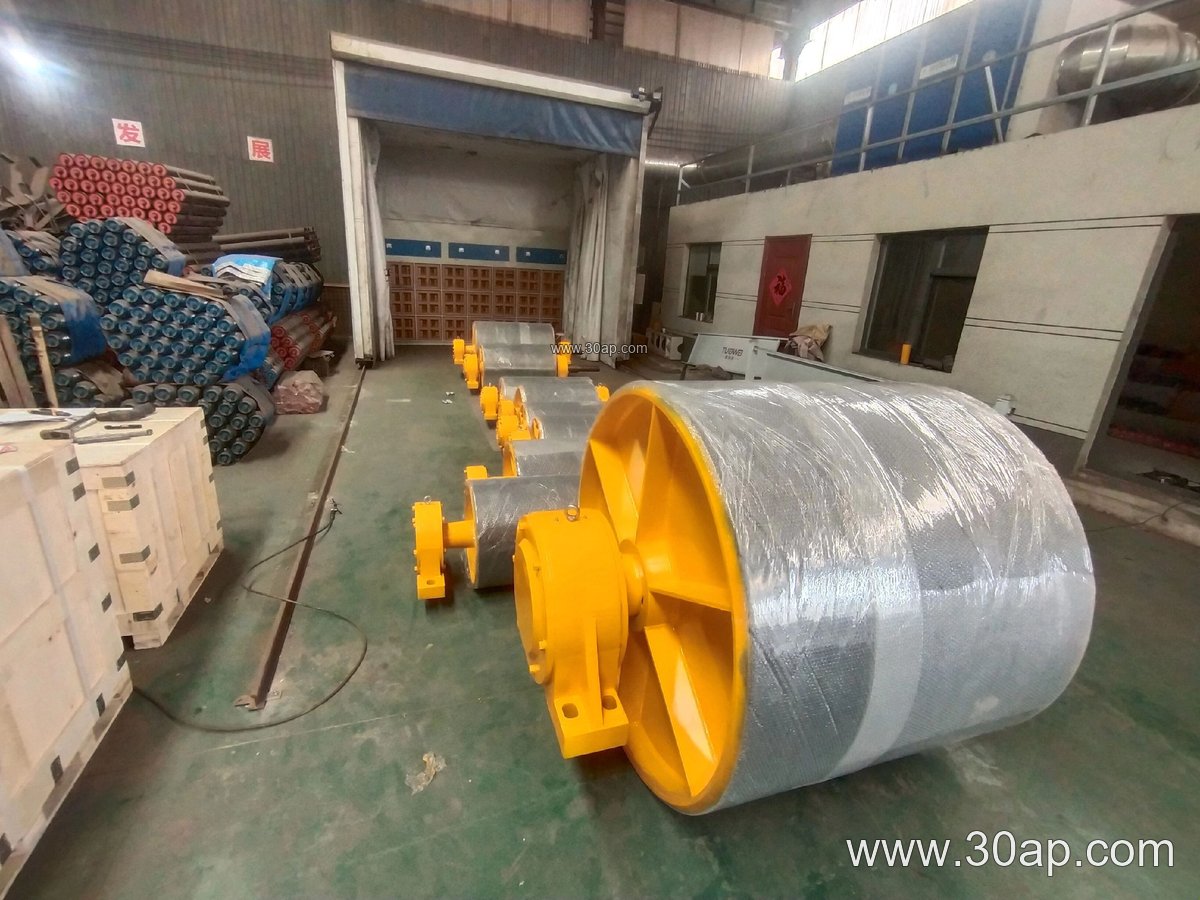
When specifying a feed-end pulley, provide belt width, pulley diameter, shaft diameter, lagging type and thickness, and bearing arrangement. Shaft diameter is determined by torque and load, not by belt width alone. Common shaft sizes include Ø50, Ø60, Ø70, Ø80, Ø90, Ø100, Ø120, Ø140, Ø160, Ø180, and Ø200. Bearing size and housing style should match the conveyor bracket and frame design.
- Belt width: B400 to B2400
- Diameter: Ø200 to Ø1800
- Lagging: plain, rubber, ceramic, grooved
- Lagging thickness: 8–20 mm
- Shaft: Ø50–Ø200, sized by load
For a B1000 belt, a Ø630 pulley with 12 mm rubber lagging might be considered, but the final choice depends on the conveyor layout and duty. Do not assume one belt width always pairs with one diameter.
Maintenance and Selection Tips
Check lagging wear and belt tracking regularly, especially in dusty or wet conditions. Replace worn lagging before it damages the conveyor belt. Ensure the pulley is aligned with the conveyor idlers and that the bracket bolts are tight. In fertilizer or grain silo applications, choose lagging that resists build-up. For heavy-duty mining or sinter plants, ceramic lagging may offer better wear life. Always confirm dimensions with the conveyor manufacturer rather than relying on general tables.