What the 2400mm Conveyor Belt Is
A 2400mm conveyor belt is a wide, heavy-duty belt designed for high-capacity bulk material transport. In many plants it is also ordered as a 2.4-meter belt or described simply as a wide-width belt, but the product remains the same: a continuous belt 2400mm across the carcass, suited to conveyor lines that move large tonnages of rock, ore, coal, clinker, or aggregate. This extra width is usually chosen when a single line must carry material at high throughput without excessive belt speed.
Because the belt is wide, its construction must be robust. The load is spread over a large surface, but the belt also carries more weight per meter and needs strong splice design, careful tracking, and a conveyor structure that can support the whole width. Typical installations include mines, coal preparation plants, cement works, power stations, and sand and gravel yards.
Construction and Common Specifications
A 2400mm belt is built from a tension-carrying carcass and rubber or PVC-based covers. Fabric carcasses such as EP or NN are common in general bulk handling, while steel cord carcasses are used where higher tension and longer center distances are required. Cover grade depends on the duty: abrasion-resistant for crushed stone and ore, heat-resistant for clinker and sinter, oil-resistant for certain industrial feeds, and flame-retardant or antistatic versions for coal and other hazardous areas.
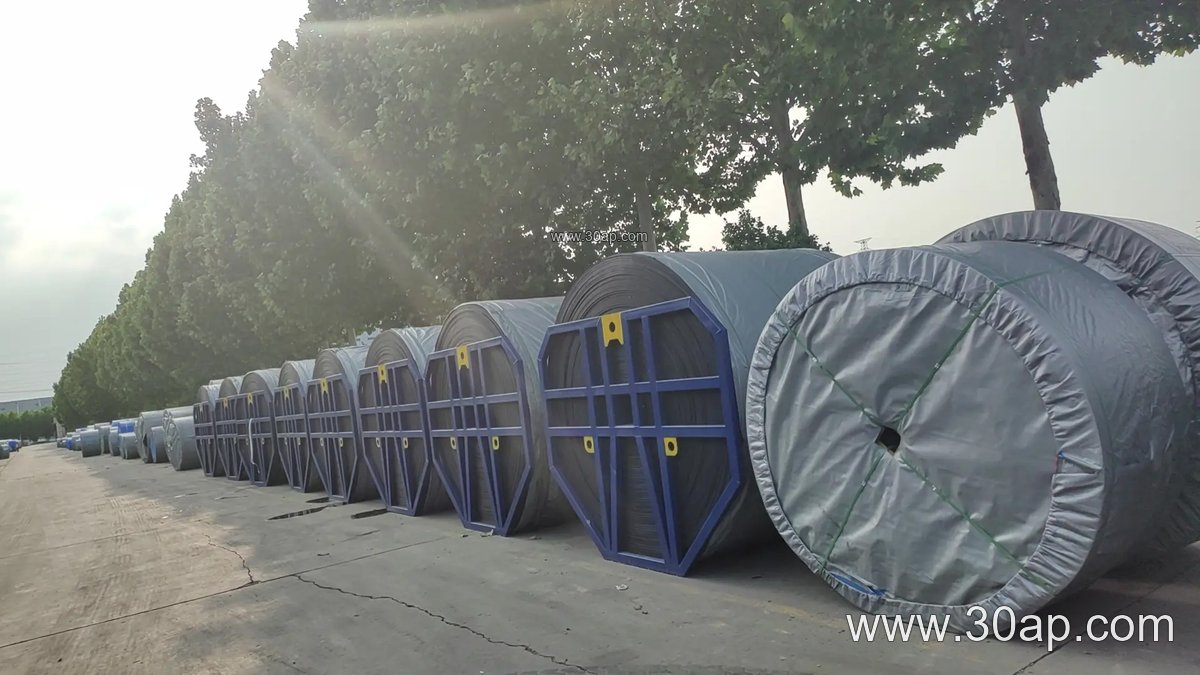
The figures below are typical reference values, not fixed supply promises. Actual construction is confirmed by design and by the manufacturer.
| Item | Common reference values |
|---|---|
| Belt width | 2400mm (B2400) |
| Carcass type | EP, NN, steel cord, PVC/PVG where applicable |
| Strength grades (fabric) | EP200 to EP2000; specific grade by tension calculation |
| Number of fabric plies | Usually 2 to 6 |
| Top and bottom cover | 3+1.5, 4+2, 5+2, 6+2, 8+3 mm |
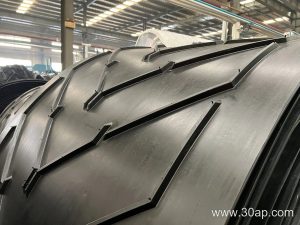
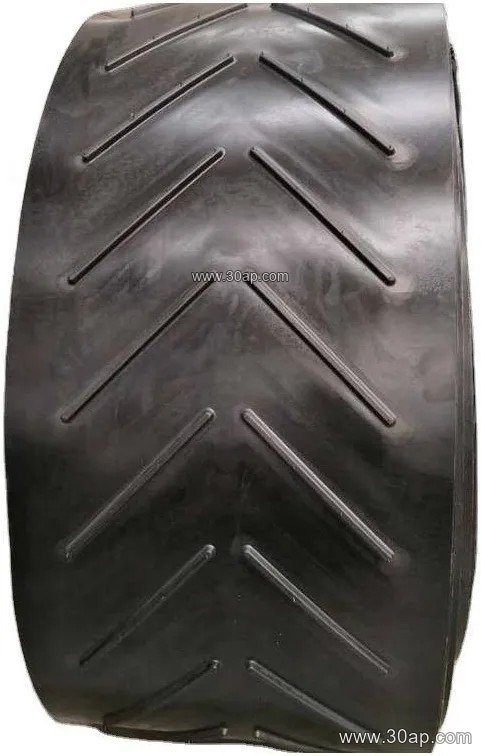
| Surface forms | Plain, patterned, chevron, corrugated sidewall |
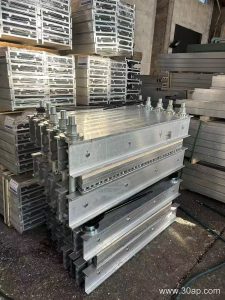
Surface form matters. A plain belt suits horizontal or gently inclined runs, while a chevron or patterned top helps hold material on steeper inclines. Corrugated sidewall belts are a different subtype and are chosen only when the conveyor design calls for contained material; a standard 2400mm belt should not be treated as interchangeable with a sidewall belt.
Where It Fits in a Conveyor Line
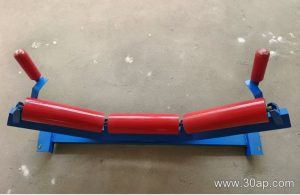
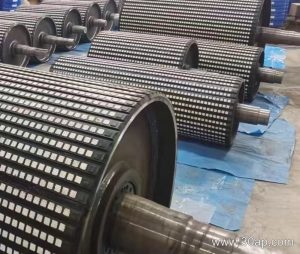
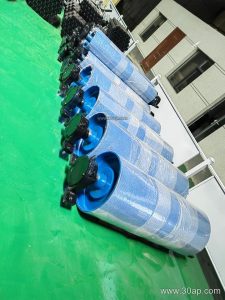
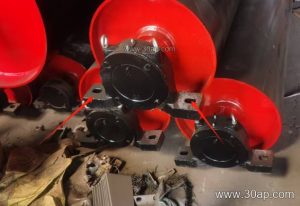
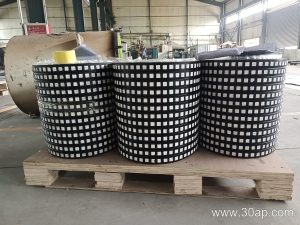
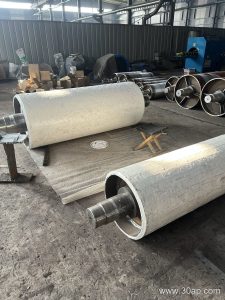
The belt runs over idler rollers that support the loaded strand and return strand, and around conveyor pulleys at the head and tail. Drive, tail, and bend pulleys each perform a distinct function and are not interchangeable. The belt also depends on conveyor brackets and frames to keep alignment and spacing correct. On a wide belt, idler selection and frame rigidity matter more, since any sag or misalignment is amplified across 2400mm.
Typical duty examples include:
- Mines and coal handling: run-of-mine ore, coal, and reject material
- Cement plants: limestone, clinker, and raw meal feed lines
- Power stations: fuel and ash transport
- Sand and gravel yards: washed aggregate and crushed stone
Buyer Checklist
Before ordering, confirm the material type, lump size, bulk density, and desired capacity. These determine belt width, strength grade, and cover thickness. Check the conveyor’s trough angle, pulley diameters, and take-up arrangement, because a 2400mm belt needs suitable pulley face width and adequate take-up travel. Ask for the splice method and verify that the selected cover grade matches the environment.
Also plan for handling and installation. A belt this wide is heavy, so lifting points, storage conditions, and splice equipment should be arranged in advance. During operation, monitor belt tracking, cover wear, and edge condition; early correction of misalignment protects both the belt and the idler rollers. With the right specification and maintenance, a 2400mm conveyor belt can serve high-capacity lines reliably for many years.