What a High-Friction Lagged Pulley Does
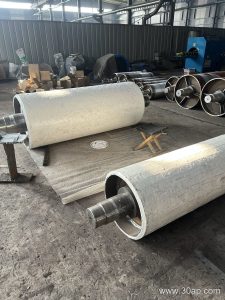
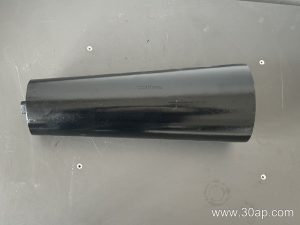
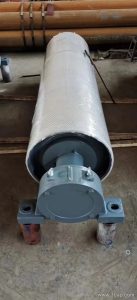
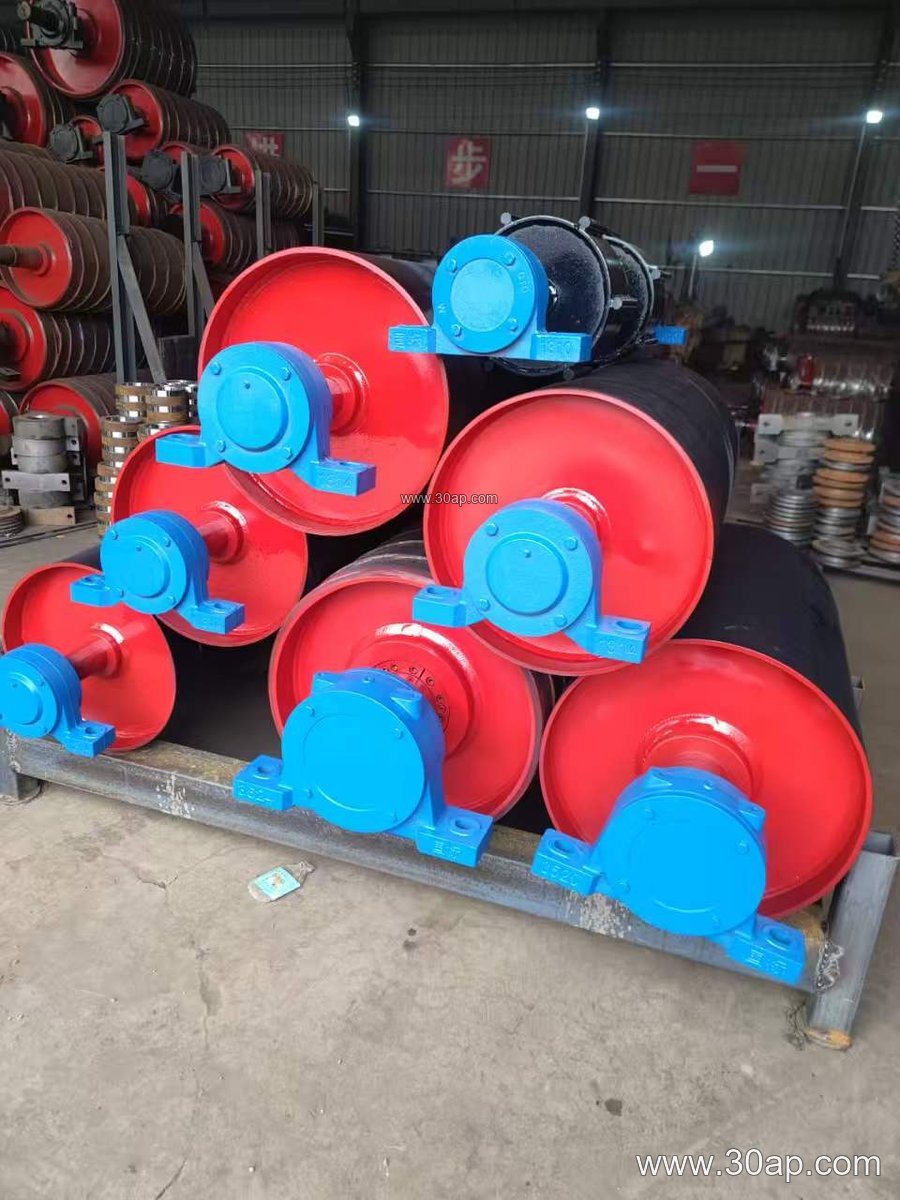
A high-friction lagged pulley is a conveyor pulley whose shell is covered with a rubber or ceramic layer that raises the coefficient of friction between the pulley face and the conveyor belt. In most installations this component serves as the drive pulley at the head of the conveyor, where it must transmit torque without slipping. The lagging is the working surface, so the quality of its bond and pattern matters as much as the shell itself. When buyers refer to a rubber-lagged drive pulley or a grip-enhanced head pulley, they are describing the same item.
The higher friction matters most on inclined conveyors, on machines that start under load, and on lines where the belt is exposed to water, dust, or fine slurry. In a sand and gravel plant, for example, a standard smooth drum may polish and lose grip, while a lagged face keeps the belt moving during wet starts.
Construction and Surface Options
The base is a welded steel shell with end discs and a shaft, machined so the lagging sits evenly. Rubber can be applied by hot vulcanization, cold bonding, or casting directly onto the shell. Ceramic tiles set in a rubber matrix are chosen where abrasive carryback is heavy.
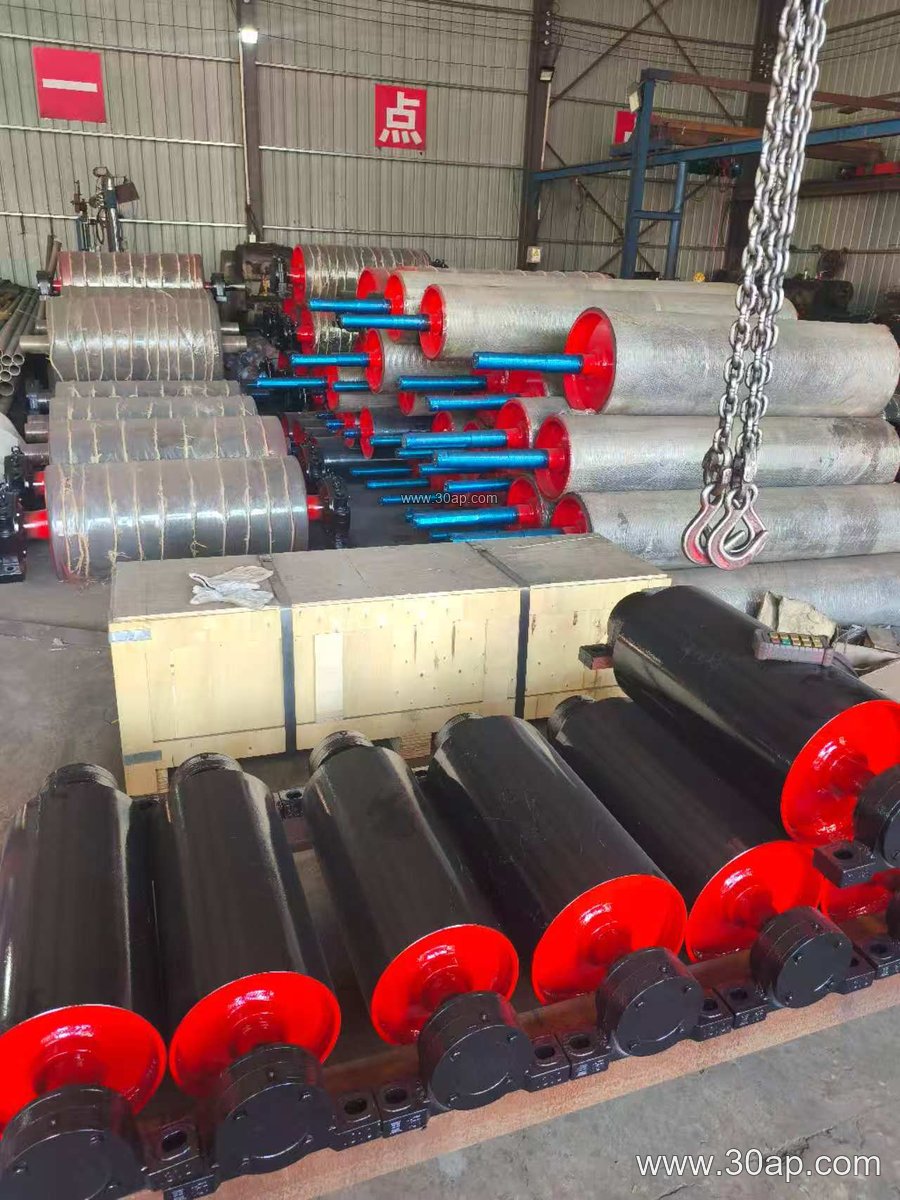
- Plain rubber lagging for general grip
- Diamond pattern for water drainage and moderate slip control
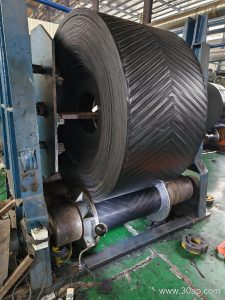
- Herringbone pattern for directional traction and self-cleaning
- Ceramic lagging for high-wear, high-torque duty
Common lagging thicknesses are 8, 10, 12, 15, and 20 mm. Thicker layers last longer but add weight and may require a larger diameter allowance. Surface pattern should follow the belt’s running direction; a herringbone face fitted backwards will not shed water as intended.
Matching Diameter and Face Width to the Belt
Face width is normally a little wider than the belt so the belt stays fully supported. Reference combinations include B800 with roughly 950 mm face, B1000 with about 1150 mm, and B1200 with around 1400 mm. Diameter is a separate decision driven by torque, belt tension, and wrap angle rather than belt width alone. Typical shells run from Ø200 up to Ø1800, and a mid-range drive might use B1200 × Ø1000 or B1400 × Ø800. Shaft diameter is sized from torque and bearing loads; common values range from Ø50 to Ø200, and belt width should never be used to guess a shaft size.
| Belt width | Typical face width | Example diameter pairing |
|---|---|---|
| B500 | about 600 mm | Ø315 or Ø400 |
| B650 | about 750 mm | Ø400 or Ø500 |
| B800 | about 950 mm | Ø500 or Ø630 |
| B1000 | about 1150 mm | Ø630 or Ø800 |
| B1200 | about 1400 mm | Ø800 or Ø1000 |
| B1400 | about 1600 mm | Ø800 or Ø1000 |
These are reference values, not fixed pairings. A long overland conveyor in a copper mine may need a larger diameter than a short feeder of the same width because the belt tension is higher.
Where It Fits on the Conveyor
The main subject here is the drive position, but the same lagged construction appears at the tail and at tensioning points where grip helps. A bend pulley, by contrast, only changes belt direction and usually carries a lighter load, so it is not a substitute for a drive pulley. A tail pulley may be lagged to reduce slip during startup, and a take-up pulley can be lagged to hold tension. Each position has its own load profile, so specify the duty when ordering.
Supporting hardware matters too. A rigid conveyor bracket keeps the pulley square to the belt, and worn idler roller bearings upstream can cause tracking faults that look like pulley slip. In a coal handling plant, misalignment at the drive is a frequent cause of edge damage that no amount of lagging will cure.
Buyer Checklist
- State the application and material, such as cement clinker, iron ore, or fertilizer.
- Give belt width, belt speed, motor power, and starting method.
- Confirm the required friction level and whether water or oil is present.
- Choose lagging type and thickness; 10 to 15 mm covers many drive duties.
- Provide shaft diameter, bearing centers, and keyway details from the drive design.
- Ask how the lagging is bonded and whether tiles are vulcanized or glued.
Inspect the lagging at each shutdown for grooves, glazing, and lifted edges. A worn face on a high-friction lagged pulley turns a reliable drive into a slipping one, and early replacement is cheaper than repeated belt damage.