What a Conveyor Support Leg Does
A conveyor support leg is the vertical member that carries the weight of a belt line down to the floor, foundation, or steel structure. In a typical frame, the leg stands under the stringer or cross beam, and the beam in turn holds the idler roller sets that support the conveyor belt. The leg looks simple, but it sets the height, level, and alignment of everything above it, so its design and installation matter more than its plain appearance suggests.
In industrial settings, the same component is often called a conveyor stand leg, conveyor frame leg, or belt conveyor support leg. These are equivalent names for the same structural part. It should not be confused with a conveyor bracket, which is the smaller fitting that connects an idler or a pulley to the frame, nor with a conveyor pulley such as a drive pulley, tail pulley, or bend pulley. Each of those parts has its own function and is not interchangeable with the leg.
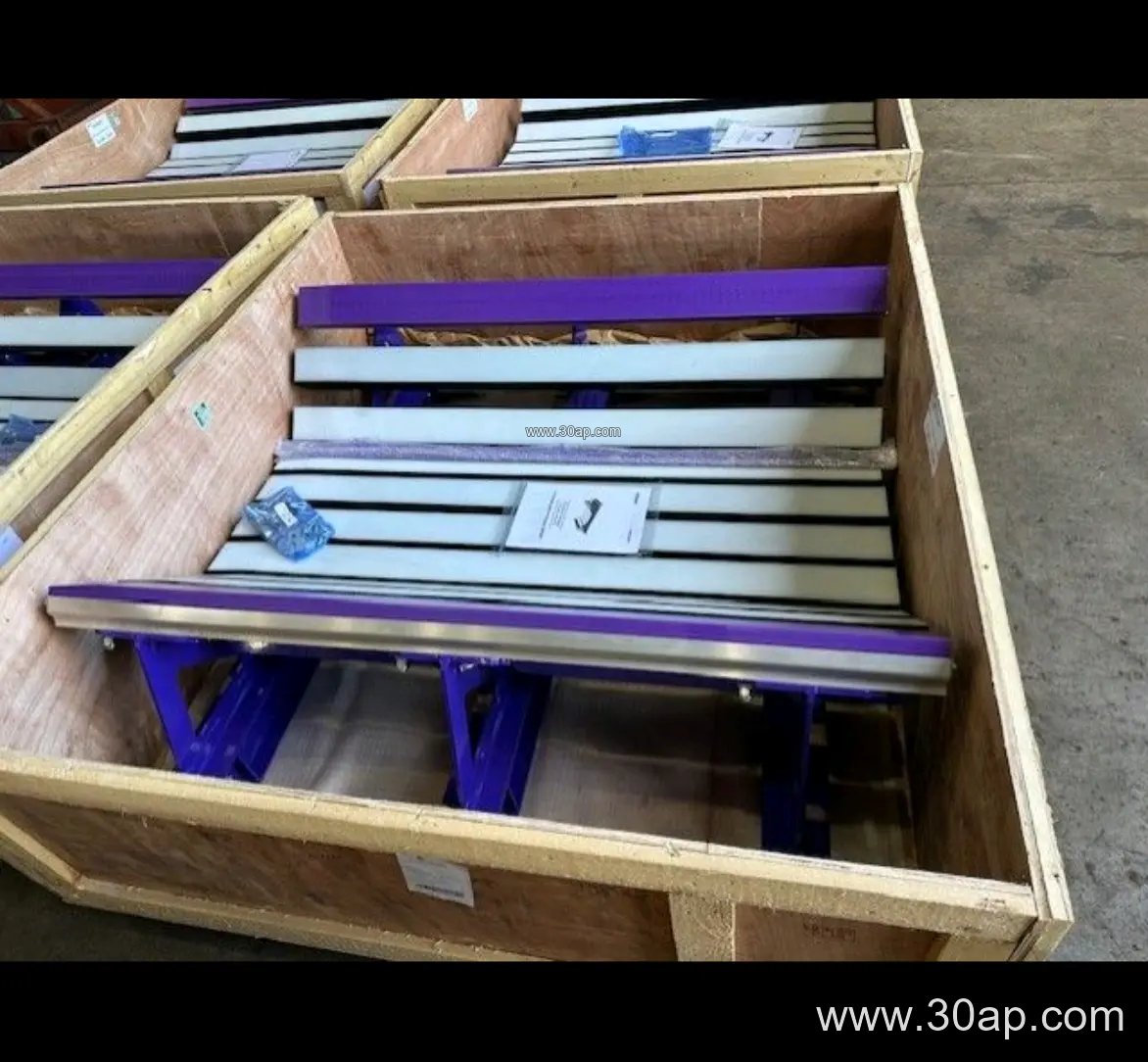
How the Leg Is Built
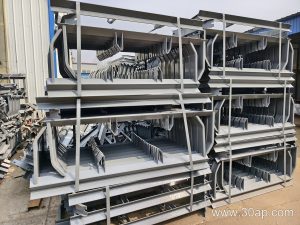
Most support legs are fabricated from structural steel. Common materials include angle steel, channel steel, and folded steel plate. The leg may be a single straight post, a pair of posts joined by a cross member, or an A-frame or T-frame arrangement, depending on the load and the width of the conveyor.
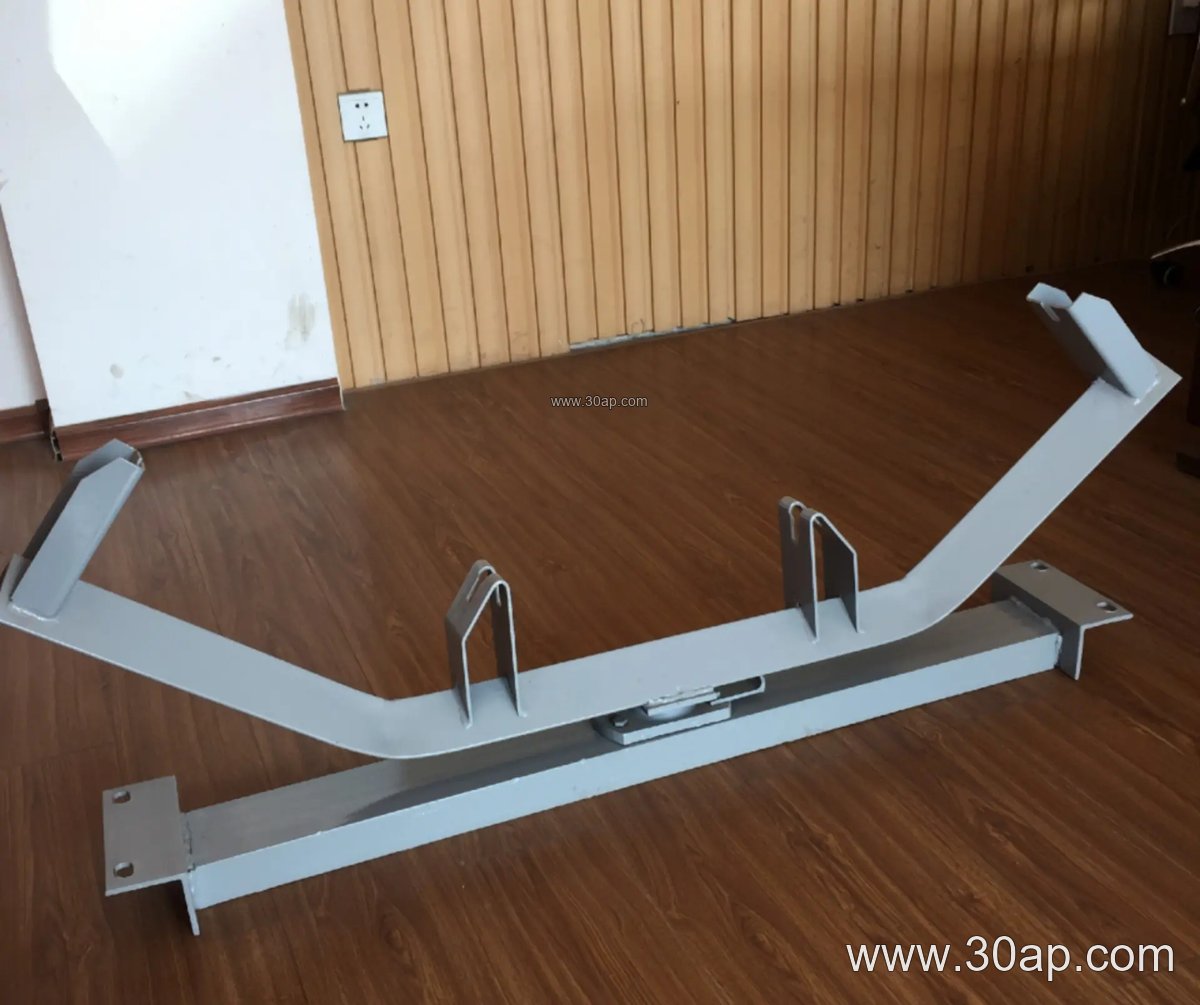
Key construction details usually include:
- Base plate with bolt holes for anchoring to concrete or to a steel base
- Top plate or connection flange for the stringer or cross beam
- Stiffening ribs or gussets where the leg meets the beam
- Slotted or multi-hole connections on adjustable versions
- Surface treatment such as painting or galvanizing for the site environment
Fixed legs are made to a set height. Adjustable support legs allow small changes in height and alignment during installation, which helps when the floor is uneven or when the line has to be leveled section by section. Installation hole spacing and cross beam length are determined by belt width and trough angle rather than being fixed numbers.
Where Support Legs Are Used
Support legs appear wherever a belt conveyor runs above ground level. In a limestone quarry or a crushing and screening line, they hold the inclined and horizontal sections that carry raw rock. In a coal preparation plant, they support belt lines that move coal between screens, crushers, and stockpiles. In a cement plant, they carry clinker and raw material conveyors, and in a power plant coal yard they keep the coal handling belt at the correct height for transfer points.
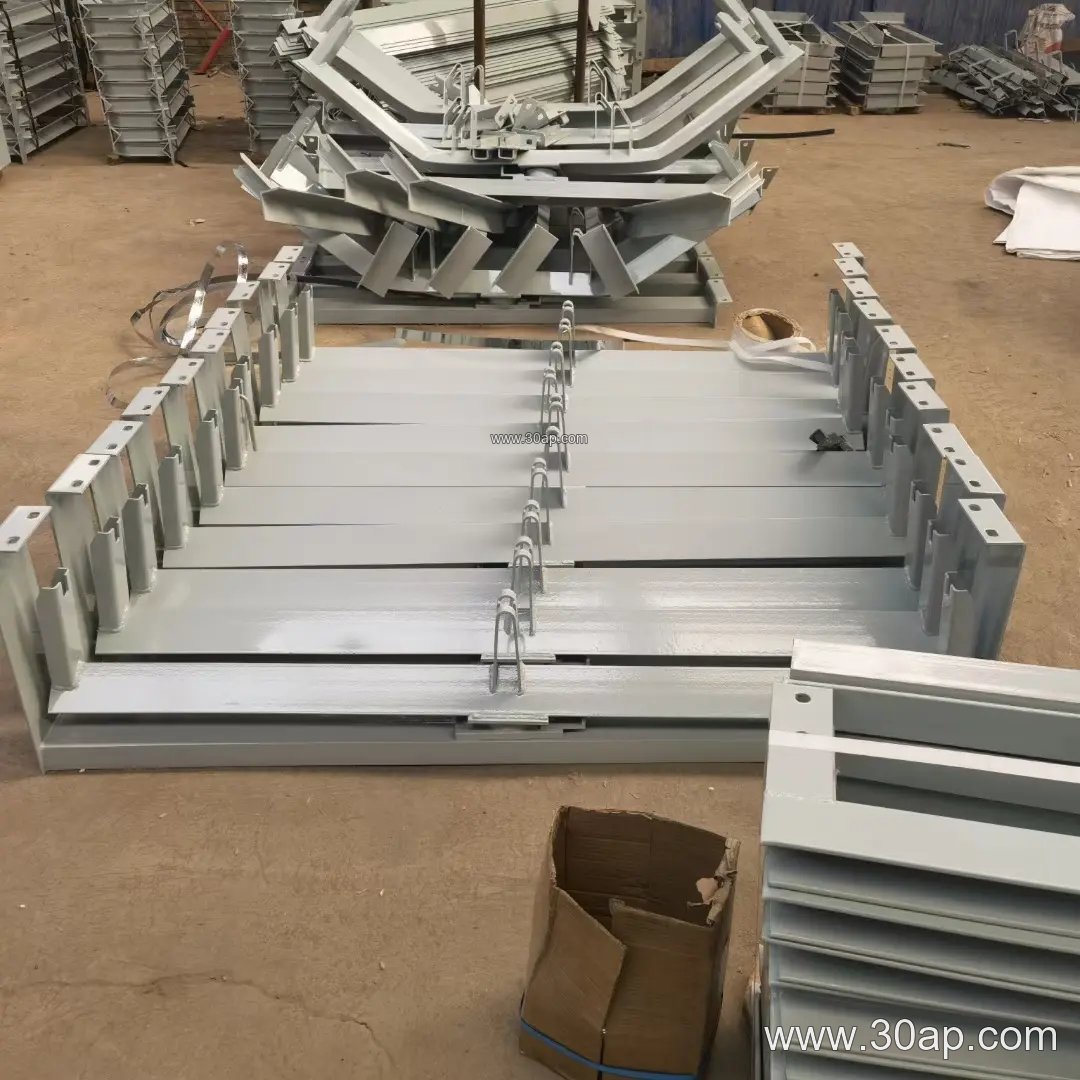
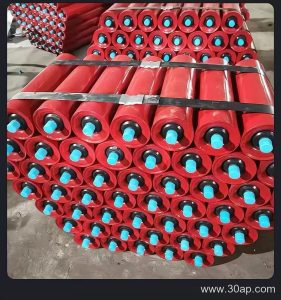
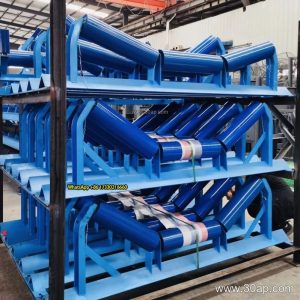
The leg works together with the idler roller, the conveyor bracket, and the belt itself. A stable leg keeps the idlers aligned, which in turn helps the belt track correctly. If a leg settles or leans, the whole frame above it may twist, and the belt may run off center.
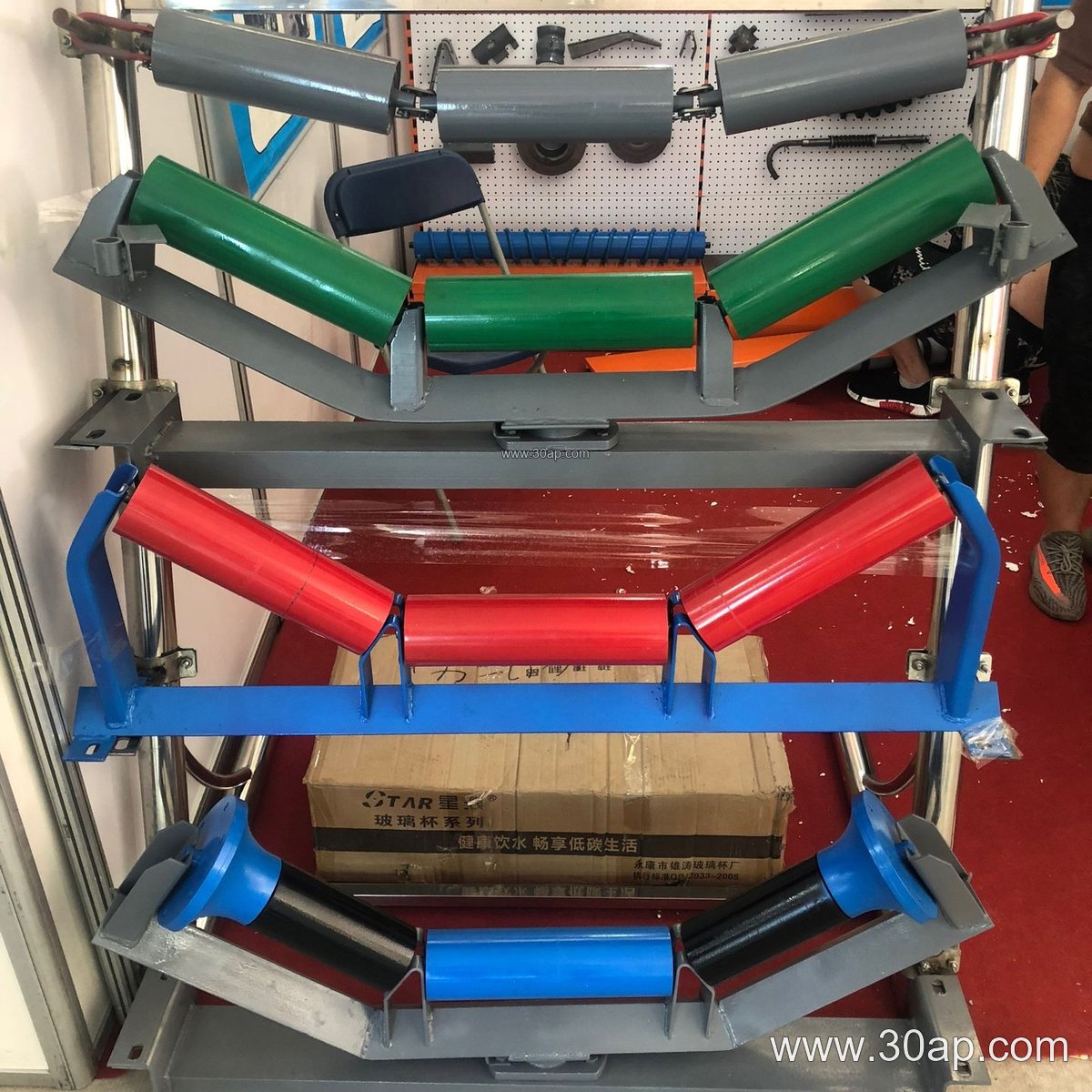
Matching the Leg to the Belt Line
Selection usually starts with the belt width, the loaded weight, and the spacing between support points. The table below shows typical reference combinations; these are examples, not fixed rules, and the final design should be confirmed against the actual conveyor layout.
| Belt width | Trough angle | Idler diameter | Typical leg application |
|---|---|---|---|
| B500 | 20 degrees | Ø89 | Light duty, short runs |
| B650 | 30 degrees | Ø89 | Small quarry or silo lines |
| B800 | 35 degrees | Ø108 | General bulk handling |
| B1000 | 35 degrees | Ø108 | Medium duty, cement or coal |
| B1200 | 45 degrees | Ø133 | Heavy bulk, crushing plants |
| B1400 | 45 degrees | Ø159 | High capacity main lines |
| B1600 and above | 45 degrees | Ø159 or Ø194 | Large tonnage, power plant coal |
The trough angle refers to the idler set above the leg, not to the leg itself. Adjustable legs may be used with trough angles between 20 and 45 degrees when the frame is designed for that range. A forward tilt of about 1.5 to 2 degrees is sometimes applied to idlers to help belt tracking, but this is an idler setting, not a leg function.
What Buyers Should Check
Before ordering, confirm the belt width, the required leg height, the cross beam length, and the hole spacing on the top and base plates. Ask whether the leg is fixed or adjustable, and check that the material thickness suits the load. For dusty or wet sites, confirm the surface treatment. Also confirm how the leg connects to the stringer and whether anchor bolts are included. A well chosen support leg is a small part of the conveyor, but it keeps the idler rollers, the belt, and the whole frame working together.