What a Port Belt Conveyor Pulley Does
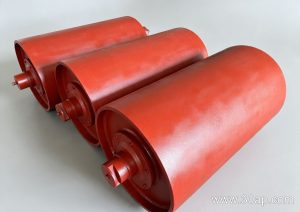
On a port bulk terminal, a belt conveyor pulley is the rotating drum that drives, tensions, or redirects the conveyor belt. The pulley itself is a simple assembly, but it sits at the center of every transfer point where ore, coal, or aggregate moves from ship unloaders to stockyard conveyors. A port belt conveyor pulley usually operates under continuous duty, salt air, and heavy belt tension, so its construction and surface treatment matter more than in a short in-plant line.
The same product is also called a conveyor pulley or drum pulley. Drive, tail, and bend pulleys are not interchangeable names; they describe different positions and duties on the same conveyor.
How the Pulley Is Built
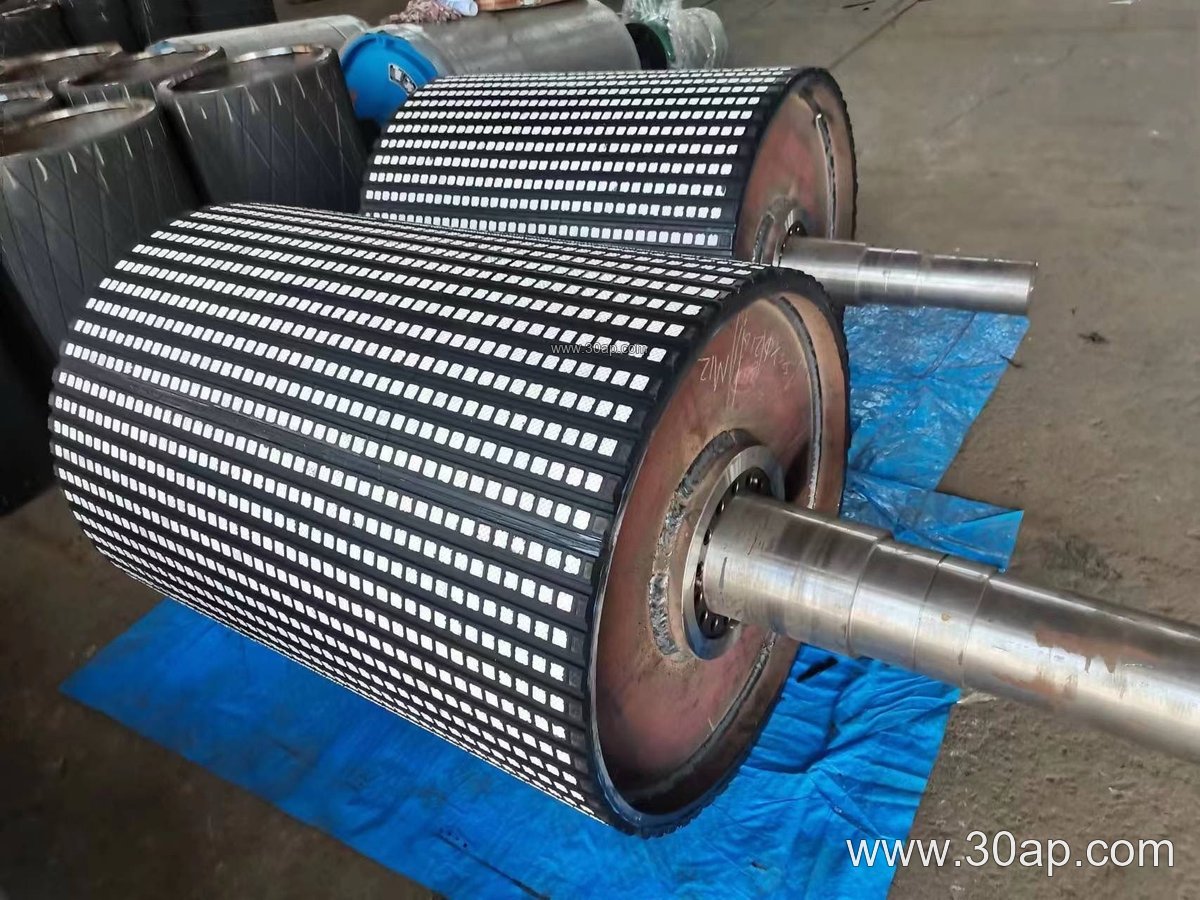
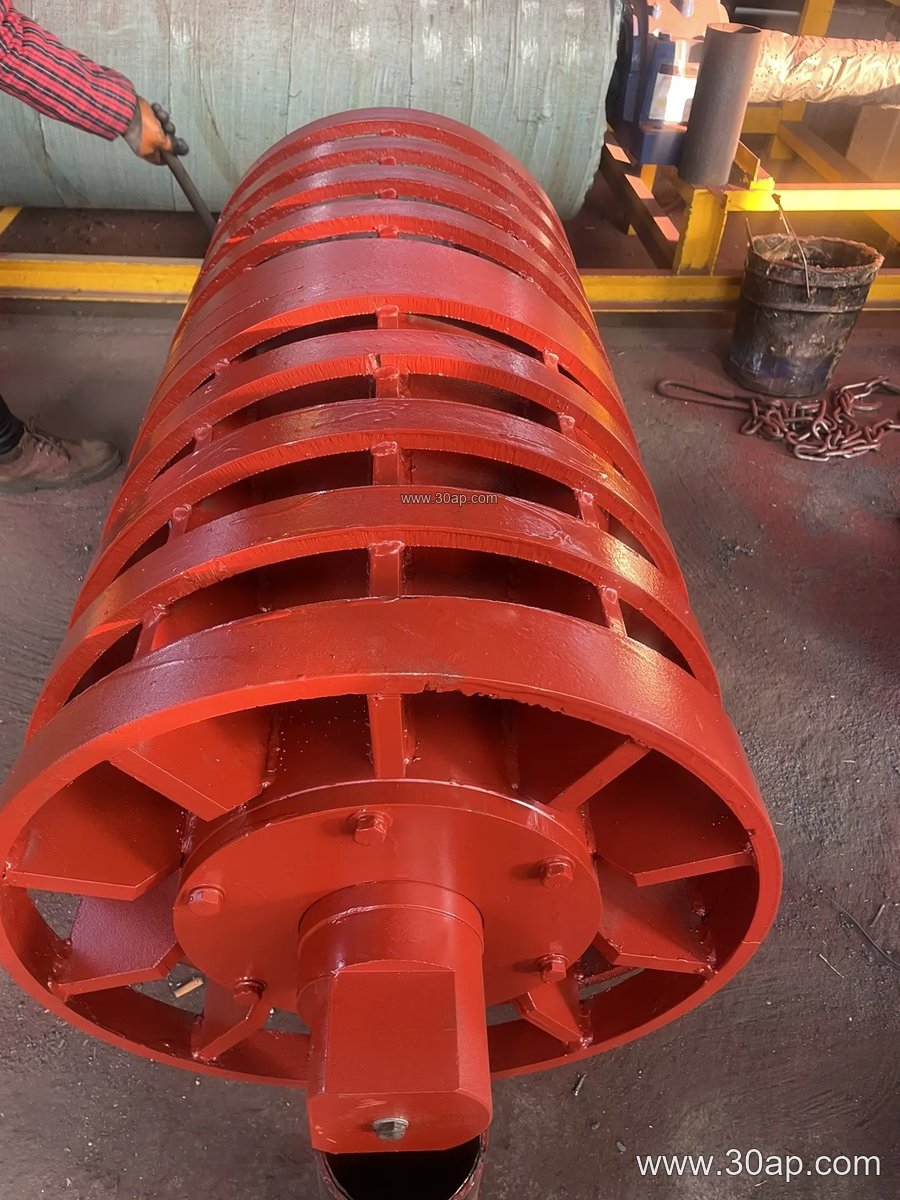
A typical unit consists of a cylindrical shell, two end discs, a shaft, and bearing housings mounted on a conveyor bracket. The shell is usually rolled steel; the shaft is sized by torque and radial load, not by belt width alone. Common shaft diameters include Ø80, Ø100, Ø120, Ø140, and Ø160 mm, but the final value follows the drive calculation.
Surface form is chosen to match the duty. A drive pulley often carries cast rubber, cold-bonded rubber, hot-vulcanized rubber, diamond grooving, herringbone grooving, or ceramic lagging to raise friction. A tail or bend pulley may run plain or with a thin rubber cover. Lagging thickness commonly ranges from 8 mm to 20 mm.
Common Reference Dimensions
The table below shows typical combinations seen in port and stockyard projects. These are reference data, not fixed matches; one belt width can work with several pulley diameters.
| Belt width | Usual pulley face width | Example diameter | Example shaft |
|---|---|---|---|
| B800 | about 950 mm | Ø500 mm | Ø100 mm |
| B1000 | about 1150 mm | Ø630 mm | Ø120 mm |
| B1200 | about 1400 mm | Ø1000 mm | Ø140 mm |
| B1400 | about 1600 mm | Ø800 mm | Ø160 mm |
| B1600 | about 1800 mm | Ø1250 mm | Ø180 mm |
Pulley diameters commonly fall between Ø200 mm and Ø1800 mm. Face width is normally slightly wider than the belt so the belt stays centered. A B650 belt often uses about a 750 mm face; a B2000 belt may use about 2200 mm.
Where It Fits in the Terminal
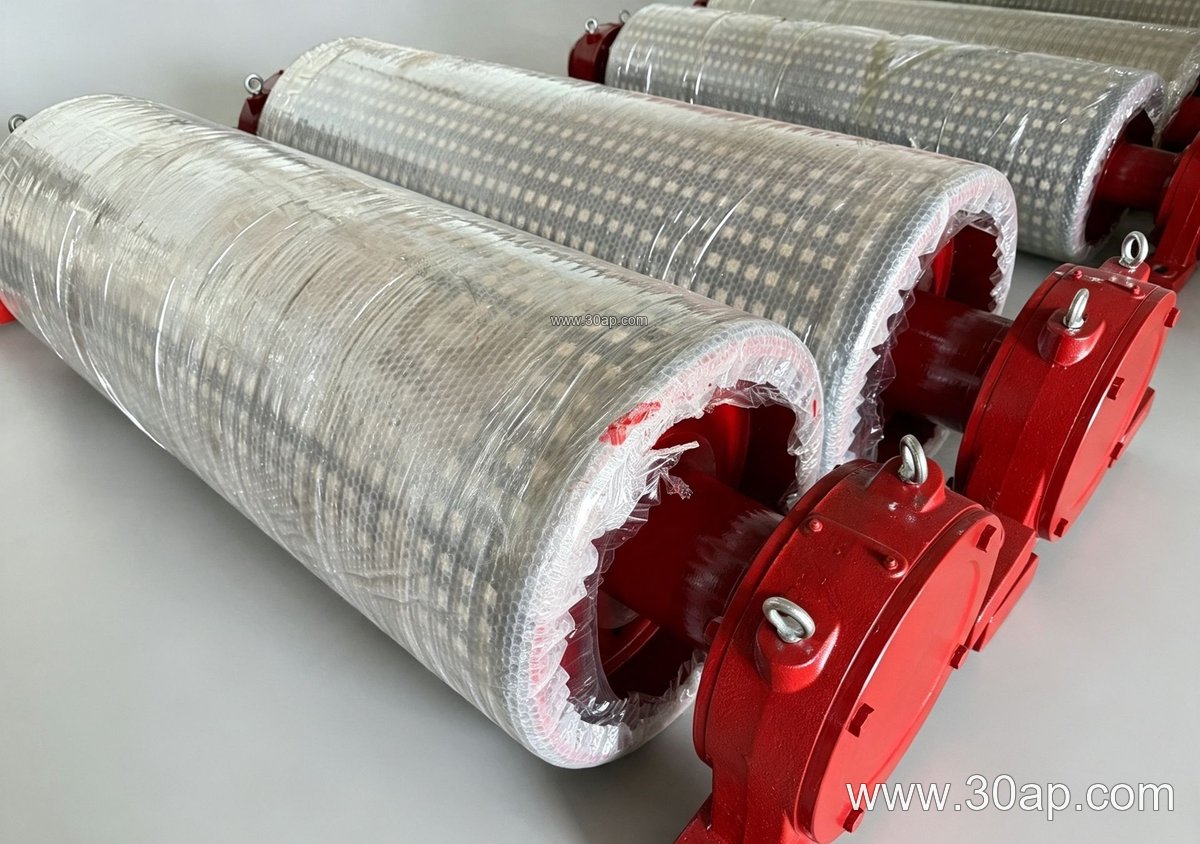
In a coal washing plant or a port stockyard, the drive pulley is placed at the head of the conveyor, while the tail pulley returns the belt at the loading end. Bend pulleys guide the belt around take-up systems, and a snub pulley increases wrap angle on the drive. Each position calls for a different check: the drive needs friction and torque capacity, the tail needs self-cleaning geometry, and the bend pulley needs a compact bearing arrangement.
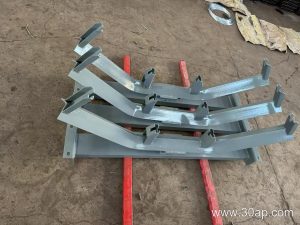
The pulley works together with the conveyor belt, idler roller, and conveyor bracket. Misalignment between these parts is a frequent cause of edge wear and tracking problems.
What Buyers Should Check
- Confirm the actual belt width, belt speed, and starting torque before choosing a diameter.
- State the lagging type and thickness for the drive position; plain finish is often enough elsewhere.
- Ask for the shaft diameter calculation, not just a catalog number.
- Check bearing housing seals for dusty or coastal conditions.
- Keep spare lagging and fasteners for high-wear transfer points.
A well-matched port belt conveyor pulley keeps the belt tracking straight and reduces downtime at the busiest part of the terminal.