What a Trough Idler Does on a Conveyor
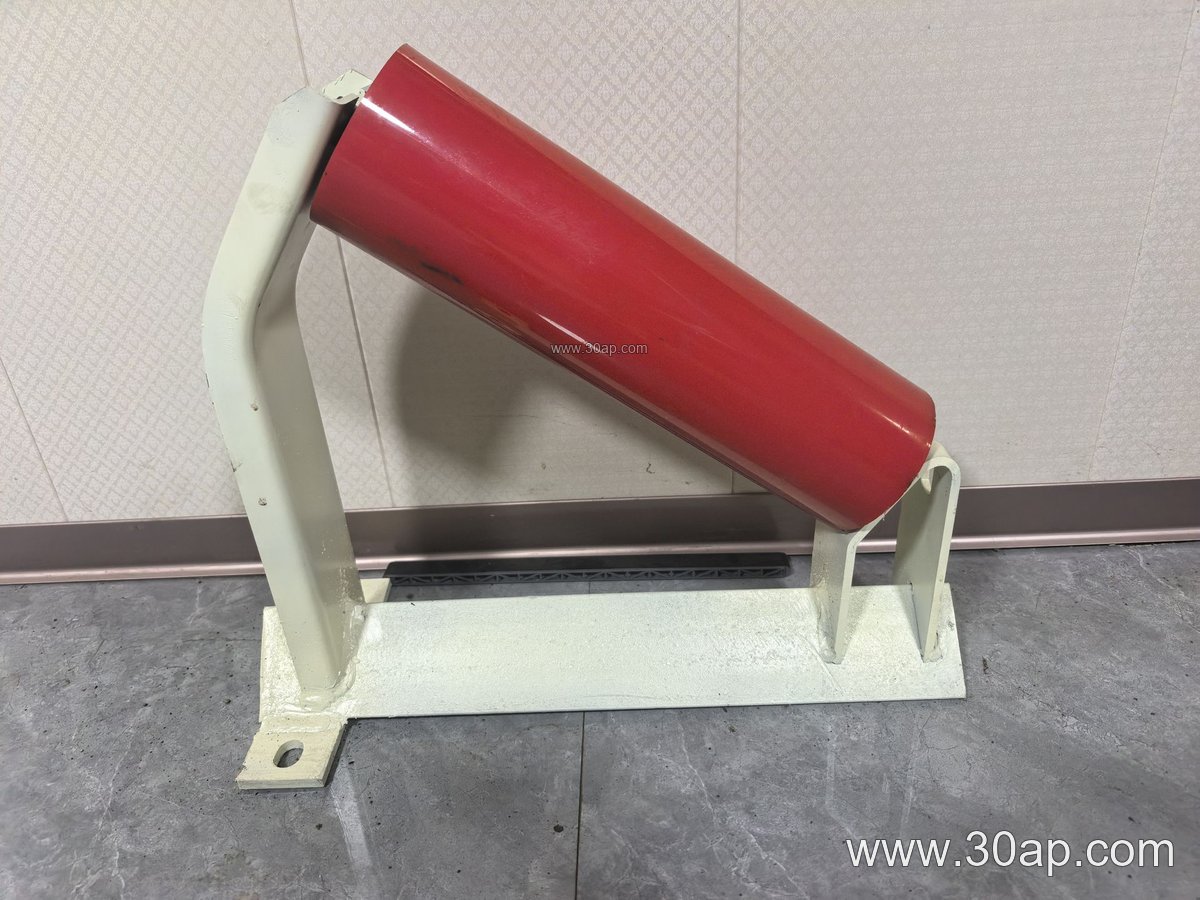
A trough idler is the carrying component that shapes a flat conveyor belt into a trough, helping keep bulk material centered and reducing spillage along the line. In a typical three-roll trough idler set, the side rolls are angled upward while the center roll stays relatively flat, so the belt forms a channel. This arrangement is common in quarry, limestone, and aggregate operations where uneven loads can push a belt off track.
Unlike a drive pulley or tail pulley, which transmit power and change belt direction, a trough idler only supports the belt and material. It is not a substitute for a bend pulley or any other conveyor pulley. The idler works together with the conveyor bracket and frame to maintain belt alignment and reduce wear on the conveyor belt.
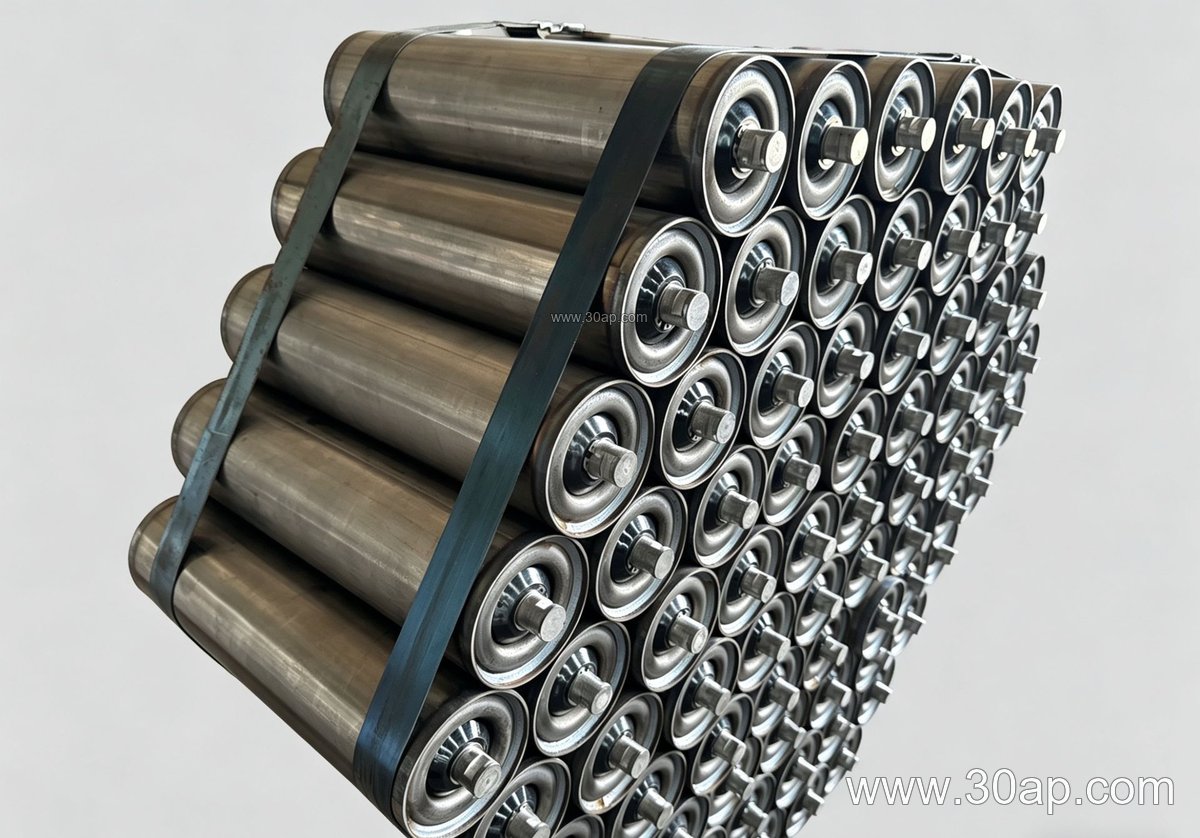
Construction and Common Configurations
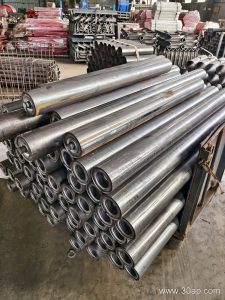
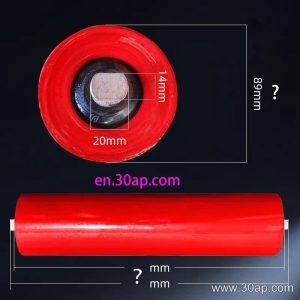
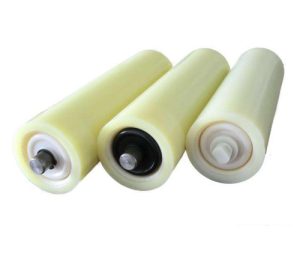
Most trough idlers use a steel tube shell with sealed bearings at each end. Roll diameters commonly range from Ø63 to Ø219, and the choice depends on belt width, load, and speed. Bearing sizes such as 6204, 6205, 6305, 6306, 6308, and 6310 appear across different roll diameters; a given bearing is not tied to one shell size.
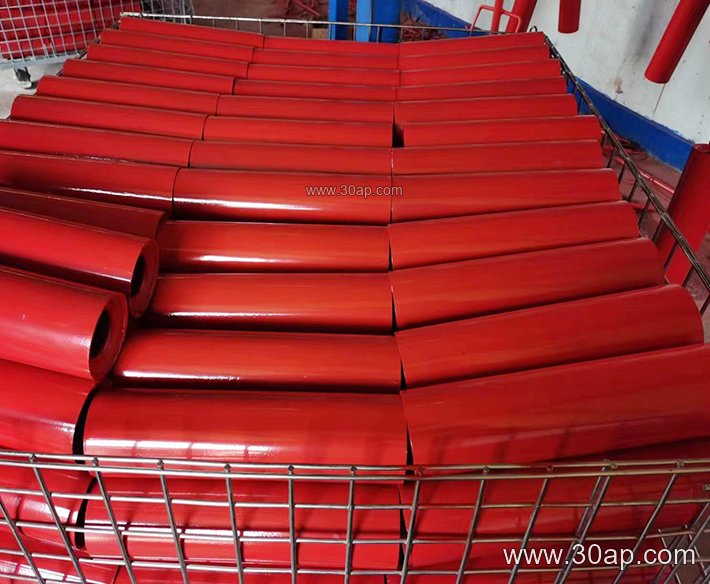
Trough angle affects how deep the belt sits in the idler set. Common trough angles are 20, 30, 35, and 45 degrees. A 35-degree three-roll set is widely used in aggregate and cement plants, while a 45-degree set may suit higher capacities where material containment is critical. The idler roll length varies with belt width and trough angle; for a three-roll set, common center roll lengths are approximately 200 mm for B500, 250 mm for B650, 315 mm for B800, 380 mm for B1000, 465 mm for B1200, 530 mm for B1400, 600 mm for B1600, 670 mm for B1800, and 750 mm for B2000. Side rolls can differ from the center roll, so these are reference examples, not fixed pairings.
Common Trough Idler Reference Data
| Parameter | Common Range or Example |
|---|---|
| Roll diameter | Ø63, Ø76, Ø89, Ø102, Ø108, Ø127, Ø133, Ø159, Ø178, Ø194, Ø219 |
| Belt width | B400 to B2400 |
| Trough angle | 20°, 30°, 35°, 45° |
| Roll surface | Steel tube, nylon, ceramic, rubber ring |
| Bearing | 6204, 6205, 6305, 6306, 6308, 6310 |
| Idler set form | Single roll, two-roll, three-roll trough |
Where Trough Idlers Are Used
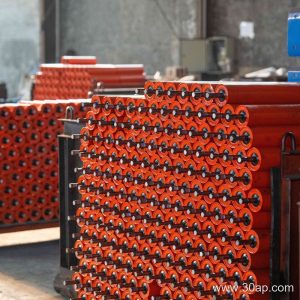
In a coal washing plant or power station coal yard, trough idlers support the conveyor belt on the carrying side, keeping coal from spilling as it moves from stockpile to bunker. In a sand and gravel line, three-roll trough idlers with steel or rubber-covered rolls handle abrasive aggregate. A cement plant may use a 35-degree trough idler set on clinker and raw meal conveyors, while a limestone mine might choose a 45-degree set for higher surcharge angles.
For comparison, a return idler supports the empty belt on the return side and does not shape the belt into a trough. A buffer idler is used at loading points to absorb impact, but it is a different subtype and not a replacement for the standard carrying trough idler. Matching the idler type to the conveyor section is important; a trough idler belongs on the carrying run, not on the return run where a flat or V-return idler is typical.
Buyer Checklist for Trough Idlers
- Confirm belt width and trough angle before selecting roll length; do not assume one belt width matches only one pulley diameter.
- Check the idler roll diameter and bearing size against the load and speed of the conveyor, not just the belt width.
- Specify the roll surface: steel tube for general service, rubber ring for impact or noise reduction, ceramic or nylon where wear or material build-up is a concern.
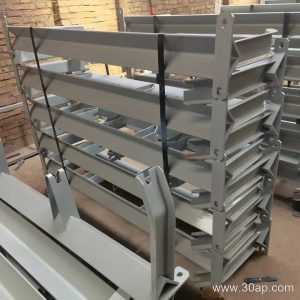
- Verify that the conveyor bracket and frame dimensions match the idler set, especially the shaft ends and fixing centers.
- Ask for the idler set form (single, two-roll, or three-roll trough) and confirm side roll angles if the application requires a specific trough profile.
- Consider environmental conditions such as dust, moisture, and temperature when choosing seals and bearing protection.
Properly selected trough idlers help extend conveyor belt life and keep material moving smoothly in mining, cement, power, and aggregate operations. Use the reference values above as a starting point, and confirm final dimensions with the conveyor design.