What an EP Rubber Conveyor Belt Is
An EP rubber conveyor belt is a textile-reinforced rubber belt built around polyester warp and nylon weft fabric, usually called EP fabric. This carcass gives the belt high tensile strength, low elongation under load, and good resistance to fatigue, which is why EP belts are common in mines, coal preparation plants, cement works, power stations, and sand and gravel yards. The product is often written as an EP conveyor belt or polyester-nylon rubber belt, and both names describe the same construction.
The rubber covers protect the carcass from abrasion, moisture, and impact, while the fabric layers carry the tension between the drive pulley and tail pulley. This division of labour is the core design idea behind the EP rubber conveyor belt.
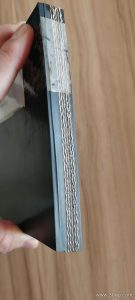
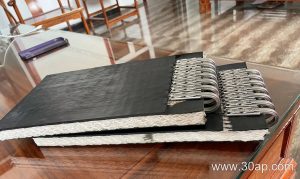
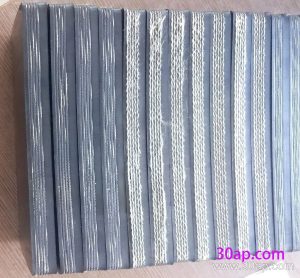
How the Belt Is Built
A typical EP belt contains two to six fabric plies, with rubber skim between them, a top cover, and a bottom cover. Cover thickness is usually quoted as a pair, for example 4+2 mm or 6+2 mm, where the first figure is the carrying side and the second is the pulley side. Heavier duty installations often use 8+3 mm covers for lumpy, sharp, or hot material.
- Polyester warp gives low stretch and stable tracking.
- Nylon weft gives flexibility and resistance to impact and tearing.
- Skim rubber bonds the plies and resists ply separation.
- Top and bottom covers protect against wear, oil, heat, or flame as required.
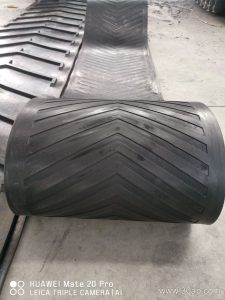
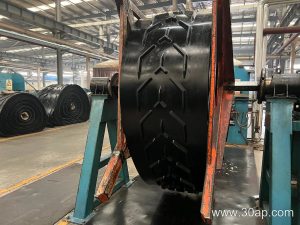
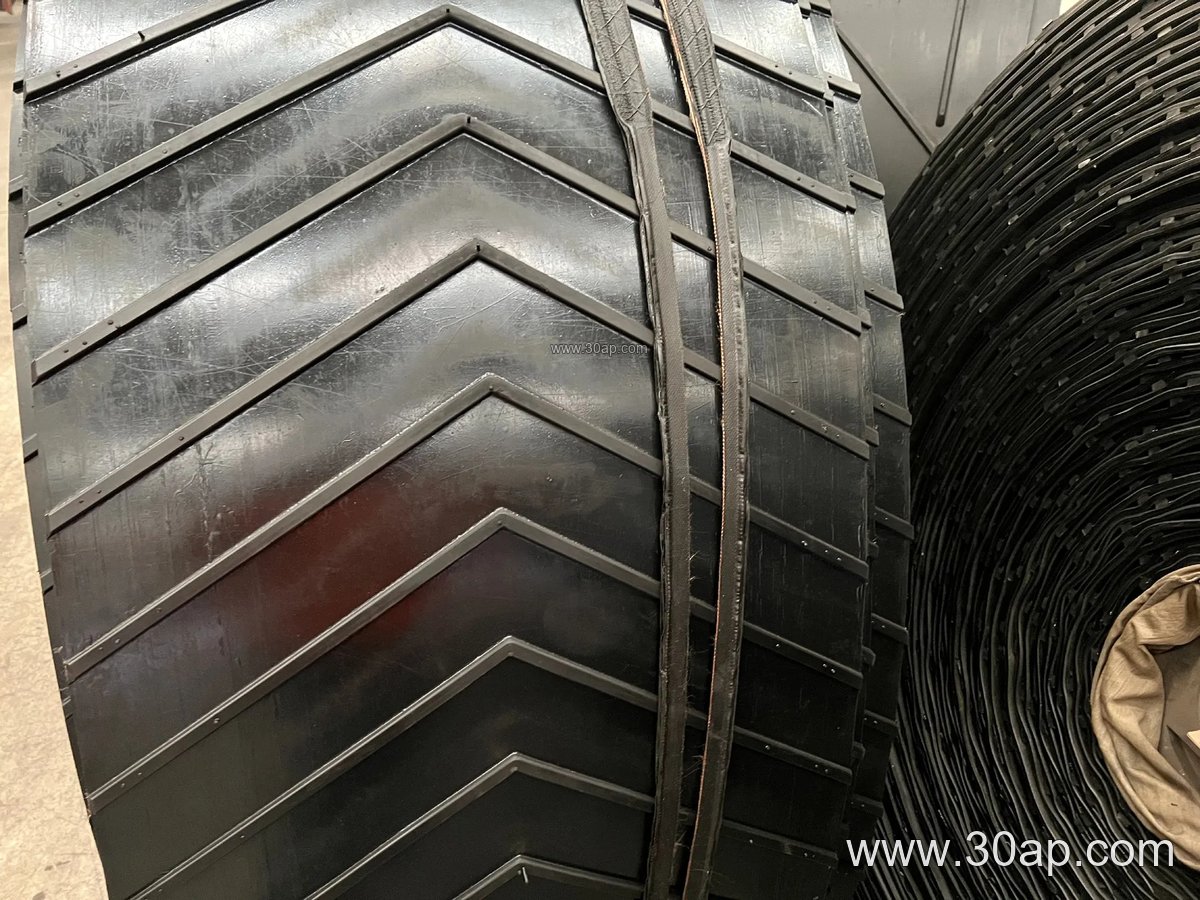
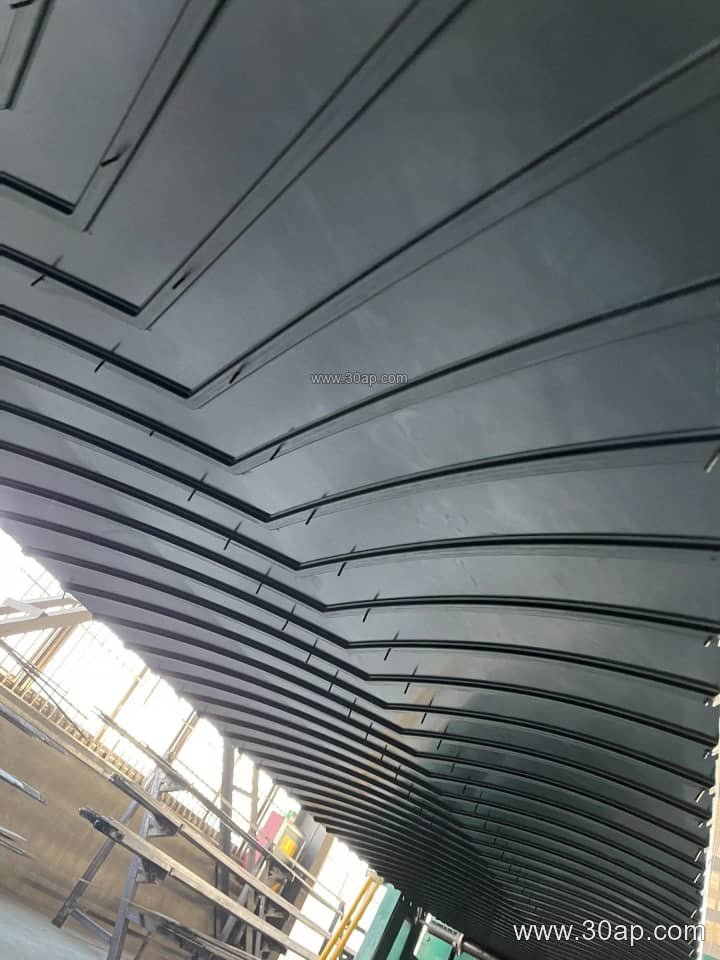
Special grades add resistance to heat, oil, flame, antistatic conditions, cold, or acid and alkali exposure. Patterned surfaces such as chevron or cleated profiles help on inclines where material would otherwise slide back.
Common Strength Grades and Widths
EP belts are usually ordered by nominal tensile strength per unit width and by belt width. The figures below are common reference values, not fixed supply promises; the final specification depends on the conveyor design, material, and duty.
| Property | Common reference values |
|---|---|
| Strength grades | EP200, EP315, EP400, EP500, EP630, EP800, EP1000, EP1250, EP1600, EP2000 |
| Belt widths | B500, B650, B800, B1000, B1200, B1400, B1600, B1800, B2000 |
| Cover combinations | 3+1.5, 4+2, 5+2, 6+2, 8+3 mm |
| Carcass plies | Usually 2 to 6 layers |
Belt width and pulley diameter are separate design decisions. A wider belt does not automatically dictate a particular drive pulley size, and shaft dimensions must be calculated from the actual load, torque, and pulley design rather than guessed from belt width alone.
Where EP Belts Are Used
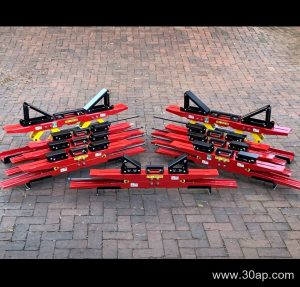
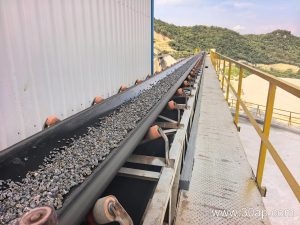
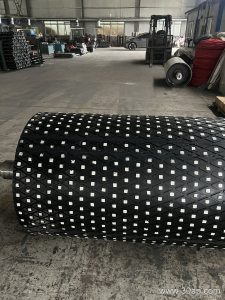
These belts suit long horizontal runs and moderate inclines in mining, coal handling, cement clinker transport, power plant coal yards, and aggregate plants. They work alongside conveyor pulleys, idler rollers, and conveyor brackets that support and guide the belt. The drive pulley transmits motion, the tail pulley returns the belt, and bend pulleys change its path; these roles are not interchangeable, and each pulley type is selected for its own function.
For very high tension or long overland routes, steel cord belts may be compared with EP belts, but the EP construction remains the practical choice where flexibility, spliceability, and moderate cost matter.
Buyer Checklist
- Confirm the required strength grade and number of plies for the actual load.
- Match cover thickness and rubber grade to the material: abrasive, oily, hot, or wet.
- Check belt width against the conveyor frame and existing idler rollers.
- Ask about splice type, since fabric belts are usually spliced on site.
- Review pulley and bracket dimensions with the conveyor designer before ordering.
Routine checks of cover wear, edge damage, and splice condition extend service life. Keeping idler rollers turning freely and pulleys aligned reduces uneven wear on the EP rubber conveyor belt.