What a Heavy-Duty Welded Pulley Is
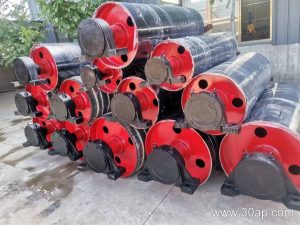
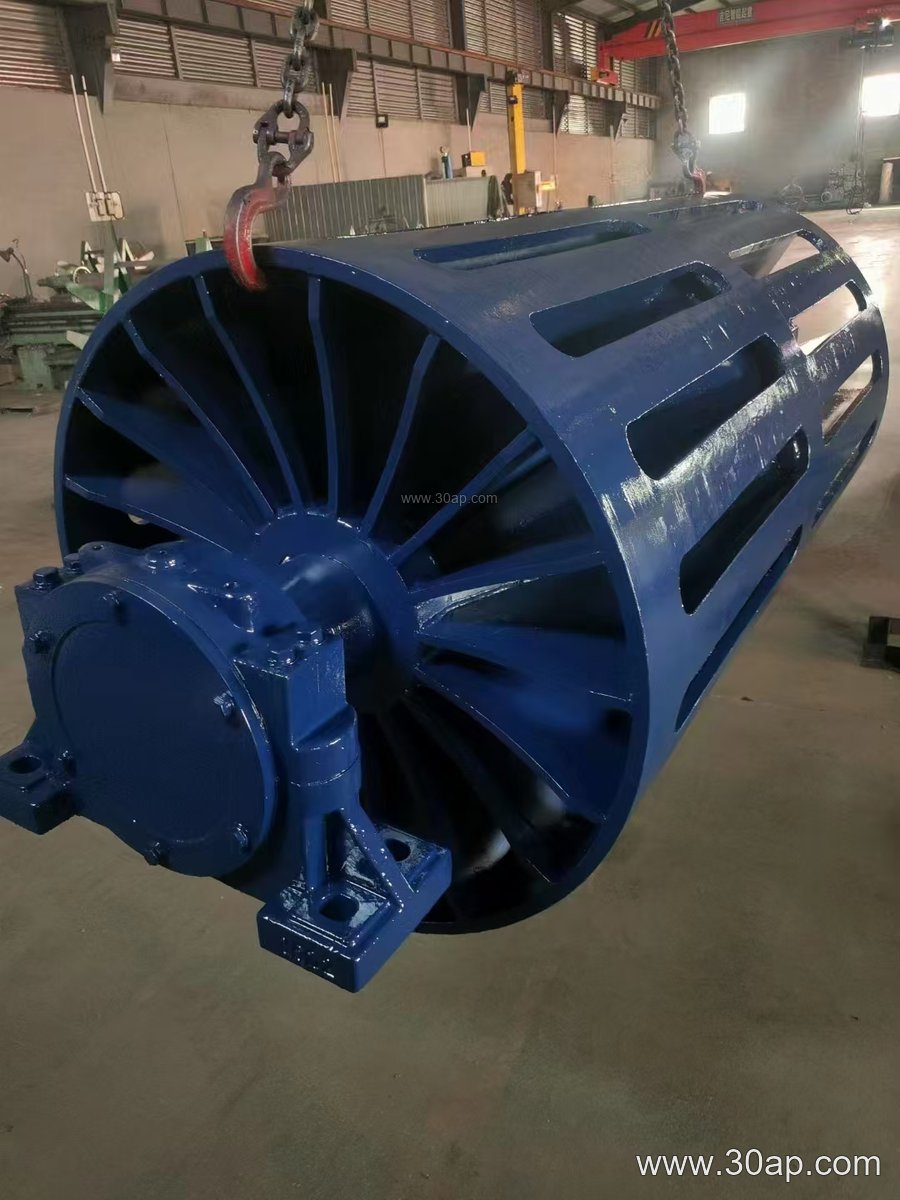
A heavy-duty welded pulley is a conveyor pulley built from rolled steel shell sections joined by continuous welds, with end discs and a shaft assembly designed for high radial and axial loads. In the field it is often simply called a welded drum or conveyor pulley. Unlike a light fabricated roller, this construction is intended for abrasive, high-tonnage duties where a cast or thin-wall alternative may not hold up. The shell, hubs, and shaft are typically normalized after welding to relieve stress before machining, which helps keep the pulley round under load.
It is a distinct component from a drive pulley, tail pulley, or bend pulley. Those names describe the pulley’s job in the conveyor, not its manufacturing method. A welded pulley can serve in any of those positions when the duty calls for it.
How the Welded Construction Comes Together
Production usually starts with a rolled steel shell, sized to suit the belt width and the required face length. End plates are machined with a bore for the shaft and welded to both ends. The shaft is pressed or keyed into the hubs and secured, then the whole unit is finish-machined so the outside diameter and face run true. Dynamic balancing follows for higher-speed or large-diameter units.
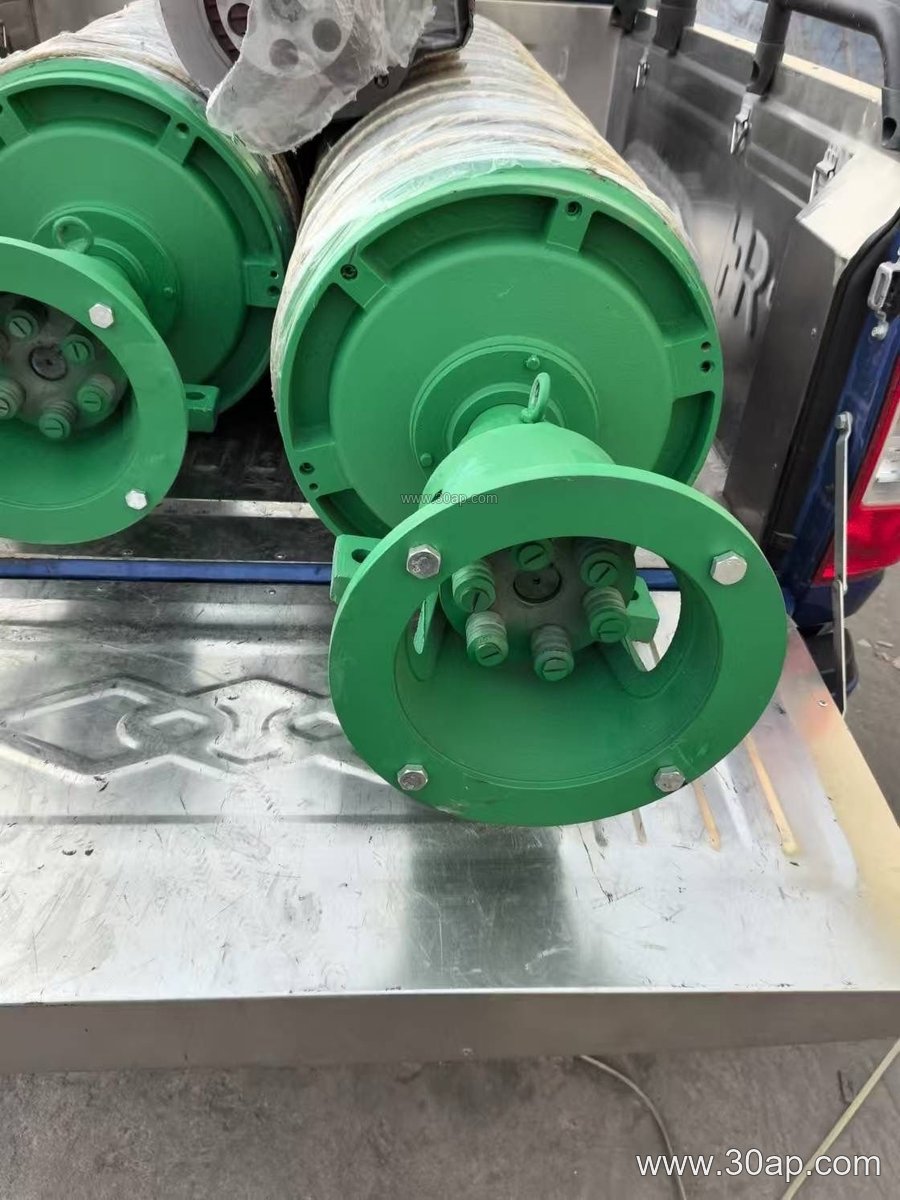
Common face widths run wider than the belt they carry, so material does not spill at the edges. Typical pairings include B650 with a roughly 750 mm face, B800 near 950 mm, and B1200 around 1400 mm. These are reference proportions, not fixed rules.
Surface Options and Grip
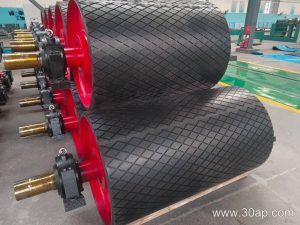
The shell surface is chosen for traction and wear. Plain steel suits non-drive positions. Rubber lagging is common on driving and braking pulleys. Available forms include plain rubber, diamond lagging, herringbone lagging, ceramic lagging, cold-bonded rubber, and hot-vulcanized rubber. Lagging thickness is often 8, 10, 12, 15, or 20 mm, selected by the slip risk and the abrasive nature of the material.
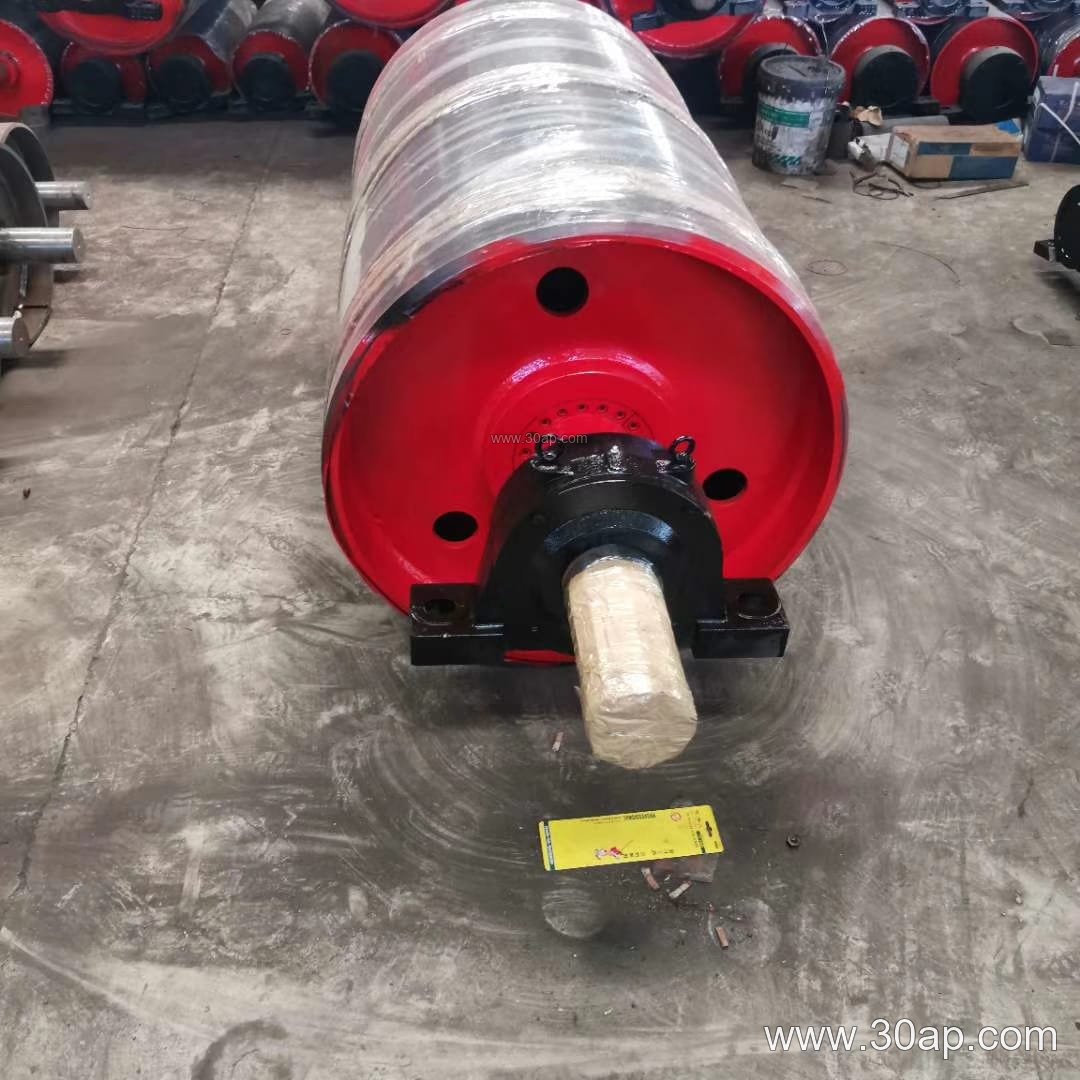
Diamond and herringbone patterns help shed water and fines, which matters in wash plants and wet-process circuits. Ceramic tiles add grip where oil or fine slurry reduces friction.
Diameters and Shaft Sizes
Diameter is set by belt tension, wrap angle, and the number of plies or steel cords in the belt. Common sizes include Ø200, Ø250, Ø315, Ø400, Ø500, Ø630, Ø800, Ø1000, Ø1250, Ø1400, Ø1600, and Ø1800. A B800 × Ø500 unit is a modest drive or tail size, while B1200 × Ø1000 and B1400 × Ø800 suit heavier mainline duty. No single belt width locks you into one diameter.
Shaft diameter follows torque and bearing load, not belt width alone. Common shaft sizes are Ø50, Ø60, Ø70, Ø80, Ø90, Ø100, Ø120, Ø140, Ø160, Ø180, and Ø200. Final sizing should come from the conveyor design calculation, for example P = (qb + qm) x g x L / 2 for the power requirement on a simple profile.
| Belt Width | Typical Face Width | Example Diameter | Example Shaft |
|---|---|---|---|
| B650 | ~750 mm | Ø400 | Ø80 |
| B800 | ~950 mm | Ø500 | Ø100 |
| B1200 | ~1400 mm | Ø1000 | Ø140 |
| B1400 | ~1600 mm | Ø800 | Ø160 |
Treat these as reference combinations. The actual selection depends on the belt, load, and starting torque.
Where It Fits in the Plant
These pulleys appear in primary crushing circuits at a limestone quarry, in coal handling at a power station, and in clinker transport at a cement works. They also turn up in iron ore beneficiation, sand and gravel lines, and port bulk terminals. In these settings they work alongside the conveyor belt, idler roller, and conveyor bracket, and they must tolerate dust, moisture, and continuous running.
A drive pulley transmits torque and needs lagging. A tail pulley redirects the belt and may run plain. A bend pulley changes direction without driving. The welded heavy-duty version is used wherever those duties involve high tension or shock loading.
What Buyers Should Check
- Confirm the duty position: drive, tail, bend, take-up, or snub.
- Match face width to belt width with a small margin.
- Choose lagging type and thickness for the material and moisture.
- Verify shaft diameter from the torque calculation, not from belt width.
- Ask about balancing, weld inspection, and runout tolerance.
- Check bore and keyway dimensions against the gearbox or bearing housing.
A well-built welded pulley should arrive round, balanced, and ready to mount. Buyers who compare the shell thickness, weld quality, and lagging bond will usually get longer service in abrasive, high-load conveyors.