What a Rubber Idler Does on a Conveyor
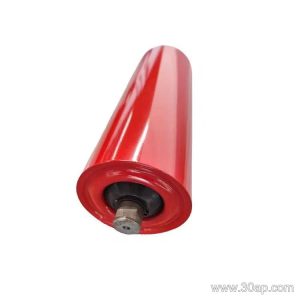
A rubber idler is a carrying or returning roller whose outer surface is covered with a rubber layer, often in the form of rubber rings or a rubber sleeve. It supports the conveyor belt, keeps it tracking, and absorbs some of the impact and noise that occur when bulk material drops onto the belt. In a quarry or a coal-fired power plant, the difference between a steel roller and a rubber idler is easy to hear and feel: the rubber version runs quieter and cushions the belt at transfer points.
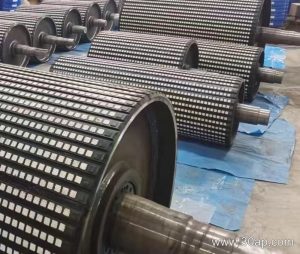
The product is still a roller, not a pulley. Drive pulleys, tail pulleys and bend pulleys transmit power or change belt direction; a rubber idler only supports and guides. It is normal to see several idlers under one conveyor pulley, but they do different jobs and are not interchangeable.
How It Is Built
A typical rubber idler starts with a steel tube body. The tube is fitted with bearing housings, a shaft, and a sealing arrangement. Rubber rings or a rubber cover are then pressed or bonded onto the shell. Common tube diameters include Ø89, Ø108, Ø133, Ø159 and Ø194, and bearings such as 6204, 6205, 6305, 6306, 6308 or 6310 may be used depending on load and speed. None of these figures form a fixed pairing: one bearing size can serve more than one roller diameter, and one belt width can accept more than one pulley diameter.
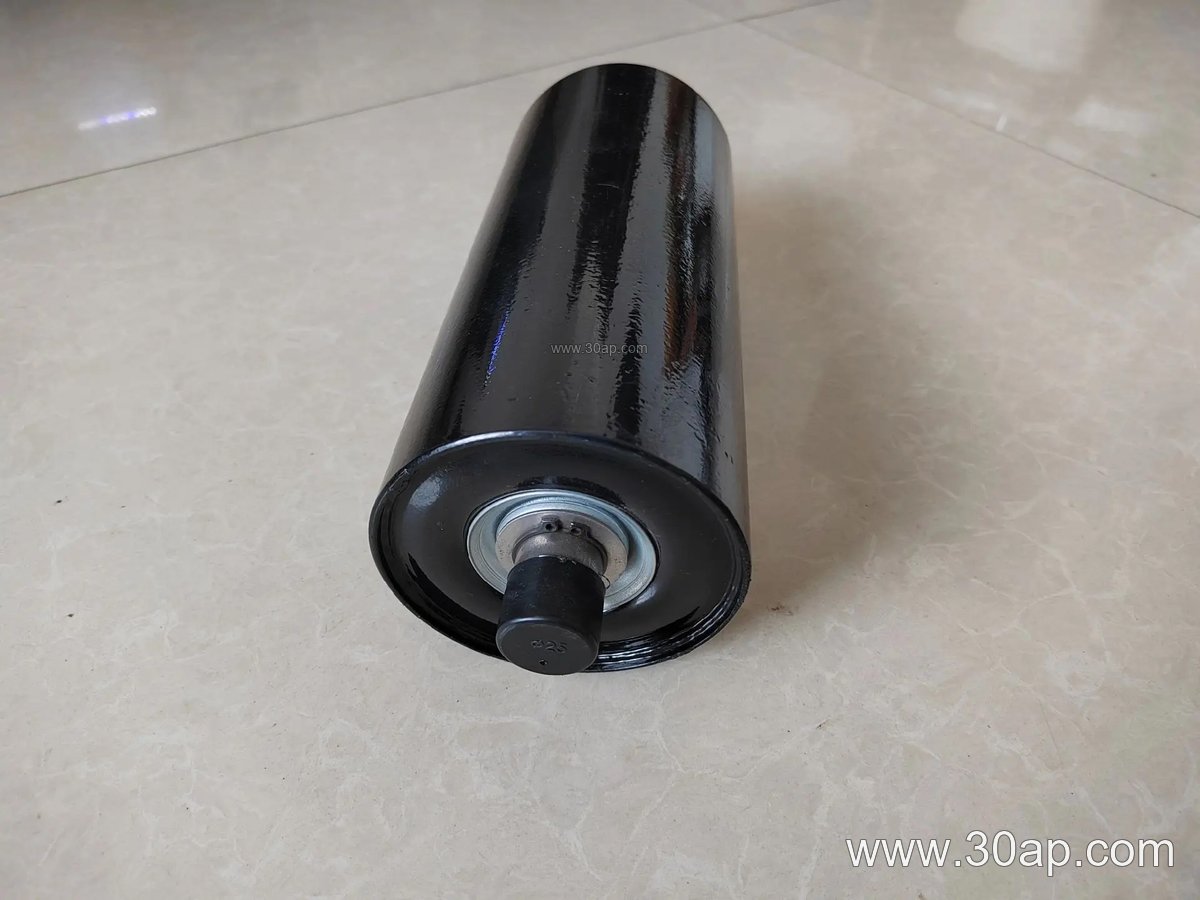
Seals matter as much as the rubber. Dust from limestone, iron ore, cement clinker or crushed aggregate is abrasive. A well-sealed idler keeps grit away from the bearing, while the rubber surface tolerates small impacts that would dent a bare steel shell.
Where Rubber Idlers Fit
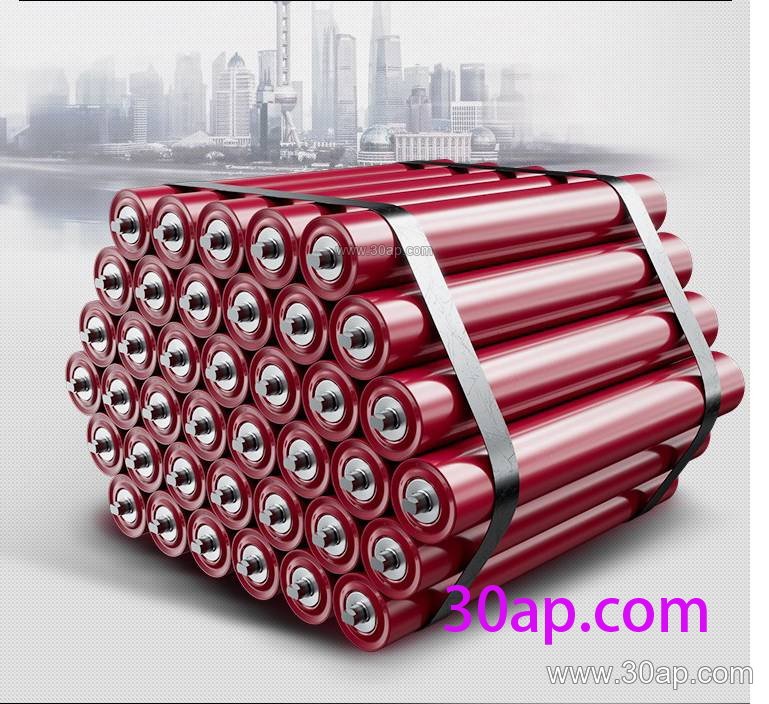
Rubber idlers are often chosen at the loading zone, where the conveyor belt receives material from a crusher or a chute. They also appear on the return run in dusty, damp or noisy locations. Typical sites include:
- Quarries and limestone mines feeding a primary crusher
- Coal yards and power plant coal handling systems
- Sand and gravel aggregate lines
- Cement plants and clinker transport
In these places the roller works together with the conveyor belt, the conveyor bracket and the supporting frame. A rubber idler does not replace a training idler or a spiral roller; those are separate designs used for alignment or cleaning.
Common Types and Sizes
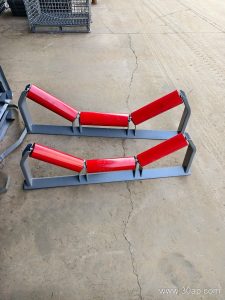
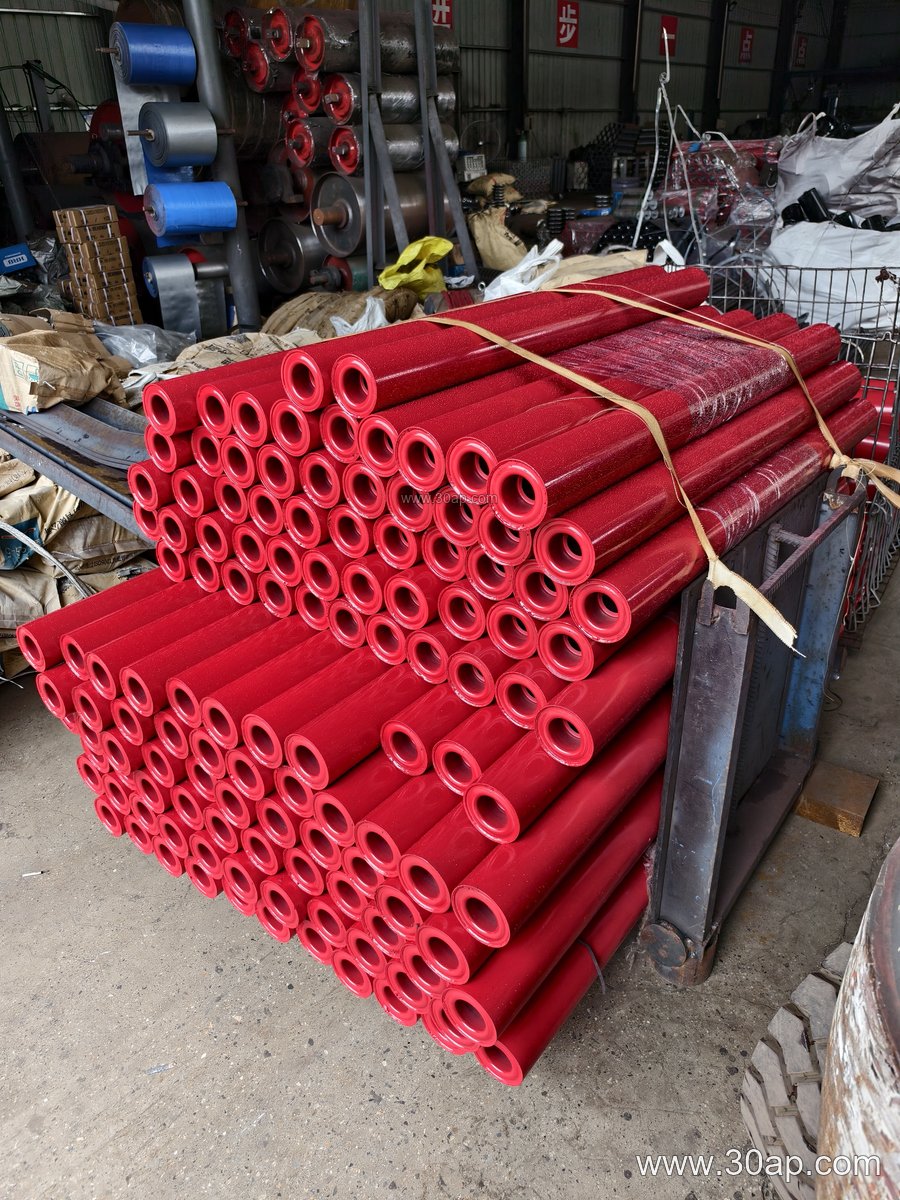
Rubber idlers are made in several forms. Impact rollers with rubber rings are common under a loading chute. Return rollers with a rubber cover are used on the lower strand. Troughing sets of two or three rollers carry the belt on the top run. The table below gives common reference values, not universal rules.
| Item | Common reference |
|---|---|
| Roller diameter | Ø63, Ø76, Ø89, Ø102, Ø108, Ø127, Ø133, Ø159, Ø178, Ø194, Ø219 |
| Belt width | B400, B500, B650, B800, B1000, B1200, B1400, B1600, B1800, B2000 |
| Trough angle | 20°, 30°, 35°, 45° |
| Bearing | 6204, 6205, 6305, 6306, 6308, 6310 |
| Surface | Rubber rings, rubber sleeve, steel tube with rubber cover |
Roller length changes with belt width and trough form. For a three-roll troughing set, a B800 belt commonly uses a side roller near 315 mm and a B1200 belt near 465 mm, but the middle roller and side rollers can differ. These are examples, not fixed combinations.
Choosing and Maintaining Rubber Idlers
Start with the duty: belt width, trough angle, material lump size and the amount of impact at the load point. A rubber idler with a thicker cover suits a coarse, heavy feed, while a lighter rubber roller may be enough on a clean return strand. Check that the shaft and bearing housing match the existing conveyor bracket, and confirm the roller length before ordering.
During operation, listen for squealing bearings and watch for a belt that wanders. A worn rubber ring, a damaged seal or a seized bearing should be replaced early. Keeping the idler aligned and the belt tension correct extends service life. In a dusty cement plant or a wet sand and gravel line, a little attention to sealing pays back quickly.
Rubber idlers are a practical, quiet and impact-resistant support component for many conveyor systems. They are not a replacement for a drive pulley or a tail pulley, but they help the belt run smoothly between them.