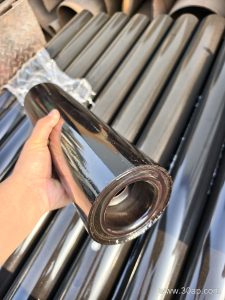
What a Drive Rubber Lagged Pulley Does
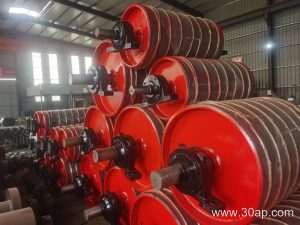
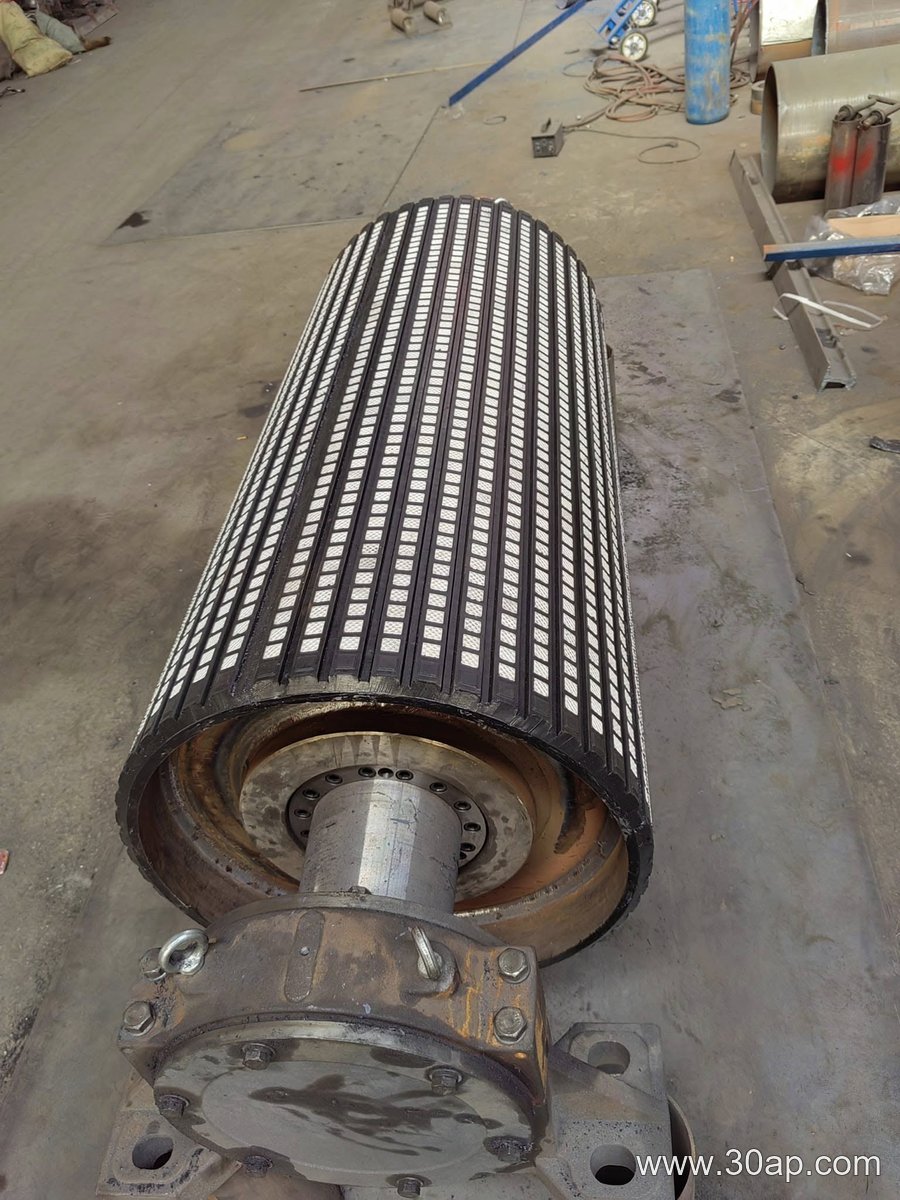
A drive rubber lagged pulley is the powered drum at the head of a belt conveyor. Its rubber cover raises the friction coefficient between the shell and the conveyor belt, so torque from the gearbox can be transmitted without excessive slip. In a limestone quarry, a cement clinker line, or a coal handling plant, this drum is often the single point where the entire conveyor is driven, which makes the lagging quality a practical concern rather than a cosmetic detail.
The same component is also called a rubber lagged head pulley or a rubber-covered drive drum. Those names describe the same item. A tail pulley, a bend pulley, or a tension pulley may also carry rubber, but they serve different positions and should not be treated as substitutes for the drive unit.
Construction of the Drum and Its Rubber Cover
The body usually starts as a rolled steel shell welded to end discs, with a shaft pressed or keyed into the hub. The lagging is bonded to the shell by hot vulcanization, cold bonding, or cast rubber. Hot vulcanized rubber generally gives the strongest bond for high-torque drives, while cold-bonded sheets are easier to replace in the field. Surface patterns include plain, diamond, herringbone, and ceramic-lagged forms. Diamond or herringbone grooves help water and fine slurry escape from the contact zone, which matters in wet sand and gravel lines.
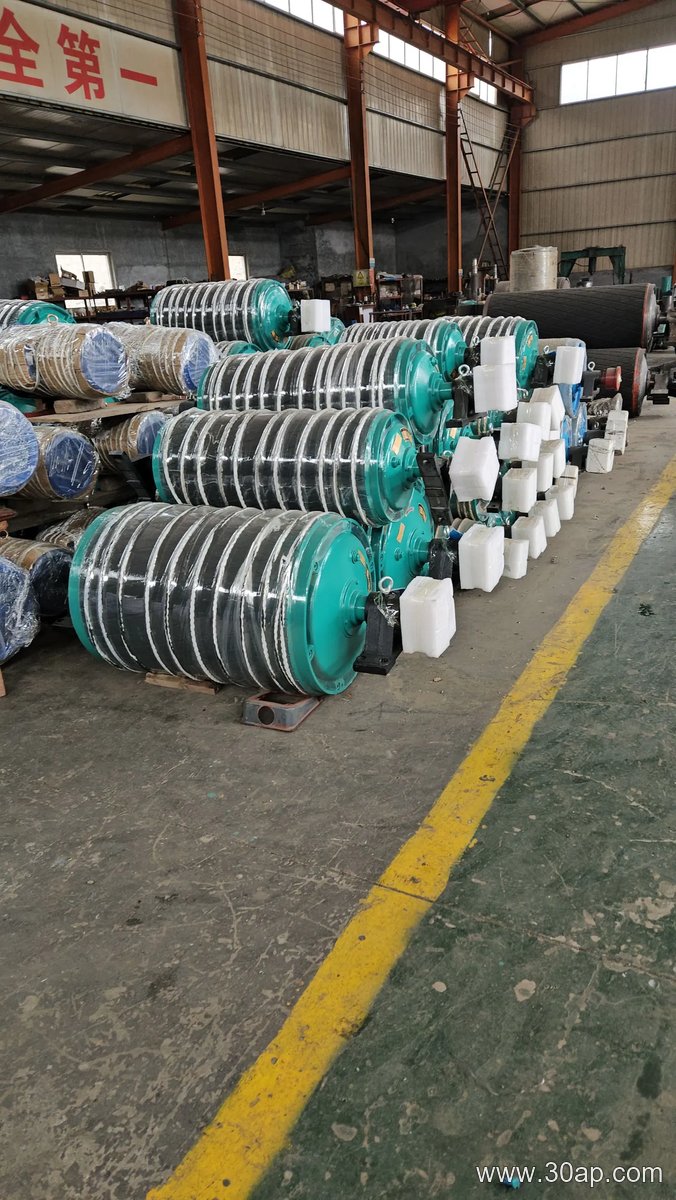
Common lagging thickness values are 8, 10, 12, 15, and 20 mm. Thicker covers last longer under abrasive conditions but add mass and cost, so the choice should follow the actual load and environment.
Matching Drum Dimensions to the Conveyor
Shell width normally exceeds belt width so the belt can track with some margin. The table below shows typical reference combinations; final values are confirmed by the conveyor designer.
| Belt width | Typical drum face width | Reference diameter range |
|---|---|---|
| B400 | about 500 mm | Ø200 to Ø315 |
| B650 | about 750 mm | Ø250 to Ø500 |
| B800 | about 950 mm | Ø315 to Ø630 |
| B1000 | about 1150 mm | Ø400 to Ø800 |
| B1200 | about 1400 mm | Ø500 to Ø1000 |
| B1400 | about 1600 mm | Ø630 to Ø1250 |
| B1600 | about 1800 mm | Ø800 to Ø1400 |
| B1800 | about 2000 mm | Ø1000 to Ø1600 |
Diameter is not locked to belt width. A B800 conveyor may use Ø500 in one layout and Ø630 in another, depending on belt tension, wrap angle, and available space. Shaft diameter is determined by torque and bearing load, not by belt width alone. Typical shaft sizes include Ø50, Ø60, Ø70, Ø80, Ø90, Ø100, Ø120, Ø140, Ø160, Ø180, and Ø200, but the final value comes from the drive calculation.
Where It Is Used
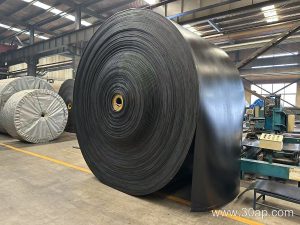
Rubber-lagged drive drums appear in crushing and screening plants, iron ore and copper concentrators, coal preparation facilities, power station coal yards, port bulk terminals, and tunnel muck removal systems. They work with the conveyor belt, idler rollers, and conveyor brackets to keep material moving. In dusty or wet conditions, the lagging also protects the shell from wear and reduces belt polish, which helps maintain grip over time.
What Buyers Should Check Before Ordering
- Confirm the drive position and required wrap angle, since these affect the friction demand.
- Specify belt width, drum face width, diameter, and shaft size as a complete set.
- State the lagging type and thickness, for example 12 mm diamond rubber or 15 mm ceramic lagging.
- Describe the material and environment: abrasive clinker, wet sand, or fine coal dust.
- Ask about balancing, keyway dimensions, and bearing housing fit.
- Request the bonding method and inspection records for the rubber-to-steel joint.
Do not assume that one belt width can only match one drum diameter, and do not derive a shaft size from belt width alone. A drive rubber lagged pulley works best when the lagging, shell, shaft, and conveyor layout are selected together.