What the Ø108 Self-Aligning Idler Does on a Conveyor
On a long overland or in-plant conveyor, the belt does not always stay centred. Material build-up, uneven loading, or a slightly misaligned frame can push the belt toward one side. The Ø108 self-aligning idler is a carrying or return roller built to correct that drift automatically. It is often called a self-aligning roller or training idler, and its 108 mm roller diameter makes it a common choice for medium-width belts in mining, quarrying, and bulk handling.
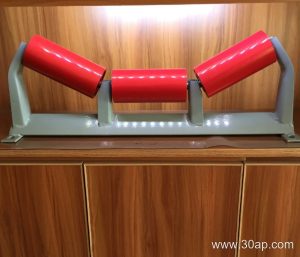
Unlike a standard troughing idler, this roller is mounted on a pivoted frame or bracket that can rotate slightly around a vertical axis. When the belt contacts the roller off-centre, the resulting force turns the assembly, which steers the belt back toward the centre line. This happens continuously without manual adjustment, which is why the Ø108 self-aligning idler is frequently installed at points where misalignment is most likely.
Construction Details
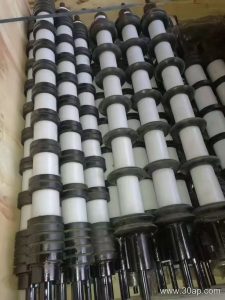
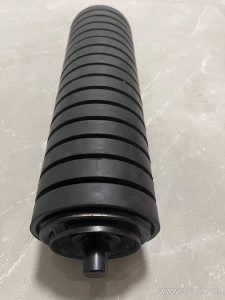
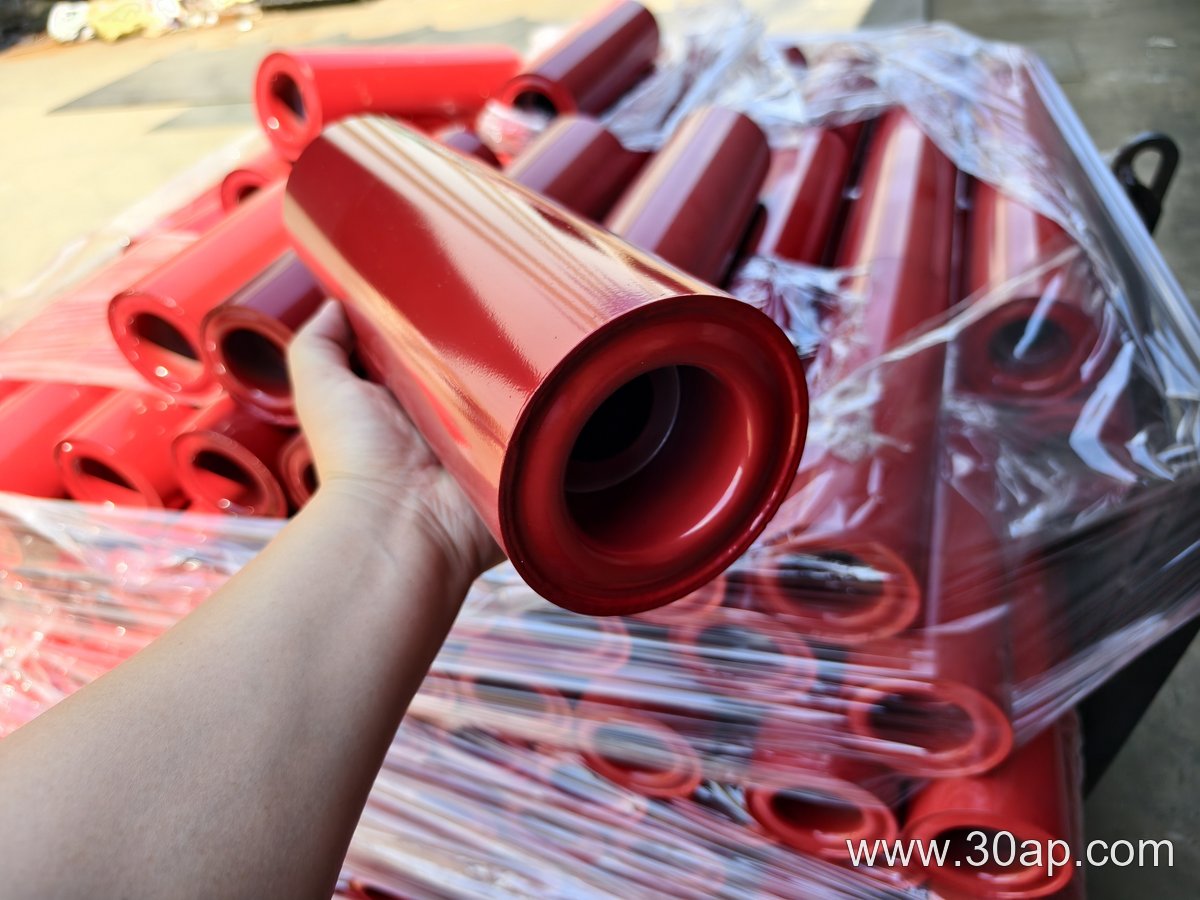
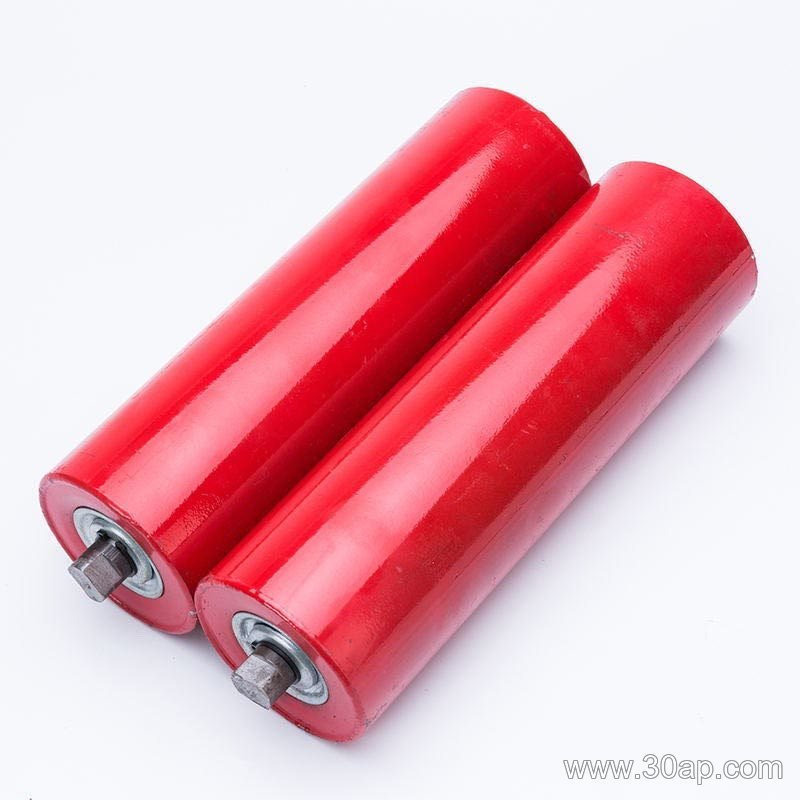
A typical Ø108 self-aligning idler uses a steel tube shell with a machined end disc. The roller body may be plain steel, nylon-coated, or fitted with rubber rings for grip and impact absorption. Inside, deep-groove ball bearings such as 6205, 6305, or 6306 are common, depending on load and speed. Seals are usually labyrinth or contact type to keep out fine dust and moisture.
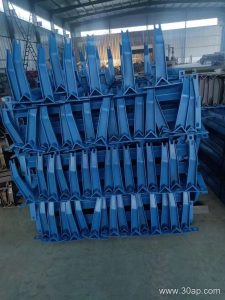
The frame that holds the roller is the key difference. It may be a single roller, a two-roller V-return set, or a three-roller troughing set. For a Ø108 self-aligning idler, the roller length is matched to the belt width and trough angle. Common belt widths include B650, B800, B1000, and B1200. The roller length is not fixed; it is selected by the conveyor designer. For example, a three-roller troughing set on a B1000 belt often uses a centre roller around 380 mm long, but side rollers can differ.
Where It Fits in the Conveyor
Self-aligning idlers are placed at intervals along the carrying run and sometimes on the return run. They are especially useful after a loading point, before a head pulley, or on long sections where the belt has a tendency to wander. In a coal handling plant, a cement plant, or a sand and gravel line, a few Ø108 self-aligning idlers can reduce edge damage and spillage.
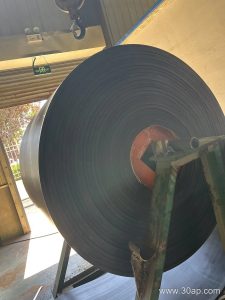
Do not confuse this product with a bend pulley or a drive pulley. Those are pulleys that transmit power or change belt direction. The Ø108 self-aligning idler is a roller that supports the belt and corrects tracking. It works together with the conveyor belt, idler roller, and conveyor bracket, but it is not a replacement for a drive, tail, or bend pulley.
Common Configurations and Parameters
The table below lists typical reference values for Ø108 self-aligning idlers. These are examples, not universal specifications. Actual dimensions depend on belt width, trough angle, and the manufacturer’s design.
| Parameter | Common Options / Reference |
|---|---|
| Roller diameter | Ø108 mm |
| Belt width | B650, B800, B1000, B1200 |
| Trough angle | 20°, 30°, 35°, 45° |
| Roller surface | Steel tube, nylon, rubber rings |
| Bearing | 6205, 6305, 6306 (depending on load) |
| Roller length (centre roller, three-roller set) | About 250 mm for B650, 315 mm for B800, 380 mm for B1000, 465 mm for B1200 |
| Mounting | Pivoted frame with conveyor bracket |
Note that roller length is not tied to one belt width only. A B800 belt may use different roller lengths for the centre and side rollers. The values above are typical examples for a three-roller troughing set.
Selection and Maintenance Notes
When choosing a Ø108 self-aligning idler, consider the belt width, the trough angle, the material being conveyed, and the operating environment. In a dusty coal yard or a limestone quarry, sealed bearings and abrasion-resistant roller surfaces are important. In a power plant or a fertilizer plant, chemical resistance may matter.
Installation should follow the conveyor designer’s layout. Self-aligning idlers are usually spaced at 10 to 20 times the belt width apart, but this depends on the application. Regular inspection of the roller, bracket, and pivot mechanism helps ensure the belt stays centred. If the roller stops turning or the frame seizes, the self-aligning action is lost.
For buyers, the key is to match the Ø108 self-aligning idler to the conveyor’s belt width, load, and environmental conditions. Requesting the roller length, bearing type, and surface form from the supplier prevents mismatches. A well-chosen self-aligning idler can extend belt life and reduce downtime in mines, ports, and aggregate operations.