What a Rubber Lagged Pulley Does on a Conveyor
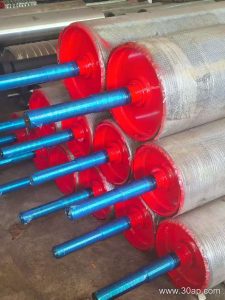
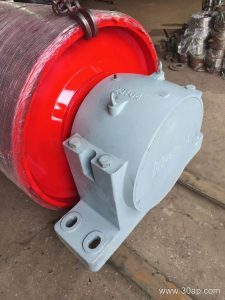
A rubber lagged pulley is a conveyor pulley whose cylindrical shell has been covered with a rubber layer, usually applied by hot vulcanization or cold bonding. The lagging is not decoration. It raises the friction coefficient between the shell and the conveyor belt, protects the steel drum from abrasive dust and moisture, and helps the belt track more steadily under load. In a crushing and screening circuit at a limestone quarry, the difference between a bare steel shell and a properly lagged one often shows up as reduced belt slip on the drive pulley and longer shell life on the tail position.
The accurate equivalent name for this product is rubber-coated pulley. Both terms describe the same component: a conveyor pulley with a rubber cover. Drive, tail and bend pulleys remain distinct functions, and they are not interchangeable labels. A tail pulley with lagging serves a different purpose from a drive pulley with lagging, even though the rubber surface may look similar.
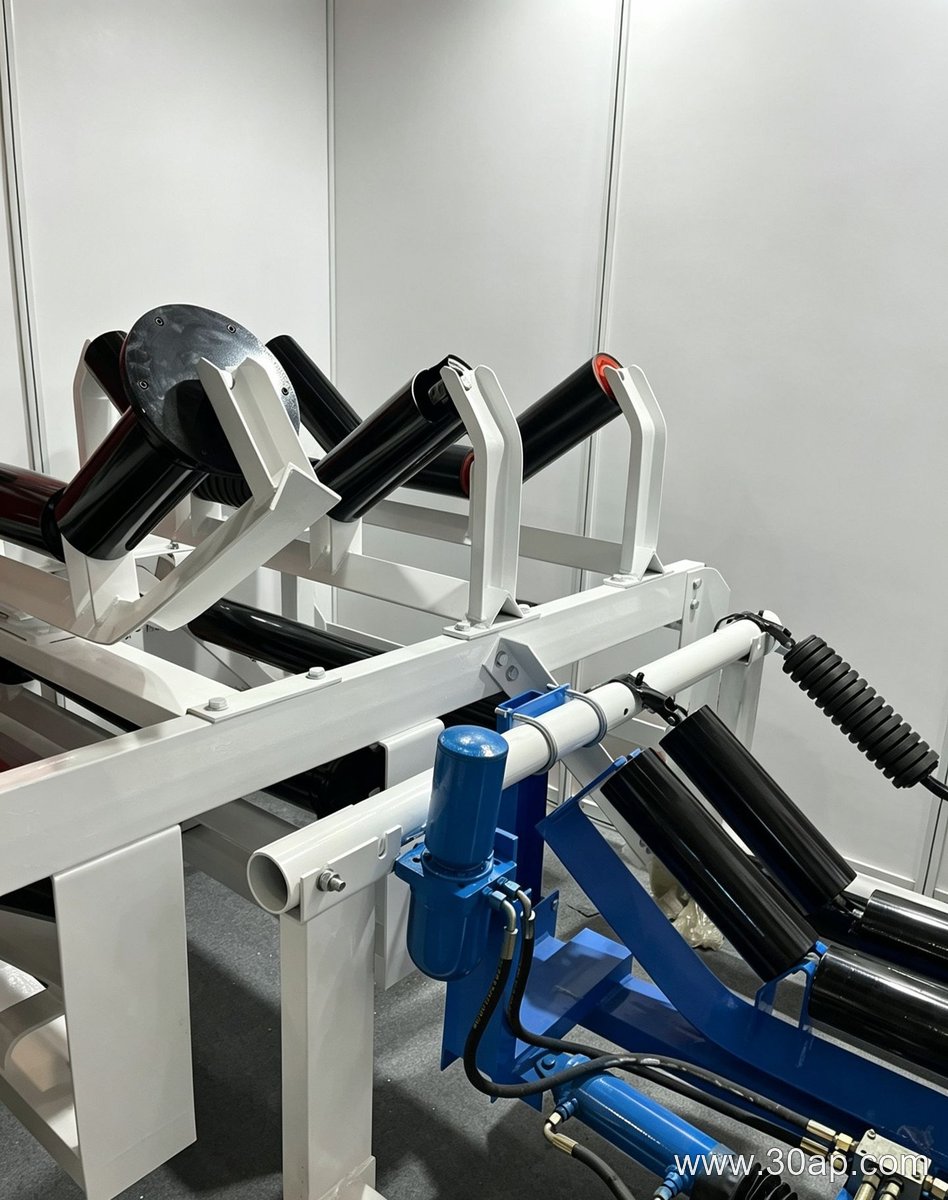
How the Lagging Is Built and Applied
The base is a welded steel drum with end discs and a shaft. After machining, the shell may be sandblasted, primed with a bonding agent, and then covered with uncured rubber sheet. Heat and pressure in an autoclave cure the rubber onto the steel, producing a strong chemical and mechanical bond. Cold-bonded versions use a room-temperature adhesive, which is convenient for field repair but generally offers lower bond strength than hot vulcanization.
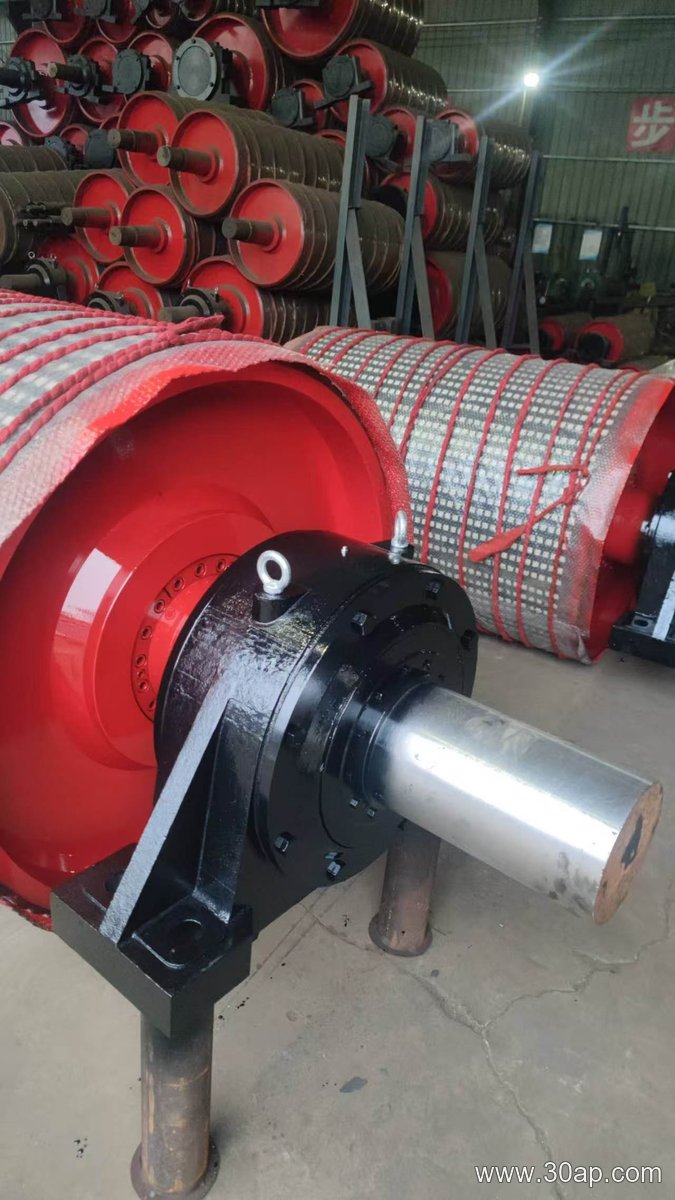
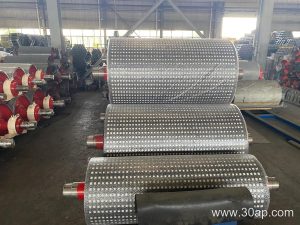
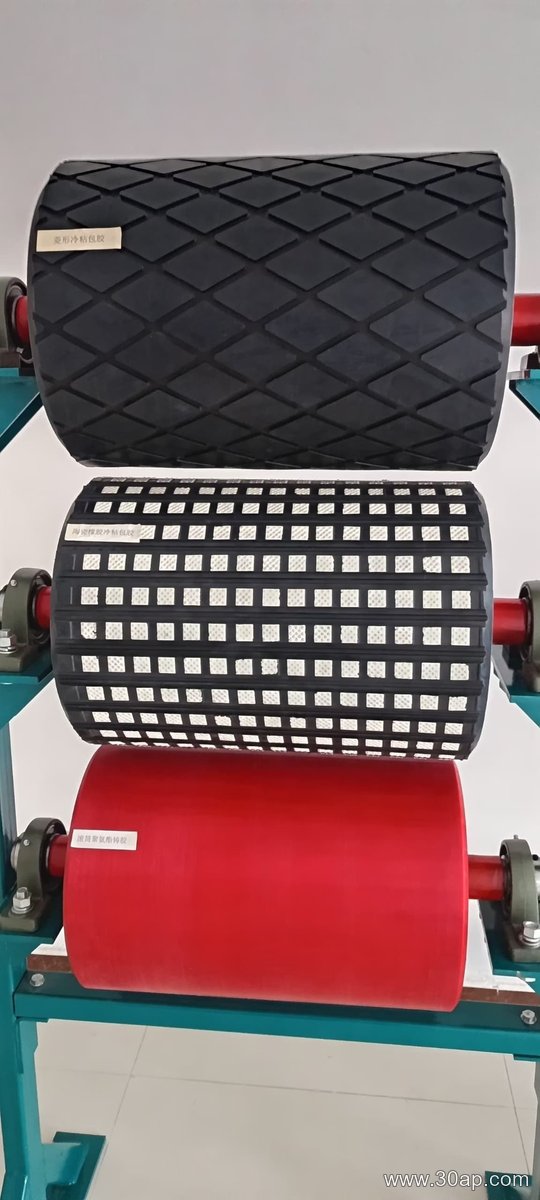
Surface patterns vary with the duty. Plain or smooth lagging suits many non-drive positions. Diamond grooved lagging channels water and fine dust away from the contact zone. Herringbone lagging helps center the belt when both directions of running are possible. Ceramic lagging embeds hard tiles in the rubber for extremely abrasive conditions, such as iron ore or sinter feed. Common cover thicknesses include 8 mm, 10 mm, 12 mm, 15 mm and 20 mm, selected according to belt tension, pulley diameter and material abrasiveness.
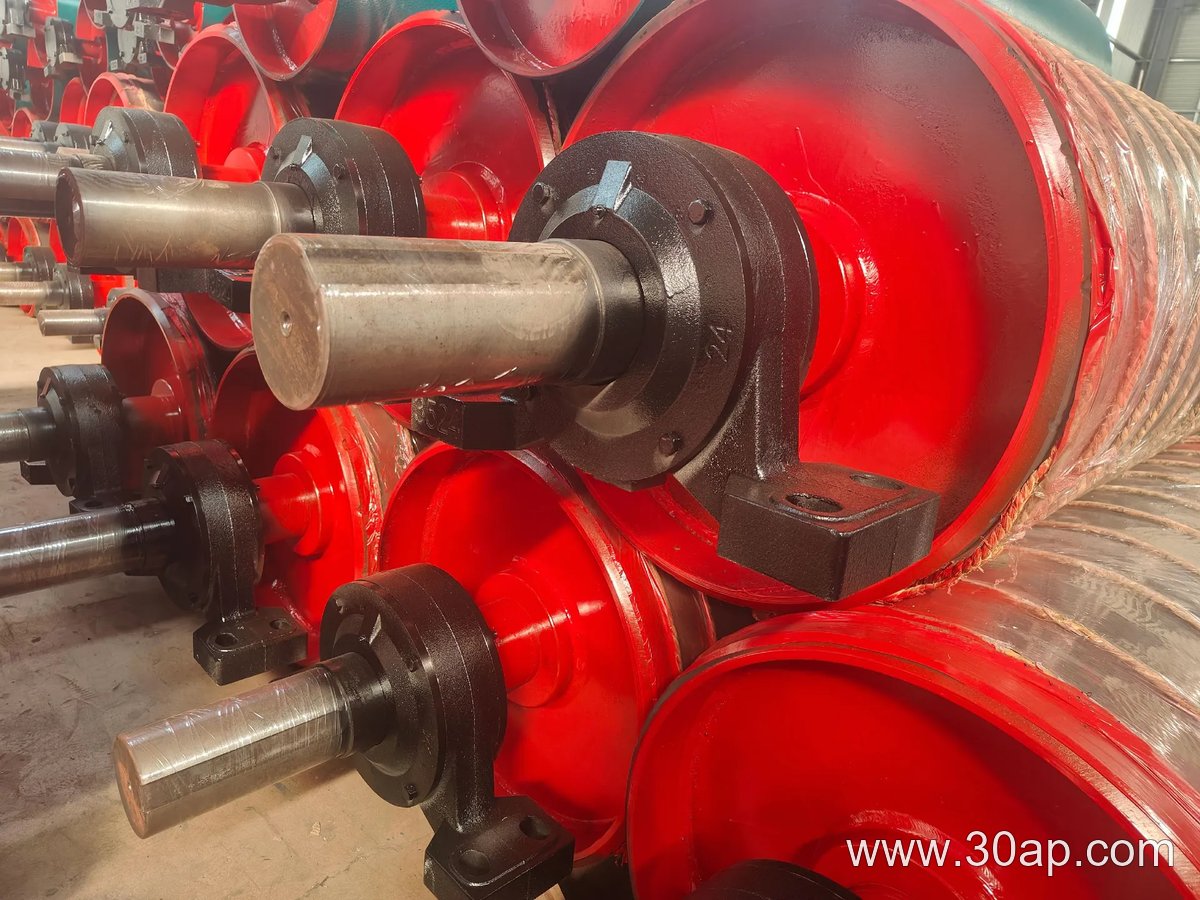
Where It Fits in a Conveying Line
Rubber lagging appears in many positions, but the function changes with location. On a drive or head pulley, lagging transmits torque to the conveyor belt. On a tail pulley, it protects the shell from material build-up and reduces wear. On a bend or snub pulley, a thin rubber cover can improve belt contact and reduce noise. A take-up pulley may also be lagged when extra grip is needed.
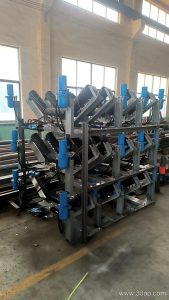
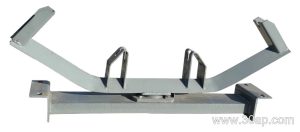
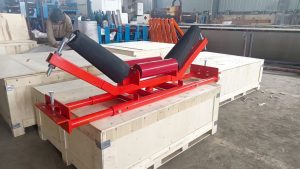
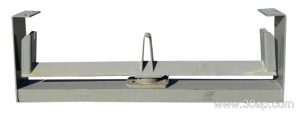
Typical industries include coal preparation plants, cement clinker lines, power station coal handling, sand and gravel aggregate yards, copper and iron mines, fertilizer plants, and grain silos. In these settings, the pulley works alongside the conveyor belt, idler rollers, conveyor brackets and the supporting frame. The lagging is only one part of the system, but it directly affects belt life and drive efficiency.
Matching Pulley Dimensions to the Conveyor
Belt width and pulley diameter are related by design, not by a fixed rule. A wider belt usually needs a wider drum face, and heavier tension often calls for a larger diameter, but the final choice depends on torque, shaft load, belt type and space. The table below shows common reference combinations, not mandatory pairings.
| Belt Width | Typical Pulley Face Width | Example Diameter Range | Common Shaft Diameter |
|---|---|---|---|
| B500 | about 600 mm | Ø200 to Ø400 | Ø50 to Ø80 |
| B650 | about 750 mm | Ø250 to Ø500 | Ø60 to Ø100 |
| B800 | about 950 mm | Ø315 to Ø630 | Ø70 to Ø120 |
| B1000 | about 1150 mm | Ø400 to Ø800 | Ø80 to Ø140 |
| B1200 | about 1400 mm | Ø500 to Ø1000 | Ø90 to Ø160 |
| B1400 | about 1600 mm | Ø630 to Ø1250 | Ø100 to Ø180 |
A B800 × Ø500 rubber lagged pulley and a B1200 × Ø1000 unit may both exist in the same plant, but they are not interchangeable. Shaft diameter is determined by torque and bending load, not by belt width alone. A common mistake is to assume that one belt width can only match one pulley diameter. In practice, several diameters can work for the same belt width depending on the conveyor profile and the required traction.
What Buyers Should Check Before Ordering
- Confirm the pulley function: drive, tail, bend, take-up or snub. The lagging pattern and thickness follow from that role.
- Specify belt width, pulley face width, shell diameter and shaft diameter as separate dimensions.
- State the rubber surface form: plain, diamond, herringbone or ceramic, and the required cover thickness.
- Describe the material being conveyed and the ambient conditions, since abrasive dust, moisture and temperature influence rubber grade.
- Ask how the lagging is bonded, hot vulcanized or cold bonded, because the bond affects service life.
- Check balancing, run-out and keyway dimensions against the conveyor bracket and bearing housing.
Rubber lagging is a wear part. Even a well-built pulley will eventually need re-lagging, so keeping the shell dimensions and surface pattern on file makes future replacement simpler. For a cement plant or a coal handling system, that record can shorten downtime when the drive pulley starts to slip.