What a Carbon Steel Conveyor Bracket Does
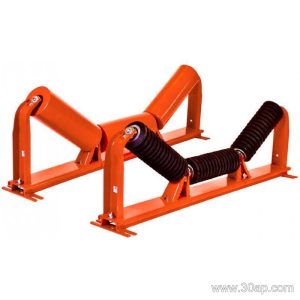
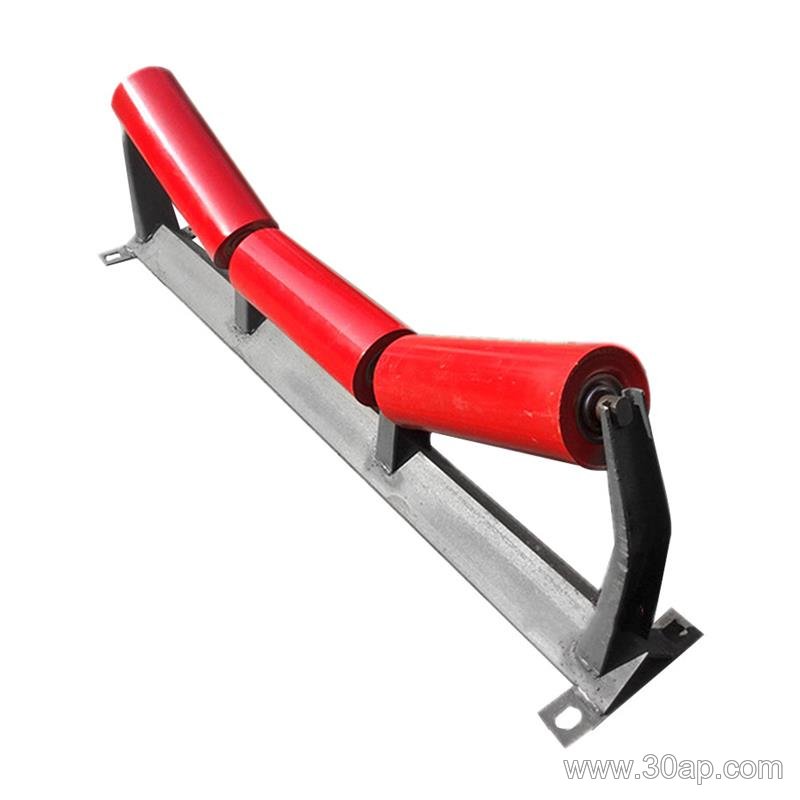
A carbon steel conveyor bracket is the structural support that holds idler rollers in place along a belt conveyor. It carries the weight of the conveyor belt, the material being transported, and the rollers themselves, transferring those loads into the conveyor frame. In a quarry, a coal washing plant, or a cement production line, these brackets keep the belt running at a stable profile and help prevent material spillage.
This component is also called a carbon steel roller support frame or a conveyor idler bracket. The name refers to the same part, and the material choice makes it suitable for heavy-duty environments where impact and abrasion are common.
How the Bracket Is Built
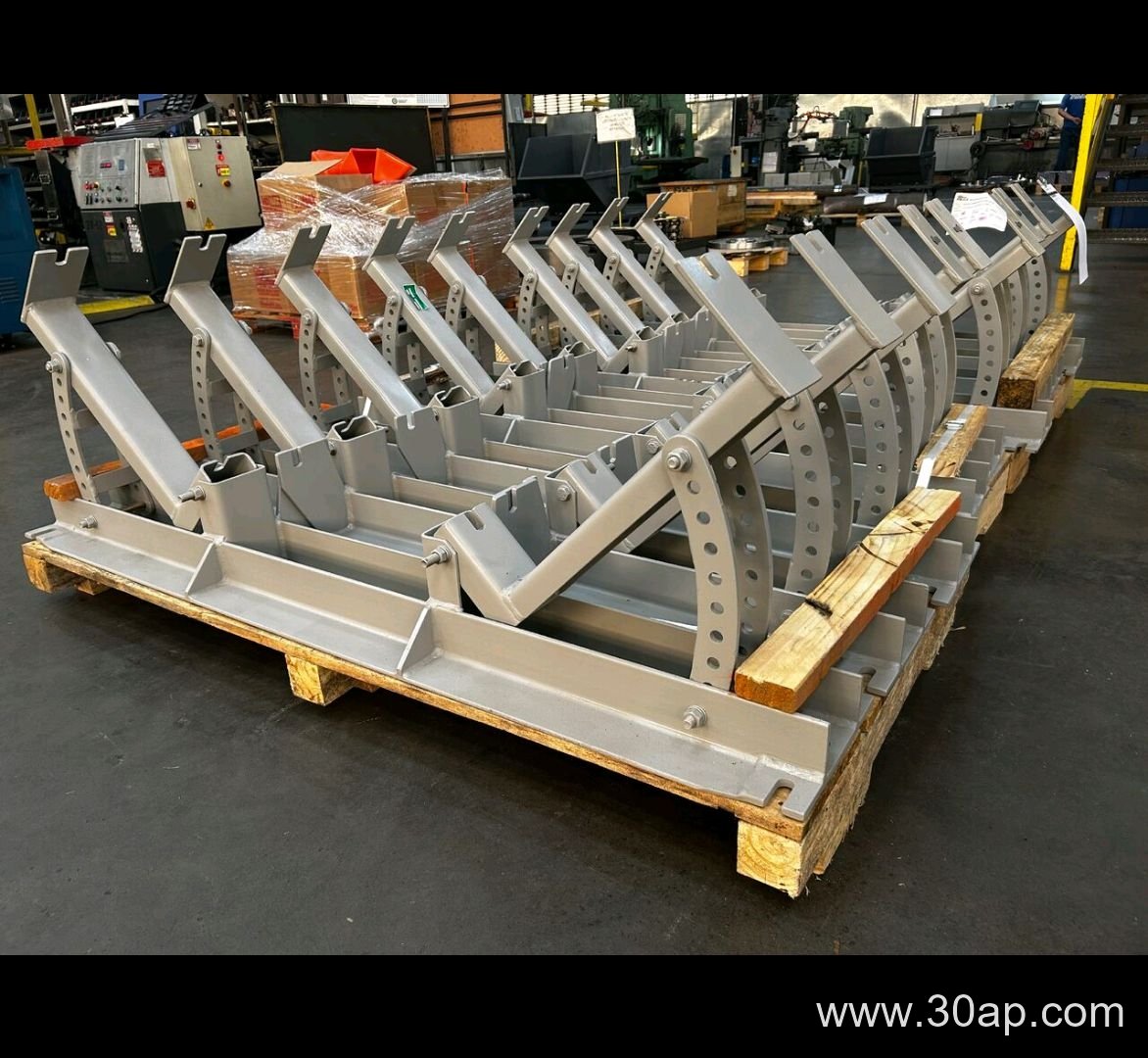
Most carbon steel conveyor brackets are fabricated from angle steel, channel steel, or bent steel plate. The manufacturing process usually involves cutting, punching, bending, and welding. Bolt holes are positioned to match the conveyor frame and the idler shaft. The surface may be painted or left with a protective finish, depending on the working conditions.
Common bracket types include troughing brackets for carrying idlers, return brackets for the lower run, impact brackets for loading zones, and self-aligning brackets for belt tracking. Adjustable brackets allow the trough angle to be changed between 20, 30, 35, or 45 degrees, which helps match different material characteristics. Forward-leaning brackets, typically around 1.5 to 2 degrees, are used where belt training is needed.
Common Configurations
| Bracket Type | Typical Function | Belt Width Range | Roller Diameter Range |
|---|---|---|---|
| Troughing bracket | Supports carrying idlers in a trough shape | B500 to B2200 | Ø89 to Ø194 |
| Return bracket | Supports return idlers under the belt | B500 to B2200 | Ø89 to Ø194 |
| Impact bracket | Absorbs impact at loading points | B650 to B1800 | Ø108 to Ø159 |
| Self-aligning bracket | Helps correct belt misalignment | B800 to B2000 | Ø108 to Ø194 |
These values are typical references. Actual hole spacing and crossbeam length are determined by the specific belt width, trough angle, and roller diameter. A wider belt does not automatically require a single roller diameter, and one bracket size cannot serve every conveyor.
Where It Is Used
Carbon steel conveyor brackets appear in many bulk material handling systems. In a limestone mine, they support the belt through the crushing and screening circuit. In a power plant coal yard, they keep the conveyor belt aligned on the carrying side. Other common applications include sand and gravel lines, steel mills, fertilizer plants, and tunnel muck removal.
Because the bracket works together with the conveyor belt, conveyor pulley, and idler roller, its alignment and mounting height affect the whole conveyor’s performance. A poorly fitted bracket can cause belt edge wear, roller vibration, or material spillage.
Selection Points for Buyers
When choosing a carbon steel conveyor bracket, the following details matter:
- Belt width, such as B650, B1000, or B1400
- Trough angle, for example 30 degrees or 45 degrees
- Roller diameter, such as Ø89, Ø108, or Ø133
- Mounting hole distance and crossbeam length, which follow the frame design
- Loading conditions and whether an impact or self-aligning version is needed
- Surface treatment and steel thickness for the working environment
It is also important to confirm whether the bracket is fixed or adjustable. Adjustable brackets offer flexibility when material properties change, while fixed brackets provide a simpler and more rigid support. Neither type is universally better; the choice depends on the conveyor layout and maintenance practice.
Installation and Maintenance Notes
Correct installation keeps the bracket square to the conveyor centerline. Bolts should be tightened to the recommended torque, and the bracket should sit flat against the frame. During routine inspection, check for loose fasteners, bent steel, and worn roller seats. Replacing a damaged bracket early can prevent more serious damage to the conveyor belt and idler rollers.
In dusty or wet conditions, such as a coal handling system or a cement plant, cleaning around the bracket helps avoid material build-up that can misalign the belt. A carbon steel bracket with a suitable protective finish will resist corrosion and maintain its shape over a long service life.