What Is an EP1000 Conveyor Belt
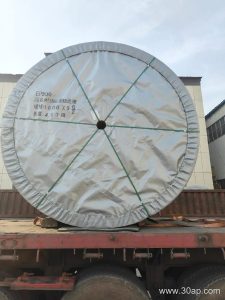
An EP1000 conveyor belt is a multi-ply rubber belt built on a polyester (E) and polyamide (P) fabric carcass. The EP1000 designation refers to the nominal tensile strength of the carcass: 1000 newtons per millimetre of belt width. In practice, this places the belt in the medium-to-heavy duty class, suitable for moving bulk materials over long distances where ordinary EP200 or EP315 belts would be stretched beyond their working limits. You will also see it described as a polyester nylon conveyor belt or an EP carcass belt — these are accurate equivalents for the same product family, provided the strength grade stays at EP1000.
The belt is not a single homogeneous slab. Its performance comes from the way the fabric plies, rubber covers, and edge construction work together. Buyers in mining, coal, cement, power plants, and sand and gravel yards should understand the carcass grade, cover thickness, and width before selecting a roll.
Construction and Carcass Design
The carcass usually contains 2 to 6 layers of EP fabric, depending on the required strength and the pulley diameters on the conveyor. Each ply is bonded with rubber skim compound. The warp direction uses polyester for low elongation, while the weft uses polyamide for impact resistance and troughability. A typical EP1000 belt may use 3 to 5 plies to achieve the rated strength, but the exact ply count is set by the belt manufacturer’s design and should not be assumed from the strength grade alone.
Top and bottom rubber covers protect the carcass from abrasion, cutting, and moisture. Common cover combinations include 3+1.5 mm, 4+2 mm, 5+2 mm, 6+2 mm, and 8+3 mm. The first figure is the top cover, the second is the bottom cover. For a coal mine or cement plant handling sharp clinker, a thicker top cover such as 6+2 mm or 8+3 mm is often considered. For a sand and gravel operation with gentler material, 4+2 mm may be sufficient.
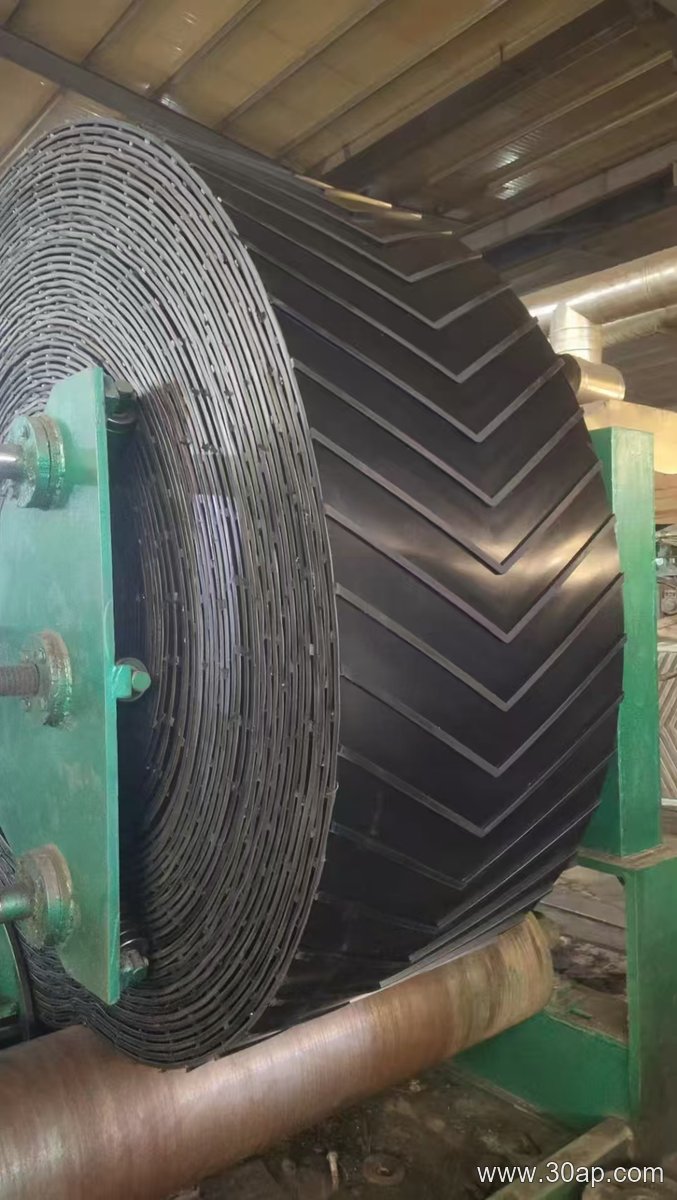
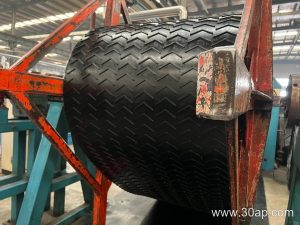
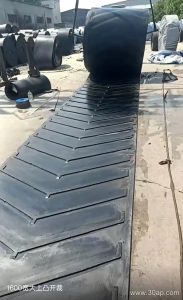
Edge construction can be cut edge or moulded edge. Cut edge belts are common in general industrial use, while moulded edge versions offer better protection in severe impact zones. The belt may also be supplied with a patterned surface, such as a chevron or herringbone profile, when the conveyor operates on an incline. That is a subtype of the same product, not a replacement for the flat EP1000 belt.
Common Specifications
The table below lists reference values that appear in general product literature. They are not fixed combinations, and actual supply depends on the conveyor design and the manufacturer’s data sheet.
| Parameter | Typical Reference Values |
|---|---|
| Strength grade | EP200, EP315, EP400, EP500, EP630, EP800, EP1000, EP1250, EP1600, EP2000 |
| Belt width | B500, B650, B800, B1000, B1200, B1400, B1600, B1800, B2000 |
| Cover thickness | 3+1.5 mm, 4+2 mm, 5+2 mm, 6+2 mm, 8+3 mm |
| Ply count | Commonly 2 to 6 layers, depending on strength and design |
| Surface form | Smooth, chevron, herringbone, or with corrugated sidewalls |
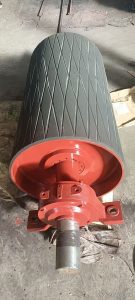
Do not assume that a given belt width must pair with one pulley diameter. The drive pulley, tail pulley, and bend pulley diameters are selected from the belt’s rated tension, ply count, and the conveyor’s overall geometry. A wider belt does not automatically require a larger pulley, and a narrow belt does not guarantee a small one. The belt manufacturer’s recommended minimum pulley diameter for the specific carcass should be followed.
Where It Is Used
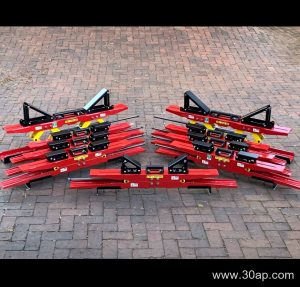
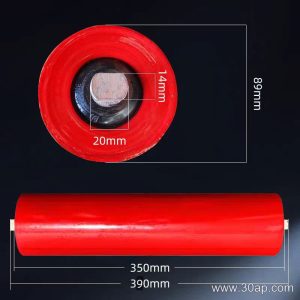
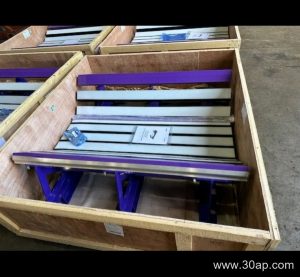
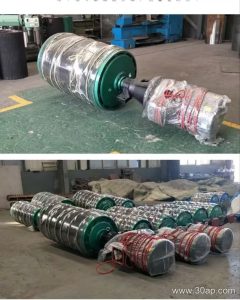
An EP1000 conveyor belt is a common choice in mines, coal preparation plants, cement kilns, power station coal yards, and sand and gravel pits. It handles crushed ore, limestone, clinker, coal, and aggregate. In these settings, the belt runs over idler rollers that support the load and through conveyor pulleys that drive and redirect it. Conveyor brackets hold the idlers and pulleys in alignment along the structure.
Because the EP carcass has low stretch, it is often preferred for longer conveyors where take-up travel is limited. The polyester warp also resists moisture, which helps in wet or humid conditions. For high-temperature service, such as cement clinker, a heat-resistant cover compound may be needed. For oil-contaminated environments, an oil-resistant cover is selected. These are cover variations within the same EP1000 family, not different belt types.
Buyer Checklist
- Confirm the required strength grade is EP1000, not a lower or higher grade, unless the conveyor design calls for a different one.
- Check the cover thickness against the material abrasion and impact level. Sharp, heavy material usually needs a thicker top cover.
- Verify the belt width matches the conveyor specification and the available pulley face width.
- Ask for the ply count and the manufacturer’s minimum pulley diameter recommendation.
- For inclined conveyors, decide whether a smooth belt or a patterned surface is appropriate.
- Confirm the edge construction and any special cover properties such as heat, oil, or flame resistance.
- Review the splicing method. Vulcanized splices are common for long belts, while mechanical fasteners may be used for shorter or temporary installations.
A belt that is correctly matched to the conveyor’s duty will give longer service and fewer downtime events. The EP1000 grade is a workhorse in bulk material handling, but it still needs the right cover, width, and pulley compatibility for the job.