What a Discharge Pulley Does
The discharge pulley, often called the head pulley or unloading pulley, sits at the delivery end of a conveyor. It is the drum that changes the belt direction while throwing material into a chute, stockpile, or the next machine. In a quarry, cement plant, or coal yard, this is the point where the conveyor belt finally releases its load, so the pulley must handle steady tension, abrasive dust, and sometimes sticky or wet material. Unlike a tail pulley, which mainly guides and tensions the belt, the discharge pulley is a functional terminal component. It is not interchangeable with a bend pulley or a drive pulley, even though all three may look similar from a distance.
Construction and Surface Options
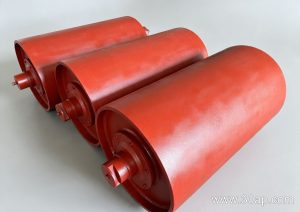
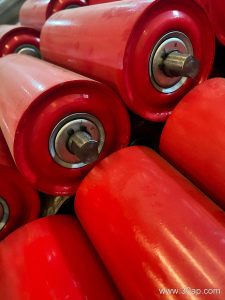
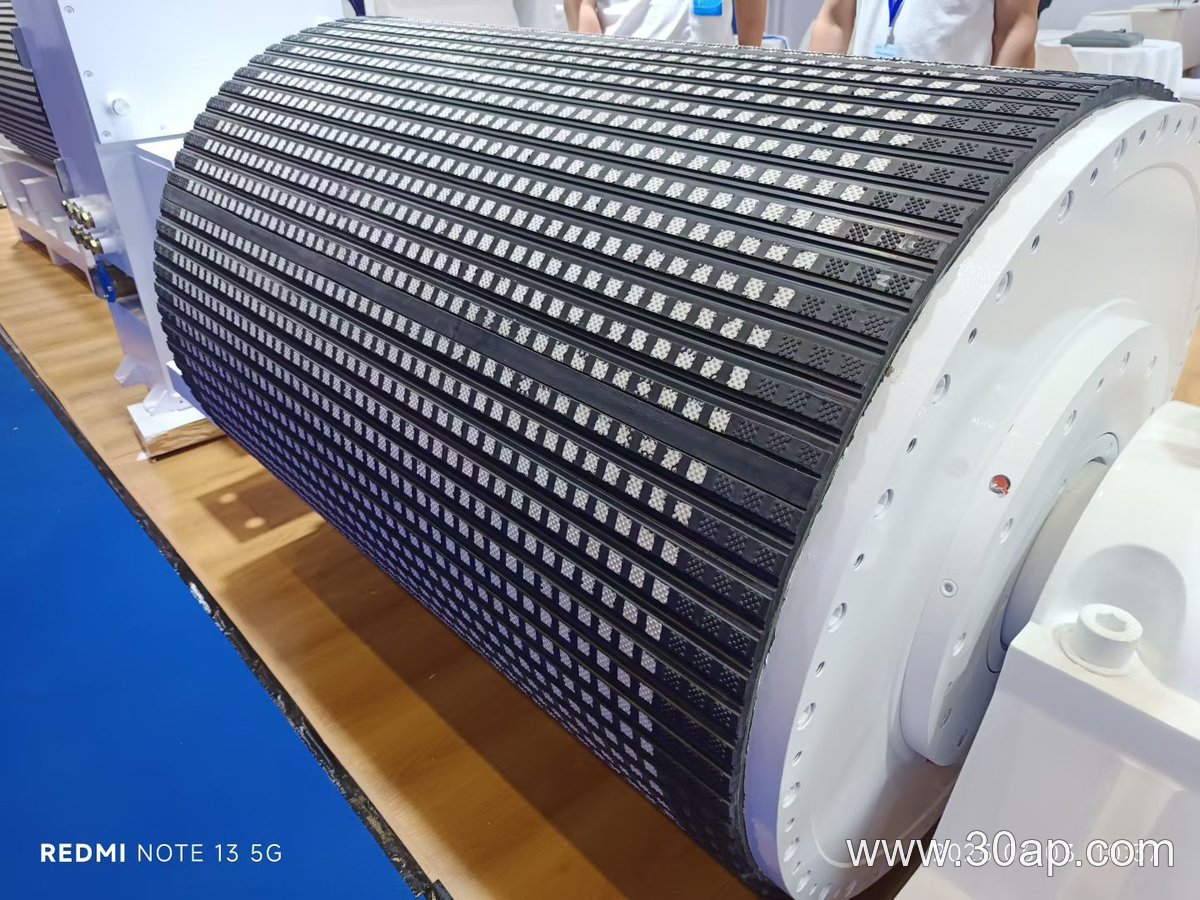
A typical discharge pulley starts with a steel cylindrical shell, two end discs, and a shaft. The shell may be machined smooth or covered with rubber. Common surface forms include plain, hot vulcanized rubber, cold bonded rubber, diamond grooved, herringbone grooved, and ceramic lagging. Rubber thickness is often 8, 10, 12, 15, or 20 mm, selected according to slip risk and material abrasiveness. The shaft diameter is not derived from belt width alone; it is determined by torque, radial load, and bearing life. Common shaft sizes include Ø50, Ø60, Ø70, Ø80, Ø90, Ø100, Ø120, Ø140, Ø160, Ø180, and Ø200 mm. For heavy-duty service, the pulley may be welded or assembled with a hub and locking element.
Matching Belt Width and Pulley Dimensions
Buyers often ask how to relate belt width to pulley face width. The face is usually a little wider than the belt to allow tracking tolerance. For example, a B400 belt may use a face around 500 mm, B650 around 750 mm, B800 around 950 mm, B1000 around 1150 mm, B1200 around 1400 mm, and B1400 around 1600 mm. These are reference values, not fixed rules. A B1200 conveyor may run a Ø1000 discharge pulley, while a B800 line might use Ø500 or Ø630 depending on belt speed and tonnage. The table below shows common combinations, but the final choice belongs to the conveyor designer.
| Belt Width | Typical Pulley Face | Common Diameter Range |
|---|---|---|
| B500 | 600 mm | Ø250 to Ø400 |
| B650 | 750 mm | Ø315 to Ø500 |
| B800 | 950 mm | Ø400 to Ø630 |
| B1000 | 1150 mm | Ø500 to Ø800 |
| B1200 | 1400 mm | Ø630 to Ø1000 |
| B1400 | 1600 mm | Ø800 to Ø1250 |
Where It Fits in the Conveyor Layout
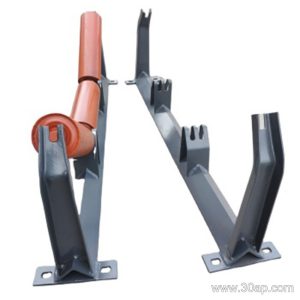
A discharge pulley is usually installed at the head station, supported by a conveyor bracket and bearing housings. It works together with the conveyor belt, idler rollers, and sometimes a bend pulley that adjusts the belt path before the discharge point. In a coal handling system, the discharge pulley may feed a transfer tower. In a sand and gravel plant, it may throw material onto a vibrating screen. In a cement plant, it can handle clinker or limestone. The same pulley type may also appear in a tunnel mucking line or a fertilizer warehouse, but the duty profile changes with material density and moisture.
What a Buyer Should Check
- Confirm the belt width and the required face width; do not assume one belt width locks to one diameter.
- Specify the lagging type and thickness if slip or wear is a concern. Plain steel is acceptable for some clean, low-tension duties.
- Provide the shaft diameter only after torque and load review. A Ø120 shaft may suit one B1000 pulley and be undersized for another.
- Ask about balancing, runout, and bearing type, because a discharge pulley often runs at higher speed than a tail pulley.
- Check the chute and skirt arrangement; material build-up near the pulley can damage the belt and lagging.
A discharge pulley is not a universal drum. It is a terminal pulley with a specific job: to support the belt, transmit motion or tension, and release the load cleanly. When replacing or specifying one, match the pulley to the conveyor duty, the material, and the surrounding structure rather than relying on a single size chart.