What a Port Belt Conveyor Pulley Actually Does
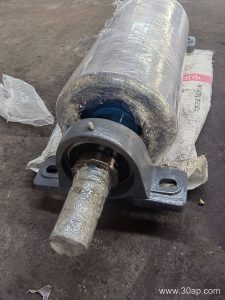
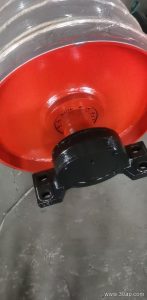
A port belt conveyor pulley is the cylindrical assembly that drives, redirects, or tensions the conveyor belt in a bulk material handling system. In ports, these pulleys move coal, iron ore, limestone, fertilizer, and other free-flowing cargo across long dockside and stockyard conveyors. While a small idler roller supports the belt along its carrying run, the pulley does the heavy work at the ends of the conveyor. It transmits torque from the drive unit, changes the belt’s direction, or maintains the necessary tension to keep material moving.
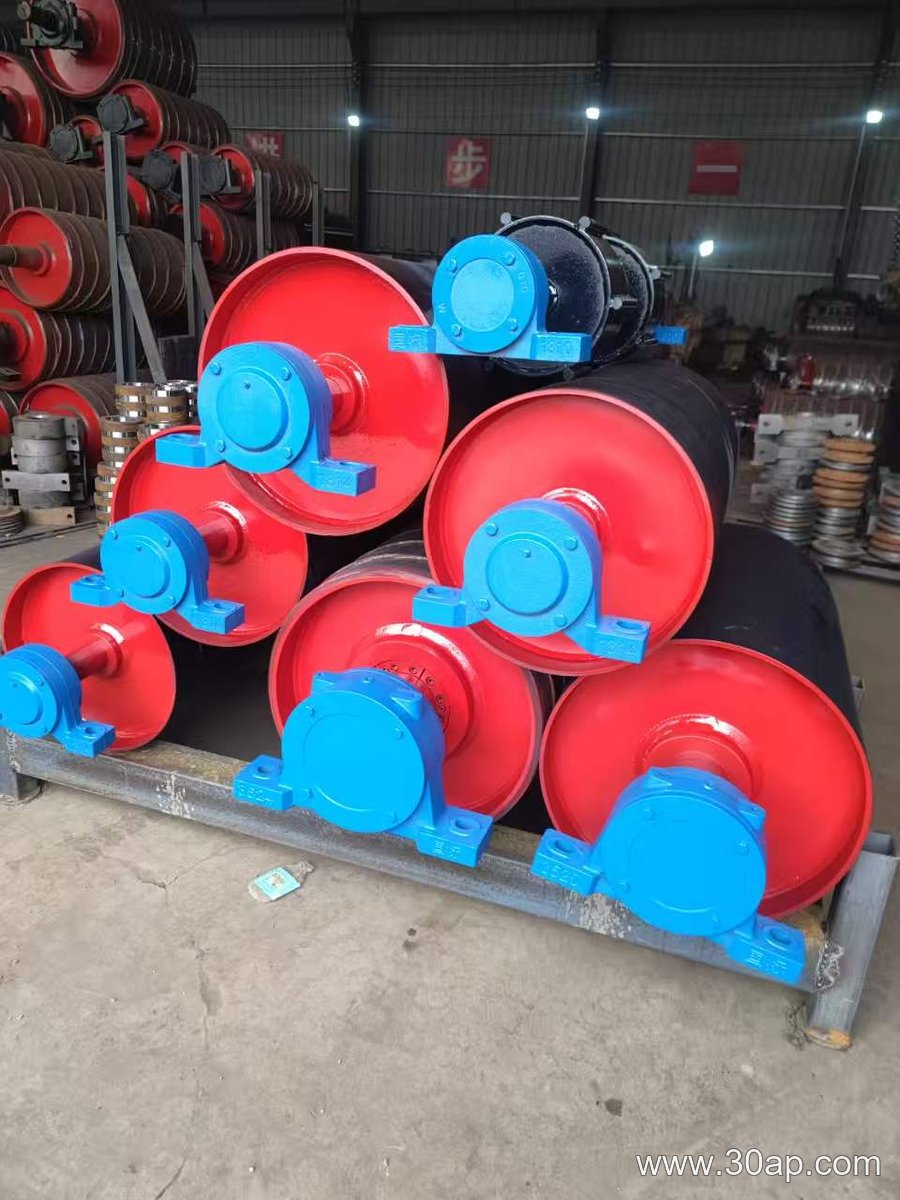
This component is also known as a conveyor drum pulley or simply a conveyor pulley. The three main functional subtypes are drive pulleys, tail pulleys, and bend pulleys. They are not interchangeable. A drive pulley, often called a head pulley or unloading pulley, is connected to the gearbox and motor. A tail pulley sits at the opposite end and often includes a tensioning mechanism. A bend pulley changes the belt path without driving or tensioning the belt on its own.
How It Is Built
Most port belt conveyor pulleys use a welded steel shell with end discs and a central shaft. The shaft is sized by torque and load, not by belt width alone. Common shaft diameters include Ø50, Ø60, Ø80, Ø100, Ø120, Ø140, Ø160, Ø180, and Ø200. The shell diameter can range from Ø200 to Ø1800 depending on the application. For a B1200 belt, a Ø1000 pulley is a common combination, but a B800 belt might use a Ø500 pulley. No single diameter is mandatory for a given belt width.
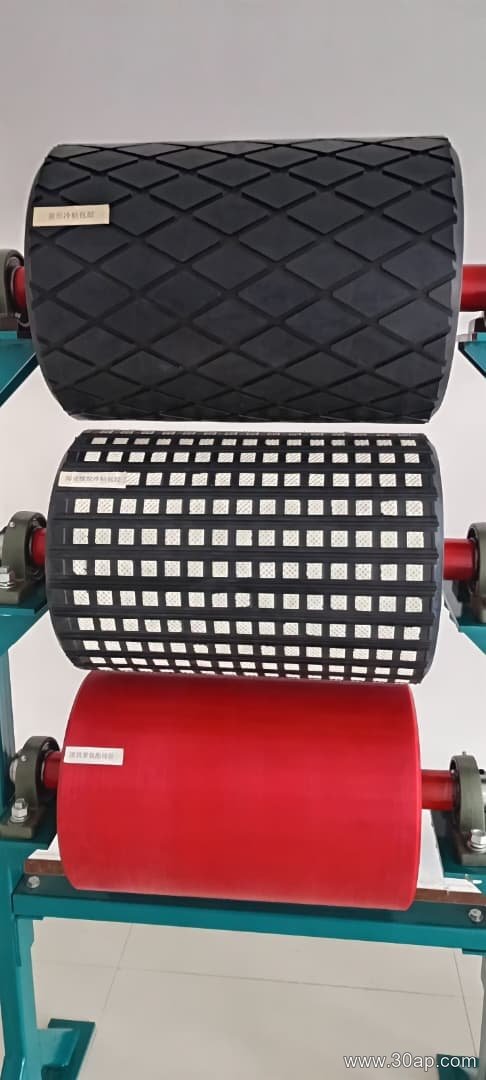
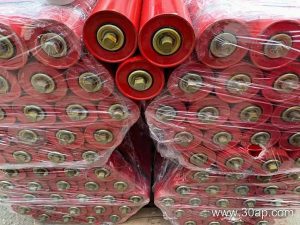
Surface treatment matters for grip and belt life. Options include plain steel, hot vulcanized rubber, cold bonded rubber, diamond grooved rubber, herringbone rubber, and ceramic lagging. Rubber lagging thickness is often 8, 10, 12, 15, or 20 mm. In a dusty port handling coal or iron ore, diamond or herringbone lagging helps shed water and fines. Ceramic lagging may be chosen where high torque and abrasive conditions exist. The pulley face width is normally wider than the belt. For reference, a B400 belt may use a 500 mm face, a B650 belt a 750 mm face, and a B1400 belt a 1600 mm face. These are common design references, not fixed rules.
Where It Fits in Port Operations
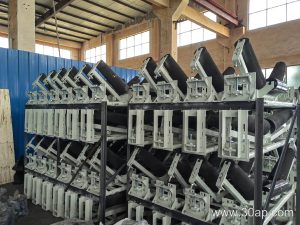
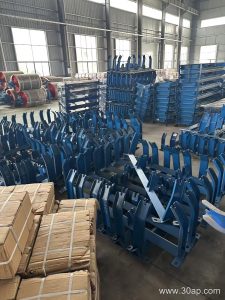
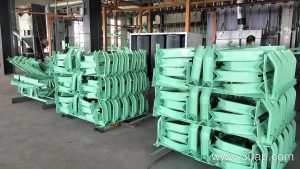
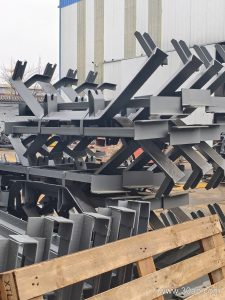
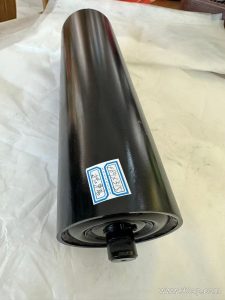
Port conveyors often run at high capacity and face salt air, dust, and variable weather. A drive pulley on a shiploader or stacker-reclaimer must handle starting torque and belt slip. A tail pulley on a dock conveyor may need a self-cleaning design to prevent material buildup. A bend pulley in a transfer tower redirects the belt around structural obstacles. In a coal terminal, a worn pulley can cause belt mistracking, spillage, and downtime. The same is true in a cement plant, a power plant coal yard, or a limestone stockyard. The pulley works together with the conveyor belt, idler rollers, and the conveyor bracket that holds the assembly in place.
What a Buyer Should Know
When specifying a port belt conveyor pulley, start with the duty: drive, tail, or bend. Then confirm the belt width, the required diameter, the shaft size, and the lagging type. Ask for the face width, the bearing type, and the locking assembly details. Do not assume that a B1200 belt automatically needs a Ø1250 pulley or a Ø120 shaft. Those values are determined by the conveyor design, the absorbed power, and the belt tension. A pulley that is too small for the torque may slip or fatigue. A pulley that is too large may add unnecessary weight and cost.
Maintenance also matters. Check lagging wear, shaft alignment, and bearing condition during scheduled shutdowns. In a sand and gravel line or a fertilizer terminal, regular inspection prevents unplanned stoppages. Keep a spare tail pulley or bend pulley for critical conveyors. For drive pulleys, verify the lagging profile and the locking element torque. A well-chosen pulley extends belt life and keeps port material flowing.
Quick Reference for Common Pulley Parameters
| Parameter | Common Range or Example |
|---|---|
| Pulley diameter | Ø200, Ø250, Ø315, Ø400, Ø500, Ø630, Ø800, Ø1000, Ø1250, Ø1400, Ø1600, Ø1800 |
| Belt width | B400, B500, B650, B800, B1000, B1200, B1400, B1600, B1800, B2000, B2200, B2400 |
| Face width example | B650 about 750 mm; B1000 about 1150 mm; B1600 about 1800 mm |
| Shaft diameter | Ø50, Ø60, Ø70, Ø80, Ø90, Ø100, Ø120, Ø140, Ø160, Ø180, Ø200 |
| Lagging thickness | 8, 10, 12, 15, 20 mm |
| Surface type | Plain, hot vulcanized rubber, cold bonded rubber, diamond, herringbone, ceramic, flat rubber |
Use these values as general references. Final dimensions come from the conveyor design and the actual load case. For any port project, match the pulley subtype to its job, confirm the belt and shaft interface, and select lagging for the site conditions.