What a Belt Conveyor Idler Frame Does on the Line
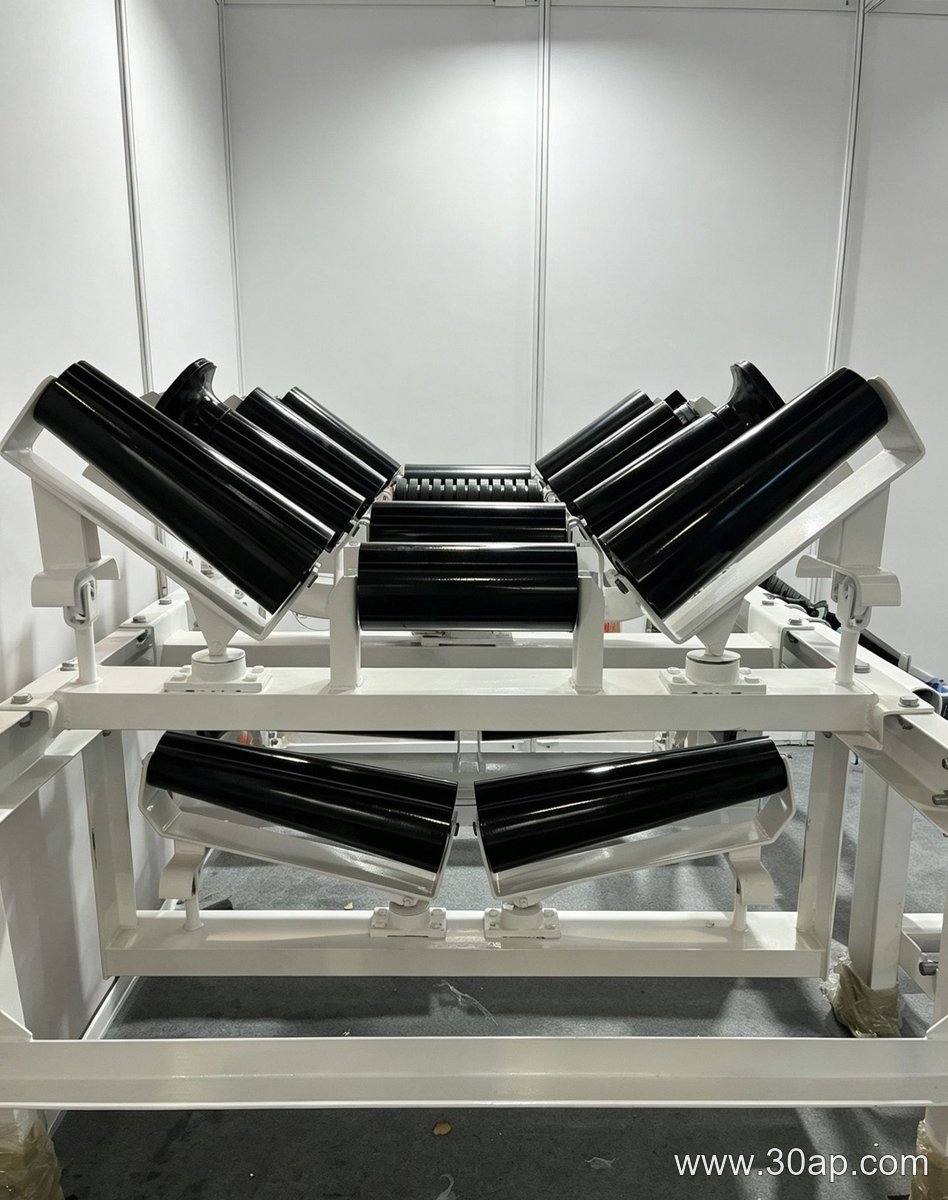
A belt conveyor idler frame is the structural bracket that holds the idler rollers in position along the carrying and return sides of a conveyor. In a quarry, a coal preparation plant, or a cement clinker line, the frame keeps each idler roller at the correct spacing, height, and trough angle so the conveyor belt runs smoothly without excessive sag or edge damage. The frame itself does not turn or carry the load directly; it transfers the load from the rollers into the conveyor stringer or support structure. Because of this, the frame must match the belt width, the roller diameter, and the intended trough angle of that specific station.
Common Types and Where They Sit
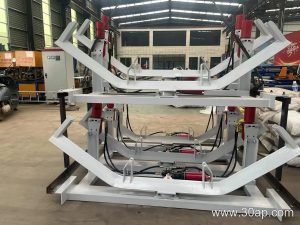
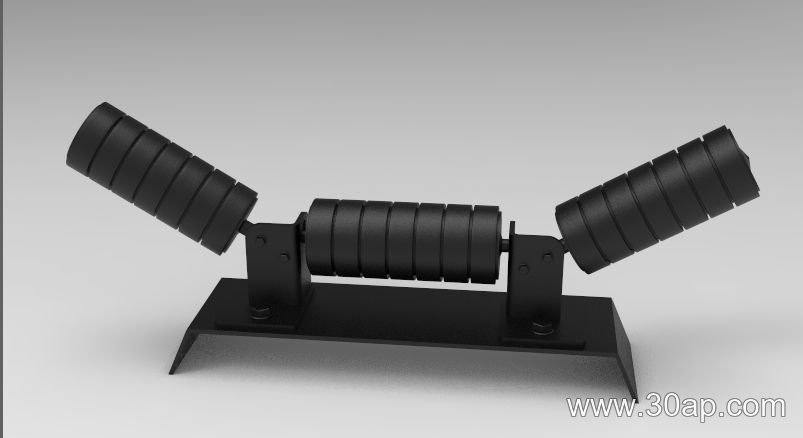
Different positions on a conveyor call for different frame designs. A troughing idler frame supports three rollers in a V or U shape on the carrying side, while a return frame supports a single flat or V-shaped roller underneath the belt. Transition frames are placed near the head or tail pulley to guide the belt from a flat profile into a full trough. Impact frames, often fitted under a loading chute in a crushing or screening circuit, hold impact rollers with rubber rings. Self-aligning frames allow slight rotation to correct belt tracking. Adjustable frames let maintenance crews change the trough angle between roughly 20 and 45 degrees without replacing the whole bracket. A fixed frame, by contrast, is welded for one angle only, which suits stable, well-behaved conveyors but gives less flexibility when the belt loading changes.
How the Frame Is Built
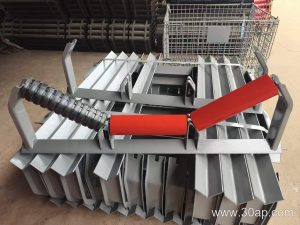
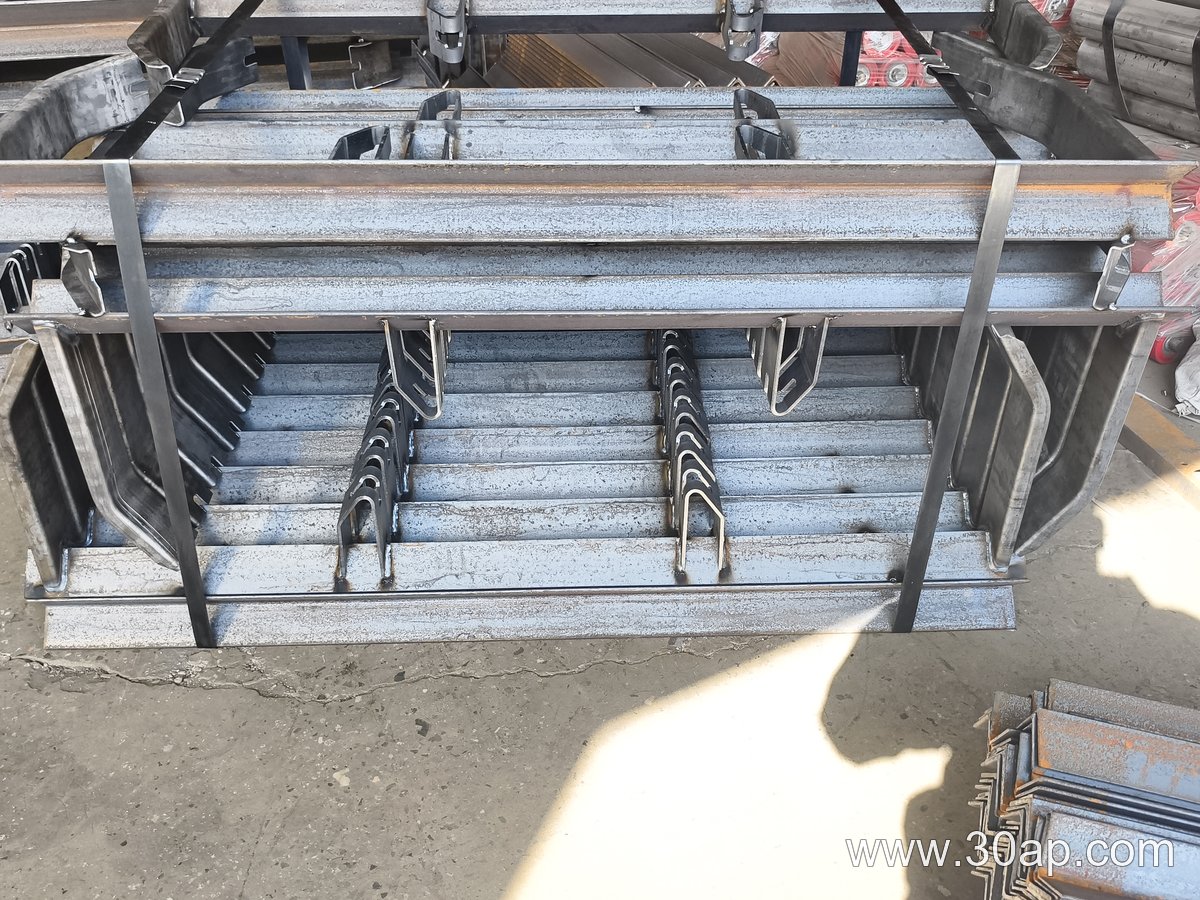
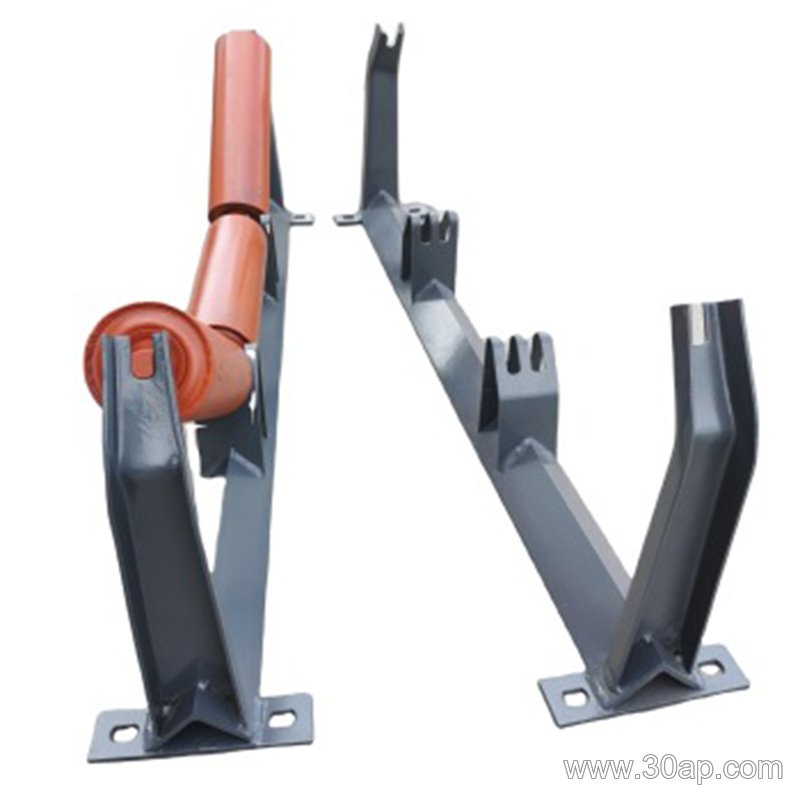
Most frames are fabricated from angle steel, channel steel, or folded steel plate. The cross beam carries the mounting slots for the idler shafts, and the end brackets bolt to the conveyor stringer. Slot spacing and beam length are usually determined by belt width, trough angle, and roller diameter rather than by a single universal figure. A typical combination might be a B800 belt with a 35 degree trough and Ø108 rollers, or a B1200 belt with a 45 degree trough and Ø133 rollers. These are common references, not fixed rules; the same belt width can accept different roller diameters and trough angles depending on the material and capacity. For a belt width of B500 up to B2200, the frame dimensions grow accordingly, and the hole pitch must be checked against the actual roller shaft and mounting bracket.
| Parameter | Common Options |
|---|---|
| Frame type | Troughing, return, transition, impact, self-aligning, adjustable |
| Belt width | B500, B650, B800, B1000, B1200, B1400, B1600, B1800, B2000, B2200 |
| Trough angle | 20°, 30°, 35°, 45° (adjustable frames cover a range) |
| Roller diameter | Ø89, Ø108, Ø133, Ø159, Ø194 |
| Material | Angle steel, channel steel, folded steel plate |
Matching Frame to Roller and Belt
The frame, the idler roller, and the conveyor belt work as one system. If the frame is too wide for the belt, the outer rollers may not contact the belt properly; if it is too narrow, the belt can ride up the side roller and misalign. The trough angle also affects how the material sits on the belt. A 20 degree trough is relatively flat and suits fine materials or low capacity, while a 45 degree trough gives a deeper material bed and is often chosen for lumpy ore or aggregate. Forward tilt of about 1.5 to 2 degrees on the side rollers is sometimes used to help tracking, but it must be built into the frame or the roller bracket. When replacing a frame, the buyer should confirm the roller shaft diameter, the mounting hole distance, and the stringer bolt pattern rather than relying only on the belt width. A conveyor pulley at the head or tail has a completely different mounting arrangement, so a frame from a troughing station cannot be swapped onto a pulley position.
Buyer Checklist Before Ordering
- Confirm the station type: carrying, return, transition, impact, or self-aligning.
- Check belt width and required trough angle, especially if the conveyor handles different materials.
- Verify roller diameter and shaft end shape, since these determine slot size and clamping method.
- Measure the stringer bolt spacing or ask for a drawing that shows the mounting bracket layout.
- Decide between fixed and adjustable frames based on how often the trough angle may need to change.
- For dusty or wet conditions in a coal plant or cement mill, consider how the frame drains and how easily rollers can be removed.
A well-chosen belt conveyor idler frame keeps the rollers aligned, extends belt life, and reduces the chance of material spillage. It is a simple component, but its fit with the conveyor belt, idler roller, and support structure determines how quietly and reliably the whole conveyor runs.