What a Tail Pulley Does
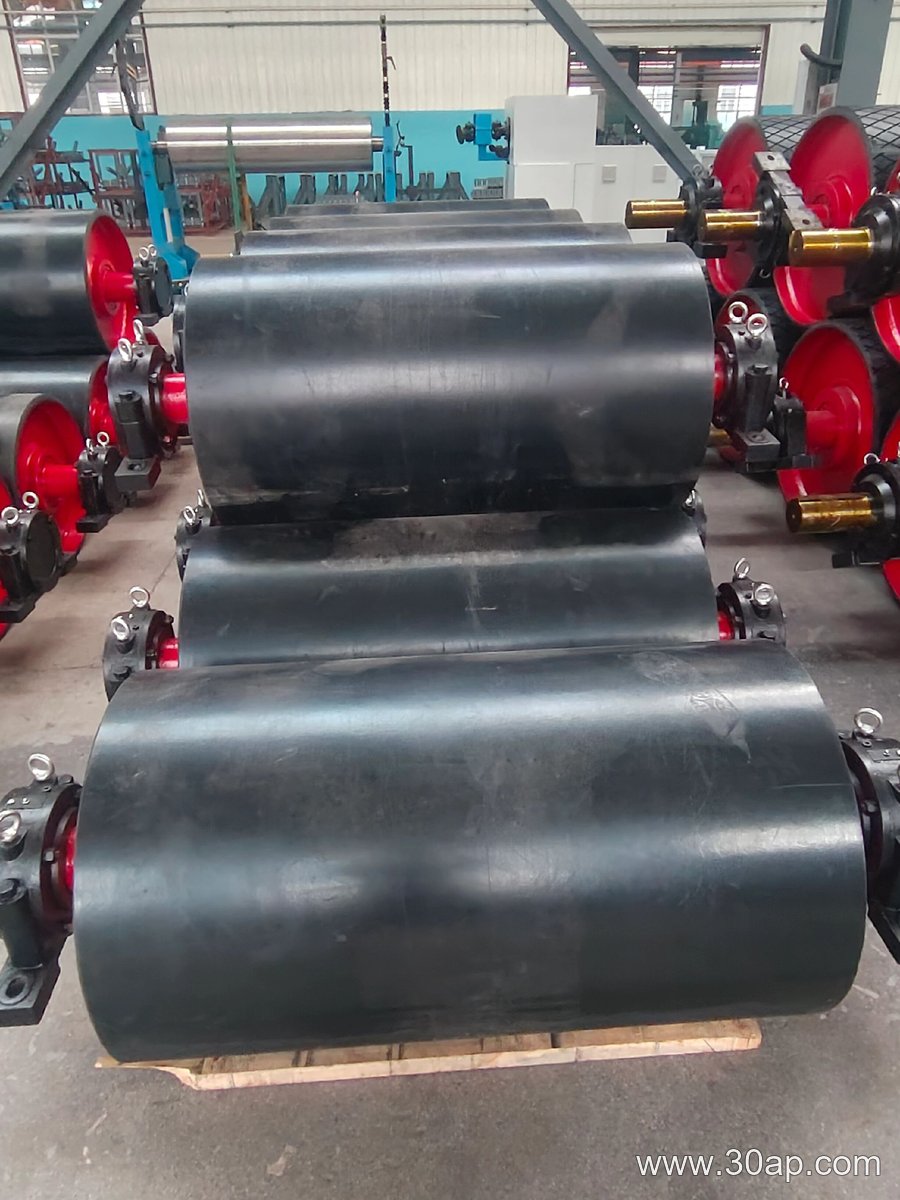
A tail pulley is the rotating drum at the return end of a conveyor, where the belt loops back after discharging its load. It is not a drive pulley, nor is it the same as a bend pulley. The drive pulley transmits power to the belt, a bend pulley changes belt direction without driving, and the tail pulley mainly supports and guides the belt at the rear of the conveyor. Depending on the design, it may also act as a tension pulley when the take-up system is located at the tail end.
Because it sits at the loading zone on many conveyors, the tail pulley often works with a conveyor belt that is still carrying material. Its shell must resist abrasion and buildup, and its bearings must handle continuous rotation under load. A well-chosen tail pulley helps keep belt tracking stable and reduces the chance of spillage or premature belt wear.
How It Is Built
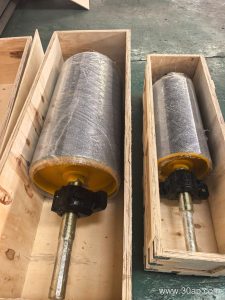
A typical tail pulley consists of a cylindrical shell, end discs, a shaft, bearing housings, and a surface covering if required. The shell is usually made from steel tube or rolled plate, machined to keep it round and balanced. The shaft is sized by torque and radial load, not by belt width alone. Common shaft diameters include Ø50, Ø60, Ø70, Ø80, Ø90, Ø100, Ø120, Ø140, Ø160, Ø180, and Ø200 mm, but the final value depends on the conveyor design and the loads involved.
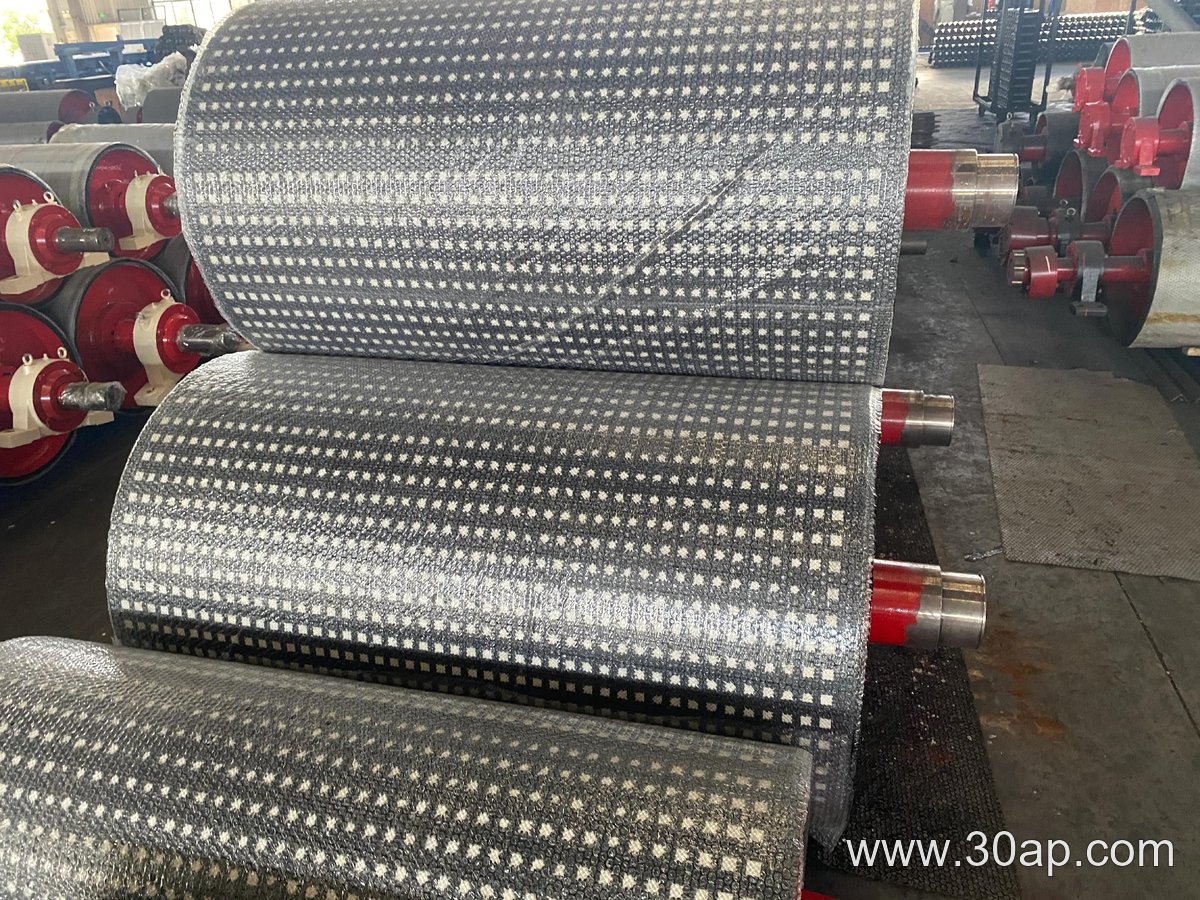
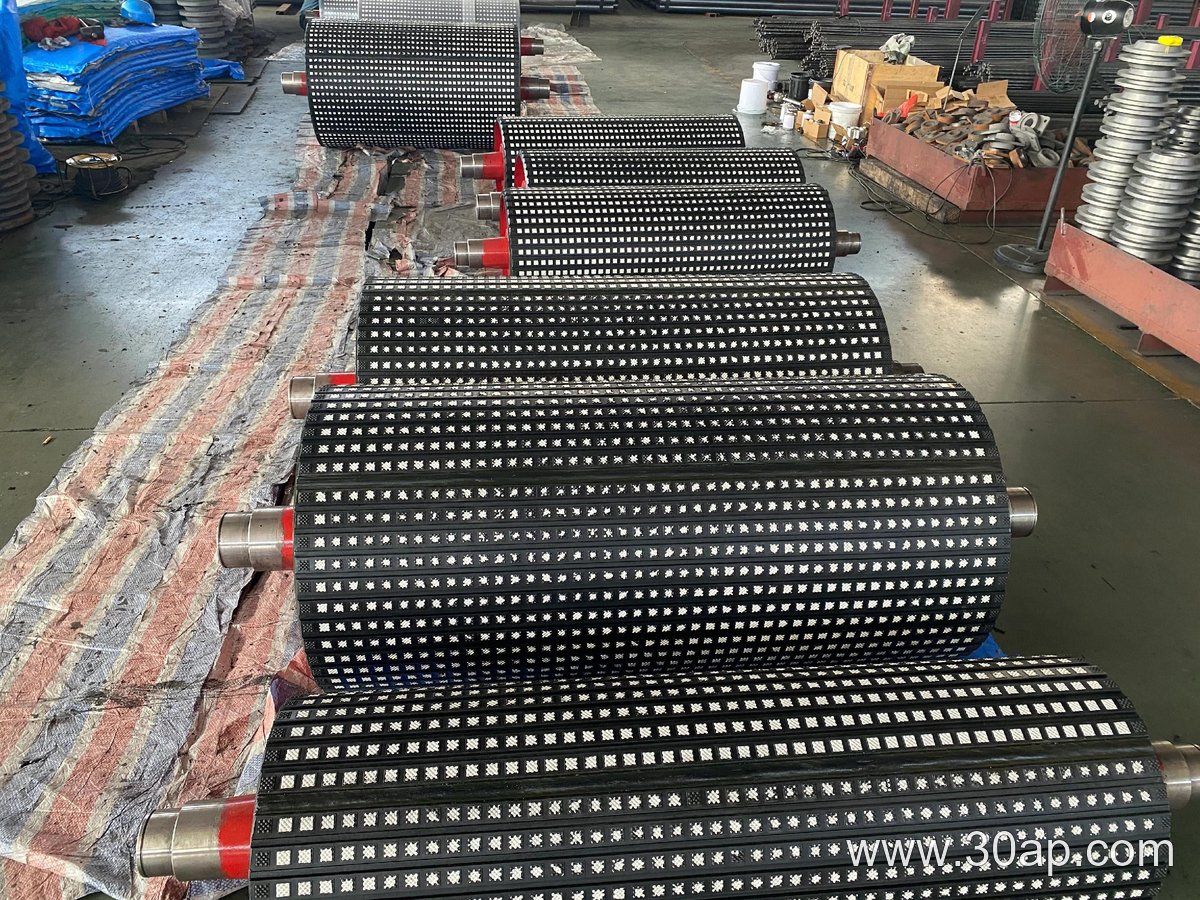
Surface options range from plain steel to rubber lagging. Plain (smooth) surfaces are common in light-duty or non-abrasive applications. Rubber lagging, such as cold-bonded rubber, hot vulcanized rubber, diamond pattern, herringbone, or ceramic lagging, can improve grip and protect the shell. Lagging thickness is often 8, 10, 12, 15, or 20 mm, selected according to belt speed, material, and ambient conditions.
Common diameters for tail pulleys include Ø200, Ø250, Ø315, Ø320, Ø400, Ø500, Ø630, Ø800, Ø1000, Ø1250, and larger sizes for heavy-duty conveyors. The pulley face width is usually wider than the belt. For example, a B400 belt may use a face width around 500 mm, B500 around 600 mm, B650 around 750 mm, B800 around 950 mm, B1000 around 1150 mm, and B1200 around 1400 mm. These are reference examples, not fixed pairings. A B1200 belt can be used with different pulley diameters depending on the application, and B800 × Ø500 or B1400 × Ø800 are simply illustrative combinations.
Typical Applications
Tail pulleys are found in quarry and aggregate conveyors, cement plants, coal handling systems, and bulk material terminals. In a crushing and screening circuit, the tail pulley often sits under the crusher discharge, where impact and abrasion are high. In a coal yard or port bulk terminal, it may be exposed to dust and moisture, so sealed bearings and lagging help extend service life.
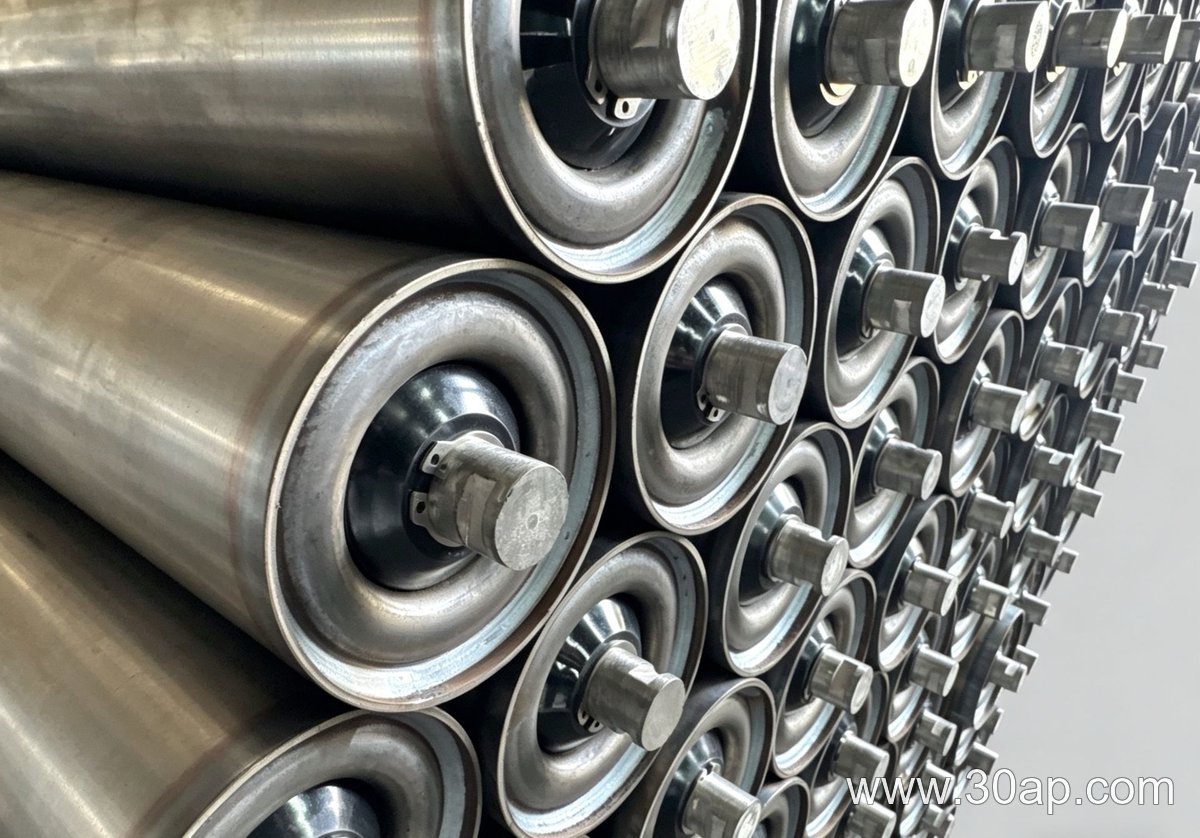
They also appear in smaller systems such as concrete batching plants and grain silos, where a compact tail pulley with a smooth surface may be sufficient. In all cases, the tail pulley must match the conveyor belt width, the take-up arrangement, and the available space around the conveyor bracket and idler roller positions.
Selection and Maintenance Notes
When specifying a tail pulley, consider belt width, belt speed, material characteristics, and the take-up method. The pulley diameter should be large enough to avoid excessive belt bending stress, but it should not be chosen from belt width alone. Shaft diameter must be calculated from torque and load. Lagging choice depends on whether the pulley needs extra grip or protection from wear. A wing pulley may be used in some sticky material applications, but it is a different subtype and not a direct replacement for a standard tail pulley.
Maintenance focuses on bearing lubrication, checking for lagging wear, and verifying that the pulley remains aligned with the belt. Misalignment can cause belt tracking problems, edge damage, and premature failure. Regular inspection of the tail pulley, together with the conveyor belt and idler rollers, helps keep the system running smoothly.
For any project, the final tail pulley dimensions, surface type, and shaft size should be confirmed by the conveyor designer. The values above are common references, not universal specifications or supply promises.