What the Herringbone Grooved Lagged Pulley Is
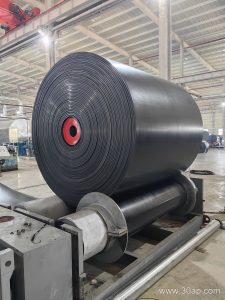
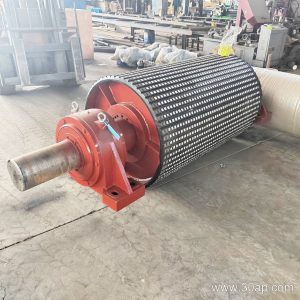
A herringbone grooved lagged pulley is a conveyor pulley whose outer surface carries a rubber lagging cut with V-shaped grooves that meet at the center. This pattern is also called chevron grooved lagging. The pulley itself may be a drive drum, a tail drum, or a bend drum, but the herringbone grooved lagged version is chosen when both friction and belt centering matter on the same unit.
It differs from a plain smooth drum because the lagging does two jobs at once: it raises the coefficient of friction between the shell and the conveyor belt, and the chevron channels push water and fine dust out from under the belt. A smooth steel shell slips easily when the belt is wet or muddy. A herringbone grooved lagged pulley keeps grip while the angled grooves guide the belt back toward the center line.
How the Grooved Lagging Is Built
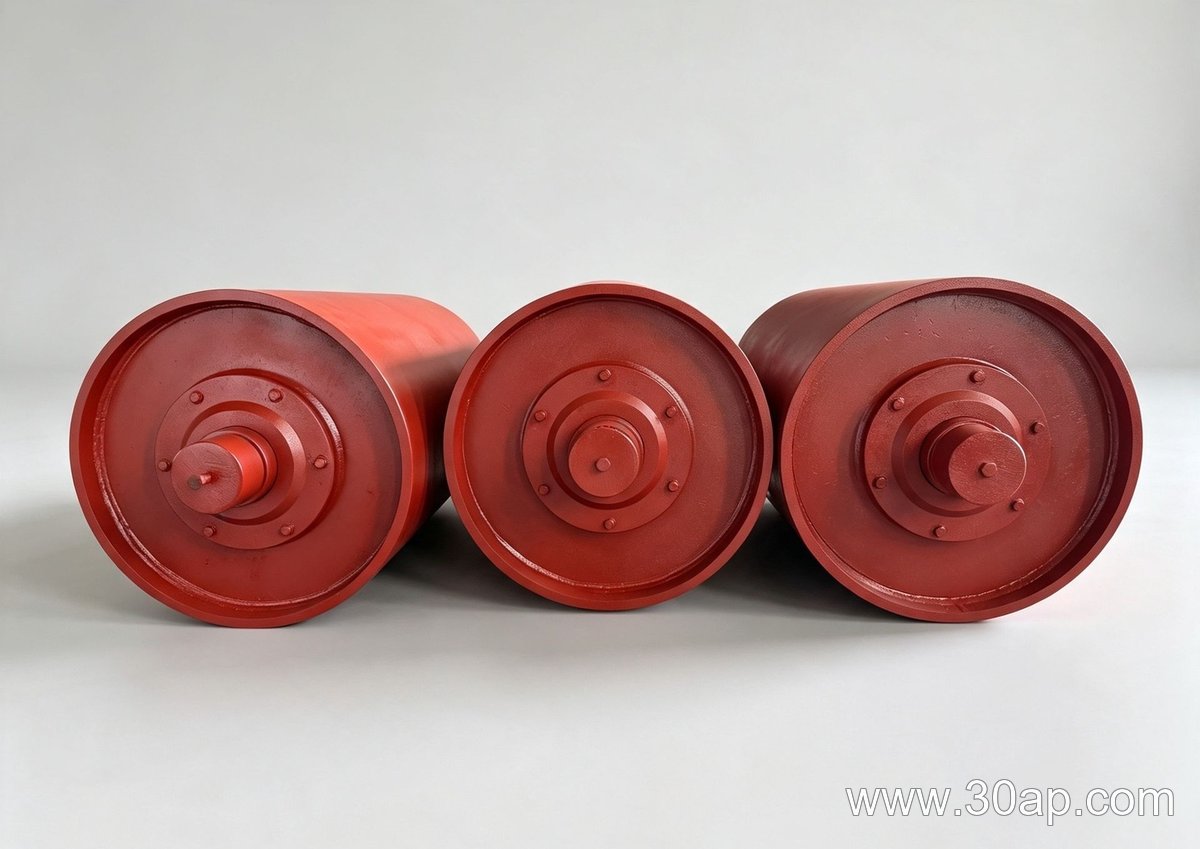
The base is a welded steel drum with a machined face. Rubber lagging is bonded to that face, usually by hot vulcanization, cold bonding, or cast-on methods. The herringbone pattern is then cut or molded into the rubber. Common lagging thicknesses are 8, 10, 12, 15, and 20 mm. The groove depth is typically a fraction of the rubber thickness, and the V angle is set by the manufacturer.
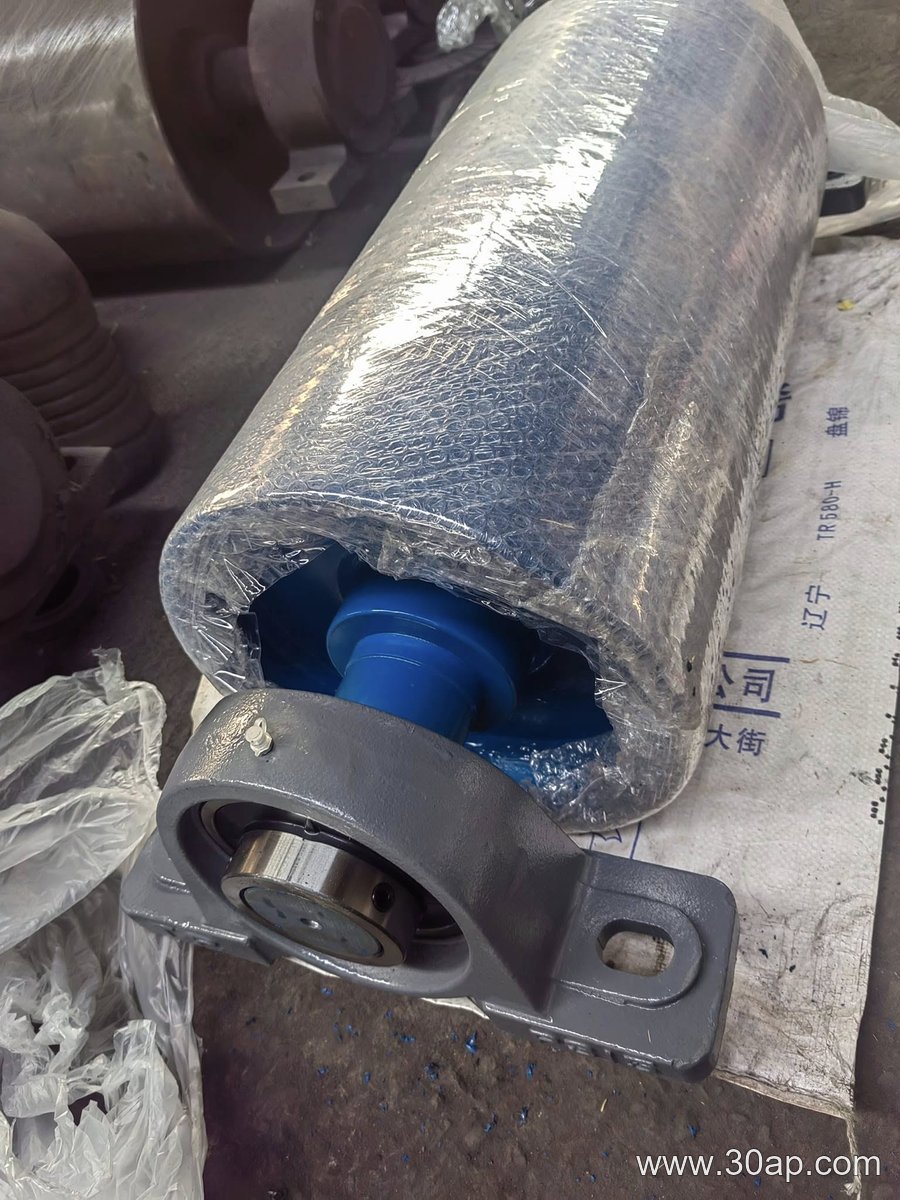
The shell width is normally wider than the belt. For example, a B800 belt often runs on a drum face around 950 mm, while a B1200 belt may use a face near 1400 mm. Diameters range from small units such as Ø200 up to large drive pulleys at Ø1600 or more. A typical combination could be B1000 × Ø630 or B1400 × Ø800. These are common references, not fixed rules, because belt width and drum diameter are selected separately from torque, wrap angle, and belt tension.
Shaft diameter is another independent choice. Common shaft sizes include Ø80, Ø100, Ø120, Ø140, Ø160, and Ø180. A wider belt does not automatically mean one fixed shaft size; the shaft is sized by the torque and bending load the pulley must carry.
Where It Fits on the Conveyor
This grooved lagged drum is most often used as a head or drive pulley, where the belt wraps the drum under high tension. The chevron lagging improves power transmission and reduces slip. It is also found on tail pulleys and tension pulleys when the return belt is wet or carries sticky fines that would otherwise build up on a smooth face.
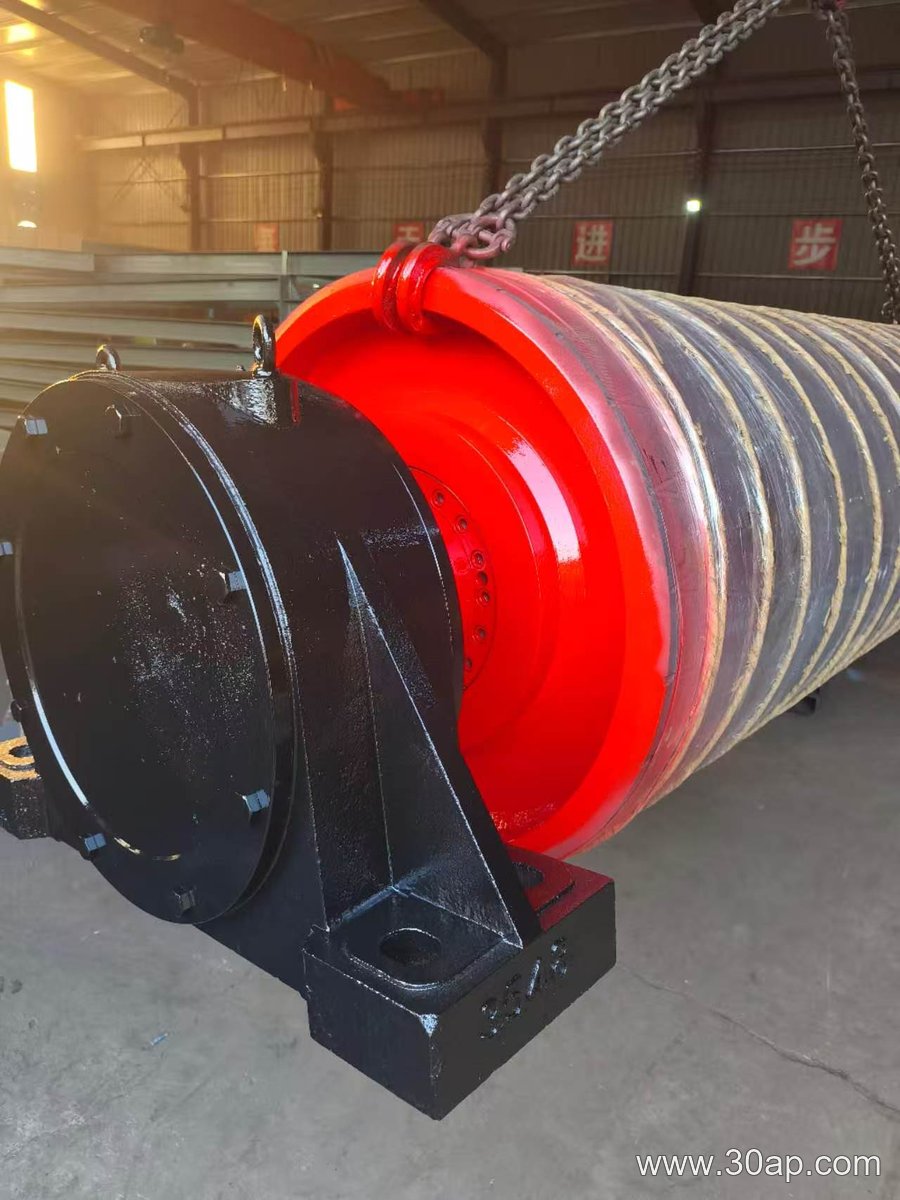
It is not the same as a bend pulley. A bend pulley only changes belt direction and usually needs less grip, so a plain or lightly lagged face is often enough. A tail pulley may use the same herringbone lagging when tracking is poor, but the drive pulley remains the main place where the grooved pattern pays off.
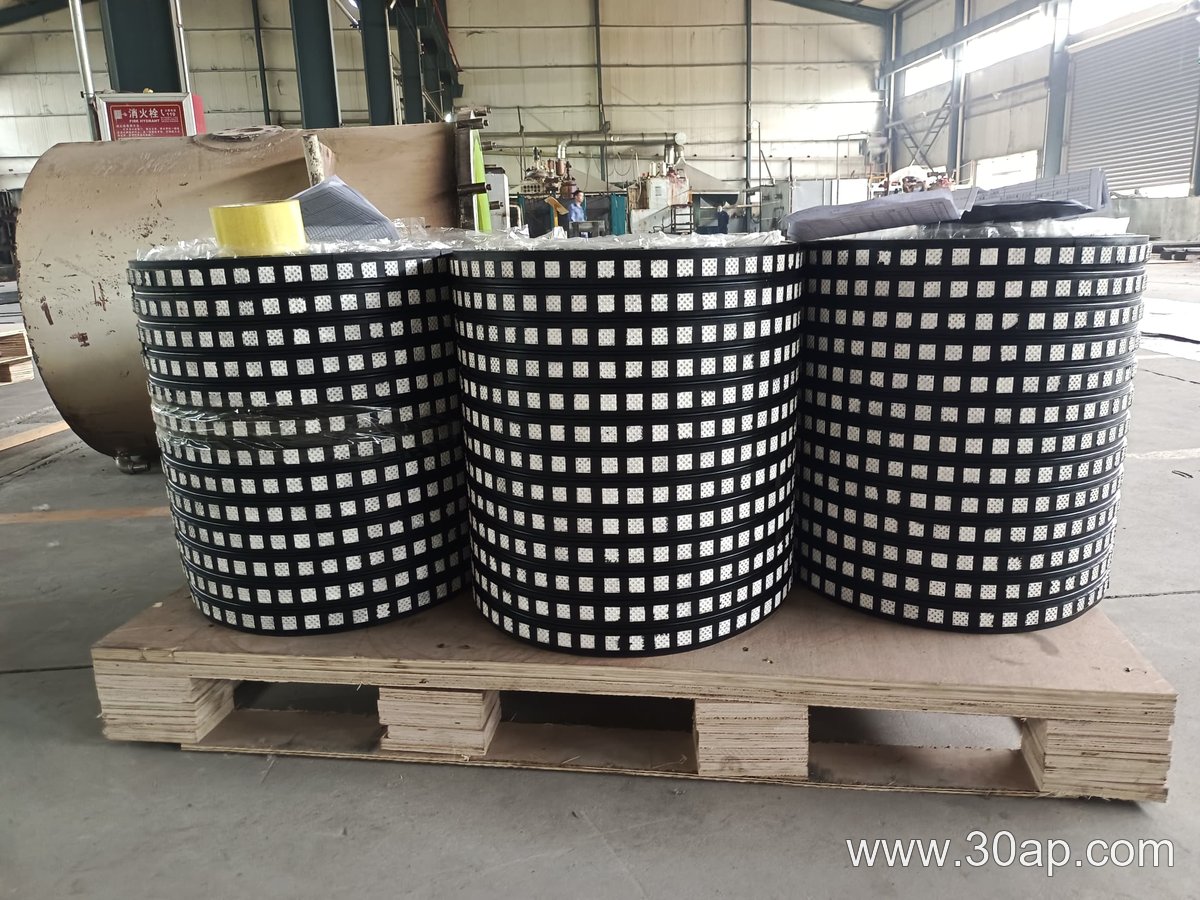
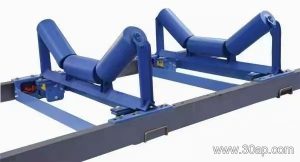
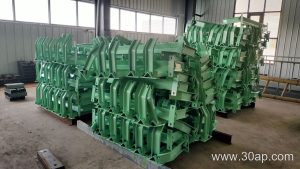
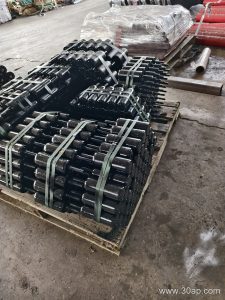
Typical sites include sand and gravel lines, crushed stone plants, coal handling at power stations, and fertilizer or grain silos where dust and moisture are present. In these places, an idler roller or a conveyor bracket may sit nearby, but the herringbone grooved lagged pulley is the component that keeps the belt moving and centered.
Selection and Buying Notes
When specifying a herringbone grooved lagged pulley, give the belt width, the required drum diameter, the shaft diameter, the face width, and the lagging thickness. Also state whether the pulley is a drive, tail, or bend position. The groove pattern is usually cut so the V points in the direction of belt travel, which helps eject water and fines.
- Belt width examples: B400, B500, B650, B800, B1000, B1200, B1400, B1600, B1800, B2000.
- Common drum diameters: Ø200, Ø250, Ø315, Ø400, Ø500, Ø630, Ø800, Ø1000, Ø1250, Ø1400, Ø1600, Ø1800.
- Lagging surface options: plain rubber, diamond lagging, herringbone grooved, ceramic lagging, cold bonded, hot vulcanized.
- Lagging thickness choices: 8 mm, 10 mm, 12 mm, 15 mm, 20 mm.
Do not assume that one belt width can only match one pulley diameter. A B650 belt might run on a Ø315 tail drum or a Ø500 drive drum depending on the conveyor design. Likewise, shaft size is not derived from belt width alone. A buyer should confirm the actual load, the wrap angle, and the environmental conditions before ordering. The herringbone grooved lagged pulley is a robust choice for wet, dusty, or high-torque duty, but it must be sized as part of the whole conveyor system.