What a Rubber Lagged Pulley Does on a Conveyor
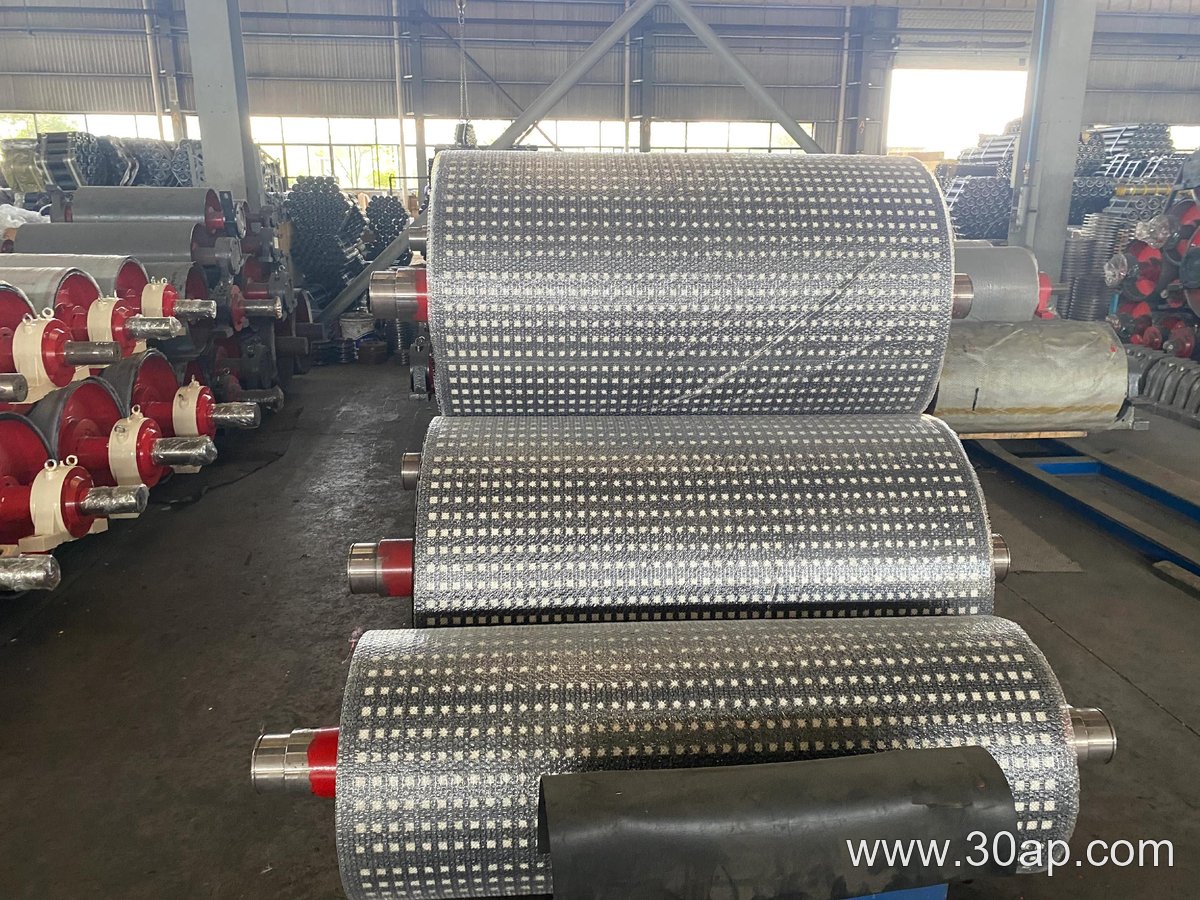
A belt conveyor rubber lagged pulley is a conveyor pulley whose cylindrical shell is covered with a rubber layer to improve grip between the drum and the conveyor belt. The rubber surface raises the friction coefficient, which helps transmit torque without excessive belt tension and reduces slip when the belt is wet, dusty or carrying a heavy load. It also cushions the belt contact and protects the shell from abrasive wear.
This is not the same as a plain steel drum. A rubber lagged pulley is chosen when traction, belt tracking or wear life matters more than the lowest possible initial cost. It is still a driven or non-driven conveyor pulley, but the lagging becomes part of the functional design.
How the Pulley Is Built
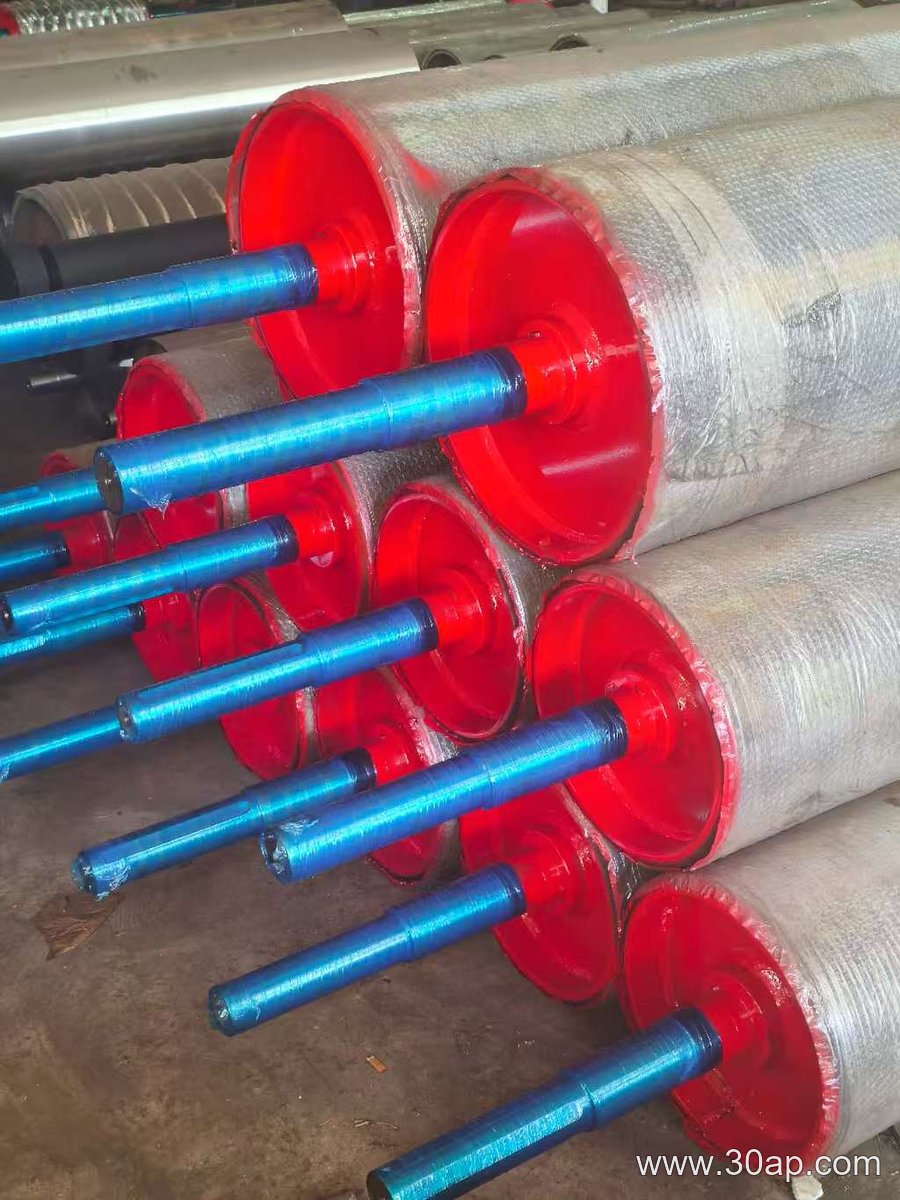
The core is normally a welded steel shell with end discs, a shaft and bearing housings. The shaft diameter is determined by torque and load, not by belt width alone, so a given belt width may be paired with different shaft sizes depending on the drive arrangement. Common shaft diameters include Ø50, Ø60, Ø70, Ø80, Ø90, Ø100, Ø120, Ø140, Ø160, Ø180 and Ø200 mm.
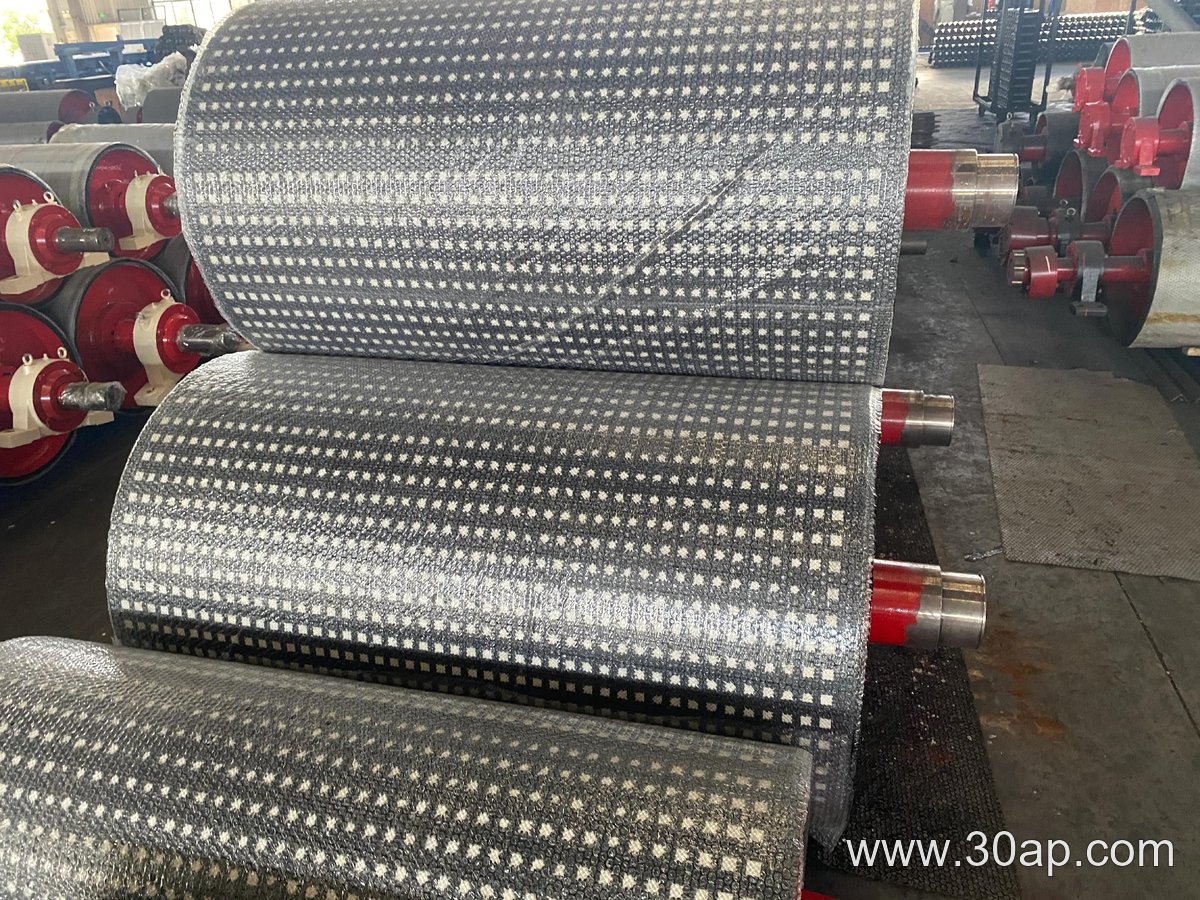
Lagging is applied in several ways. Cold bonded rubber, hot vulcanized rubber and cast rubber are the usual methods. Surface patterns include plain, diamond and herringbone. Thickness commonly ranges from 8 mm to 20 mm, with 8, 10, 12, 15 and 20 mm being frequent choices. The right combination depends on belt speed, load, moisture and the amount of slip expected.
Drive Tail and Bend Positions Are Not Interchangeable
Position changes the job. A drive pulley transmits power and needs reliable traction, so lagging is often essential. A tail pulley mainly supports and guides the belt at the loading end, and may use lagging to reduce wear or improve tracking. A bend pulley changes belt direction and usually carries less torque, so its lagging, if any, serves a different purpose.
For comparison, a snub pulley is sometimes used to increase wrap angle around a drive pulley. It is a separate subtype and should not be treated as a replacement for the main drive or tail unit. The same logic applies to a take-up pulley, which maintains tension rather than driving the belt.
Where It Fits in a Conveying System
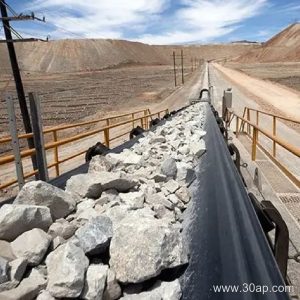
Rubber lagged pulleys appear in many bulk handling settings. In a quarry or limestone mine, they help keep the belt running under wet and gritty conditions. In a coal preparation plant or power station coal yard, lagging improves grip when fines and moisture reduce friction. Aggregate lines, cement clinker circuits and port bulk terminals also use them where reliable starting and steady tracking are important.
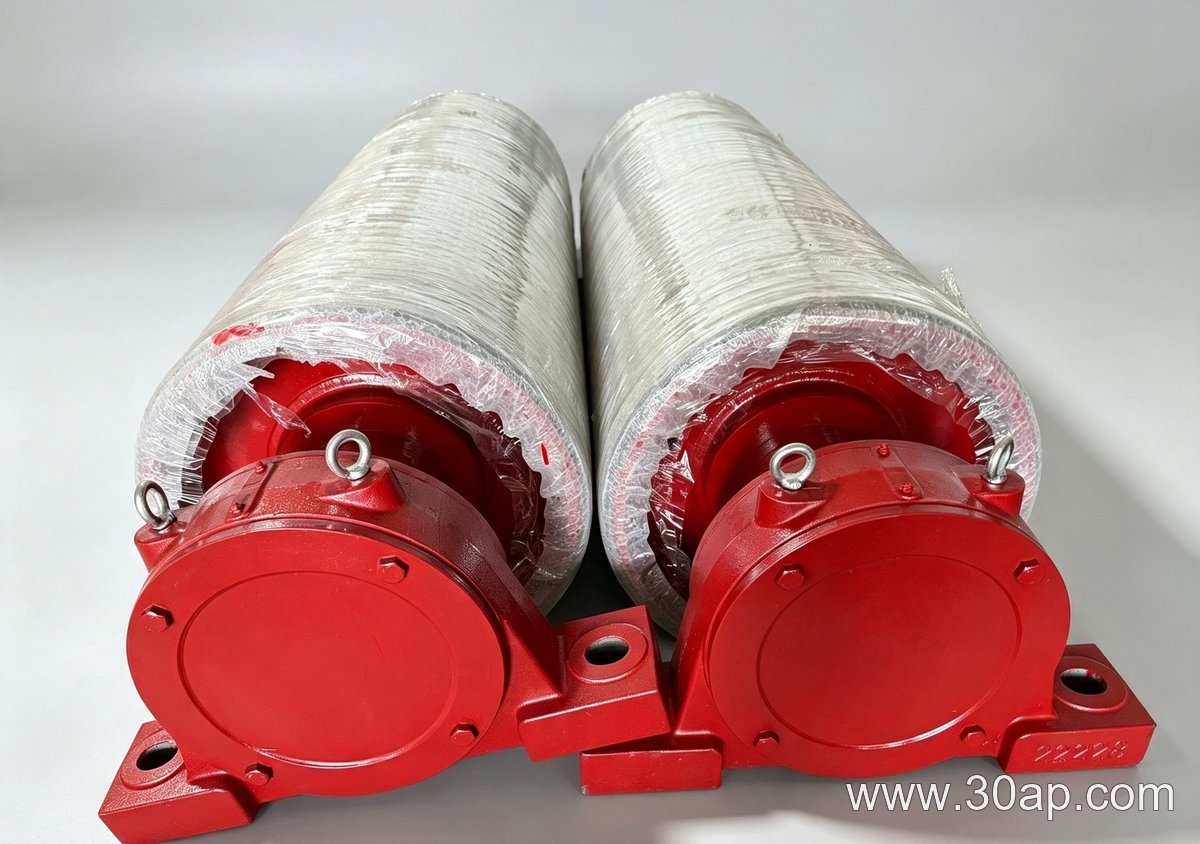
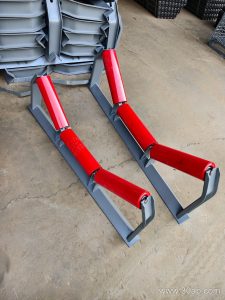
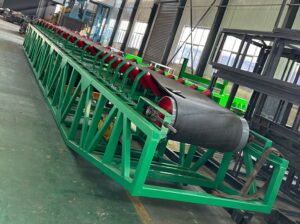
They work together with the conveyor belt, idler rollers, conveyor brackets and the supporting frame. A lagged pulley does not fix poor belt training on its own; alignment, loading and tension still matter. When a conveyor pulley is correctly matched to the belt and the duty, the whole system runs more smoothly.
Common Sizes and Surface Choices
Belt widths for this product family commonly include B400, B500, B650, B800, B1000, B1200, B1400, B1600, B1800, B2000, B2200 and B2400. Pulley diameters commonly include Ø200, Ø250, Ø315, Ø320, Ø400, Ø500, Ø630, Ø800, Ø1000, Ø1250, Ø1400, Ø1600 and Ø1800 mm. These are reference ranges, not fixed rules. A B800 conveyor might use a Ø500 pulley in one layout and a different diameter in another; the design engineer decides based on wrap angle, belt speed and tension.
The shell face is usually wider than the belt. For example, a B400 belt often matches a shell face around 500 mm, B650 around 750 mm, B1000 around 1150 mm and B1400 around 1600 mm. These figures are typical rather than mandatory, and they should always be confirmed against the actual conveyor drawing.
What a Buyer Should Check
- Position and duty: drive, tail, bend or take-up. Each has a different traction and load profile.
- Lagging type: plain, diamond or herringbone, and cold bonded, hot vulcanized or cast.
- Lagging thickness: 8 to 20 mm is common, but the choice depends on abrasion and slip risk.
- Belt width and pulley face: confirm the face width is wider than the belt and matches the frame.
- Diameter and shaft: diameter follows the conveyor design, while shaft size follows torque and bearing load.
- Balance and finish: an unbalanced or poorly bonded lagging can damage the belt and shorten service life.
- Environment: wet, dusty or high-temperature conditions influence rubber compound and pattern choice.
A well specified belt conveyor rubber lagged pulley improves traction, reduces belt slip and extends the working life of the belt. The key is to treat it as an engineered component, not a generic drum, and to match every dimension to the actual conveyor design.