What a High-Strength Idler Is
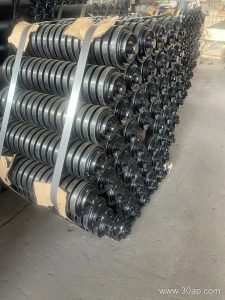
A high-strength idler is a carrying or return roller built to survive the point where ordinary rollers start to fail: heavy lump loads, high belt tensions, continuous abrasion, and long operating hours. In day-to-day language, people call it a heavy-duty idler roller or a reinforced conveyor roller, but the function is the same — it supports the conveyor belt, keeps it tracking, and lets the belt travel with as little rolling resistance as the design allows.
It is still a roller, not a pulley. A conveyor pulley drives, returns or redirects the belt at the ends of the machine, and drive, tail and bend pulleys each do a different job. A high-strength idler sits along the carrying and return runs and only supports the belt. Mixing those roles up leads to wrong orders and wrong installation.
How the Roller Is Built
The strength comes from the combination of shell, shaft, bearing housing and sealing, not from one single part. Typical construction choices include:
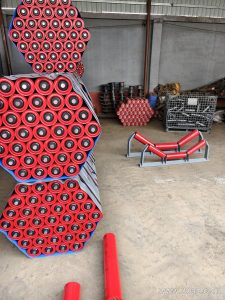
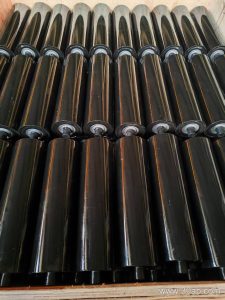
- Shell in thick-wall steel tube, sometimes with a wear-resistant or rubber-covered surface
- Shaft sized by load and span, not by belt width alone
- Deep-groove ball bearings such as 6205, 6305, 6306 or 6308, selected according to load and speed
- Labyrinth or multi-stage seals that keep fines and water out of the bearing cavity
- Welded end discs and machined bearing seats to hold alignment under vibration
Roller diameter is a key variable. Common sizes include Ø63, Ø76, Ø89, Ø102, Ø108, Ø127, Ø133, Ø159, Ø178, Ø194 and Ø219 mm. A larger diameter rolls more easily over lumps and reduces belt indentation, while a smaller diameter suits lighter, tighter installations. There is no rule that one belt width must pair with one diameter; the correct match depends on belt speed, load, trough angle and the idler group used.
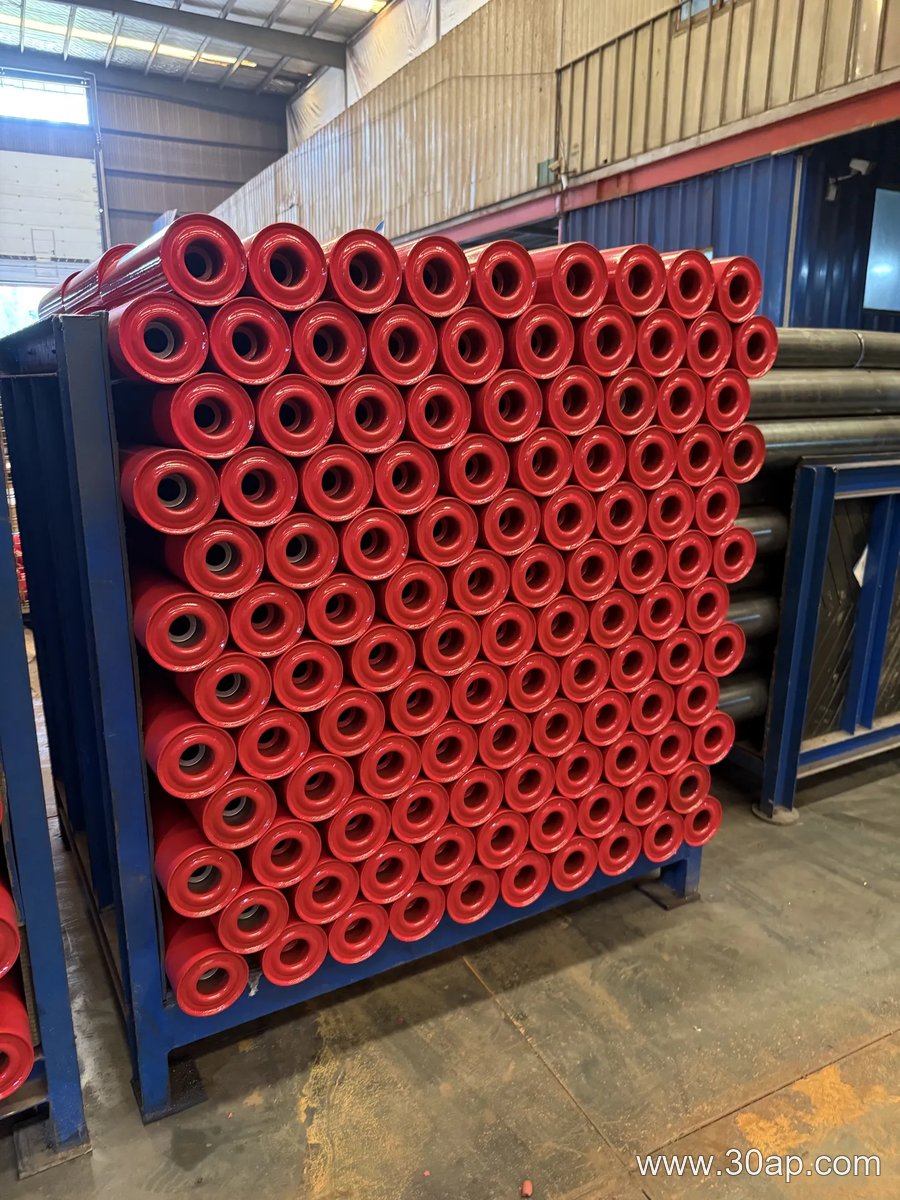
Troughing Angles and Roller Length
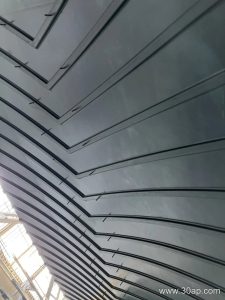
On the carrying side, a high-strength idler usually works as part of a troughing set — a single roller, a two-roll set, or the familiar three-roll arrangement. Trough angles of 20, 30, 35 and 45 degrees are common. A deeper trough holds the load better on a wide belt, but it also increases the bending of the belt at the side rollers, so the transition and the belt stiffness both matter.
Roller length changes with belt width, trough angle and group type. For a three-roll troughing set, common examples of the centre roller length are roughly 200 mm at B500, 250 mm at B650, 315 mm at B800, 380 mm at B1000, 465 mm at B1200, 530 mm at B1400, 600 mm at B1600, 670 mm at B1800 and 750 mm at B2000. These are examples, not fixed pairs; side rollers and centre rollers can differ, and the final length is set by the design.
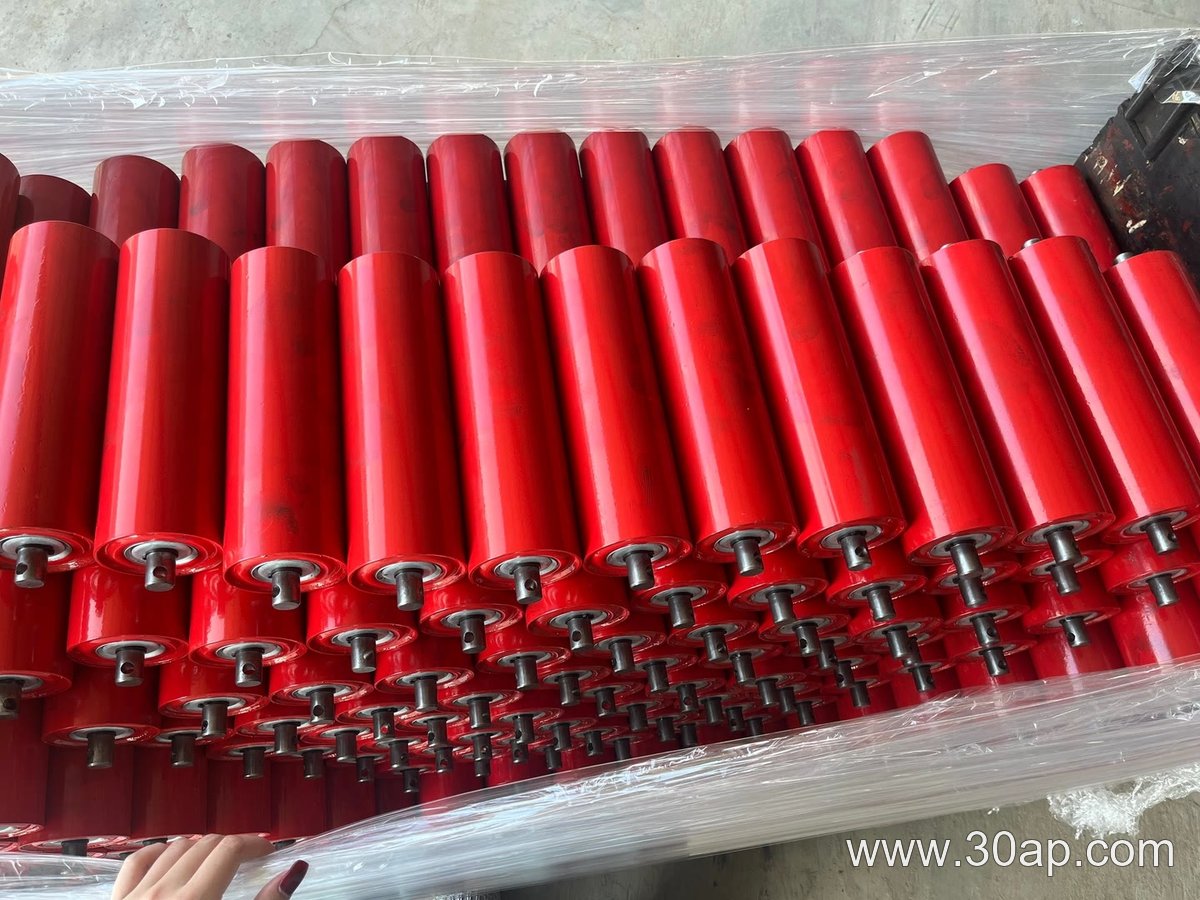
| Item | Common range or example |
|---|---|
| Roller diameter | Ø63 to Ø219 mm |
| Belt width | B400 to B2400 |
| Trough angle | 20°, 30°, 35°, 45° |
| Bearing | 6204, 6205, 6305, 6306, 6308, 6310 |
| Roller surface | Steel tube, nylon, ceramic, rubber rings |
Where It Fits on the Conveyor
High-strength idlers appear wherever the belt carries abrasive or heavy material. Two typical settings are a quarry feeding a primary crusher and a coal handling line at a power plant. In both, the loading zone is the hardest point: impact from falling rock or coal, dust that works into seals, and constant vibration. A reinforced idler with a thicker shell and better sealing lasts longer there than a light roller.
Other positions use different subtypes. Impact or buffer idlers with rubber rings absorb the drop at the loading point. Return rollers, including flat and V-type, support the empty belt underneath. Self-aligning idlers correct tracking on long runs. These are separate designs, and a buffer idler should not be ordered as a substitute for a troughing high-strength idler, or the other way round.
What a Buyer Should Check
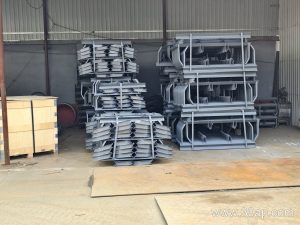
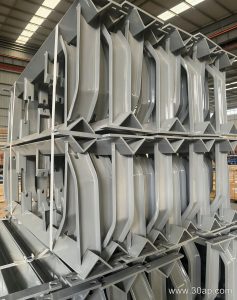
Before ordering, confirm the belt width, the trough angle, the number of rollers in the group, the roller diameter, the shaft end type, and the bracket or frame that will hold the roller. A conveyor bracket that does not match the shaft flats or the mounting pitch will cause misalignment and premature wear.
Also ask about the bearing size, the seal design, the shell wall thickness and the surface treatment. These details decide whether the roller survives a dusty, wet or high-impact environment. Finally, remember that a high-strength idler is only one part of the system: the conveyor belt, the pulleys, the frame and the loading chute all influence how long the roller lasts. Choose the idler for the duty it actually sees, and keep spare rollers of the same specification on hand for fast replacement.