What a Mining Belt Conveyor Pulley Does
A mining belt conveyor pulley is the rotating drum that turns the conveyor belt, carries its load, and keeps the belt tracking along the conveyor frame. In hard-rock and bulk material operations, this component is often called a conveyor drum pulley or simply a conveyor pulley. It is not a passive idler roller; it transmits torque from the drive unit to the belt or redirects the belt at the head, tail, tension, or bend positions. A drive pulley pulls the loaded belt forward, while a tail pulley returns the empty belt. A bend pulley changes direction without driving. These subtypes are not interchangeable, because each has a different duty in the belt line.
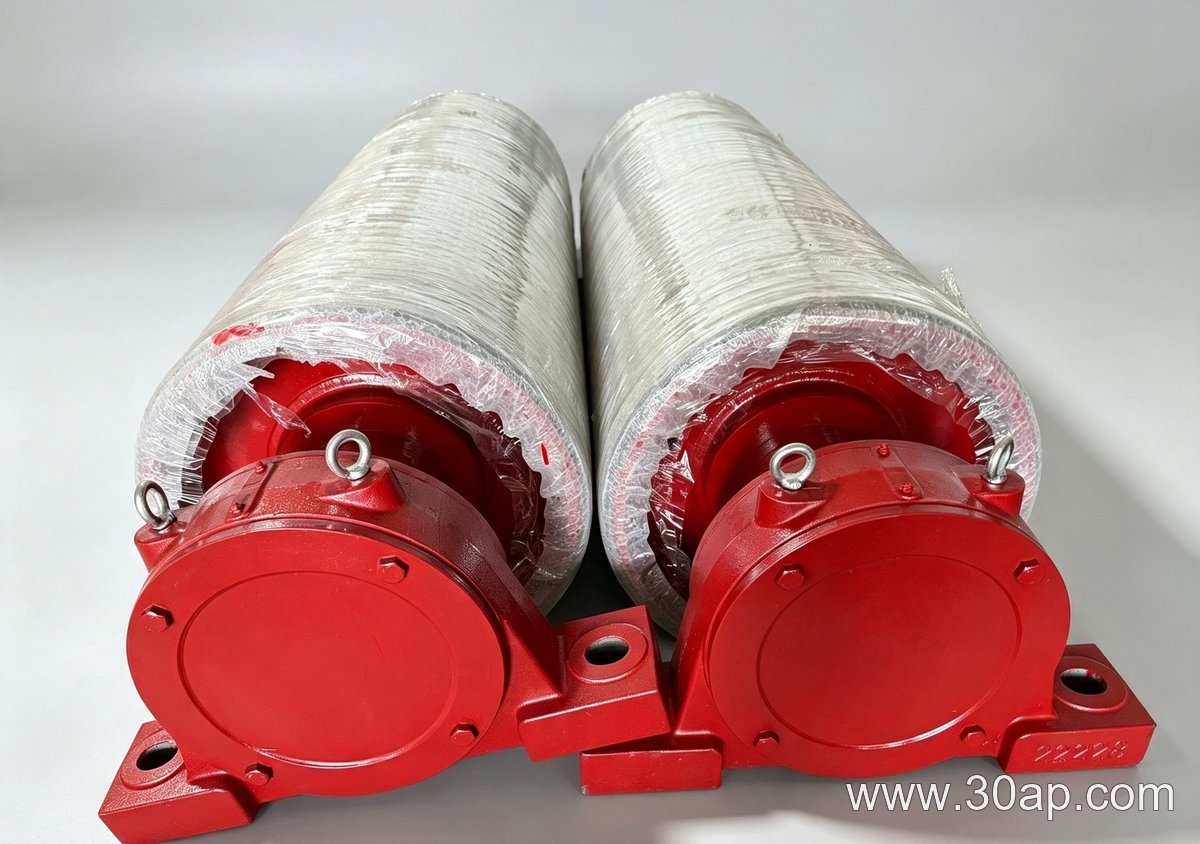
Construction and Load Path
A typical mining belt conveyor pulley consists of a cylindrical shell, end discs, a shaft, and bearing housings. The shell may be seamless pipe or rolled plate, machined to a true diameter. The shaft is sized by torque and bending load, not by belt width alone. Common shaft diameters include Ø50, Ø60, Ø70, Ø80, Ø90, Ø100, Ø120, Ø140, Ø160, Ø180, and Ø200 mm, but the final choice follows the drive design and bearing life calculation. Locking assemblies or keyed hubs connect the shaft to the end discs. The pulley is supported by bearings mounted in a conveyor bracket, which is bolted to the conveyor frame. Belt tension, material weight, and starting torque all pass through this path, so the weld quality and shaft alignment matter as much as the shell thickness.
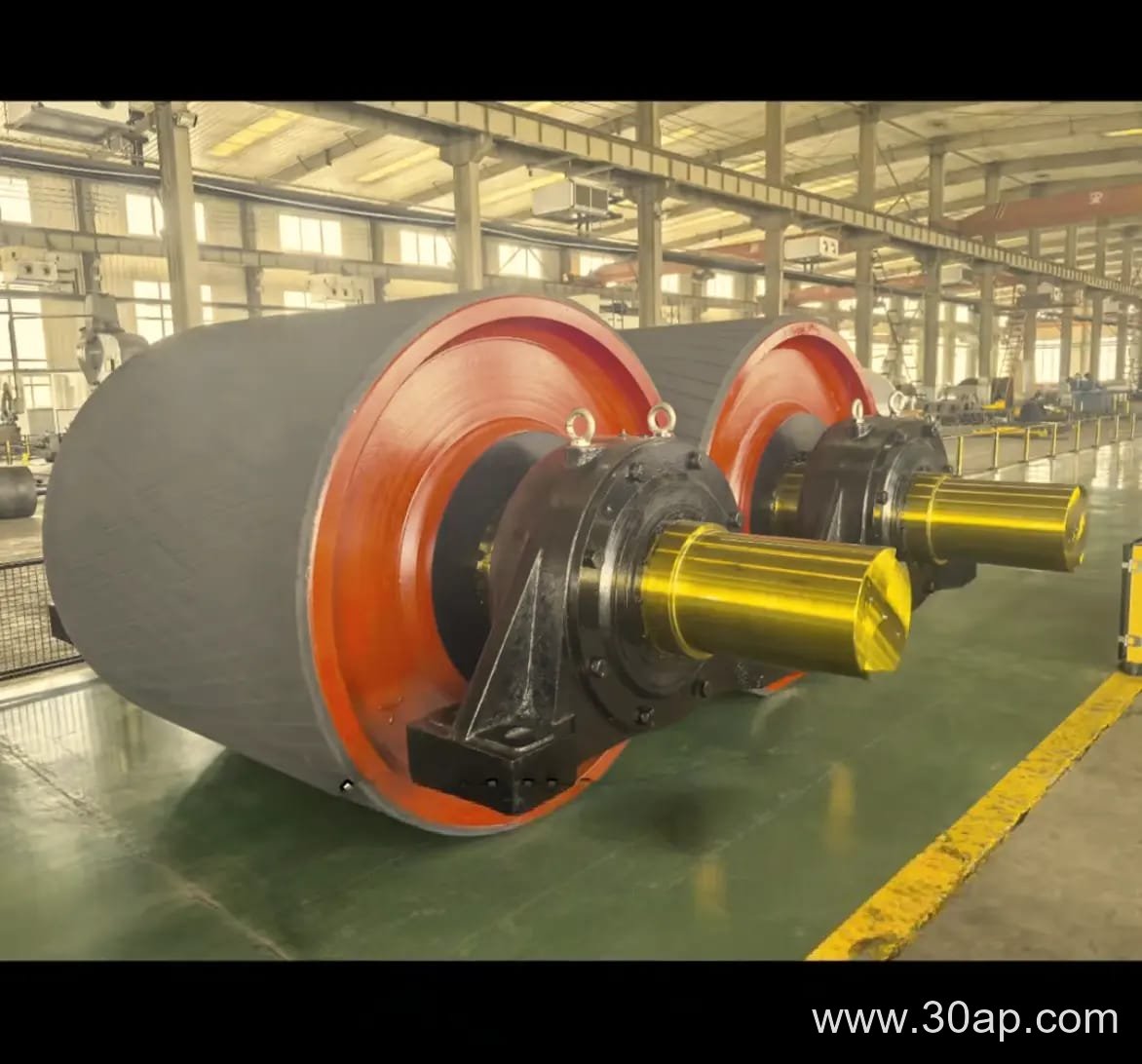
Surface Options and Grip
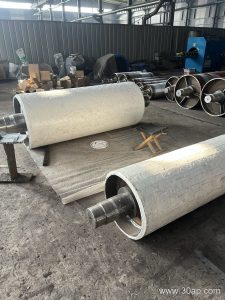
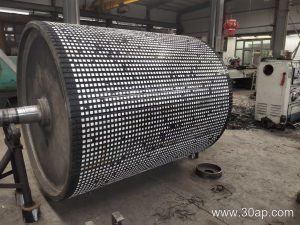
The pulley surface affects traction and belt wear. A plain or smooth surface works for light duty or where slip is not a concern. Rubber lagging is common on drive pulleys to increase friction and reduce belt slippage. It can be applied as cold-bonded rubber, hot-sulfur vulcanized rubber, or cast rubber. The pattern also matters: diamond lagging, herringbone lagging, ceramic lagging, and flat rubber each suit different conditions. Lagging thickness is often 8, 10, 12, 15, or 20 mm. In a wet or muddy mine, ceramic or grooved lagging can help water escape from the nip point, while a flat rubber surface may be enough for a dry, clean tail position.
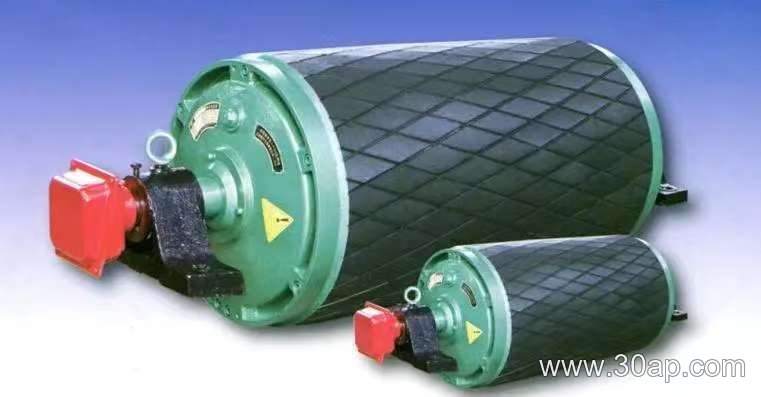
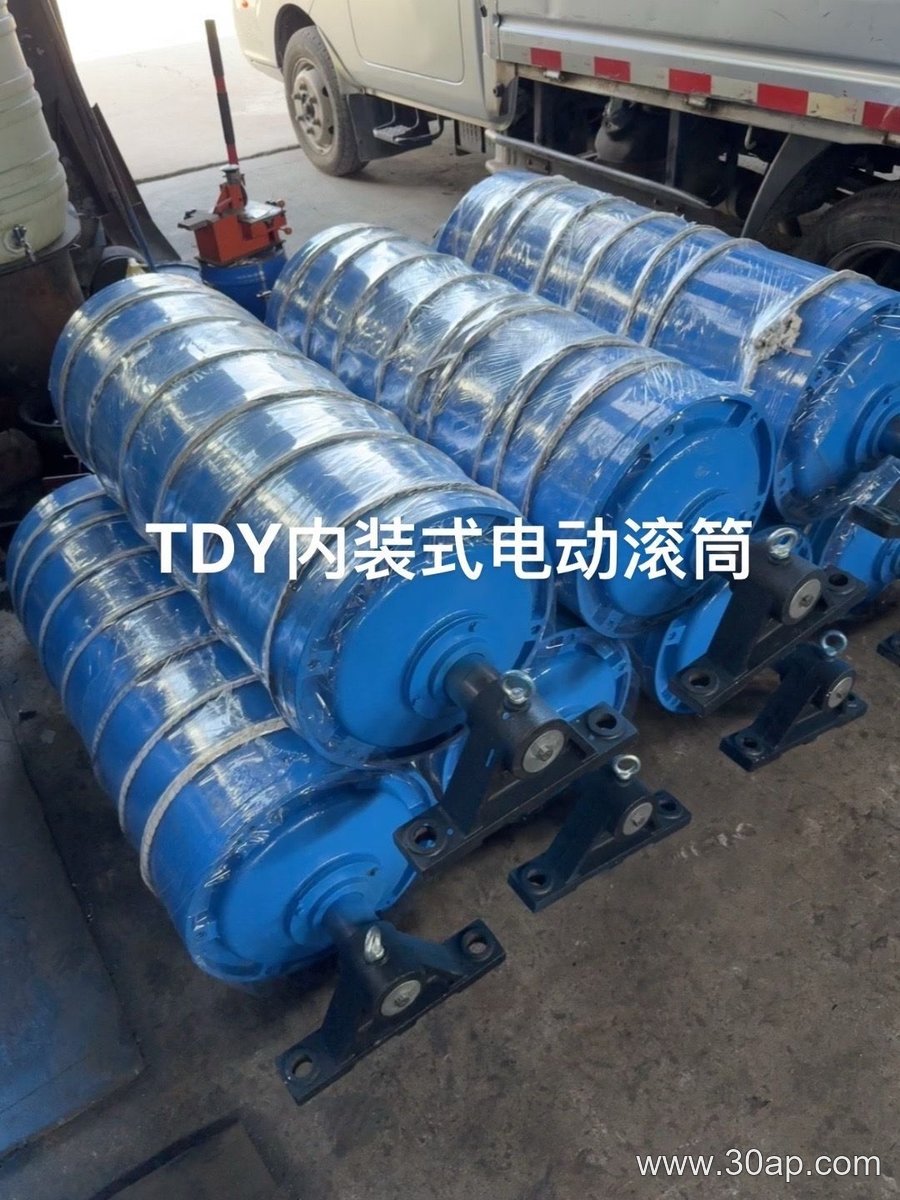
Common Sizes and Belt Width Pairing
Pulley dimensions are selected together with the conveyor belt width. The shell face is usually wider than the belt to allow tracking. For example, a B400 belt may use a pulley face around 500 mm, a B800 belt around 950 mm, and a B1200 belt around 1400 mm. Diameter is chosen from belt tension and wrap angle, not from a fixed table. One belt width can pair with more than one pulley diameter depending on the application. Common combinations include B800 × Ø500, B1200 × Ø1000, and B1400 × Ø800. These are reference examples, not universal rules. A larger diameter reduces belt bending stress and can improve belt life, but it also takes more space and adds weight.
Where It Is Used
Mining belt conveyor pulleys appear in quarry and limestone operations, iron ore and copper ore handling, coal preparation plants, aggregate crushing and screening lines, and cement clinker transport. In a crushing circuit, the head or drive pulley discharges crushed rock onto the next belt. At the tail, a tail pulley keeps the return belt aligned. A tension pulley maintains belt tension, while a bend pulley routes the belt around structural obstacles. The same hardware may be called a conveyor drum pulley in a parts manual, but the function remains defined by its location and duty.
What a Buyer Should Check
- Confirm the pulley role: drive, tail, tension, bend, or snub. Do not substitute one for another.
- Match the shell face width to the conveyor belt width, allowing for tracking.
- Review shaft diameter against torque and load, not against belt width alone.
- Choose lagging type and thickness for the material, moisture, and traction needs.
- Check bearing type, housing, and conveyor bracket fit with the existing frame.
- Ask for the pulley drawing, including keyway, shaft end, and balancing class.
A well-matched mining belt conveyor pulley keeps the belt running true, reduces downtime, and protects the conveyor belt from unnecessary edge wear. The right choice comes from the duty, the belt, and the structure, not from a single size number.