What the EP1500 Conveyor Belt Is
The EP1500 conveyor belt is a heavy-duty rubber belt built on an EP (polyester-nylon) fabric carcass. The number 1500 refers to its nominal tensile strength of 1500 N/mm per ply, placing it among the stronger fabric-reinforced belts used in bulk material handling. You may also see it called an EP1500 rubber conveyor belt or a 1500 N/mm EP belt. These are accurate short forms for the same product.
EP fabric combines polyester warp and nylon weft. That construction gives the belt low elongation in service, good troughability, and strong resistance to impact and fatigue. For conveyors that carry ore, crushed stone, coal, or heavy aggregates over long distances, this balance of properties often matters more than raw strength alone.
How the Belt Is Built
A typical EP1500 belt is made up of several layers working together:
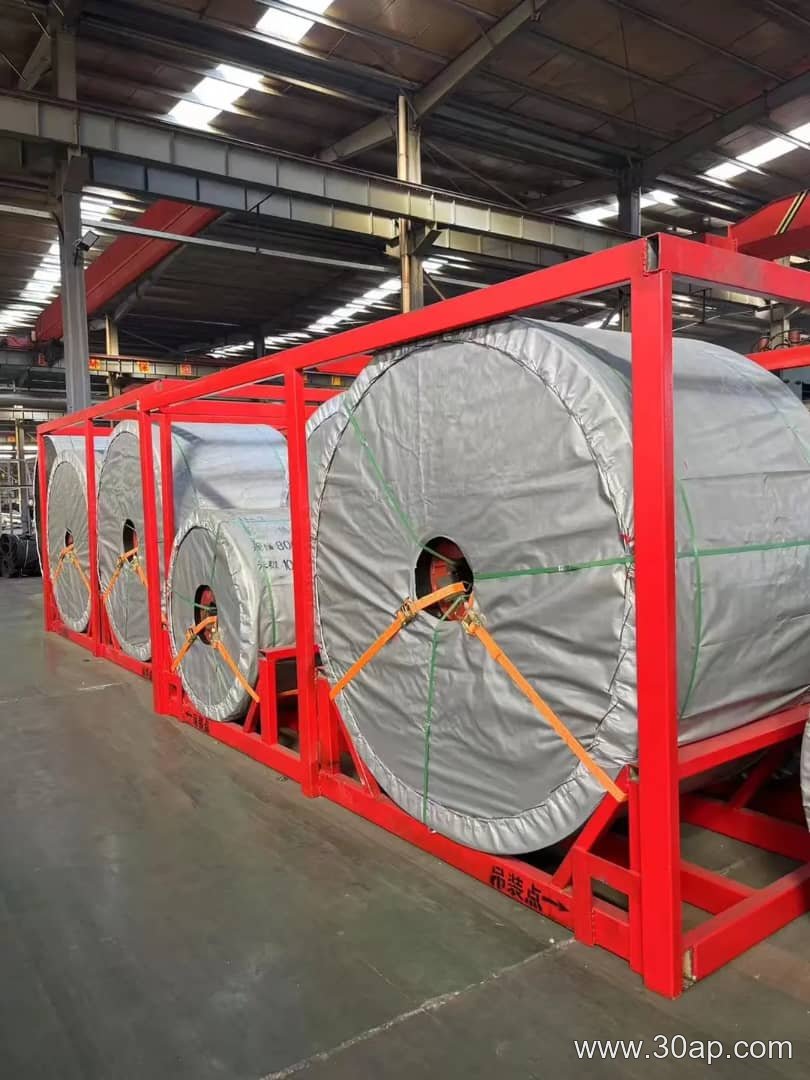
- Carcass — multiple plies of EP fabric, usually 2 to 6 plies depending on the duty. The plies carry the tension and resist ripping.
- Skim and friction layers — rubber compounds that bond the plies and cushion them against flexing.
- Top cover — the carrying side, selected for abrasion, heat, oil, or flame resistance as the site requires.
- Bottom cover — the pulley side, normally thinner than the top but still formulated to resist wear and groove cracking.
Common cover thickness combinations include 4+2 mm, 5+2 mm, 6+2 mm, and 8+3 mm. These are reference values, not fixed rules. The right cover depends on material lump size, drop height, abrasion, and ambient conditions.
Where It Fits in a Conveyor
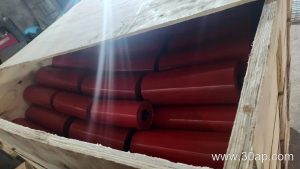
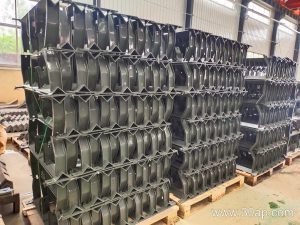
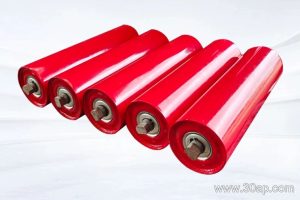
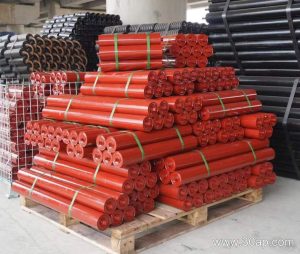
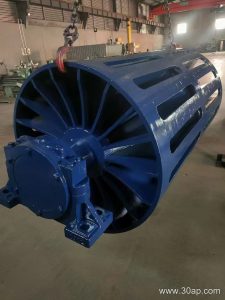
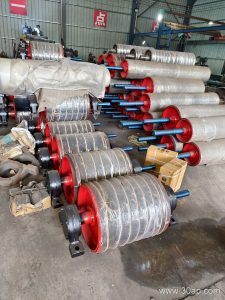
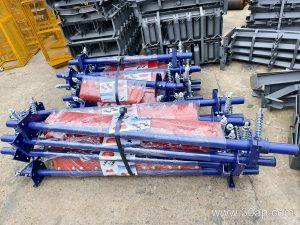
The EP1500 belt runs over a drive pulley at the head, a tail pulley at the loading end, and bend pulleys where the path changes direction. These three pulley roles are not interchangeable. A drive pulley transmits torque; a tail pulley returns the belt; a bend pulley redirects it. On the carrying run, idler rollers support the belt and help it trough. On the return run, return idlers keep it aligned. Conveyor brackets hold the idlers and pulleys in position along the structure.
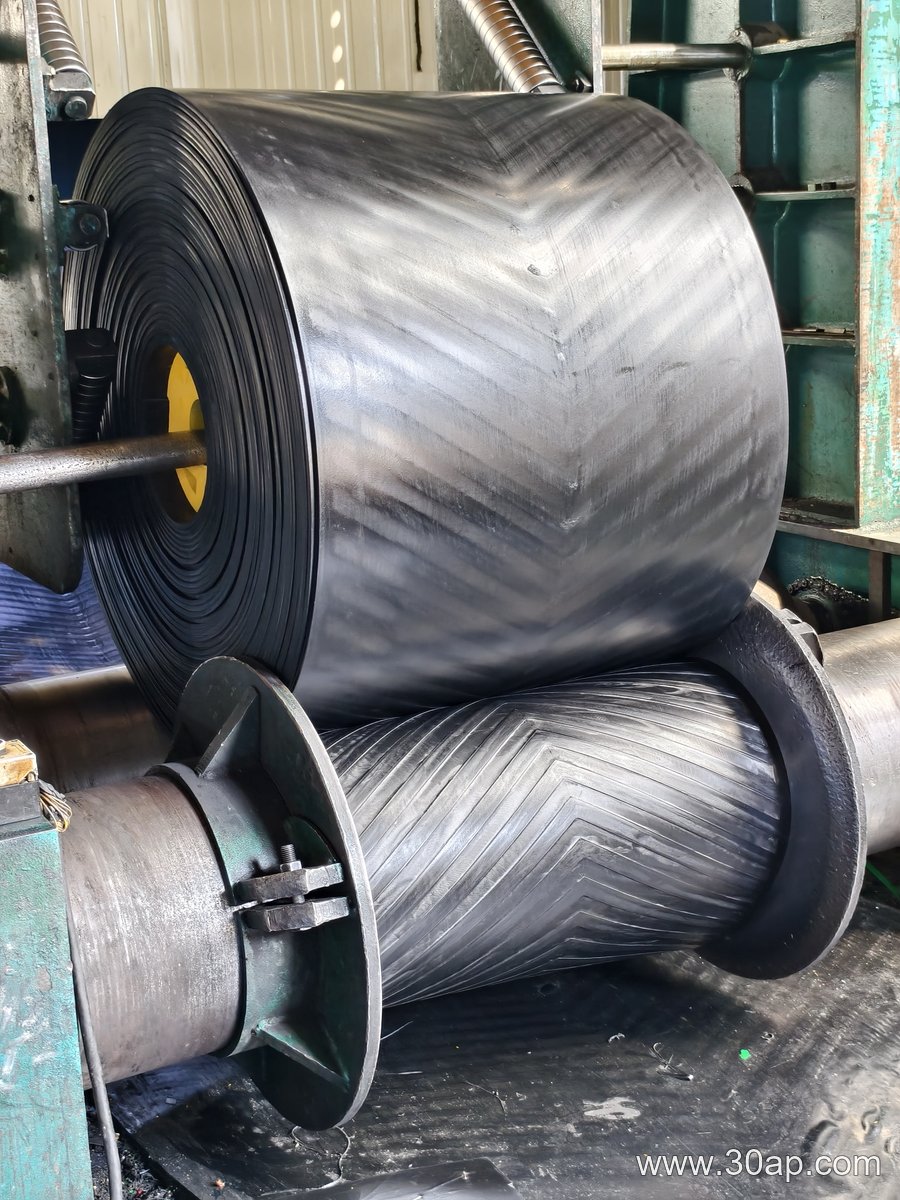
Because the EP1500 carcass has low stretch, it suits long center distances and inclined haulage where take-up travel must stay reasonable. It is also a practical choice for mobile crushing spreads, stackers, and shiftable conveyors that are moved and re-tensioned often.
Typical Duty and Material Pairing
An EP1500 belt is often specified for:
- Primary and secondary crushed rock, gravel, and sand
- Coal and coke handling
- Ore transfer in mining and mineral processing
- Fertilizer, grain, and other bulk solids where a smooth or patterned surface is needed
When the load is hot, oily, or exposed to flame risk, the cover compound changes. A heat-resistant, oil-resistant, or flame-retardant EP1500 belt keeps the same EP carcass but uses different rubber. For comparison, a PVC or PVG belt is a different product family with a solid-woven or fabric core and a plastic cover; it is not a direct substitute when the job calls for a heavy rubber EP belt. A steel cord belt is another option for very high tension and long spans, but it is also a separate type.
Widths and Related Dimensions
EP1500 belts are produced in a range of widths. Common belt widths include B500, B650, B800, B1000, B1200, B1400, B1600, B1800, and B2000. These are nominal figures, and the actual cut width should match the conveyor design. A wider belt does not automatically mean a larger pulley; pulley diameter is selected from belt tension, ply count, and minimum bend radius, not from width alone. The same is true for shaft diameter, which is a function of the pulley and bearing design, not a number that can be read off the belt width.
The table below lists reference data only. Different manufacturers offer different combinations.
Reference Data for EP1500 Belts
| Item | Common Range |
|---|---|
| Type | EP1500, also written EP 1500 |
| Strength | 1500 N/mm per ply |
| Belt width | B500 to B2000 |
| Ply count | 2 to 6 plies |
| Cover thickness | 3+1.5, 4+2, 5+2, 6+2, 8+3 mm |
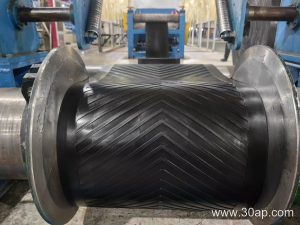
| Surface forms | Smooth, patterned, chevron, corrugated sidewall |
What a Buyer Should Check
Before ordering an EP1500 conveyor belt, confirm the following with the supplier:
- The required belt width and the exact cut length
- The number of plies and cover thickness for top and bottom
- The cover grade: abrasion-resistant, heat-resistant, oil-resistant, flame-retardant, antistatic, cold-resistant, or acid and alkali resistant
- The splice method, since vulcanized or mechanical joints affect belt performance
- The pulley diameters and idler spacing on the existing conveyor, so the belt can flex without damage
Ask for the manufacturer’s data sheet rather than relying on a generic table. EP1500 is a strength class, not a complete specification. Two belts with the same rating can differ in cover compound, ply count, and edge construction, and those differences decide how long the belt lasts in a given application.