What a Large Belt Conveyor Idler Does on the Job
A large belt conveyor idler is a rotating roller assembly that supports the loaded conveyor belt and keeps it tracking along the desired path. In heavy duty systems, the term usually refers to an idler roller with a larger roller diameter, thicker wall, and heavier bearing set than a light duty unit. These idlers are common on high capacity lines where the belt carries dense material such as crushed stone, iron ore, or coal.
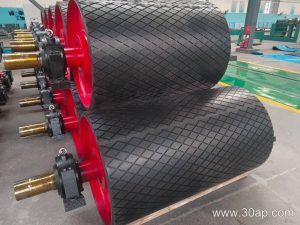
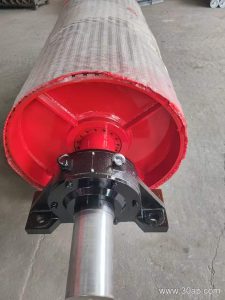
The idler does not drive the belt. It carries the belt. The drive, tail, and bend pulleys move and redirect the belt, while the idler roller only supports it. That distinction matters when ordering spares, because a conveyor pulley and a large belt conveyor idler are not interchangeable parts.
Construction Details That Matter
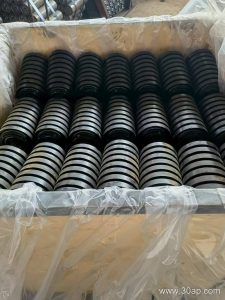
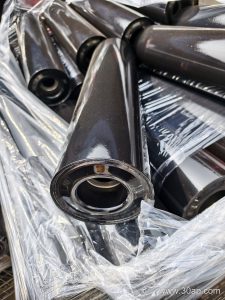
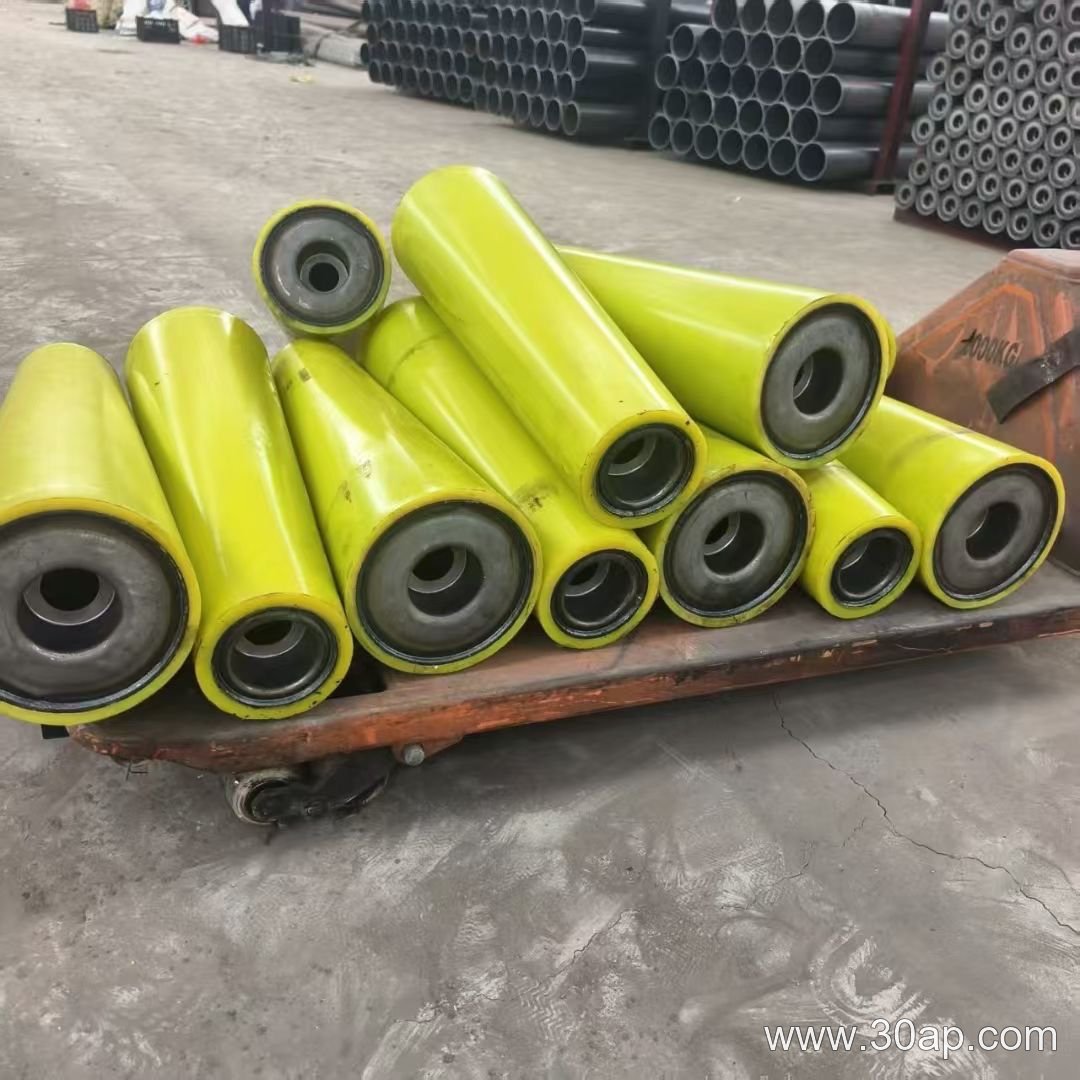
A typical large belt conveyor idler is built from a steel tube, a shaft, bearing housings, and a sealing system. The roller surface may be plain steel, nylon, ceramic, or rubber ring covered. Rubber rings are often chosen at load points to absorb impact, while plain steel is common for general carrying runs.
Bearing size is selected by load, speed, and expected service life. Common bearing numbers include 6204, 6205, 6305, 6306, 6308, and 6310. A larger bearing is not automatically better for every application, and one roller diameter can accept different bearing sets depending on the design. Sealing is equally important: a good labyrinth or contact seal keeps fine dust out of the bearing cavity, which is often the difference between a long running idler and a premature failure.
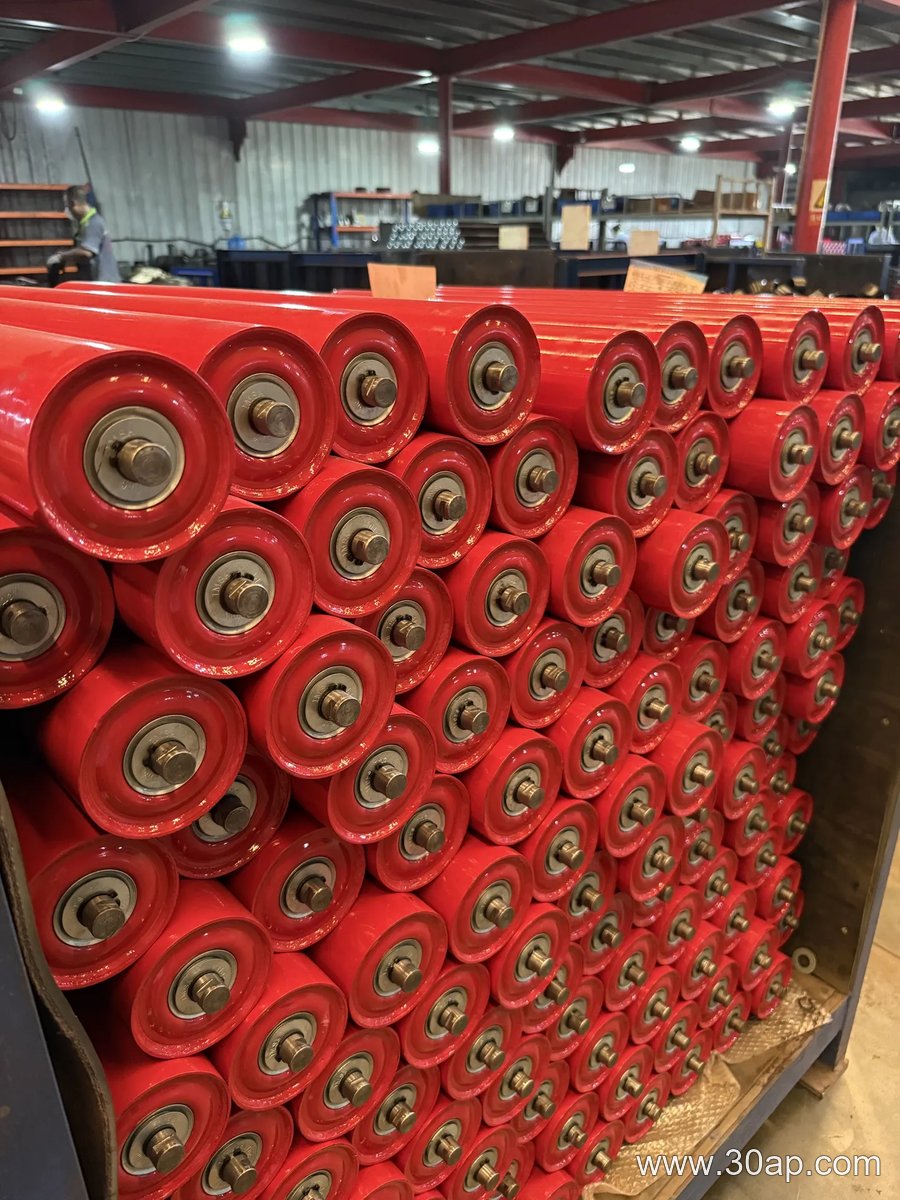
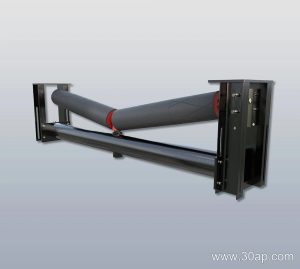
The idler assembly can be a single roller, a two roll set, or a three roll troughing set. Troughing angle is usually 20, 30, 35, or 45 degrees. A small forward tilt of about 1.5 to 2 degrees is sometimes used on training idlers to help center the belt, but it is not a universal feature of every idler.
Common Types and Where They Fit
Large belt conveyor idlers appear in several forms, each matched to a position on the conveyor:
- Carrying idlers support the loaded belt on the upper run.
- Impact idlers with rubber rings sit under the loading chute.
- Return idlers support the empty belt on the lower run.
- V return idlers and spiral return idlers help shed sticky material.
- Training idlers, including friction and tapered types, correct belt misalignment.
A comb idler is sometimes used where material carryback is a problem, but it is not a replacement for a standard troughing idler on the main carrying run. Each type has a specific job, and mixing them without checking the application can reduce belt life.
Matching Idler Size to Belt Width
Roller diameter and belt width are related but not locked together. A B800 belt may run with 89 mm, 102 mm, or 108 mm rollers depending on load and speed. A B1400 belt often uses 133 mm or 159 mm rollers, and very wide belts may use 178 mm, 194 mm, or 219 mm diameters. The table below gives common reference examples, not fixed supply rules.
| Belt width | Common roller diameter range | Typical three roll troughing roll length |
|---|---|---|
| B500 | 63 to 89 mm | about 200 mm |
| B650 | 76 to 108 mm | about 250 mm |
| B800 | 89 to 127 mm | about 315 mm |
| B1000 | 102 to 133 mm | about 380 mm |
| B1200 | 108 to 159 mm | about 465 mm |
| B1400 | 127 to 178 mm | about 530 mm |
| B1600 | 133 to 194 mm | about 600 mm |
| B1800 | 159 to 219 mm | about 670 mm |
Side rollers and center rollers can have different lengths, so the values above are only a starting point. The conveyor bracket and frame dimensions also affect the final fit. A buyer should confirm shaft diameter, mounting flat, and hole spacing before ordering.
Buying and Maintenance Notes
When specifying a large belt conveyor idler, give the belt width, troughing angle, roller diameter, roller length, shaft size, bearing number, and seal type. If the idler is for an impact zone, state the lump size and drop height. If it is for a return run, say whether a V shape or spiral surface is needed.
In service, check for seized rollers, worn seals, and material buildup. A noisy or hot bearing usually means the seal has failed and grit has entered. Replacing a few idlers early is cheaper than damaging the conveyor belt. Keep a small stock of the most common sizes used on your line, and record the position of each idler so the next order matches the original design.