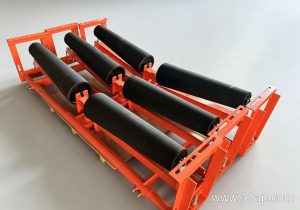
A conveyor belt support frame is the structural backbone that holds the idler rollers in position along a conveyor system. It keeps the belt running true, maintains the desired trough profile, and transfers the load from the material being carried into the conveyor’s main structure. Without a properly designed support frame, even a high-quality belt and set of rollers will not perform as intended.
How a Conveyor Belt Support Frame Is Built
Most support frames are fabricated from angle steel, channel steel, or folded steel plate. The choice of material and thickness depends on the belt width, the load carried, and the spacing between frames. A typical frame consists of a cross beam, mounting brackets for the idlers, and bolt holes or slots that allow the roller positions to be set. For carrying-side frames, the beam is usually formed to create a trough shape; for return-side frames, the beam is flatter or fitted with a V-shaped arrangement to help center the belt.
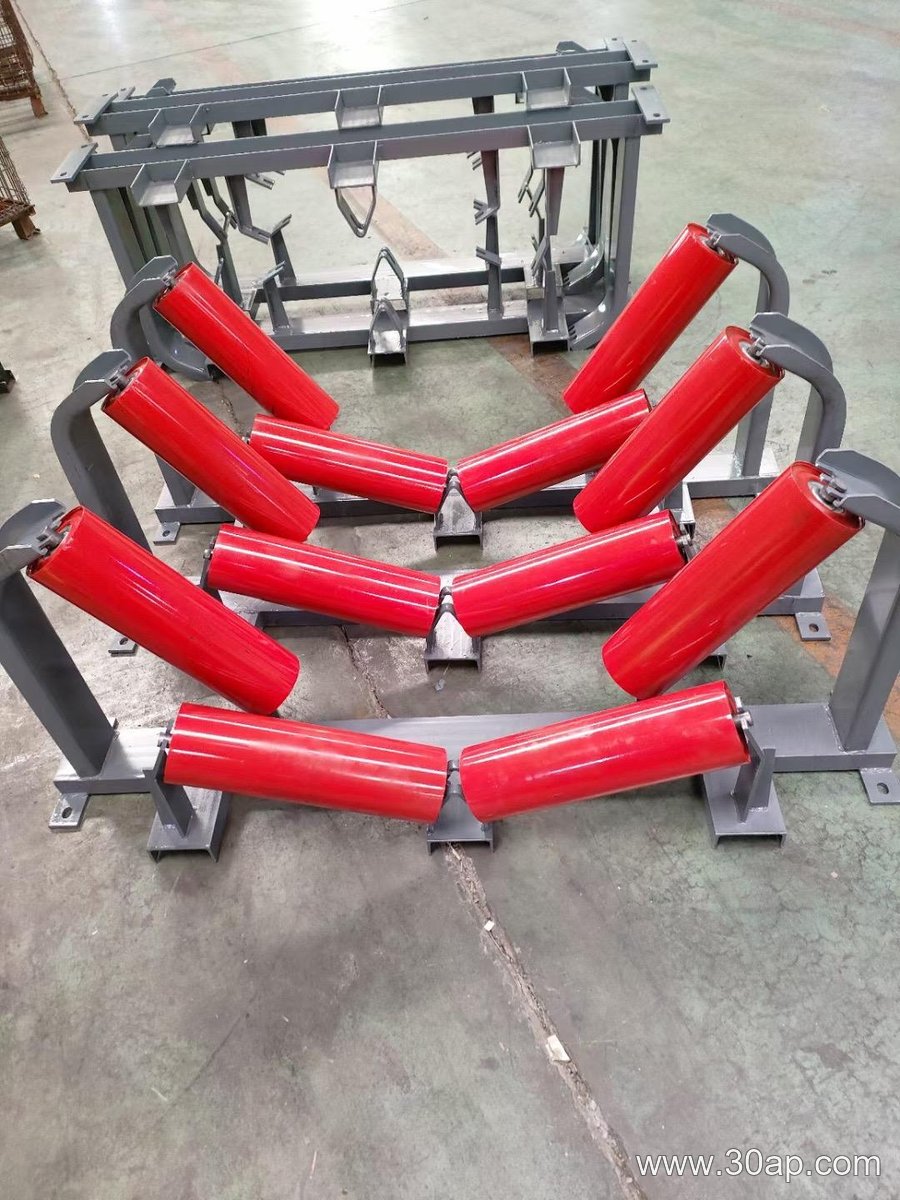
The frame does not work alone. It connects to the conveyor bracket system, which anchors the assembly to the main stringers or support legs. The conveyor pulley at the head and tail ends the belt path, while the support frame keeps the belt stable between those points.
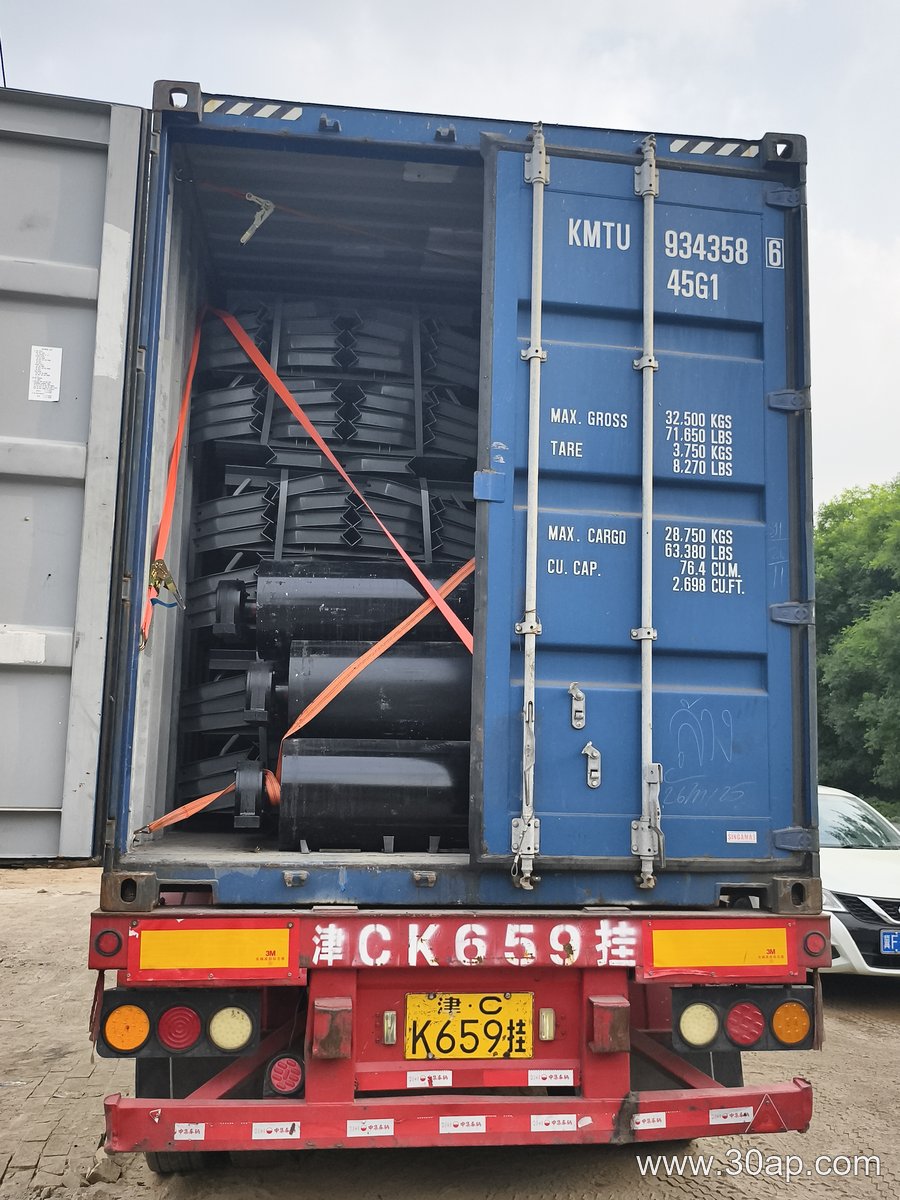
Common Types and Where They Are Used
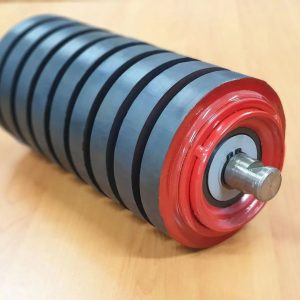
Support frames come in several forms, each suited to a different position on the conveyor. Troughing frames carry the loaded belt and are often set at a trough angle. Return frames support the empty belt on its way back. Impact frames, fitted with buffer rollers, are placed under loading points to absorb the shock of falling material. Self-aligning frames help correct belt tracking, and adjustable frames allow the trough angle to be changed within a range.
These frames appear in many bulk handling sites. For example, a limestone quarry may use heavy troughing frames at the crushing stage, while a grain silo facility may use lighter frames with closer spacing to protect the belt and product. The same principle applies in a coal-fired power plant or a tunnel muck removal line, though the frame dimensions and roller diameters will differ.
Key Parameters to Consider
When specifying a conveyor belt support frame, the belt width, trough angle, and roller diameter are the first values to match. The table below shows common reference combinations; these are examples, not fixed rules. A given belt width can work with more than one trough angle or roller diameter depending on the application.
| Belt Width | Trough Angle | Roller Diameter | Typical Use |
|---|---|---|---|
| B500 | 20 degrees | Ø89 | Light-duty, short conveyors |
| B800 | 35 degrees | Ø108 | General bulk handling |
| B1200 | 45 degrees | Ø133 | High-capacity main lines |
| B1600 | 35 degrees | Ø159 | Heavy mining or port duty |
Adjustable frames can be set to different trough angles, often between 20 and 45 degrees, which makes them useful when the material profile changes or when fine-tuning is needed. Forward-leaning frames, usually around 1.5 to 2 degrees, are another option for improving belt tracking. The mounting hole spacing and beam length are not fixed; they change with belt width, trough angle, and the roller mounting arrangement.
What Buyers Should Check
- Confirm the frame type matches the conveyor position: carrying side, return side, impact zone, or transition area.
- Check that the roller diameter and mounting slots suit the idler roller selected.
- Verify the beam material and thickness against the actual load and support spacing.
- Ask whether the frame is fixed or adjustable if the trough angle may need changes later.
- Make sure the frame connects correctly to the conveyor bracket and main structure.
A support frame that fits properly will extend belt life, reduce spillage, and keep the conveyor running smoothly. It is a simple component, but its role in the overall system is central.