What a High-Angle Conveyor Trough Idler Does
A high-angle conveyor trough idler is the carrying-side roller set that supports and shapes the conveyor belt on a steep incline. Instead of letting material slide back, the trough idler holds the belt in a deep, stable curve so the load stays centered as it climbs. The same roller assembly is often called a steep-incline troughing idler, and both names describe one product: the upper, belt-shaping roller group used on high-angle conveyors. It is not a drive pulley, not a tail pulley, and not a bend pulley; those components transmit or redirect belt motion, while the trough idler only carries the belt and controls its cross-section.
The steeper the incline, the more the belt profile matters. A deeper trough reduces the chance of spillage and keeps bulk material from rolling back down the slope.
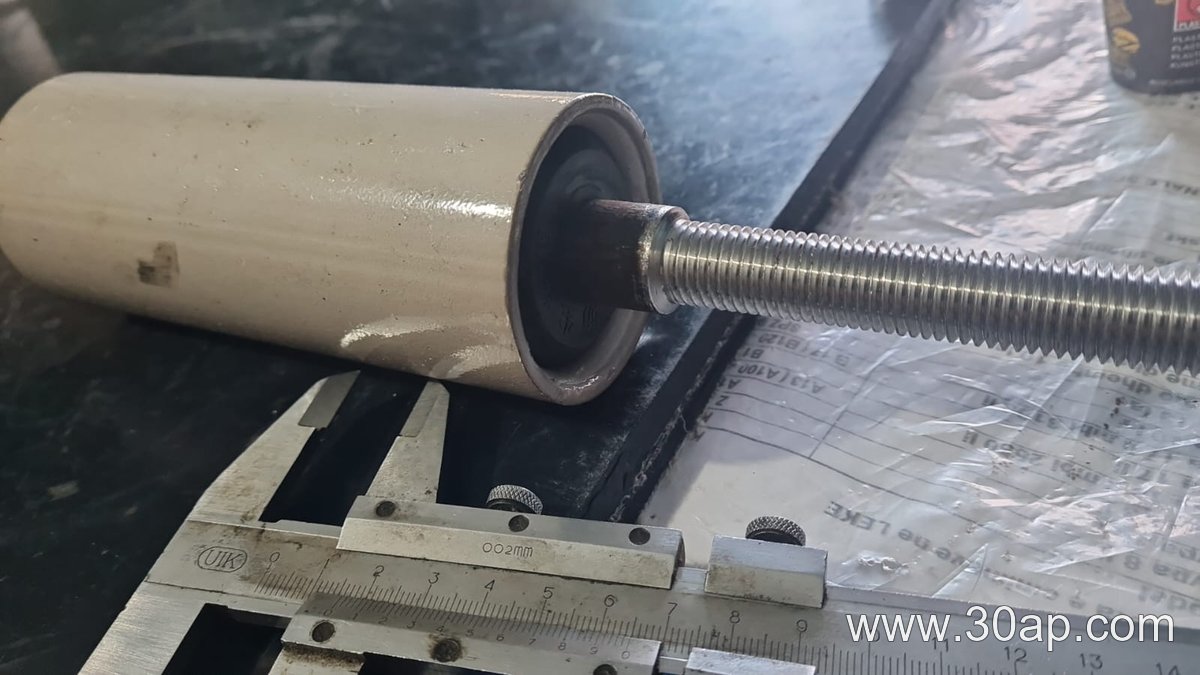
How the Roller Set Is Built
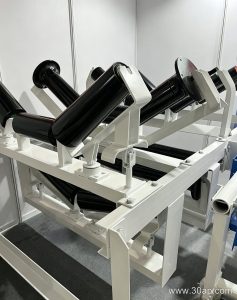
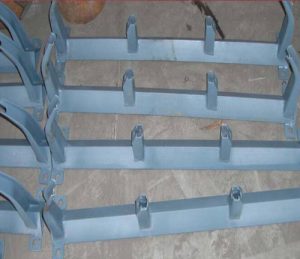
A typical assembly uses two or three idler rollers mounted in a frame or conveyor bracket. The side rollers sit at a set trough angle, and the center roller may be horizontal or slightly raised. Common trough angles include 20, 30, 35 and 45 degrees. Higher angles give a deeper pocket, which suits steep inclines and fine, free-flowing material.
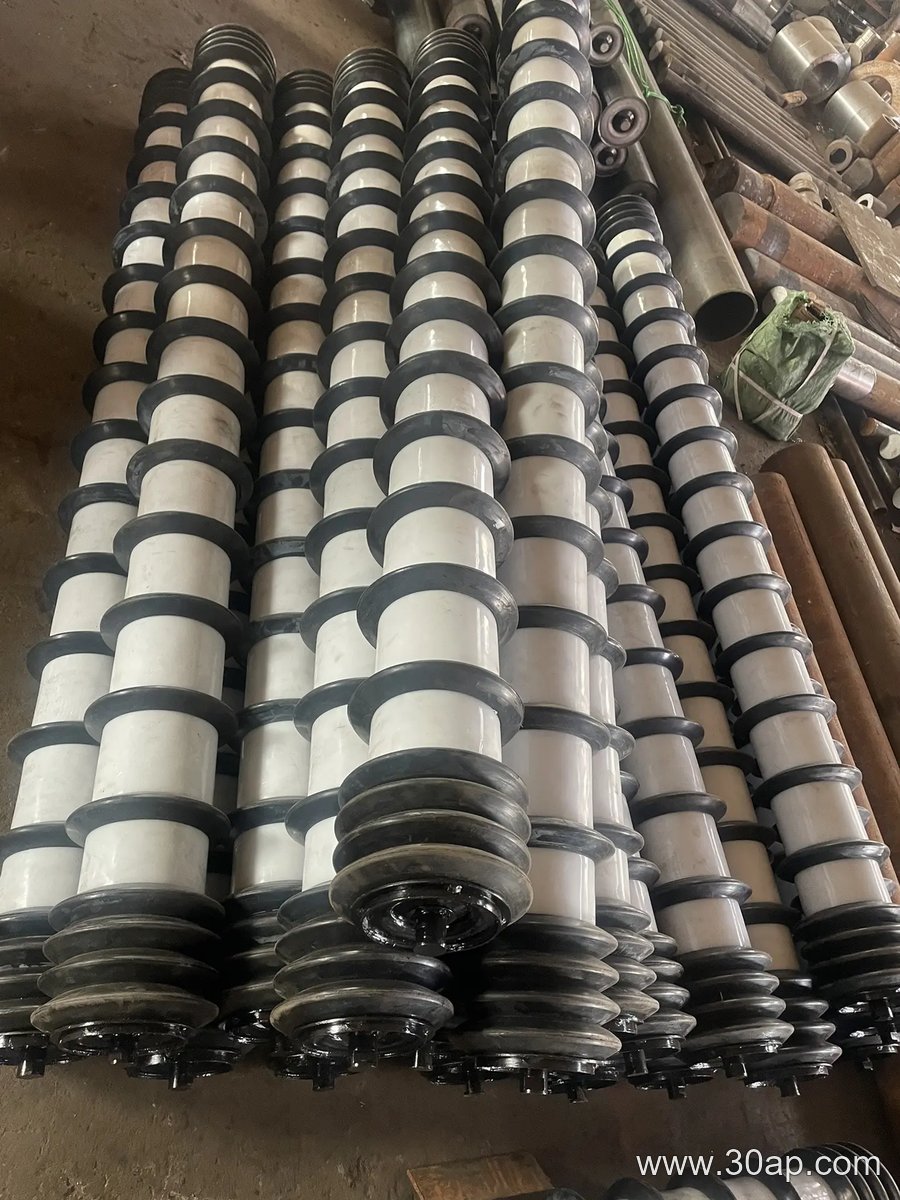
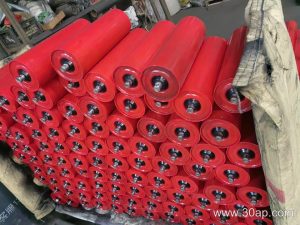
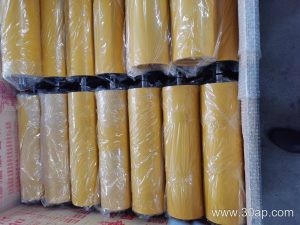
Roller diameter is chosen to match belt speed and load, not belt width alone. Common diameters include Ø89, Ø102, Ø108, Ø127, Ø133, Ø159 and Ø178 mm. Larger rollers usually run cooler and last longer under heavy loads, while smaller ones suit lighter conveyors. Bearing size is selected separately; typical bearings include 6204, 6205, 6305, 6306, 6308 and 6310. No single bearing is tied to one roller diameter.
Roller length also changes with belt width, trough angle and the number of rollers in the set. As a rough reference, a three-roll troughing set may use side rollers around 200 mm for B500, 250 mm for B650, 315 mm for B800, 380 mm for B1000, 465 mm for B1200, 530 mm for B1400, 600 mm for B1600, 670 mm for B1800 and 750 mm for B2000. These are examples only; the center and side rollers can differ, and final lengths are set by design.
| Parameter | Common Range |
|---|---|
| Trough angle | 20°, 30°, 35°, 45° |
| Roller diameter | Ø89 to Ø178 mm |
| Belt width | B500 to B2000 mm |
| Bearing | 6204, 6205, 6305, 6306, 6308, 6310 |
| Roller surface | Steel tube, nylon, ceramic, rubber rings |
Where High-Angle Trough Idlers Are Used
These idlers appear wherever a conveyor must lift material at a steep angle without a long horizontal run. In a limestone quarry, a high-angle trough idler set can carry crushed rock up a steep ramp. In a tunnel boring or muck removal line, the same roller group keeps wet, heavy spoil centered on a short, steep incline. Other sites include sand and gravel lines, coal preparation plants and fertilizer handling, but the steep slope and the material behavior are what decide the roller choice.
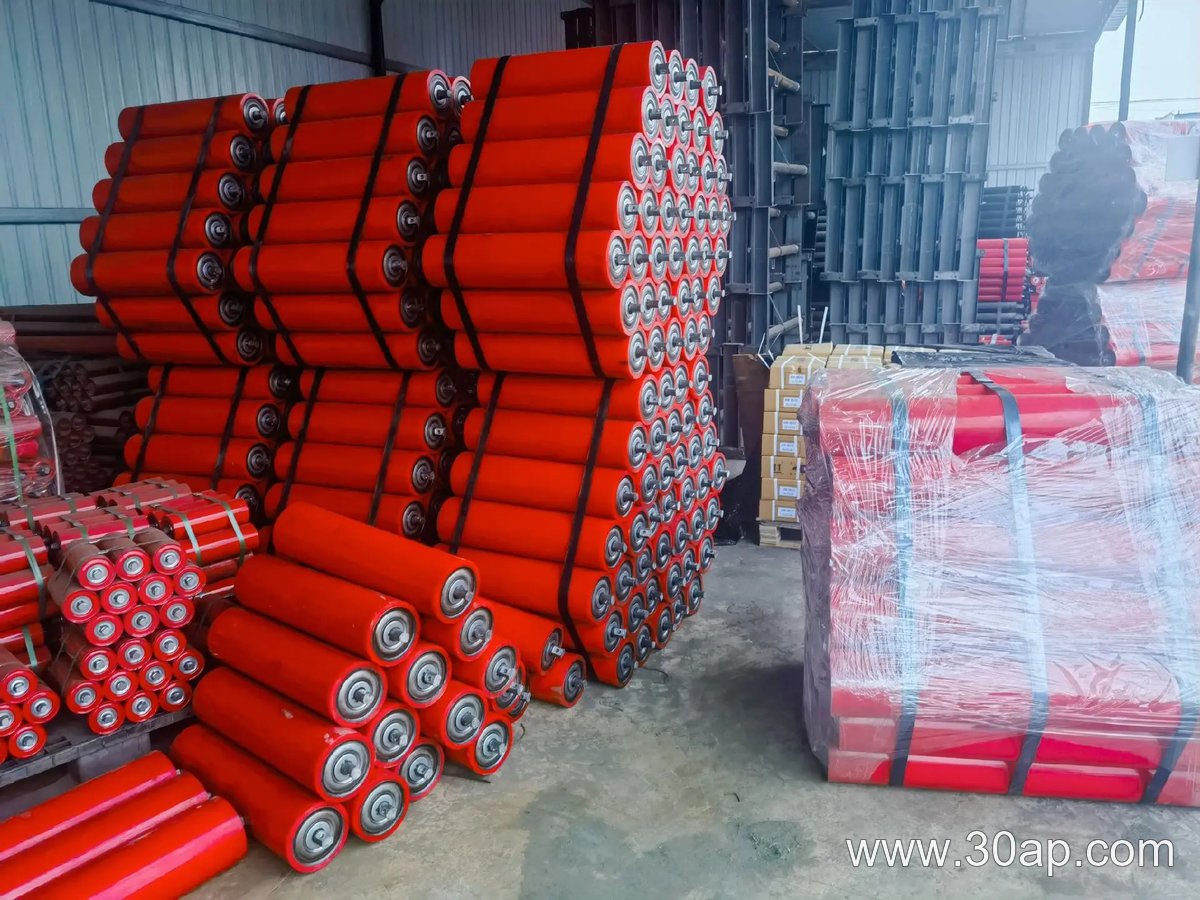
The idler roller itself may have a steel tube, nylon, ceramic or rubber-ring surface. Rubber rings help grip and cushion, while ceramic or nylon can reduce wear in abrasive service. The right surface depends on material size, moisture and belt speed.
Buyer Checklist for Steep Incline Idlers
- Confirm the trough angle needed for the incline and material.
- Match roller diameter to belt speed and load, not to belt width alone.
- Check roller length against belt width and the number of rollers in the set.
- Verify bearing size and sealing for dust or wet conditions.
- Confirm the frame or conveyor bracket fits the existing stringer spacing.
- Ask whether the rollers are standard troughing idlers or a design made for steep angles.
A high-angle conveyor trough idler is a small part of the line, but it decides how well the belt holds its load on the climb. Get the angle, diameter and sealing right, and the conveyor runs cleaner and longer.