What a Conveyor Rubber Lagged Pulley Does
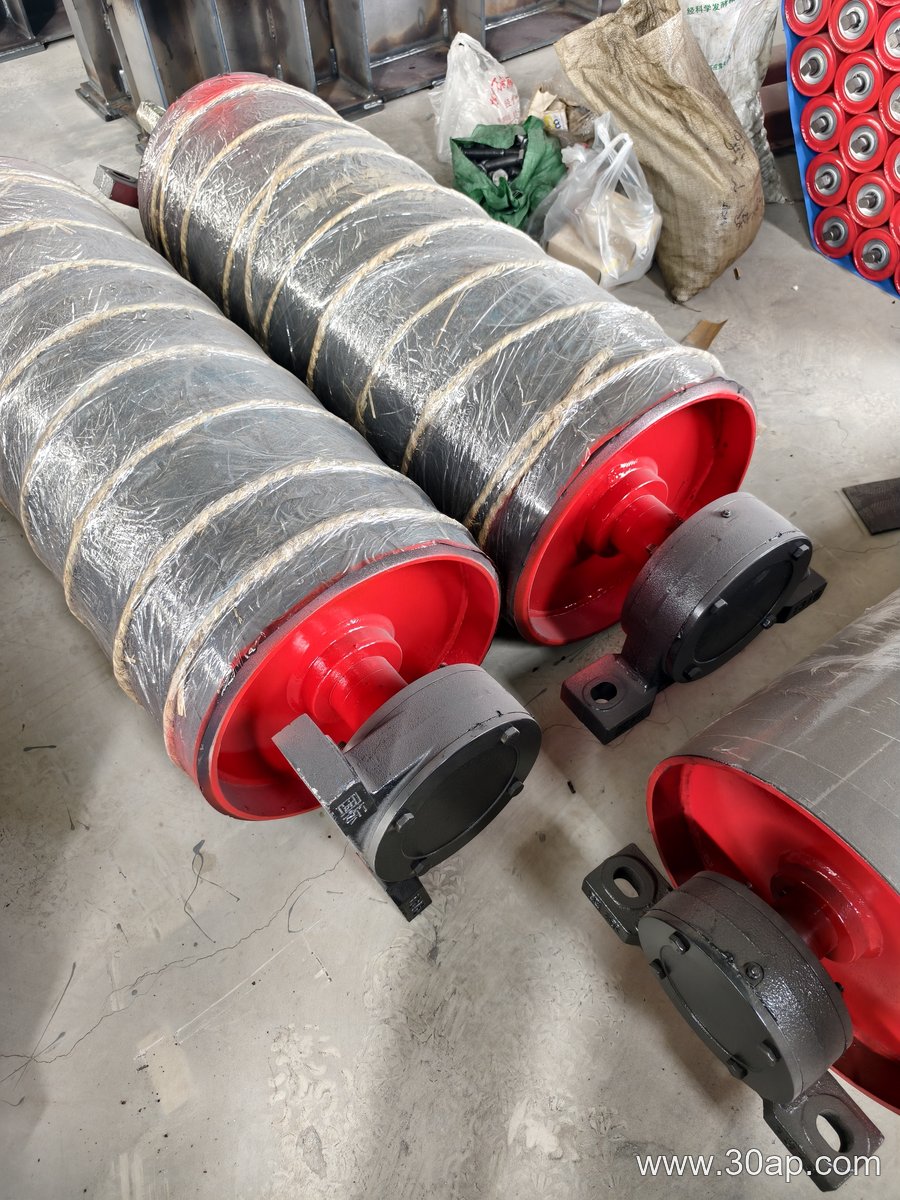
A conveyor rubber lagged pulley is a conveyor pulley whose cylindrical shell is covered with a rubber layer, usually applied by hot vulcanization, cold bonding, or casting. The rubber covering, often called lagging, sits between the steel shell and the conveyor belt. Its job is simple but important: increase friction between the pulley face and the belt, protect the shell from abrasion, and help keep the belt tracking steadily under load.
This product is not the same as every other drum on a conveyor. A drive pulley transmits torque to move the belt, while a tail pulley returns it and a bend pulley changes direction. Rubber lagging is most often specified on the drive pulley, but it can also appear on other positions when extra grip or wear protection is needed. The pulley itself remains the main subject here, and the lagging is the feature that defines it.
How the Rubber Layer Is Built
The construction begins with a machined steel shell and shaft. After surface preparation, the rubber is bonded to the shell. Common surface forms include plain, diamond, herringbone, and ceramic-lagged patterns. A plain rubber surface gives uniform contact, while diamond or herringbone grooves help channel water, mud, and fine particles away from the contact zone. Ceramic lagging adds hard inserts for very abrasive duties.
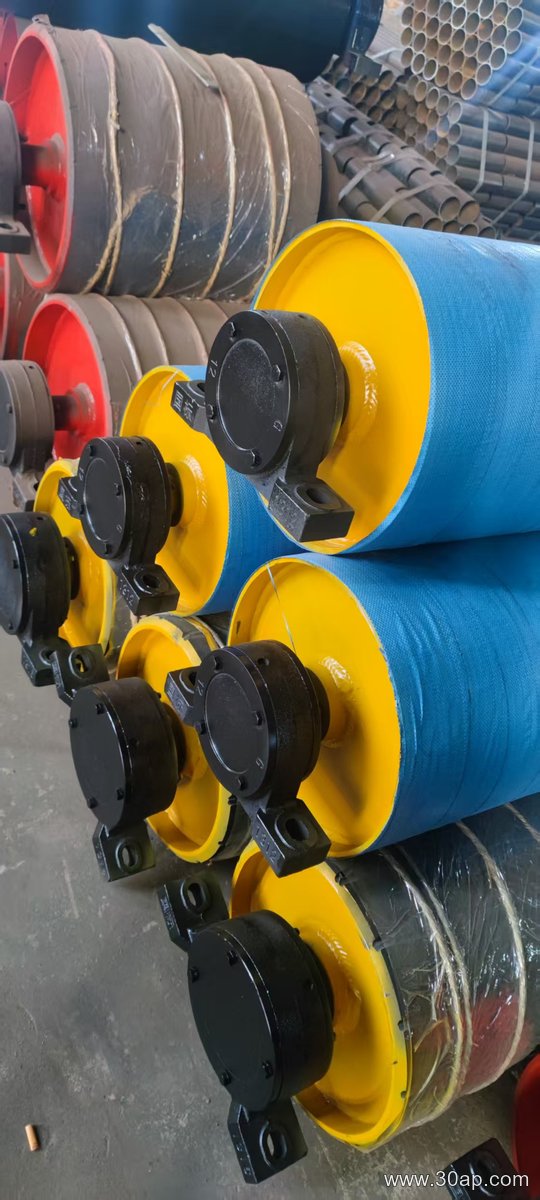
Lagging thickness is commonly 8, 10, 12, 15, or 20 mm, depending on belt tension, pulley diameter, and working conditions. A thicker layer can absorb more wear, but it also changes the effective pulley diameter and must be considered in the belt path. Bonding quality matters as much as thickness. A weak bond can allow water to creep under the rubber, leading to peeling and premature failure.
Where It Fits in a Conveying System
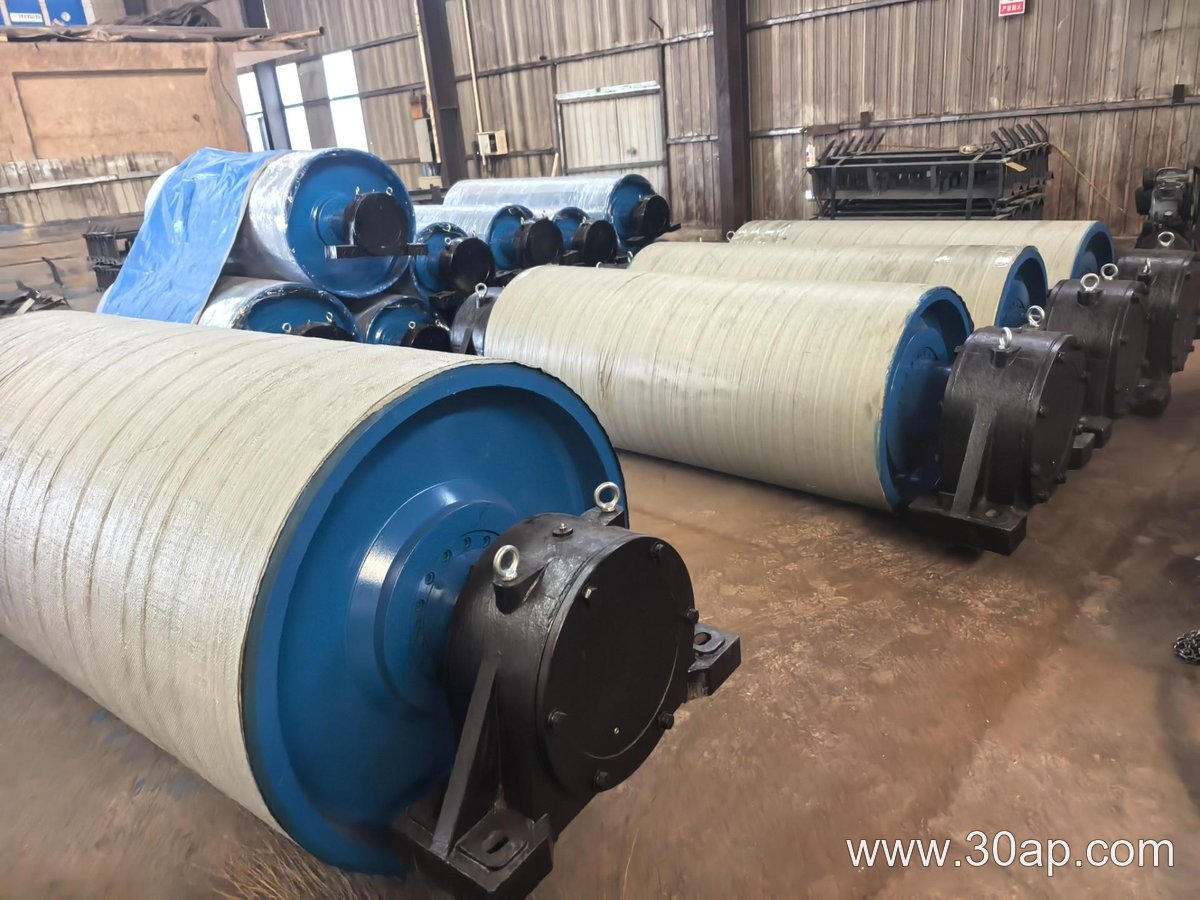
Rubber-lagged pulleys appear in many bulk handling sites. In a limestone quarry or a sand and gravel line, they help a drive pulley keep grip on a belt carrying wet, gritty material. In a coal preparation plant, lagging reduces slip when the belt is dusty or damp. The same principle applies in a cement plant clinker circuit or a port bulk terminal, though the exact surface pattern and thickness should match the material and climate.
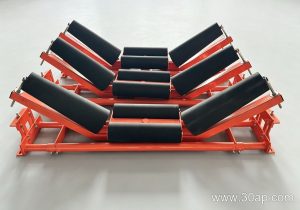
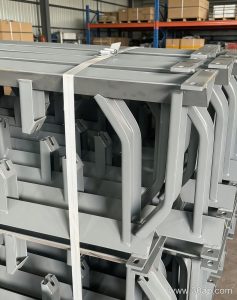
The pulley works together with the conveyor belt, idler rollers, and conveyor brackets. A conveyor bracket supports the pulley assembly, while idler rollers carry the belt along the route. If the belt is overloaded or misaligned, even a well-lagged pulley cannot compensate for poor system design.
Common Reference Data for Buyers
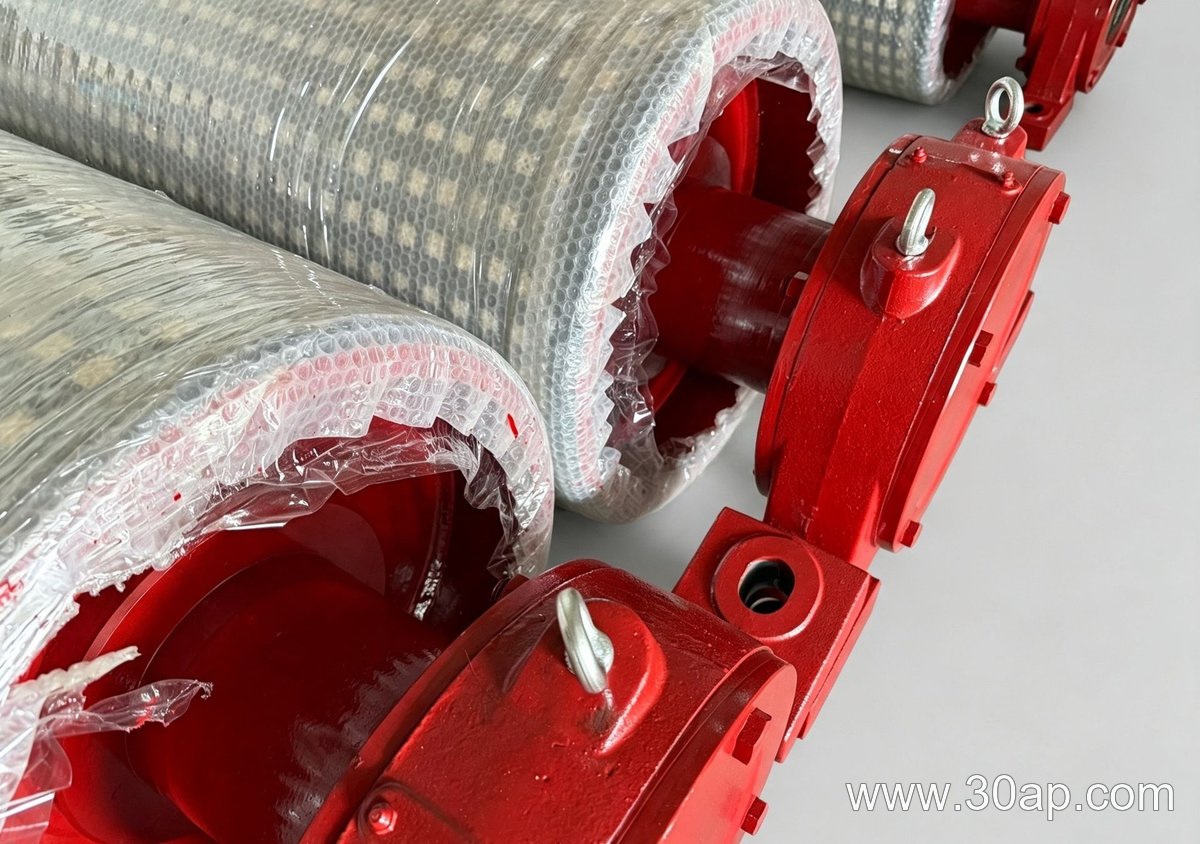
The table below shows typical reference values, not fixed combinations. Belt width and pulley diameter are selected by the conveyor designer based on tension, speed, and space.
| Item | Common reference values |
|---|---|
| Belt width | B400, B500, B650, B800, B1000, B1200, B1400, B1600, B1800 |
| Pulley diameter | Ø200, Ø250, Ø315, Ø400, Ø500, Ø630, Ø800, Ø1000, Ø1250 |
| Lagging thickness | 8, 10, 12, 15, 20 mm |
| Shaft diameter | Ø50, Ø60, Ø70, Ø80, Ø90, Ø100, Ø120, Ø140, Ø160, Ø180, Ø200 |
| Surface form | Plain, diamond, herringbone, ceramic, hot vulcanized, cold bonded |
A combination such as B800 × Ø500 or B1200 × Ø1000 can be reasonable in one project, but it is not a rule. Shaft diameter is determined by torque and load, not by belt width alone. A larger shaft may be needed for a heavily loaded drive pulley, while a smaller one may suit a bend pulley with light duty.
What to Check Before Ordering
- Confirm the pulley position: drive, tail, bend, tension, or snub. Each position has different demands, and a drive pulley usually needs the highest friction.
- Match the lagging surface to the material. Wet, oily, or fine sticky cargo may call for grooved or ceramic lagging.
- Check the belt width and pulley face width. The face is usually wider than the belt, for example B650 with a face around 750 mm, but final dimensions come from the design drawing.
- Review bonding method and rubber hardness. Hot vulcanized lagging generally offers strong adhesion for heavy duty, while cold bonding is common for field repair or lighter service.
- Consider maintenance. Replace lagging when it becomes worn smooth, cracked, or separated from the shell. A worn lagging can cause belt slip, heat, and reduced belt life.
A conveyor rubber lagged pulley is a small part of a large system, but it directly affects traction and uptime. Buyers should treat it as an engineered component, not a generic drum. The right rubber grade, surface pattern, thickness, and shaft size will keep the belt moving and reduce the chance of unplanned stoppages.