What a Heavy-Duty Conveyor Bracket Does
A heavy-duty conveyor bracket is the structural support that holds idler rollers in the correct position along a belt conveyor. It carries the weight of the conveyor belt, the material on it, and the roller itself, while keeping the trough shape consistent from the loading point to the discharge end. In everyday plant language, this component is also called a heavy-duty conveyor idler bracket or a heavy-duty roller support bracket. The name stays the same regardless of whether the bracket sits on the carrying side or the return side; what changes is the geometry and the load it must resist.
Because the bracket is often hidden under the belt, it is easy to overlook during design. Yet a weak support frame can flex under load, change the trough angle, and shorten roller life. A properly built heavy-duty version is sized to the belt width, the material density, and the duty cycle of the conveyor.
How the Bracket Is Constructed
Most heavy-duty conveyor brackets are fabricated from angle steel, channel steel, or folded steel plate. The choice depends on the span between stringers, the belt width, and the expected impact from lump material. A typical assembly includes a cross member, mounting slots or drilled holes for the idler shaft, and sometimes a separate base that bolts to the conveyor frame.
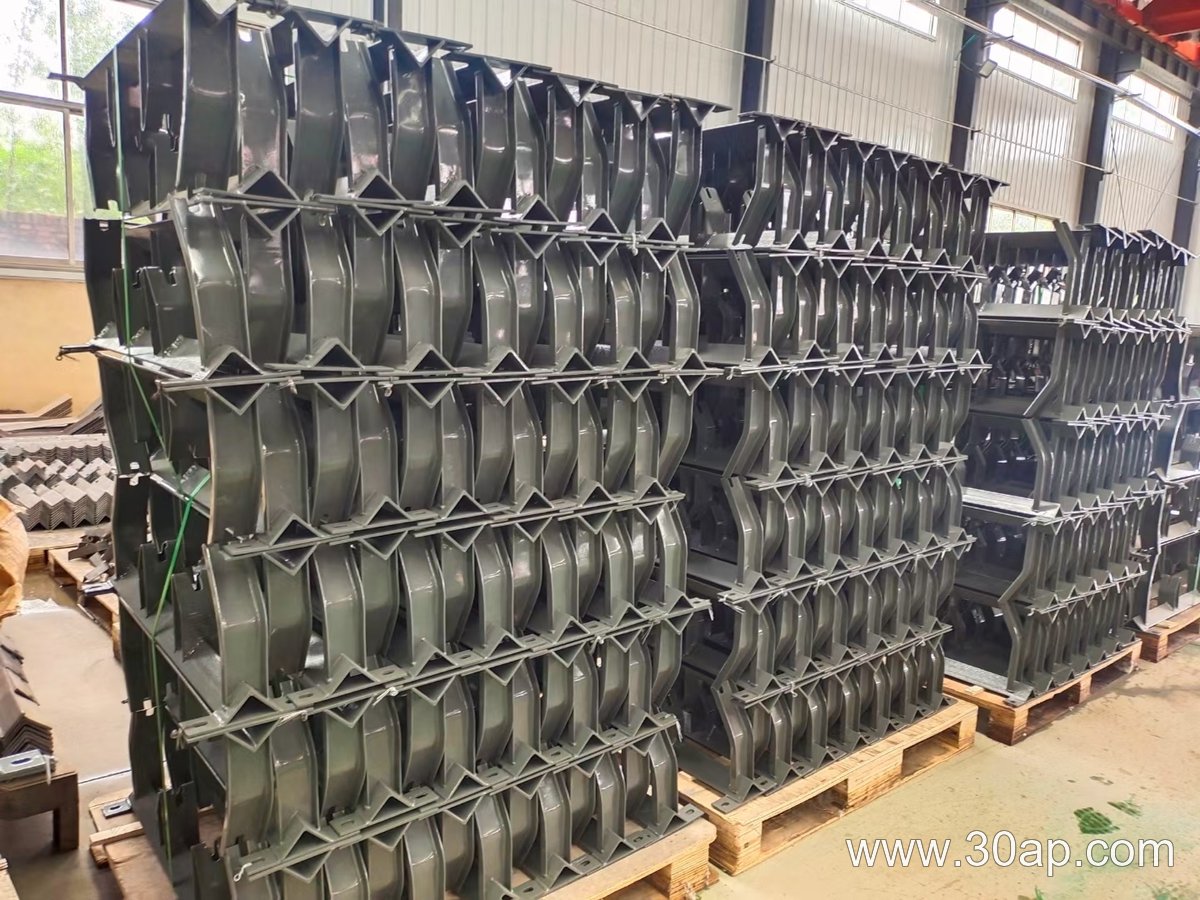
Welding quality matters as much as material thickness. A bracket that is distorted after welding may seat the idler roller at the wrong height, which in turn affects belt tracking. For this reason, many designs use jigs during fabrication so that the mounting faces stay square and parallel.
Common Types and Where They Fit
- Troughing bracket: supports three rollers in a trough shape on the carrying side.
- Transition bracket: eases the belt from a flat pulley into a full trough.
- Return bracket: holds a single flat roller under the belt on the return run.
- V-return bracket: uses two angled rollers to help center the belt on the return side.
- Impact bracket: reinforced to absorb shock at the loading zone.
- Self-aligning bracket: allows slight rotation to correct belt drift.
- Adjustable bracket: lets maintenance staff change the trough angle on site.
These are not interchangeable names. A troughing bracket and a return bracket serve different positions on the same conveyor. Likewise, a bend pulley and a tail pulley are separate components; the bracket only supports the idler roller, not the pulley itself.
Matching Bracket to Belt and Roller
Belt width and roller diameter guide the bracket dimensions, but they do not lock a single combination. A B800 belt may run with Ø89 or Ø108 rollers depending on load and speed. A B1200 conveyor might use Ø133 or Ø159 rollers with a 35-degree or 45-degree trough angle. The mounting hole spacing and cross beam length usually change with belt width and trough angle, so these values are best confirmed from the current drawing rather than assumed.
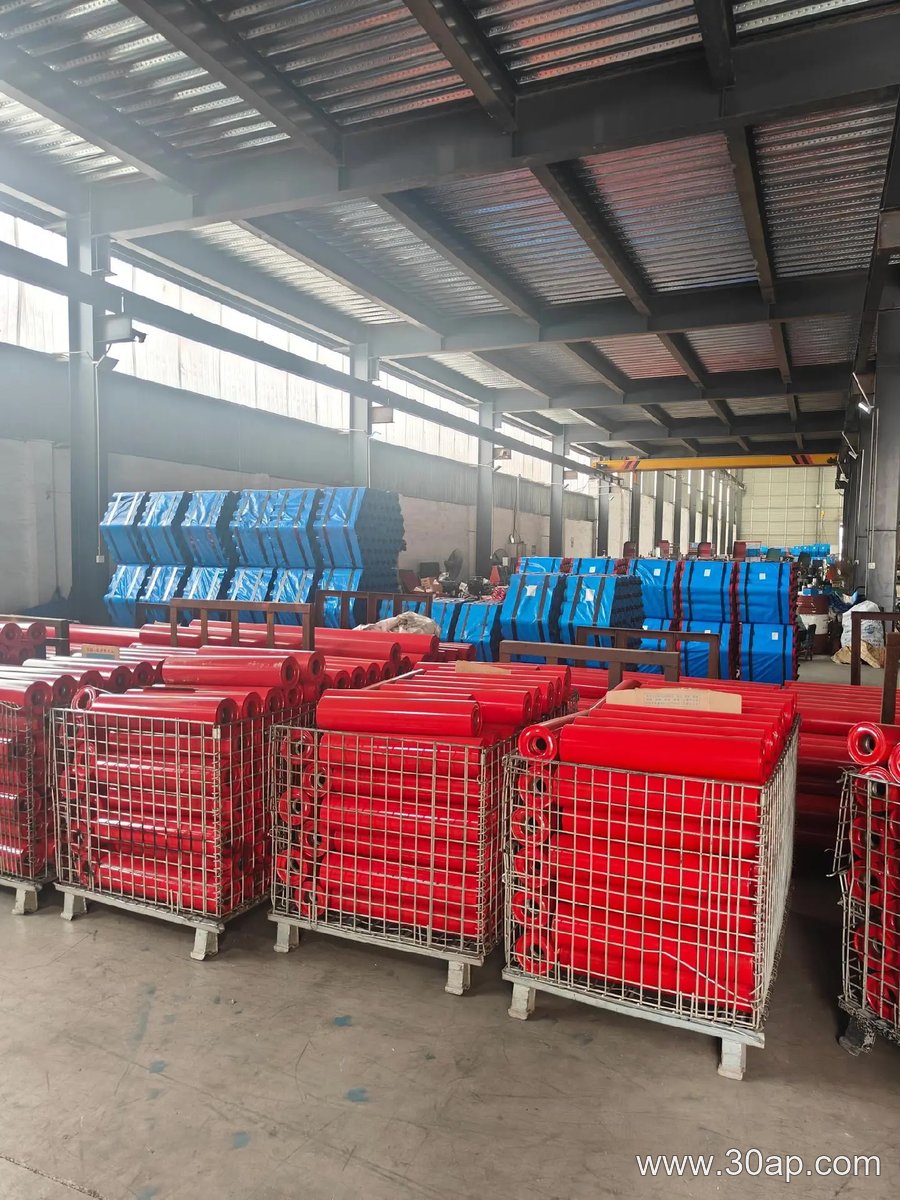
Trough angles commonly fall between 20 and 35 degrees for general bulk material, while 45 degrees is used where the material is light and the belt speed is high. Pre-tilted brackets often sit around 1.5 to 2 degrees to help the belt stay centered. None of these figures are universal; they are starting points for selection.
Applications in Heavy Industry
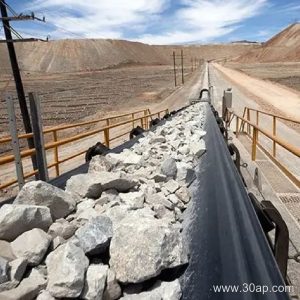
Heavy-duty conveyor brackets appear wherever belts move abrasive or heavy loads. In a limestone quarry, they support the carrying run through the crushing and screening circuit. In a coal preparation plant, they hold idlers on both the raw coal and clean coal lines. Other common sites include cement plants, iron ore handling, and port bulk terminals. Each location brings its own challenges, from wet and sticky material to high impact at the transfer point.
What Buyers Should Check
Before ordering, confirm the belt width, the roller diameter, the trough angle, and the mounting hole pattern. Ask whether the bracket is fixed or adjustable, and whether it is designed for the carrying side or the return side. Check the steel grade and the weld finish, especially if the conveyor operates in a corrosive or dusty environment. A heavy-duty conveyor bracket is a long-life component, but only if it matches the conveyor it serves.