What a Conveyor Self-Aligning Idler Does
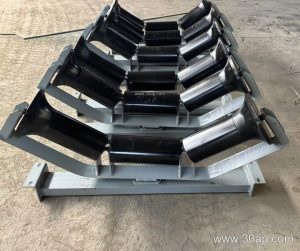
A conveyor self-aligning idler is a training idler that keeps the conveyor belt centered on the conveyor structure. It responds to belt drift by pivoting slightly, so the idler applies a corrective force that guides the belt back to its proper path. This type of idler is common on long overland conveyors, stockyard systems, and plant conveyors where misalignment can cause spillage, edge wear, and premature belt damage. In a quarry or aggregate line, a self-aligning idler helps protect an abrasion resistant conveyor belt from rubbing against the frame. In a coal mining conveyor or power plant coal handling system, it supports reliable tracking of a flame retardant conveyor belt or fire resistant conveyor belt.
How the Self-Aligning Design Works
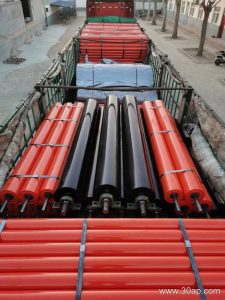
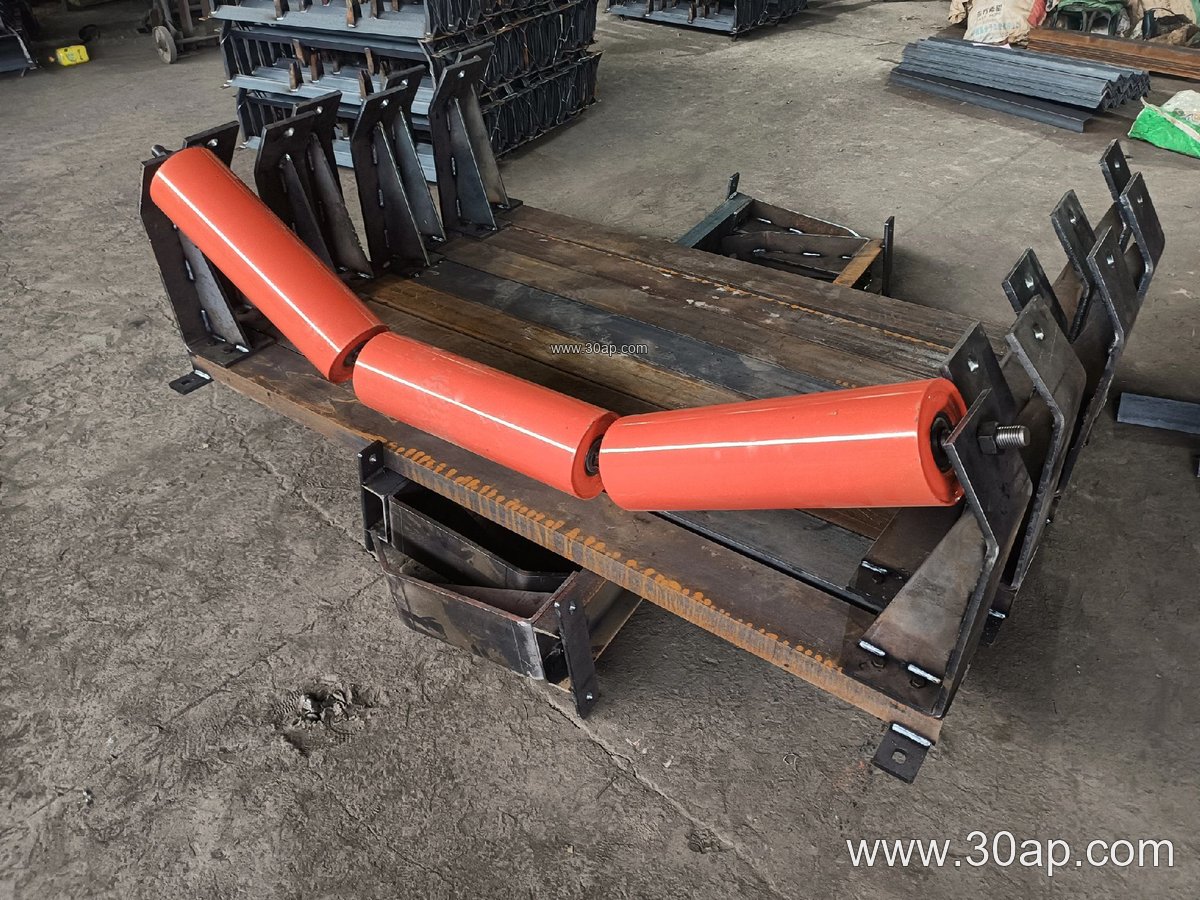
The self-aligning idler is usually built as a two-roll or three-roll set mounted on a pivoting base. The rolls are carried on a shaft with bearings, and the frame can rotate about a vertical pivot. When the belt shifts to one side, the idler senses the change and angles itself. The angled rolls then generate a small lateral force that steers the belt back toward the center. A friction self-aligning idler uses friction between the belt and the rolls to trigger the pivot action, while a conical self-aligning idler uses tapered roll shapes to assist the return motion. The assembly often includes a conveyor bracket that mounts to the conveyor stringer and allows the idler to be positioned and adjusted.
Common Construction Details
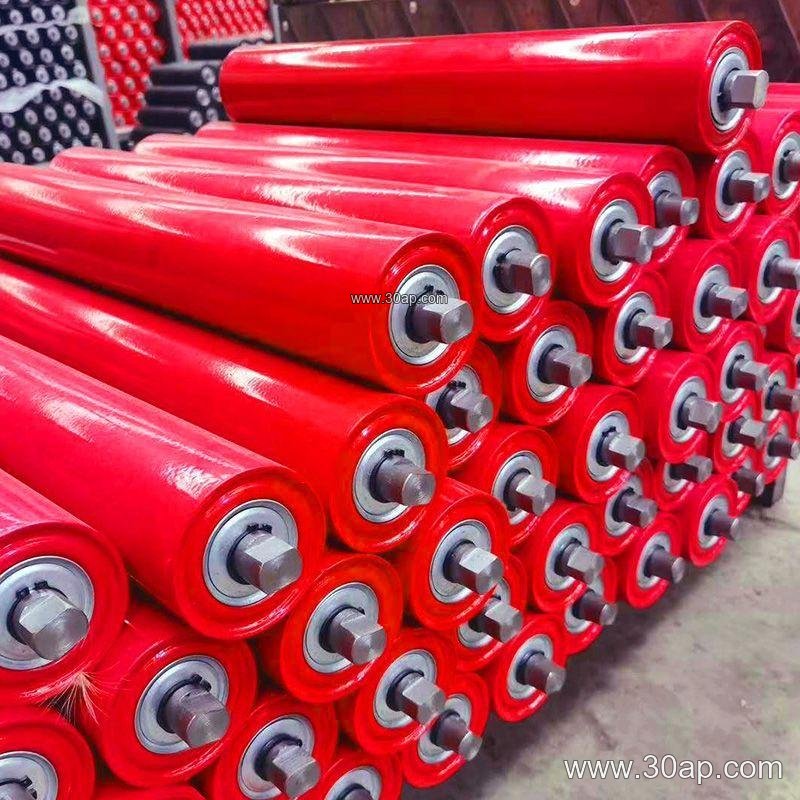
- Roll diameter options commonly include Ø89, Ø102, Ø108, Ø127, Ø133, Ø159, and larger sizes up to Ø219 for heavy-duty service.
- Bearing sizes such as 6204, 6205, 6305, 6306, 6308, and 6310 are selected according to load and roll diameter, not by belt width alone.
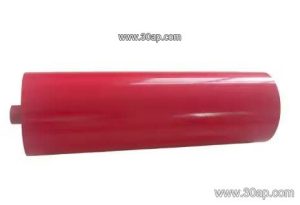
- Roll surfaces may be steel tube, nylon, ceramic, or rubber ring, depending on whether the application needs extra grip, wear resistance, or material build-up control.
- Idler sets are available as single-roll, two-roll, and three-roll troughing configurations. For self-aligning duty, a two-roll or three-roll arrangement is common.
- Trough angles of 20 degrees, 30 degrees, 35 degrees, and 45 degrees are used to match the belt profile and material load.
Where It Fits on the Conveyor
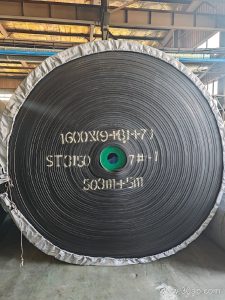
Self-aligning idlers are typically installed on the carrying side at intervals along the conveyor, especially where belt tracking has been a problem. On the return side, a V-return idler or a flat return idler may be used, but a self-aligning idler is mainly a training device for the carrying run. In a cement plant, a steel cord conveyor belt or EP conveyor belt may benefit from self-aligning idlers at transfer points and curves. In a port or ship loading conveyor, a wide conveyor belt such as 1200mm, 1400mm, or 1600mm may need self-aligning idlers to maintain alignment under variable loading. The idler works together with the conveyor pulley, including the drive pulley, tail pulley, and bend pulley, but these pulleys are not interchangeable with idlers and serve different functions.
Selection Points for Buyers
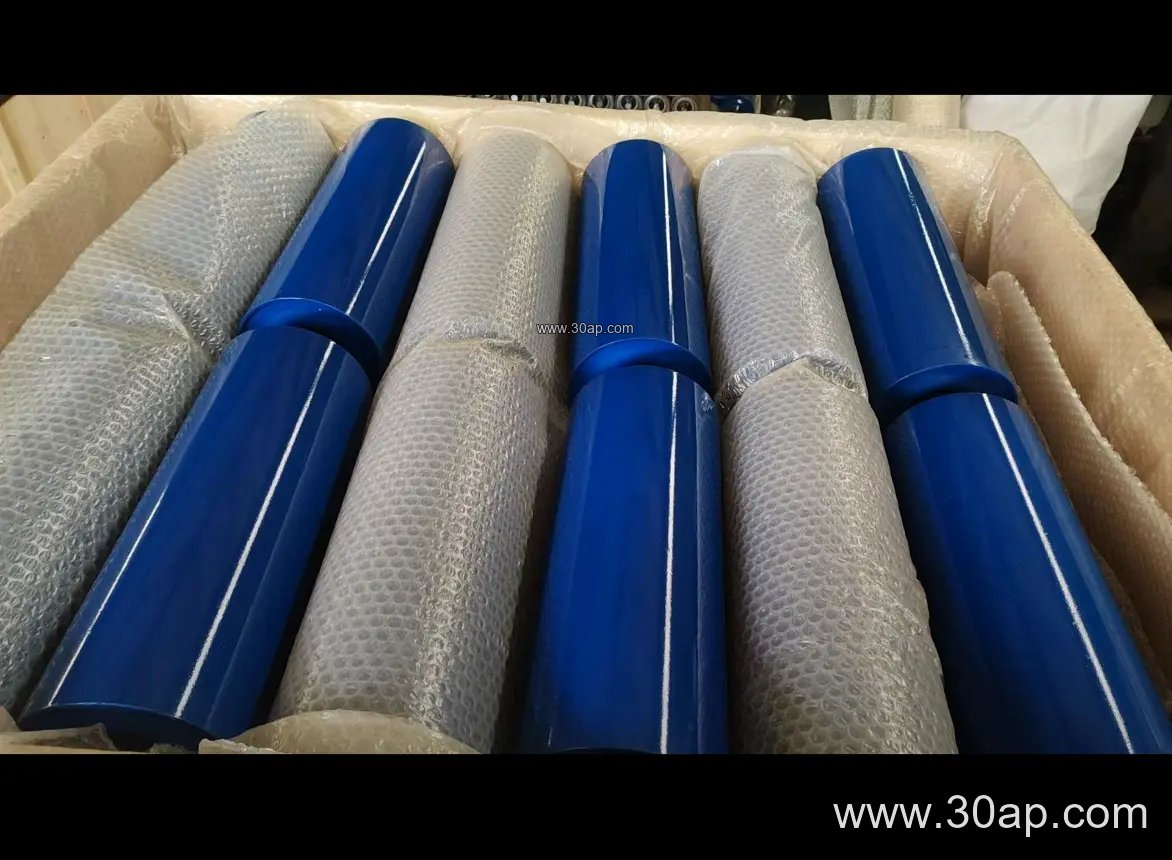
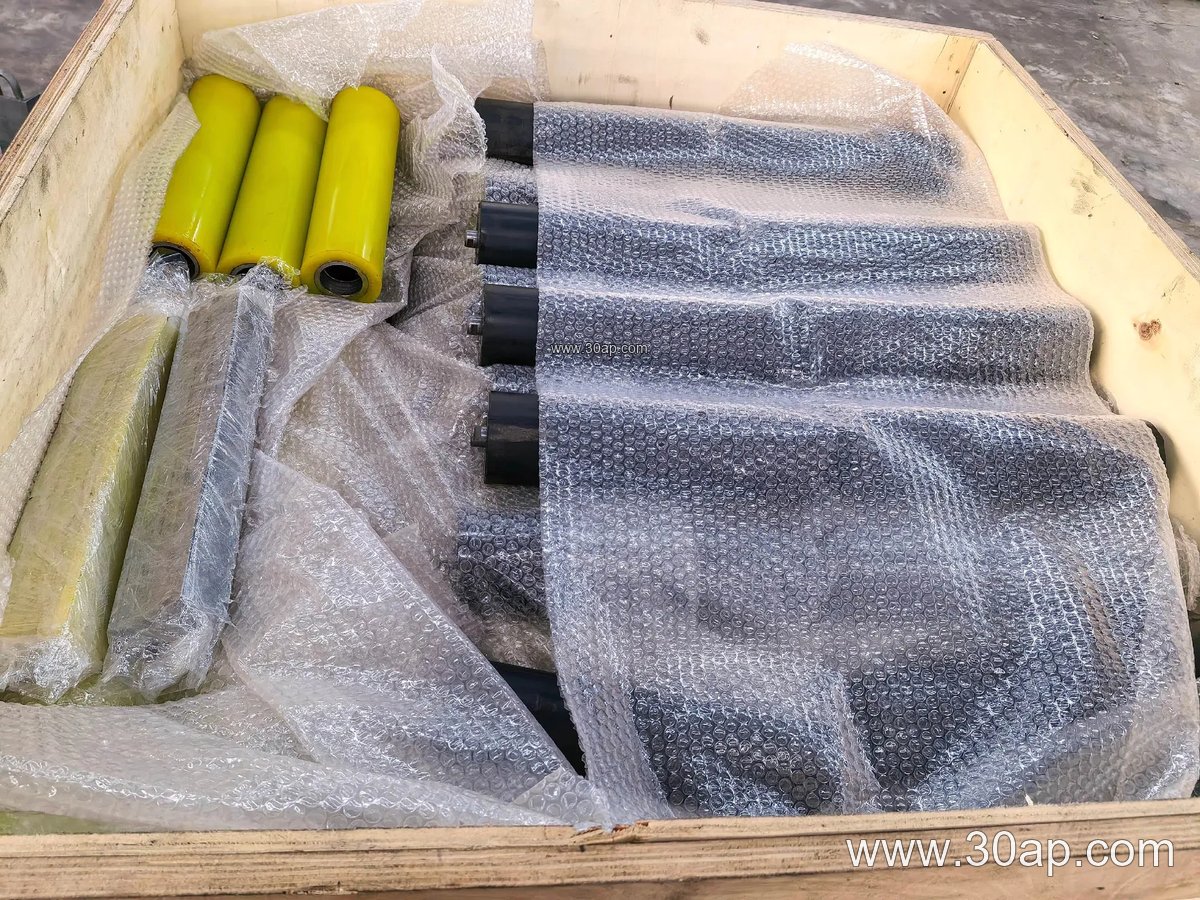
When choosing a self-aligning idler, start with the belt width and the existing idler set dimensions. Belt widths from B400 to B2400 are common in bulk material handling, and the idler length must match the belt width, trough angle, and roll arrangement. For a three-roll troughing set, common roll lengths are approximately 200 mm for B500, 250 mm for B650, 315 mm for B800, 380 mm for B1000, 465 mm for B1200, 530 mm for B1400, and 600 mm for B1600, but side rolls and center rolls can differ. These are reference examples, not fixed pairings. The shaft diameter should be confirmed with the manufacturer based on load and bearing selection; it should not be assumed from belt width alone.
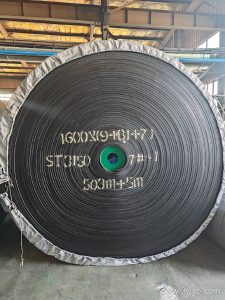
Consider the material being conveyed. In an iron ore or copper ore application, a heavy-duty mining conveyor belt may require a robust self-aligning idler with a larger roll diameter and reinforced frame. In a fertilizer or grain facility, a food grade conveyor belt or oil resistant conveyor belt may call for a cleaner-running idler with suitable roll surface. In a cold climate, a cold resistant conveyor belt may be paired with idlers that allow for snow and ice build-up without jamming. For dusty conditions, a sealed bearing arrangement helps extend service life. A rubber conveyor belt, EP conveyor belt, or NN conveyor belt all need proper tracking, and the self-aligning idler is one of the tools that keeps the belt on center.
Maintenance and Installation Notes
Install self-aligning idlers squarely and at the recommended spacing. Check that the pivot moves freely and that the rolls turn without binding. Keep the idler clean and inspect for worn rolls, damaged seals, or loose brackets. A misaligned conveyor bracket can cause the idler to fight the belt rather than help it. When replacing an idler, confirm the roll diameter, bearing size, and mounting dimensions. Do not substitute a drive pulley, tail pulley, or bend pulley for an idler, and do not use a standard troughing idler as a replacement for a self-aligning idler when training action is needed. For a conveyor belt that is already damaged, correct the belt condition before relying on the idler to improve tracking.