What a Conveyor Support Leg Does
A conveyor support leg is the vertical structural member that carries the weight of a belt conveyor’s idler frames, rollers, and conveyed material down to the floor or foundation. In many workshops and plant drawings, the same component is called a conveyor stand leg, and the two names refer to the same load-bearing part. It is not a pulley, not a roller, and not a bracket, although it works together with all of them.
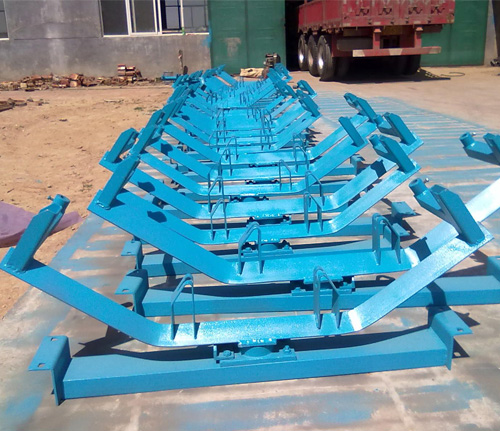
The leg sits under the main longitudinal beam or stringer. On a typical installation, the beam holds the idler roller set, the belt runs over the rollers, and the leg transfers the resulting forces into the ground. If the leg is weak, poorly aligned, or spaced too far apart, the whole line can sag, track badly, or vibrate.
How the Leg Is Built
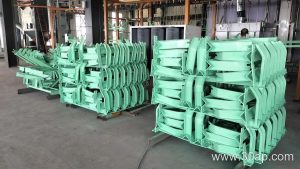
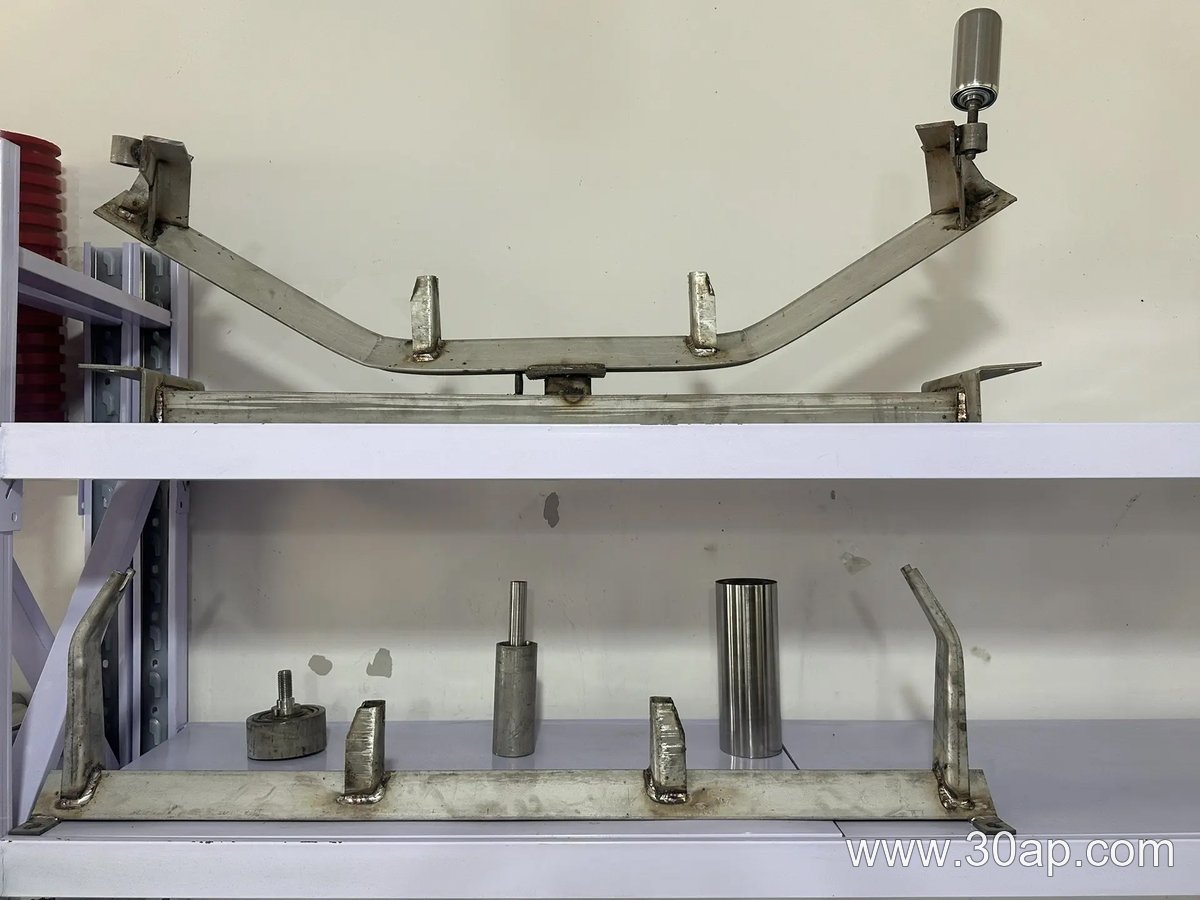
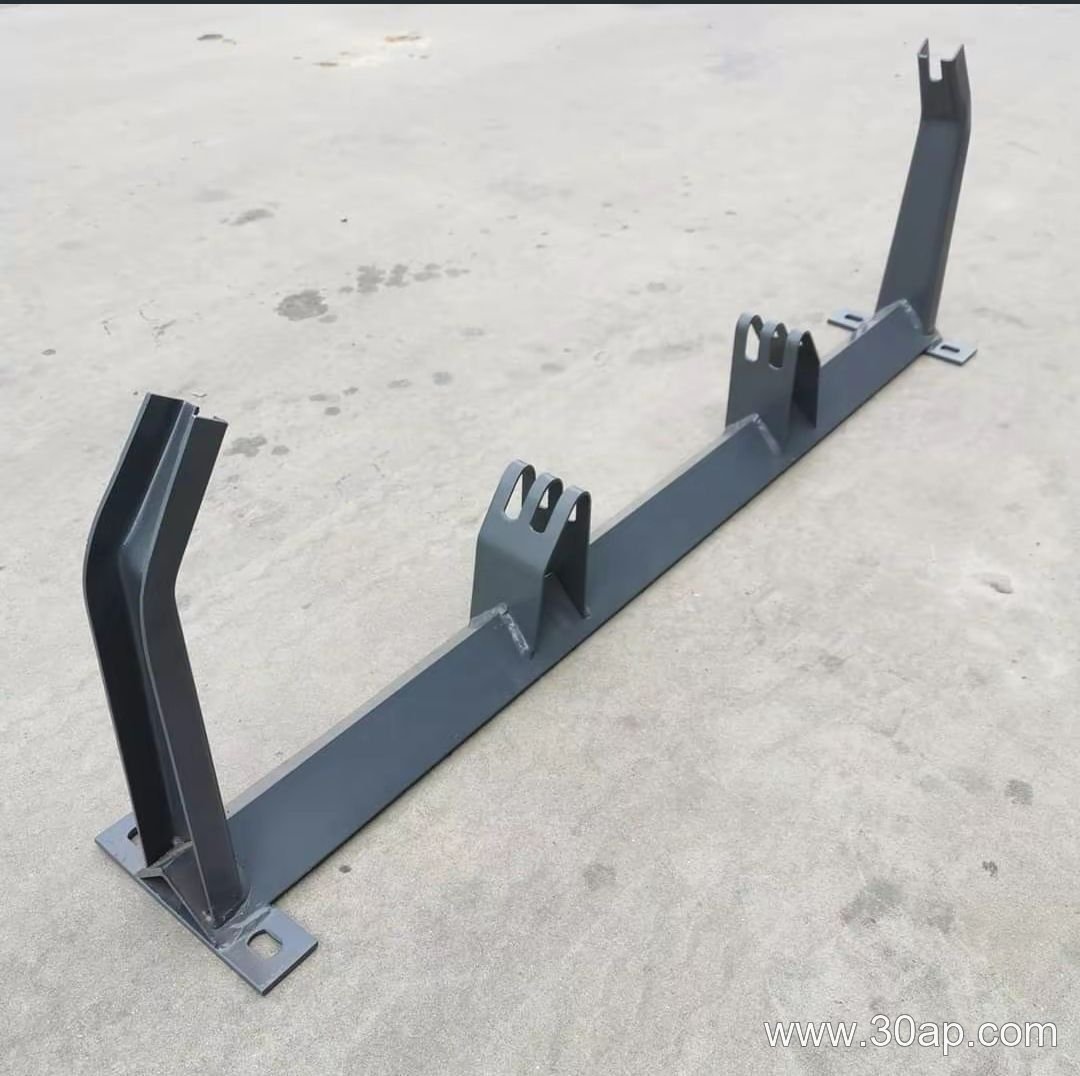
Most support legs are fabricated from structural steel. Common materials include angle steel, channel steel, and folded steel plate. A simple fixed leg may be a single rolled or welded section with a base plate drilled for anchor bolts and a top plate that bolts to the stringer. Taller or heavier-duty legs often use two uprights with cross bracing to resist lateral movement.
Bolted connections are common because they allow on-site adjustment and later modification. Welded versions are also used where the structure is permanent. The base may include slotted holes or shims so the installer can level the frame and correct small height differences between legs.
Where Support Legs Are Used
These legs appear wherever a belt conveyor needs to be raised above the ground or above a maintenance walkway. In a quarry or a crushed-stone line, they carry the inclined sections that lift material from a crusher discharge to a screening deck. In a grain silo or a fertilizer plant, they support enclosed or covered belt runs where dust control and cleanout access matter.
The same part is used on horizontal sections, inclined sections, and transition zones. When a conveyor changes angle, the leg height and the beam position change, but the basic function stays the same: keep the belt line at the correct elevation and transfer load safely.
Matching the Leg to the Rest of the Conveyor
A support leg is selected together with the belt width, the idler frame type, and the roller diameter. For example, a B800 belt with a 35-degree troughing idler set and Ø108 rollers will need a different leg height and beam spacing than a B1200 line with a 45-degree trough and Ø133 rollers. These combinations are common references, not fixed rules. The actual leg height, hole spacing, and beam length are determined by the design, the required ground clearance, and the loads involved.
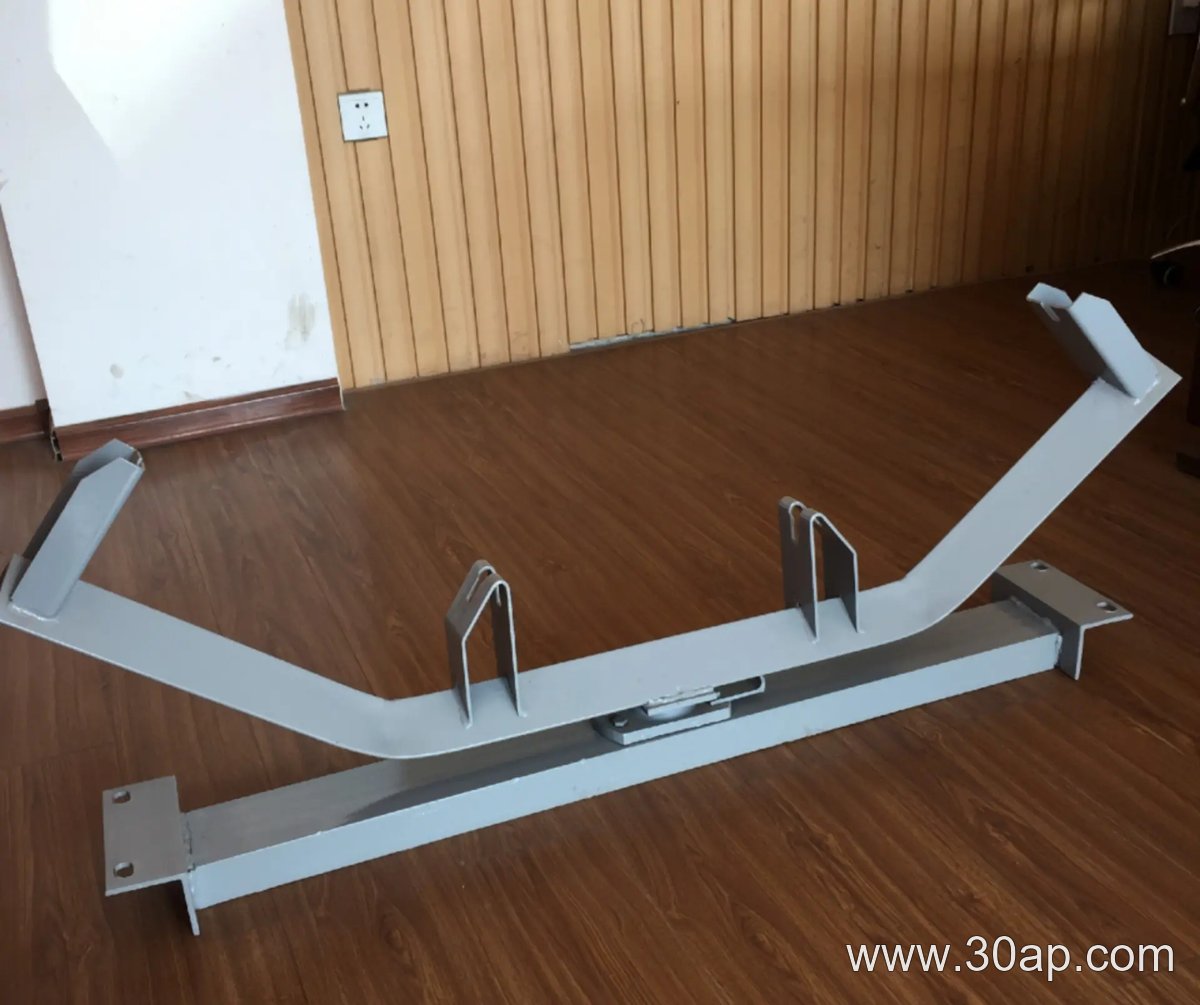
Adjustable legs are useful where the floor is uneven, where future changes in elevation are expected, or where a transition zone needs fine tuning. Fixed legs are simpler and often stiffer, so they suit permanent installations with well-prepared foundations. Neither type is automatically better; the choice depends on the site and the maintenance plan.
What Buyers Should Check
- Load path: confirm the leg is rated for the belt, material, and idler weight it will carry, including impact from lumpy feed.
- Mounting details: check the base plate hole pattern, anchor type, and whether shims or slotted holes are needed for leveling.
- Connection to the stringer: verify that the top plate or bracket matches the beam and the conveyor bracket arrangement.
- Height and adjustment range: make sure the leg can be set to the required elevation without over-extending a sliding section.
- Material and finish: consider the environment. Wet or corrosive sites may need a different coating or a heavier section.
- Compatibility: the leg should suit the idler roller frame, the pulley positions, and the belt width without forcing the belt into an odd profile.
Installation and Maintenance Notes
Set out the legs at the spacing shown on the general arrangement drawing. Check that the tops are level and in line before tightening all bolts. A laser level or a string line helps here. After the belt is installed and tensioned, walk the line and look for legs that are leaning, loose, or sitting on cracked concrete.
Inspect anchor bolts and base plates during routine shutdowns. If a leg is in a high-impact zone, look for bent uprights or fatigue cracks near welds. Replacing a damaged leg is usually straightforward when the connection is bolted, which is one reason bolted designs remain popular.
A conveyor support leg may look like a simple piece of steel, but it controls the geometry of the entire belt line. Choosing the right height, material, and adjustment range keeps the conveyor belt centered, protects the idler roller and conveyor pulley, and reduces the chance of unexpected downtime.