What a Trough Idler Bracket Set Does
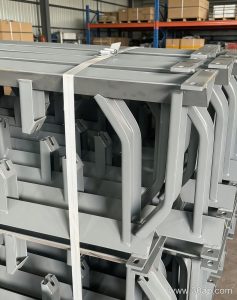
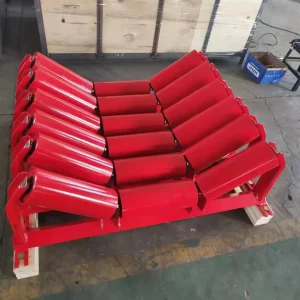
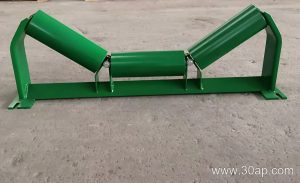
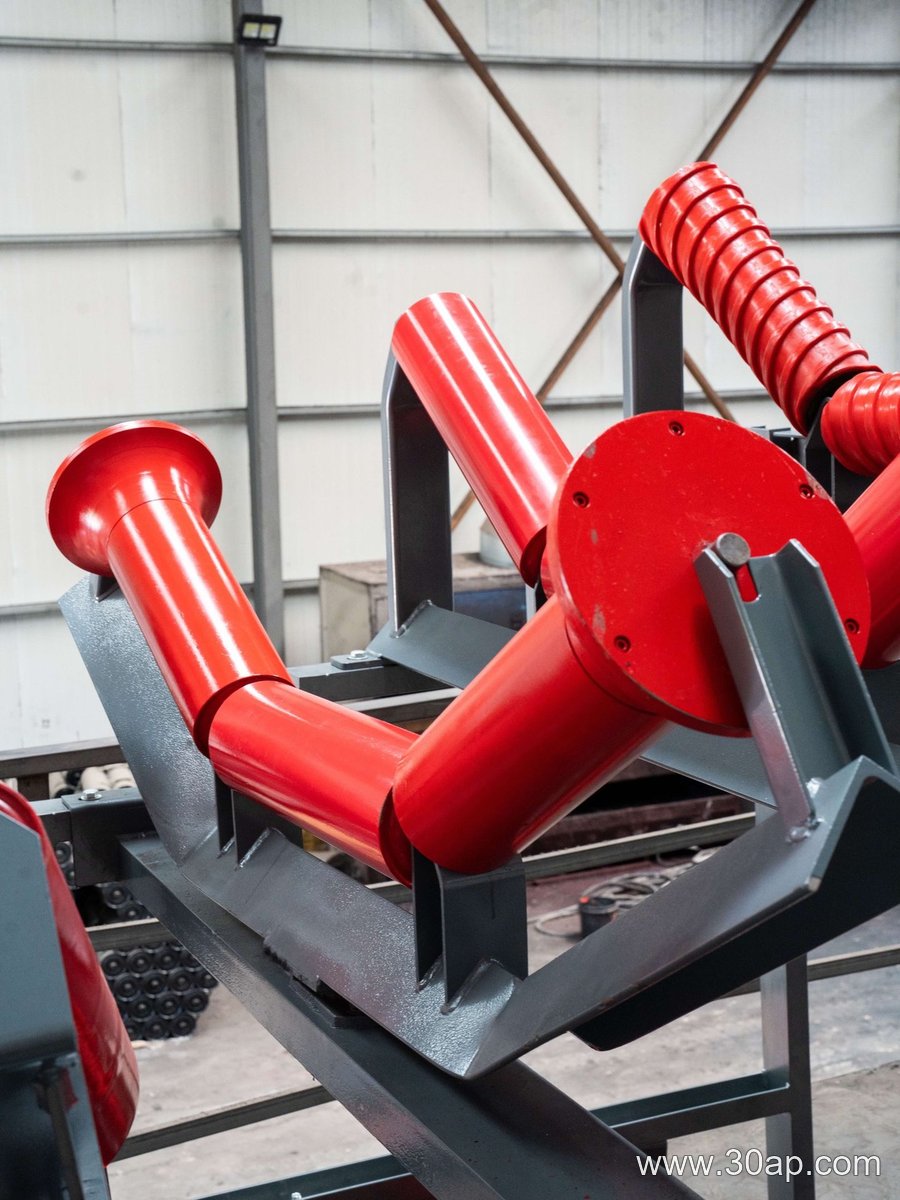
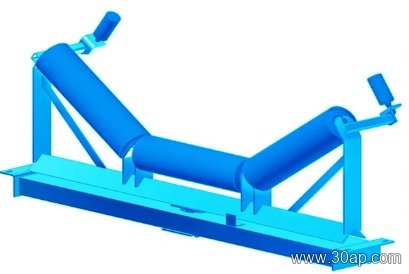
A trough idler bracket set is the supporting frame that holds the idler rollers in a troughed configuration along the carrying side of a conveyor. The set typically includes the brackets or stands that position two or three idler rollers at a defined trough angle. The rollers themselves are separate components, but the bracket set determines their alignment, spacing, and angle relative to the conveyor belt. Without a properly mounted trough idler bracket set, the belt would not form the curved profile needed to contain bulk material during transport.
This assembly is also known by the equivalent name troughing idler frame set. It is distinct from a return bracket or a flat carrying bracket, because its primary purpose is to create the trough shape on the loaded side of the belt. A trough idler bracket set is not the same as a drive pulley, tail pulley, or bend pulley, which are different components in the conveyor system.
Construction and Common Materials
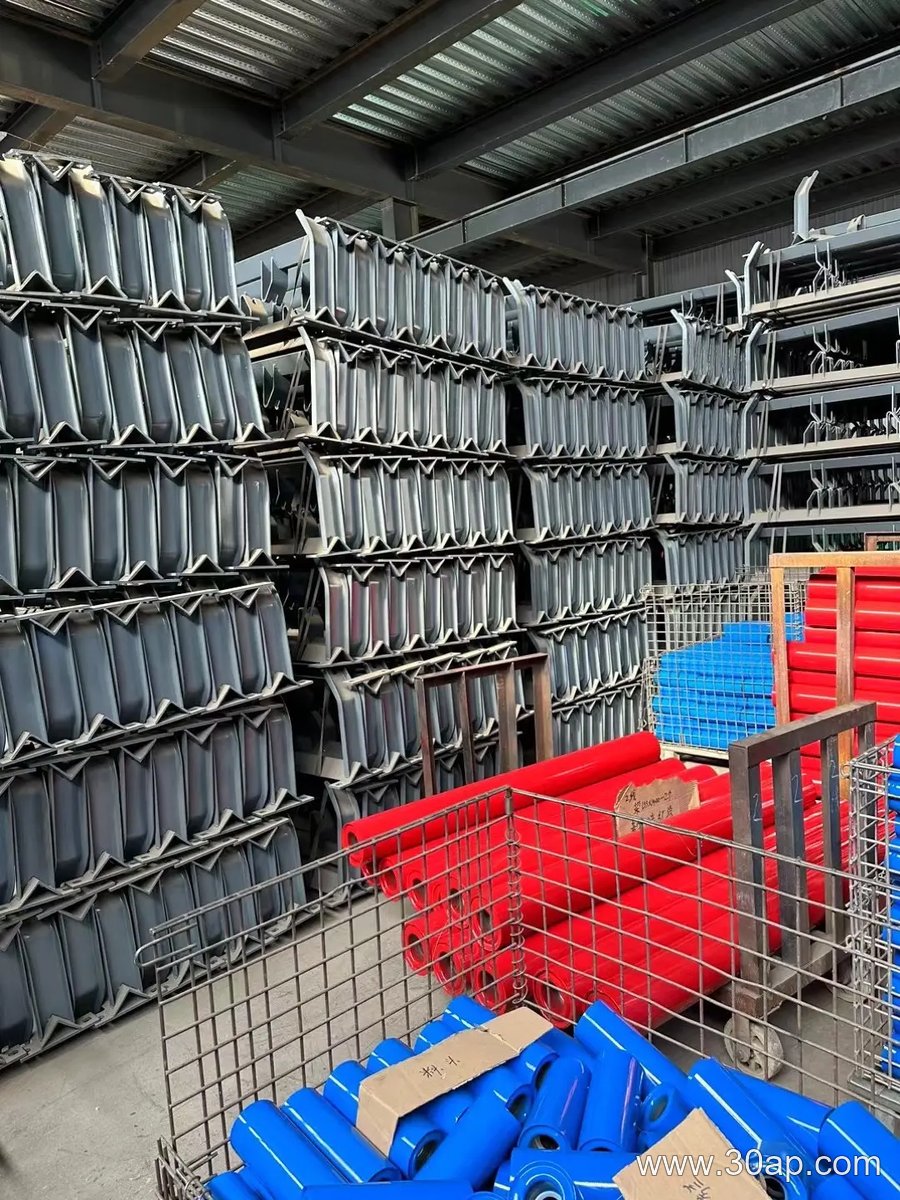
Most trough idler bracket sets are fabricated from angle steel, channel steel, or folded steel plate. The choice depends on the load, belt width, and environmental conditions. The brackets are usually bolted or welded to the conveyor’s longitudinal beams. Slots or multiple holes may be provided to allow adjustment of the trough angle or roller position.
Typical trough angles include 20 degrees, 30 degrees, 35 degrees, and 45 degrees. Adjustable brackets can be set to several of these angles, while fixed brackets are made for one specific angle. The bracket set must match the idler roller diameter and the belt width. Common roller diameters for troughing applications include Ø89, Ø108, Ø133, Ø159, and Ø194. Belt widths such as B500, B650, B800, B1000, B1200, and wider sizes are available, but no single belt width is limited to one trough angle or one roller diameter.
Where It Is Used
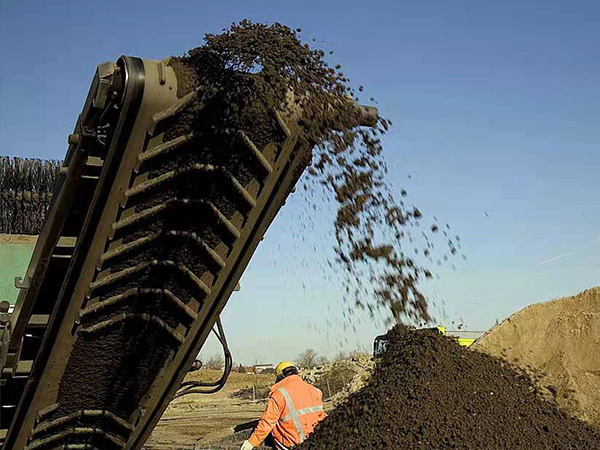
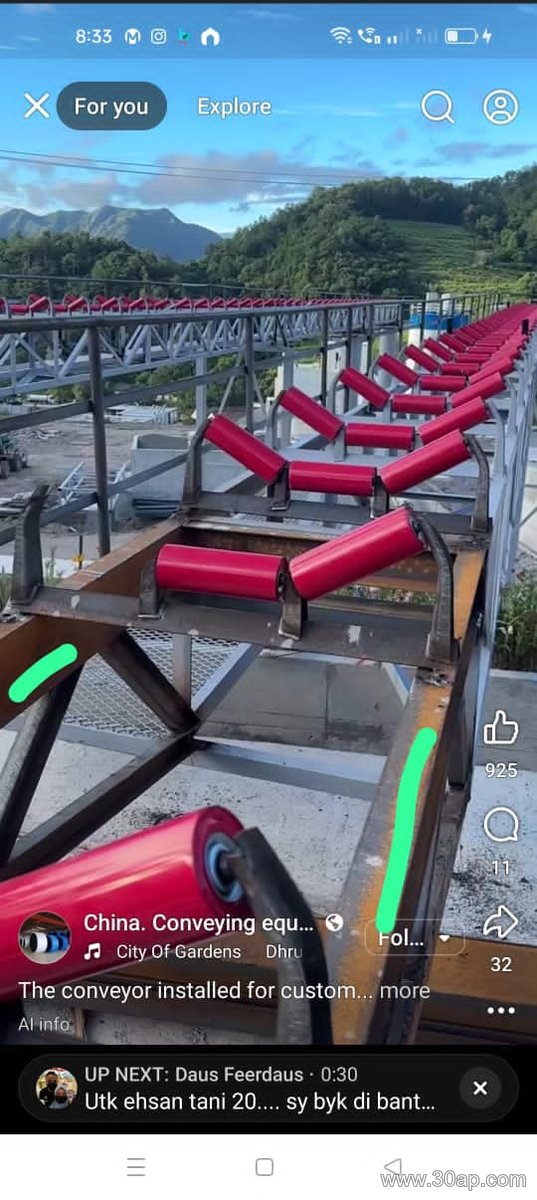
Trough idler bracket sets are found wherever a conveyor belt carries bulk material. Two common examples are a quarry and a coal washing plant. In a quarry, the bracket set supports the belt through the crushing and screening circuit, where material is heavy and abrasive. In a coal washing plant, the brackets may be exposed to moisture and fine particles, so the mounting surfaces and hardware should be considered for corrosion resistance.
Other applications include cement plants, power plant coal handling, and port bulk terminals. In each case, the bracket set works together with the conveyor belt, idler rollers, and conveyor pulleys to keep the belt tracking and troughing correctly.
Selection and Buyer Checklist
When choosing a trough idler bracket set, the buyer should first confirm the belt width and the required trough angle. The bracket set must also match the idler roller diameter and the mounting hole spacing on the conveyor frame. Installation hole spacing and beam length usually vary with belt width and trough angle, so they should be confirmed against the actual conveyor design rather than assumed from a single number.
Other points to check include:
- Material thickness and finish for the expected load and environment.
- Whether a fixed or adjustable bracket is needed. Adjustable brackets allow the trough angle to be changed within a range, while fixed brackets are simpler and more rigid.
- Compatibility with the existing conveyor bracket mounting pattern.
- Availability of replacement parts, since a bracket set may be replaced independently of the rollers.
For comparison, a return bracket set supports the belt on the return side and does not create a trough. A trough idler bracket set is specific to the carrying side and should not be substituted with a return or flat bracket when a troughed profile is required.
Maintenance Notes
Inspect the bracket set for loose bolts, bent members, or elongated holes. A damaged bracket can shift the idler roller alignment, causing the belt to mistrack or wear unevenly. Keep the mounting area clean so that material buildup does not change the trough angle. When replacing rollers, check that the bracket set still holds the correct angle and that all fasteners are tightened to the supplier’s recommendation.
Because the bracket set is a structural component, it should be selected with the same care as the idler rollers and the conveyor belt itself. A correct match helps extend belt life and keeps the conveying system running smoothly.