What a V-Type Idler Does on a Conveyor
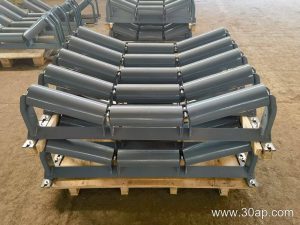
A V-Type Idler is a two-roll return idler arranged in a V shape, with the rolls angled upward toward the center. It supports the empty side of the conveyor belt and, because of that V geometry, gently guides the belt back toward the center line as it runs. In a coal washing plant or a limestone quarry, a belt that wanders off track can damage the edge and spill material, so this return idler earns its place as a simple, passive training device.
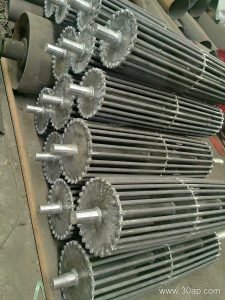
The product is also called a V-return idler or V-shaped return roller. Those names describe the same item. It is not a troughing idler, not a transition idler, and not a buffer idler. Drive pulleys, tail pulleys, and bend pulleys are different components entirely and cannot stand in for it.
How the V-Type Idler Is Built
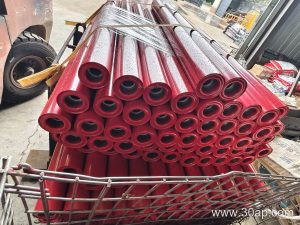
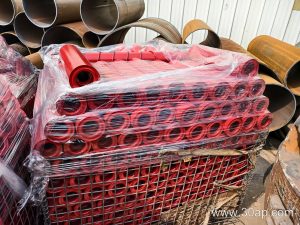
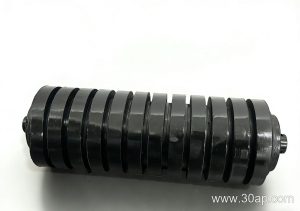
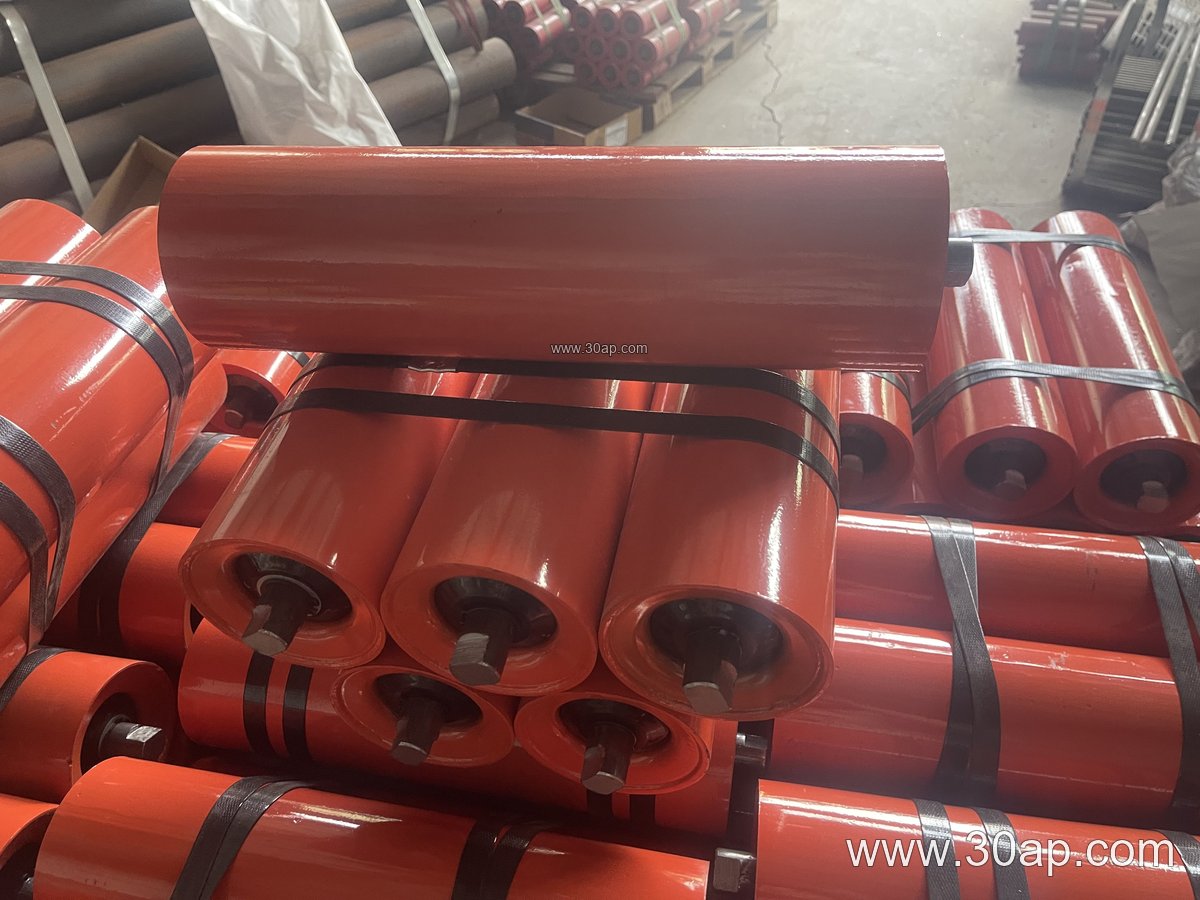
Two idler rollers are mounted on a common frame at an angle, forming the V. Each roll usually has a steel tube shell, a shaft, sealed bearings, and a bearing housing. Roll surfaces can be plain steel, nylon, ceramic, or rubber rings depending on the duty. In a cement plant handling dusty clinker, sealed bearings matter more than surface finish; in a wet coal preparation circuit, corrosion protection of the frame and housings deserves attention.
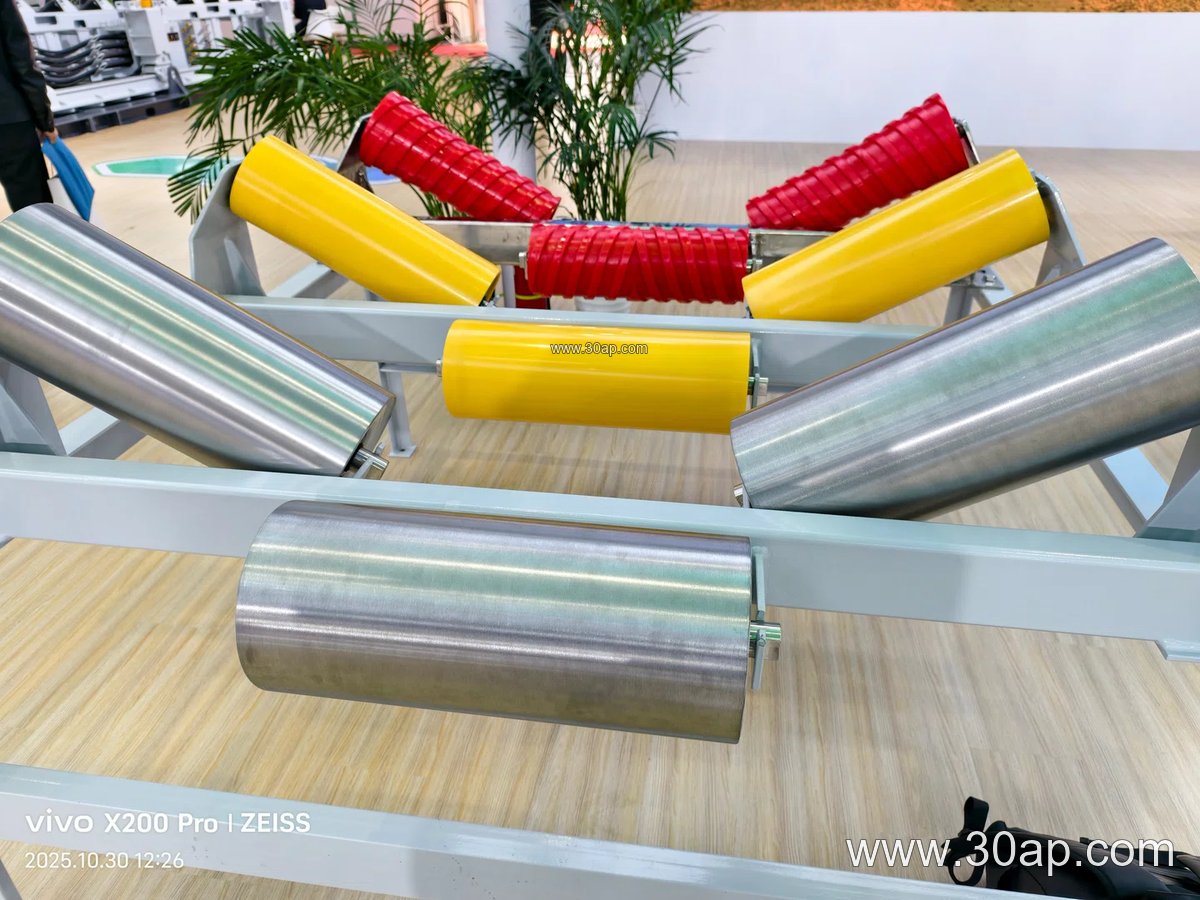
The roll diameter is chosen with belt width and load in mind. Common diameters include Ø89, Ø108, Ø127, Ø133, and Ø159, and larger sizes such as Ø178 or Ø194 appear on heavy belts. Bearing selection follows the shaft and load, with 6204, 6205, 6305, 6306, 6308, and 6310 among the usual options. No single bearing is tied to one roll diameter.
Where It Fits in the Conveyor Line
The V-return idler sits under the carrying run, on the return strand, spaced among flat return idlers or replacing them where belt tracking is a concern. Typical sites include:
- Aggregate and sand-gravel lines where belt edges wear quickly
- Coal handling and washing plants with long return runs
- Power station coal conveyors and limestone feed systems
- Tunnel spoil removal and crushing-screening plants
It works alongside the conveyor belt, the idler roller set on the carrying side, conveyor brackets, and the conveyor pulley at the head or tail. The V angle is normally modest, enough to center the belt without pinching it.
Reference Dimensions and Model Notes
The table below gives common reference values, not fixed supply commitments. Roll length changes with belt width, V angle, and frame design.
| Belt width | Typical roll length (reference) | Common roll diameters |
|---|---|---|
| B500 | about 200 mm | Ø63 to Ø89 |
| B650 | about 250 mm | Ø76 to Ø108 |
| B800 | about 315 mm | Ø89 to Ø127 |
| B1000 | about 380 mm | Ø108 to Ø133 |
| B1200 | about 465 mm | Ø108 to Ø159 |
| B1400 | about 530 mm | Ø127 to Ø159 |
| B1600 | about 600 mm | Ø133 to Ø178 |
| B1800 | about 670 mm | Ø133 to Ø194 |
| B2000 | about 750 mm | Ø159 to Ø219 |
These figures are examples only. A designer may pair a given belt width with more than one roll diameter, and the two rolls in a V set need not share the same length as a troughing side roll.
Buyer Checklist
- Confirm belt width and the return strand load before choosing roll diameter.
- State the environment: dust, moisture, fines, or abrasive material all affect seal and surface choice.
- Check frame height and mounting hole spacing against the existing conveyor bracket.
- Ask for bearing type and lubrication details, since these drive service life.
- Verify the V angle suits the belt stiffness; a very stiff belt may need a shallower V.
During maintenance, inspect for seized rolls, worn shells, and material build-up between the rolls. A V-type idler that stops turning will rub the belt and can cause tracking problems rather than cure them. Replacing worn rolls early is usually cheaper than replacing a damaged conveyor belt.