What a 630mm Drive Pulley Does
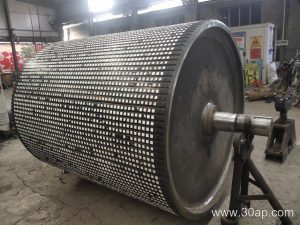
A 630mm drive pulley, also called a 630mm head pulley or drive drum, is the powered cylinder at the discharge end of a belt conveyor. Its job is simple to state and demanding to execute: grip the conveyor belt, transmit torque from the gearbox, and keep the belt tracking straight under load. The 630mm figure refers to the drum diameter, not the shaft or the face width. That diameter is one of the more common sizes in medium and heavy-duty conveying, sitting above lighter head pulleys and below the largest mine-duty drums.
Because it is a drive pulley rather than a tail, bend, or tension pulley, it carries the highest torque in most conveyor layouts. A bend pulley only changes belt direction. A tail pulley returns the belt. Neither is interchangeable with the drive pulley, and each is selected on its own duty.
How the Drum Is Built
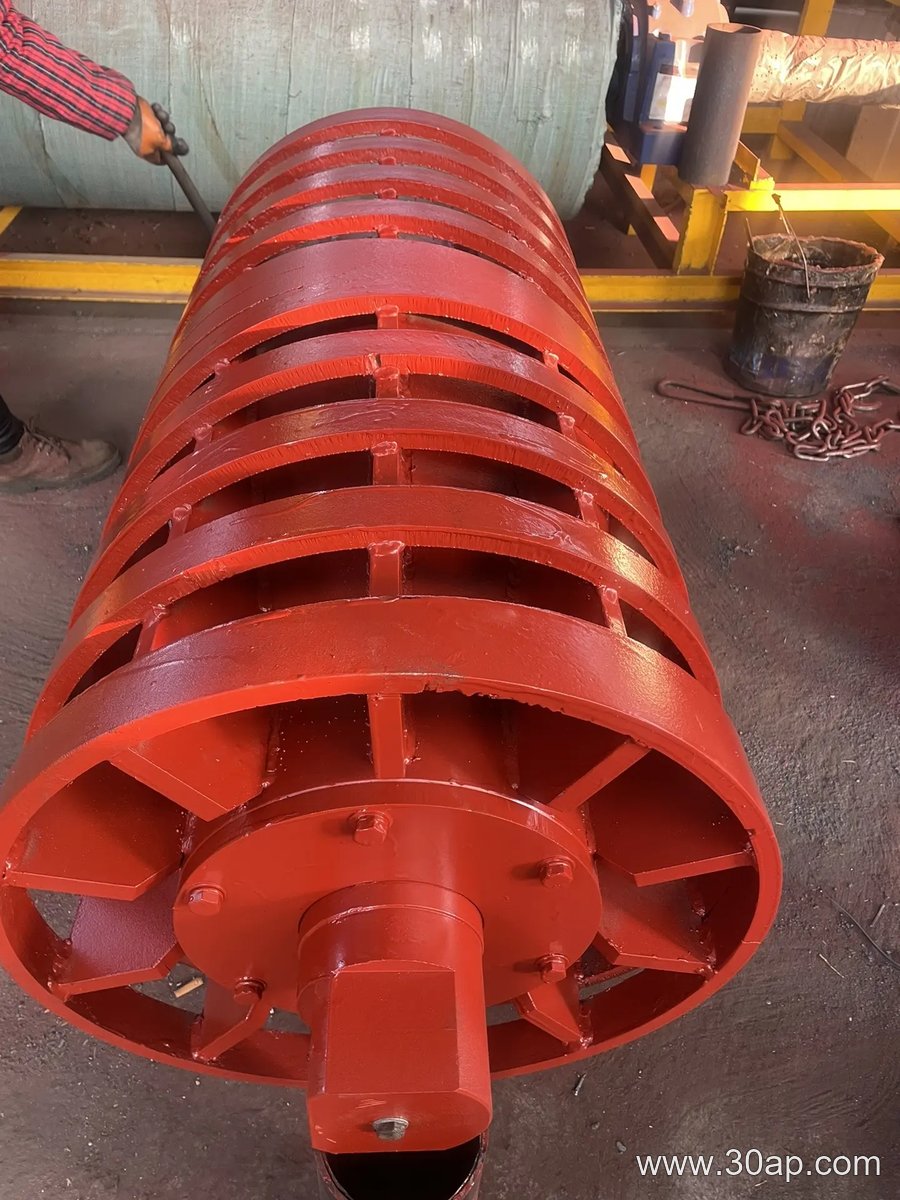
The shell is usually a rolled steel cylinder, machined at the ends and welded to the hub plates. Inside, the shaft passes through the drum and is supported by bearing housings mounted on the conveyor bracket or frame. The shaft diameter is determined by torque and load, not by belt width alone, so a 630mm drive pulley might run on a shaft sized by the drive calculation and the bearing life target.
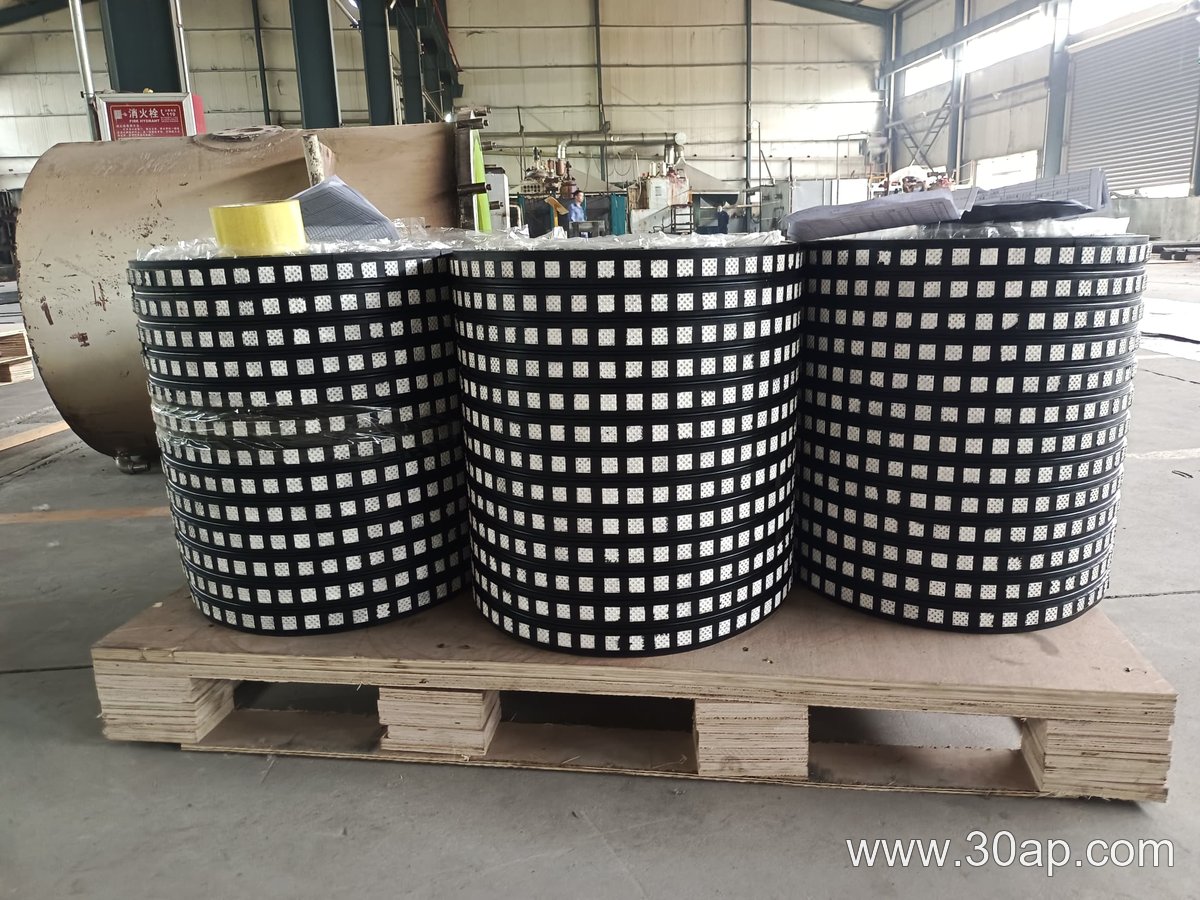
Surface treatment matters as much as the shell. Common options include plain steel, cast rubber, cold-bonded rubber, hot vulcanized rubber, diamond grooving, herringbone grooving, ceramic lagging, and flat rubber sheet. Lagging thickness is often 8, 10, 12, 15, or 20 mm. On a drive pulley, lagging raises the friction coefficient between drum and belt, which reduces the risk of slip when the belt is wet or dusty.
Where This Size Fits
A 630mm drive pulley is often found in aggregate plants, limestone quarries, coal preparation plants, and crushing and screening circuits. It can also appear in cement clinker handling, power plant coal conveying, and port bulk terminals. In these settings the belt may carry crushed rock, ore, or mineral products, and the drive drum has to start under load without slipping.
Face width is matched to belt width, and the drum face is normally wider than the belt. For example, a B800 belt commonly runs on a pulley face around 950 mm, while a B1200 belt is often paired with a face near 1400 mm. Combinations such as B1200 x 1000 mm or B1400 x 800 mm appear in real layouts, but no single belt width locks the user into one diameter. The 630mm size is a design choice, not a rule.
What Buyers Should Check
- Confirm the drive duty: starting torque, belt speed, and the material being carried.
- Match the lagging type to the environment. Wet or oily conditions usually call for grooved or ceramic lagging.
- Verify the shaft diameter from the torque and bearing load calculation, never from belt width alone.
- Check face width against the conveyor belt width and the required edge clearance.
- Ask about balancing, runout, and bearing type, since these affect vibration and service life.
- Confirm that the pulley will fit the existing conveyor bracket and take-up arrangement.
Installation and Maintenance Notes
Alignment is critical. A 630mm drive pulley that is not square to the belt centerline will cause edge wear and mistracking, even if the lagging is in good condition. After installation, check that the drum is level, the bearings are greased to the maker’s schedule, and the lagging is not glazed or contaminated. A conveyor pulley with worn lagging loses grip gradually, so inspection intervals should match the duty cycle.
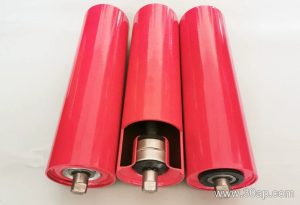
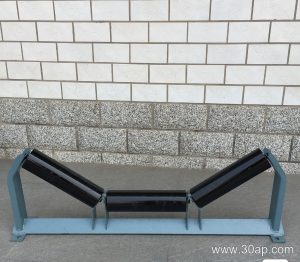
Related components such as the idler roller, conveyor bracket, and tension pulley all interact with the drive drum. If the belt slips, the cause may be the take-up rather than the drive pulley itself. A structured check of belt tension, lagging condition, and load distribution usually identifies the problem faster than replacing the drum.
Selection Summary
The 630mm drive pulley is a mid-to-heavy duty head drum suited to a range of bulk conveying tasks. Its performance depends on correct shaft sizing, suitable lagging, accurate alignment, and a belt that matches the drum face. Buyers should treat diameter, face width, shaft, and surface as a set of related choices, each confirmed against the actual conveyor design rather than a generic table.