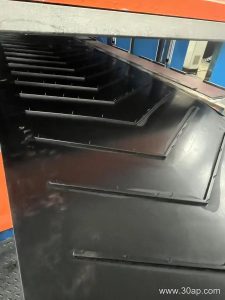
What a Heat Resistant Conveyor Belt Is
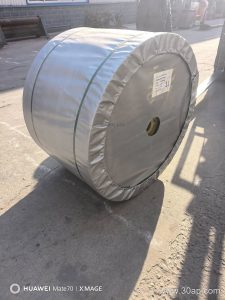
A heat resistant conveyor belt is a heavy-duty rubber conveyor belt built to carry hot bulk materials without losing its cover, carcass strength or tracking stability. In cement plants, steel mills, power stations, foundries and sinter plants, material often leaves a kiln, cooler or furnace at temperatures that would quickly destroy a standard belt. The heat resistant conveyor belt uses a heat-tolerant rubber compound and a carefully chosen carcass so the belt can survive that thermal load while still flexing around the conveyor pulleys.
Buyers sometimes call the same product a high temperature conveyor belt. Both names describe the same article: a belt engineered for hot clinker, sinter, coke, ash, cement and similar loads.
How the Belt Is Built
The construction follows the familiar sandwich of a rubber conveyor belt. A top cover faces the hot material, a bottom cover runs over the return idler roller, and a fabric or steel carcass carries the tension. What changes is the compound and the layer design.
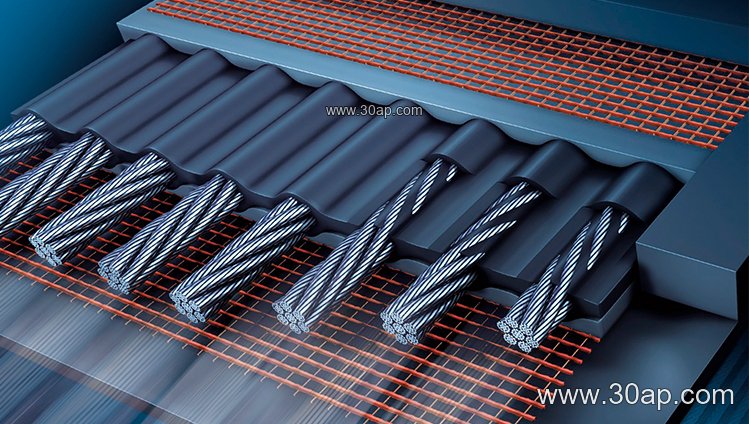
- Heat-resistant cover compound: usually based on EPDM or a specialty blend that resists hardening, cracking and reversion at elevated temperatures.
- Carcass: commonly EP conveyor belt fabric (polyester warp, nylon weft) or NN conveyor belt fabric, with steel cord conveyor belt used where very high tension and long centers demand it.
- Insulation and adhesion layers: extra skim and breaker layers can slow heat transfer from the cover into the carcass.
- Edges: cut or molded edges, depending on belt width and running conditions.
Fabric core conveyor belt designs in this family are often multi-ply fabric core conveyor belt constructions, typically 2 to 6 plies, so the belt keeps strength while remaining flexible enough for smaller pulleys. Strength grades such as EP200, EP315, EP400, EP500, EP630, EP800 and EP1000 are common references; the final grade is set by the conveyor design.
Typical Sizes and Cover Thickness
Width and cover thickness are matched to the material, the throughput and the pulley layout. The values below are common references, not fixed supply promises.
| Parameter | Common reference values |
|---|---|
| Belt width | B500, B650, B800, B1000, B1200, B1400, B1600, B1800, B2000 |
| Cover thickness (top + bottom) | 3+1.5 mm, 4+2 mm, 5+2 mm, 6+2 mm, 8+3 mm |
| Carcass plies | Usually 2 to 6 layers |
| Strength grade | EP200 to EP1000, or higher by design |
A wide belt such as a 1200mm or 1400mm unit may run beside a narrow 650mm belt in the same plant; there is no rule that one width fits one pulley diameter. Drive pulley, tail pulley and bend pulley sizes are calculated from tension, wrap angle and belt flexibility, not from width alone.
Where It Runs
Hot-material duty appears across many industries. In a cement plant, the belt moves clinker from the cooler to storage. In a steel plant, sinter and coke travel on heat resistant belting. Power plant ash handling and foundry sand lines also use this grade. The same plants typically run an abrasion resistant conveyor belt on cold, sharp rock, a flame retardant conveyor belt or fire resistant conveyor belt in coal handling, and an oil resistant conveyor belt where lubricants or oily scrap are present.
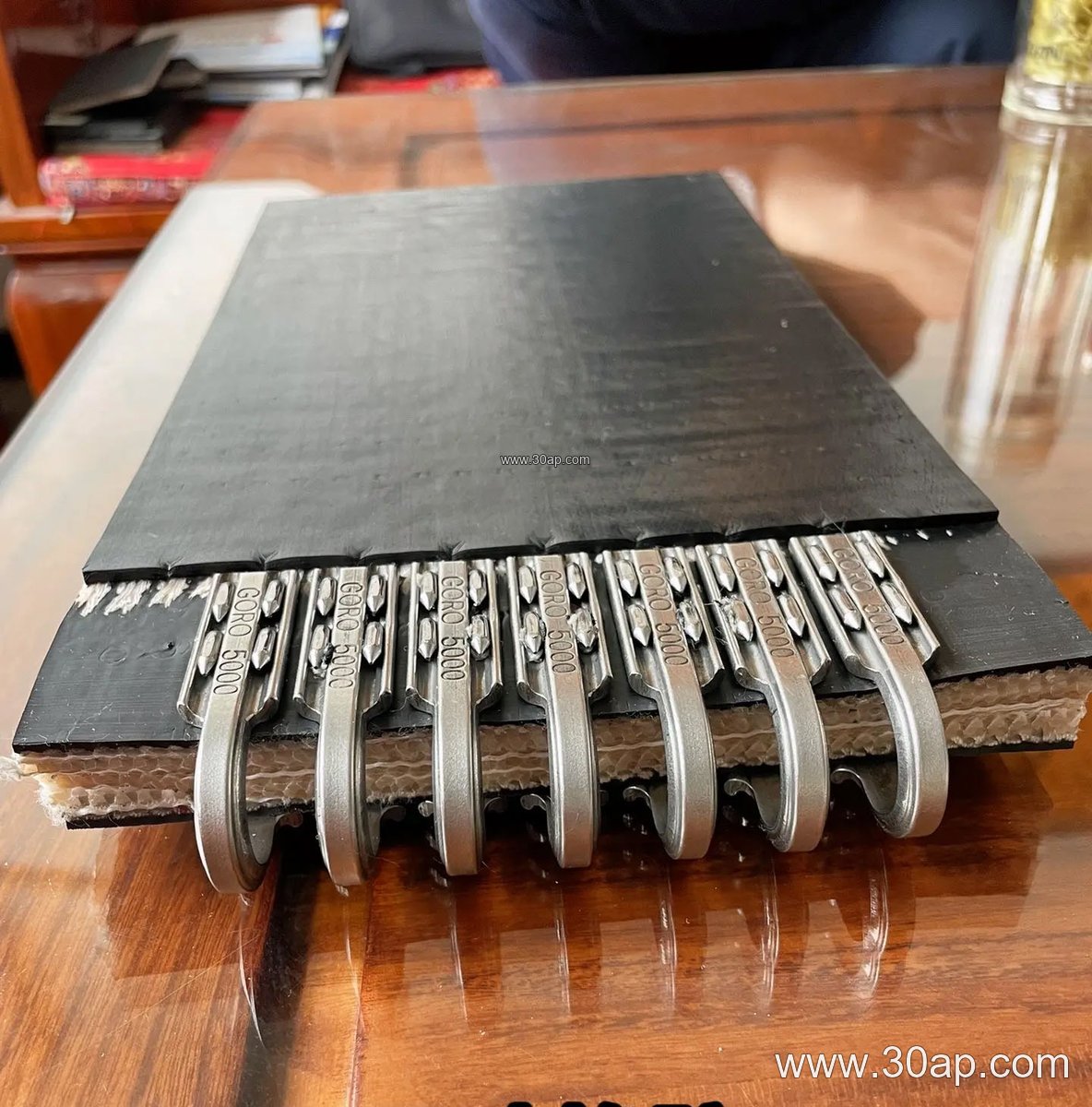
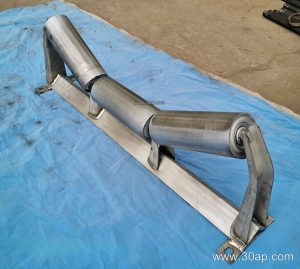
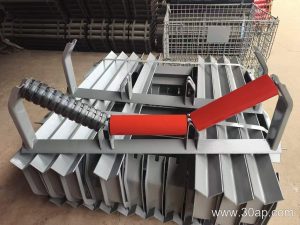
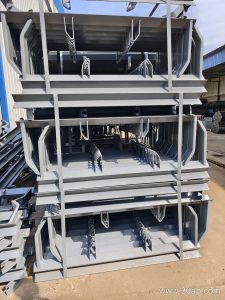
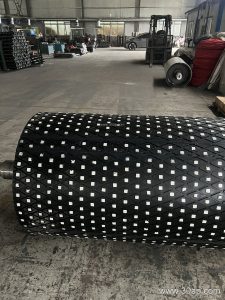
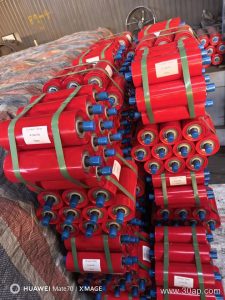
Related hardware matters too. The belt runs over a conveyor pulley at the head and tail, rests on an idler roller on the carrying and return sides, and is held by a conveyor bracket and frame. In dusty cement or quarry conveyor belt lines, alignment and idler condition strongly affect belt life.
Buyer Checklist
- Material temperature: give the normal and peak temperature, plus whether sparks or glowing particles are present.
- Material type and lump size: clinker, sinter, coke and ash behave differently; impact points may need extra cover.
- Conveyor geometry: centers, incline, pulley diameters and trough angle all influence the carcass choice.
- Environment: outdoor sun, cold start-up or wet conditions may call for a cold resistant conveyor belt or additional cover protection.
- Safety requirements: underground coal mining conveyor belt service usually needs flame retardant grades such as PVG conveyor belt constructions.
Ask for the cover compound data, ply construction and recommended working temperature range. Check that the belt can bend around the smallest pulley on the line, and confirm splice method and edge type. For very hot discharge points, a short cooling section or a heat shield can extend service life.
Care and Maintenance
Heat damage rarely appears overnight. Watch for a hard, glossy cover, small cracks near the edges, and cover separation at splice areas. Keep the idler roller turning freely, check pulley lagging and alignment, and remove spilled hot material that can trap heat against the belt. Store spare rolls away from direct sunlight and heat sources. With correct grade selection and steady maintenance, a heat resistant conveyor belt gives reliable service in the toughest hot-material lines.