What a Mining Belt Conveyor Pulley Does
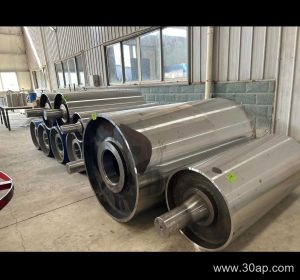
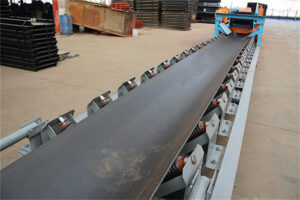
A mining belt conveyor pulley is the rotating drum that turns the conveyor belt, carries its load, and keeps the belt tracking along the structure. In hard-rock operations, the pulley is not a passive part; it transfers torque, absorbs tension, and often faces abrasive dust, water, and heavy impact. The same product is also called a conveyor drum or conveyor pulley, depending on the supplier and region. A drive pulley, for example, is the powered drum at the head of the conveyor, while a tail pulley returns the belt and a bend pulley changes its direction. These are separate roles, not interchangeable names, and each one is designed around its position in the conveyor profile.
How a Pulley Is Built
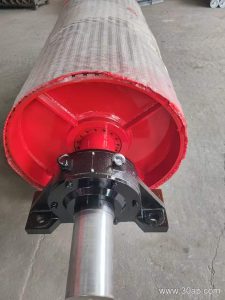
Most industrial pulleys share a common frame: a cylindrical shell, two end discs, a shaft, and a locking assembly or keyed hub. The shell is usually seamless steel tube or rolled plate, machined at the ends to accept the discs. The shaft is sized by torque and bending load, not by belt width alone. Common shaft diameters include Ø50, Ø60, Ø80, Ø100, Ø120, Ø160, and Ø200, but the final value follows the drive calculation and bearing selection. Larger pulleys may use a fabricated shell with internal ribs to resist deflection under high tension.
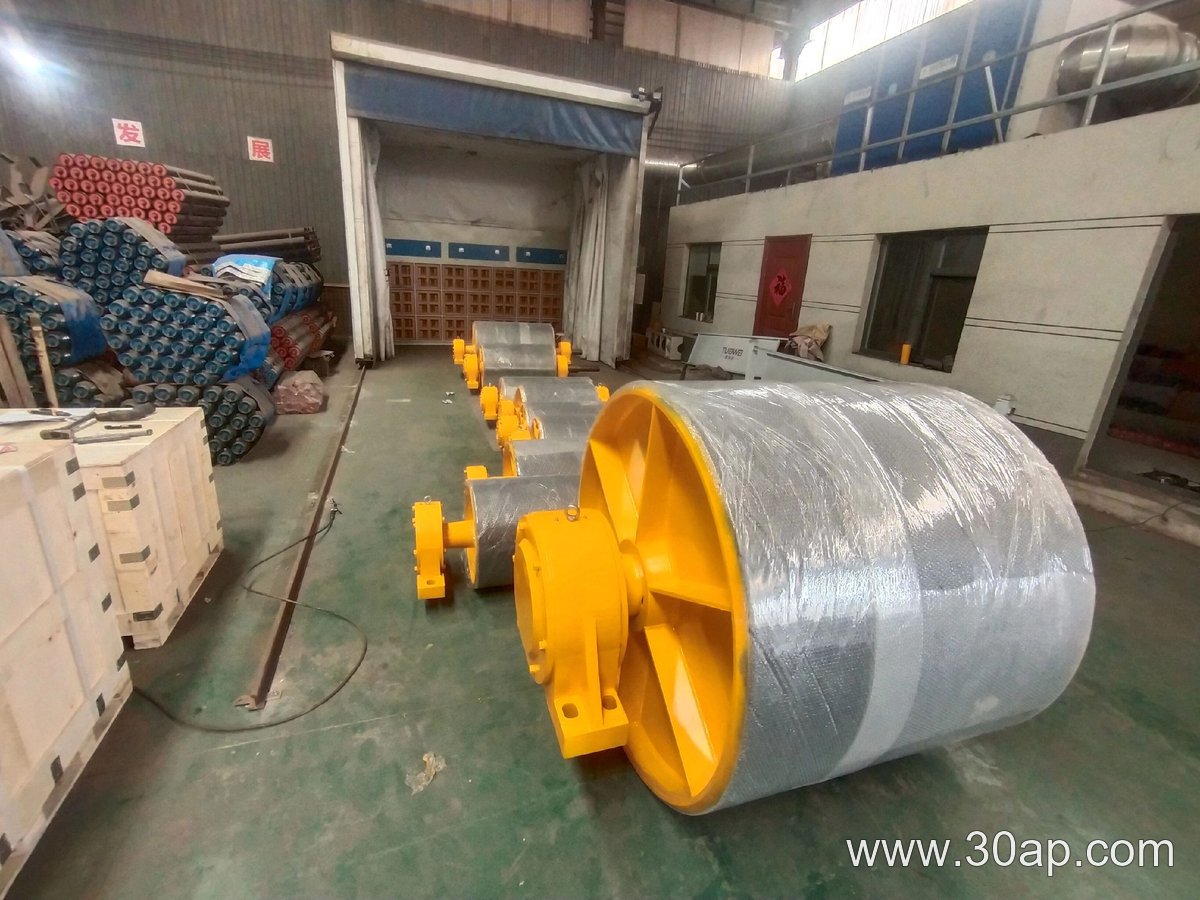
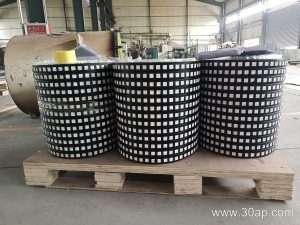
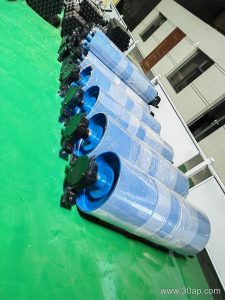
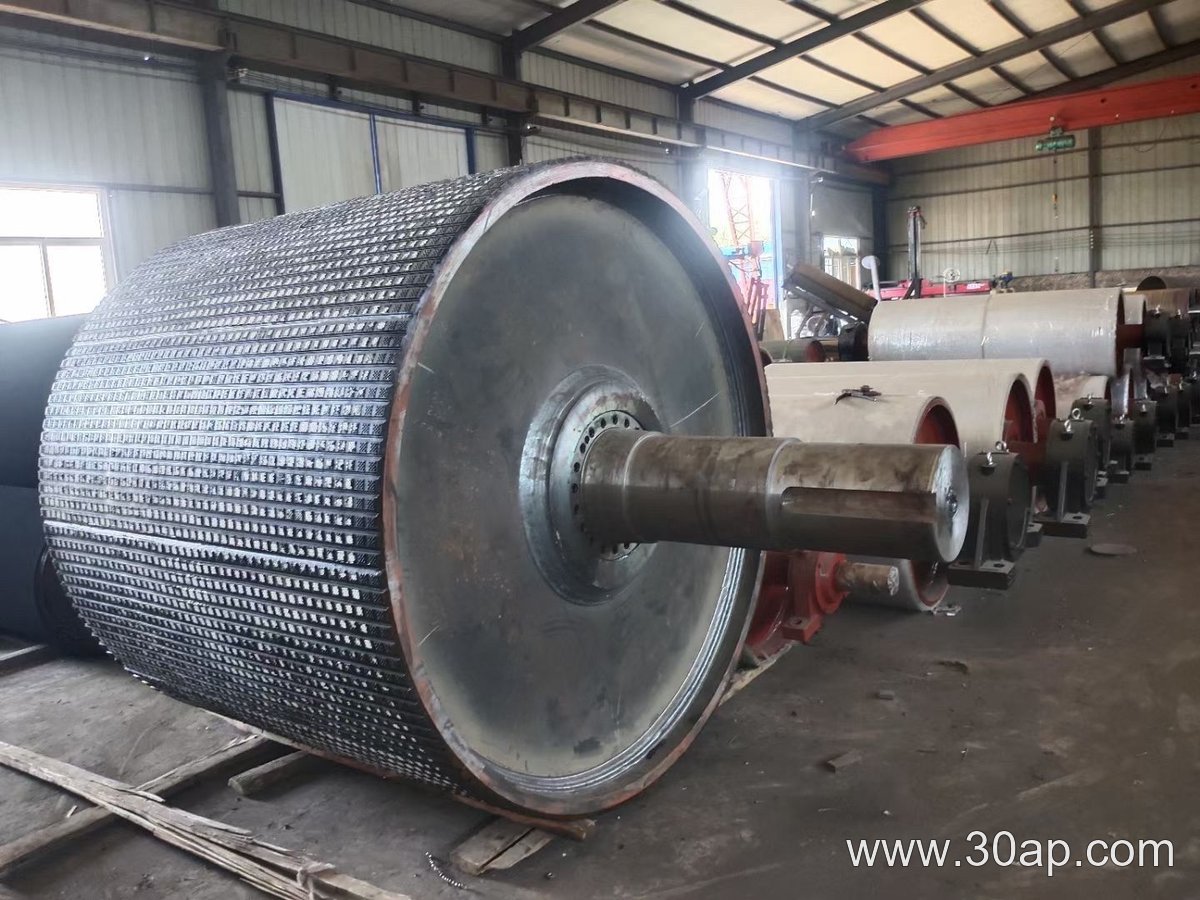
Surface treatment matters as much as the steel. A plain finish is common for light-duty return positions, while rubber lagging improves grip and protects the shell from wear. Cold-bonded rubber, hot-vulcanized rubber, diamond grooving, herringbone grooving, and ceramic lagging are all available. Lagging thickness often falls between 8 mm and 20 mm. In a quarry or limestone mine, diamond or herringbone lagging helps shed wet fines and reduces belt slip on the drive pulley.
Where It Is Used
You will find these pulleys in crushing and screening circuits, aggregate plants, and tunnel muck handling. A typical installation pairs a B800 belt with a Ø500 head pulley, or a B1200 belt with a Ø1000 drive pulley. The belt width and pulley diameter are related through the required wrap angle, belt tension, and space envelope, but no single belt width is locked to one diameter. A B1400 conveyor might use a Ø800 bend pulley at a transfer point and a larger Ø1250 drive pulley at the head. The shell face is normally wider than the belt; a B650 belt often runs on a pulley face around 750 mm, and a B1000 belt on a face near 1150 mm.
Matching the Pulley to the Conveyor
Selection starts with the duty: primary drive, tail, snub, take-up, or bend. A drive pulley needs enough friction and shaft strength to transmit the motor torque. A tail pulley must guide the belt without damaging the splice. A bend pulley only redirects the belt, so its load is lower, but its alignment still affects belt training. The conveyor bracket and bearing housing must match the shaft diameter and the frame bolt pattern. If the pulley is part of a take-up system, the take-up pulley moves with the tension carriage and should be checked for travel clearance.
- Confirm the belt width and the required face width, not just the pulley diameter.
- Check the shaft diameter against the actual torque and radial load.
- Choose lagging according to moisture, abrasives, and slip risk.
- Verify the bearing type, sealing, and lubrication method for the site conditions.
- Review the pulley position: head, tail, bend, or take-up, because each has a different job.
Maintenance and Buyer Checks
A mining belt conveyor pulley should be inspected for shell wear, lagging separation, shaft scoring, and bearing play. In a coal preparation plant or power station coal yard, fine dust can work into the bearing housing, so effective seals matter. In a copper or iron ore plant, impact and abrasion shorten lagging life, and a worn drive pulley may need re-lagging before it loses grip. Buyers should ask for the shell material, shaft material, lagging type and thickness, balancing grade, and bearing brand or specification. A conveyor pulley is not a stock item in every size; the right unit is built around the conveyor duty, so the data sheet and the application details are the real starting point.