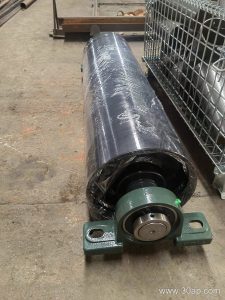
What a Plain Lagged Pulley Is
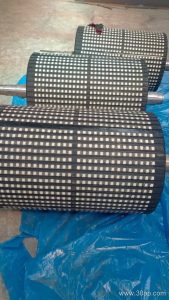
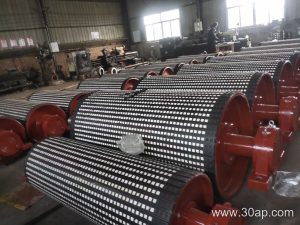
A plain lagged pulley is a conveyor pulley whose cylindrical shell is covered with a smooth rubber or polymer layer. It is the same product as a smooth lagged drum pulley, and the term “plain” refers to the surface form: no grooves, no diamond pattern, no chevrons. The lagging itself is usually applied as a flat sheet or a vulcanized layer, then ground or finished to a uniform thickness. This surface is intended to raise friction between the shell and the conveyor belt without introducing a directional tread pattern.
How It Is Built
The core of the pulley is a steel drum with end discs and a shaft. The shell diameter, wall thickness, and shaft diameter are determined by the belt tension, torque, and load carried by the conveyor. Common diameters include Ø200, Ø315, Ø500, Ø800, and Ø1000, while shaft sizes such as Ø60, Ø80, Ø120, or Ø160 are selected by the drive or tail station design, not by belt width alone. The lagging may be cold-bonded rubber, hot-vulcanized rubber, or a cast polymer layer. Typical lagging thickness values are 8, 10, 12, 15, and 20 mm. The face width is normally wider than the belt: for example, a B800 belt often runs on a pulley face near 950 mm, and a B1200 belt may use a face around 1400 mm. These are common references, not fixed rules.
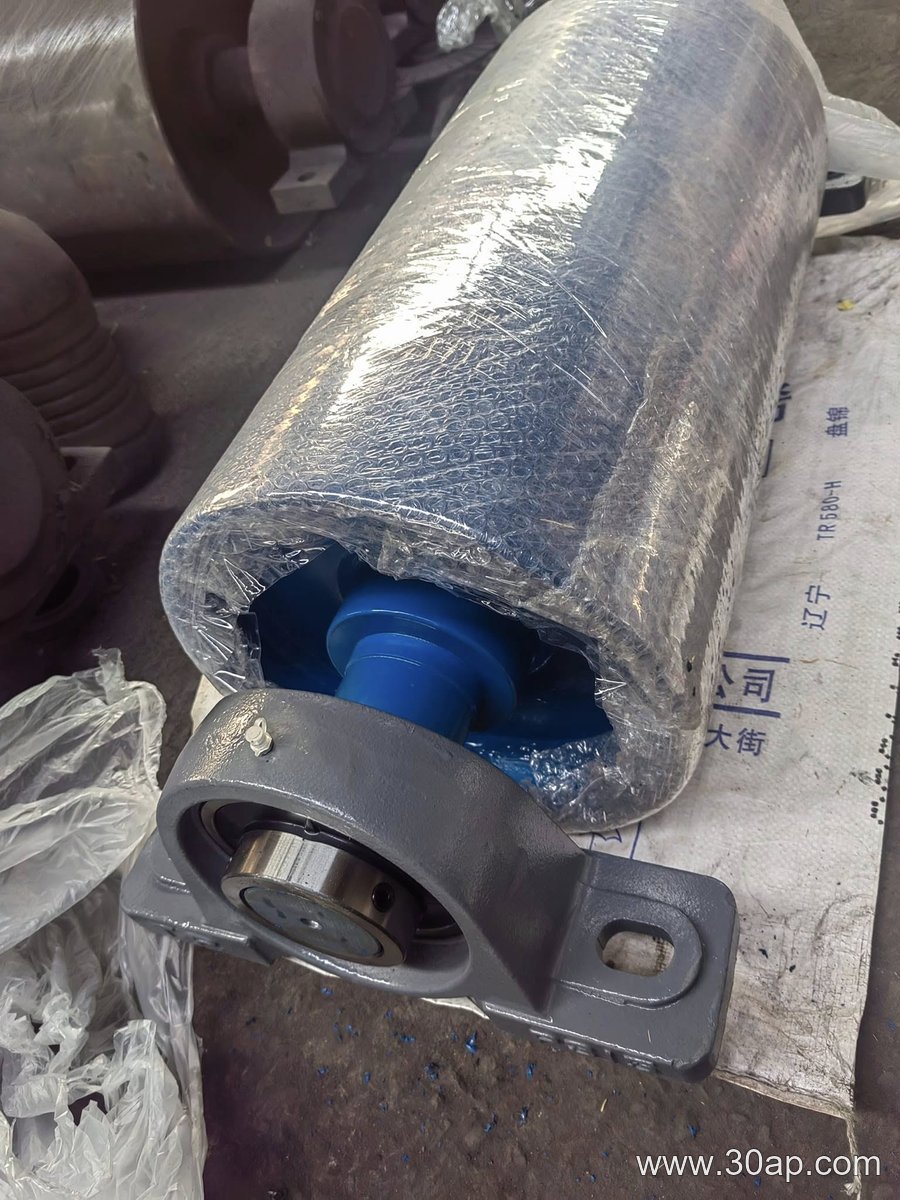
Where It Is Used
Plain lagged pulleys appear in many positions along a conveyor. At the tail, they help keep the belt centered as it wraps the pulley. At the head or drive position, the smooth lagging increases grip so the belt can be pulled without slipping under normal load. At a bend or snub position, the plain surface reduces the chance of material buildup that can occur with deep grooves. A plain lagged pulley is also used in tensioning stations where a steady, even contact patch matters more than aggressive traction. It is not a replacement for a drive pulley, tail pulley, or bend pulley; it is a surface choice that can be applied to those positions when the application calls for it.
Surface and Application Fit
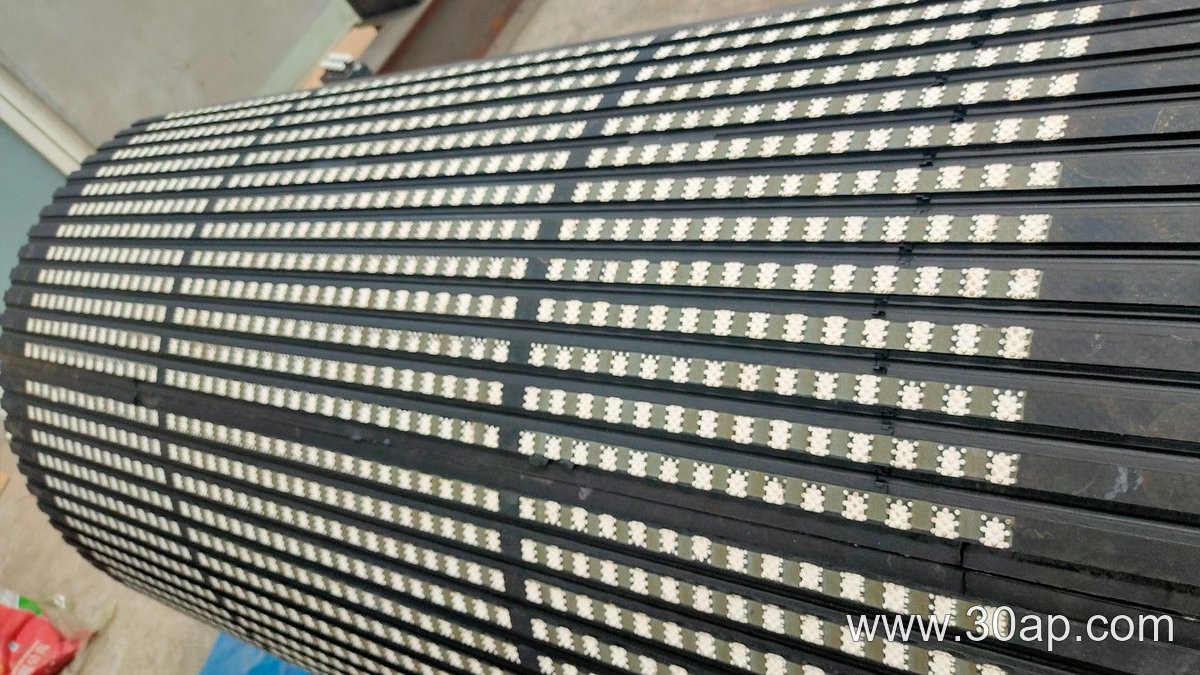
Because the lagging is plain, it works well with belts that need full contact across the width. In a quarry or sand and gravel line, a plain lagged pulley on a tail or bend station can help limit belt wander without trapping fine dust in grooves. In a coal handling plant or a cement plant, the smooth surface can be easier to clean than a patterned one. For very wet or oily conditions, a grooved or ceramic lagging may offer better water evacuation, but that is a different surface form. A plain lagged pulley is often chosen when the main goal is uniform friction and simple maintenance.
What Buyers Should Check
- Belt width and pulley face width: the face should be wider than the belt, but the exact amount depends on the conveyor design. A B650 belt may run on a face near 750 mm, while a B1400 belt may use a face around 1600 mm.
- Diameter and shaft size: these follow the torque and load, not just the belt width. A B1000 belt does not automatically require one specific shaft diameter.
- Lagging thickness and material: 8 mm to 20 mm is common, but the right choice depends on the duty and the belt tension.
- Balance and runout: a plain lagged pulley should be balanced for the intended speed to avoid vibration.
- Mounting: check the conveyor bracket and bearing housing fit, as well as access for maintenance.
Related Components and Naming
A plain lagged pulley works with conveyor belting, idler rollers, and the conveyor bracket that holds the shaft. It is not the same as a drive pulley or a tail pulley, because those names describe the pulley’s role in the system. A plain lagged pulley can serve in a drive, tail, or bend position, but the position name should not be used as a substitute for the product name. When specifying, use the full description: plain lagged pulley, with the required diameter, face width, shaft size, and lagging thickness.
For any project, the final dimensions should come from the conveyor design and the supplier’s current data sheet. The values above are common references and should not be treated as universal specifications or a supply promise.