What a Steel Plant Conveyor Idler Actually Does
In a steel plant, raw materials arrive in many forms: iron ore fines, sinter, pellets, coke, limestone, and coal. The conveyor belt that carries these materials runs on a series of rotating cylinders called idlers. A steel plant conveyor idler is the supporting roller that keeps the belt moving smoothly, maintains the belt shape, and reduces friction between the belt and the structure. Without these rollers, the belt would drag, wear quickly, and require far more power to move the same load.
The idler roller is not a single, universal part. It is a family of components designed for different positions on the conveyor. The load-carrying side, the return side, the loading zone, and the transition areas each call for a different arrangement. Choosing the right one affects belt life, energy consumption, and maintenance intervals.
How a Steel Plant Conveyor Idler Is Built
A typical idler consists of a shell, a shaft, bearing housings, bearings, and a sealing system. The shell is often made of steel tube, but other surface forms exist for specific duties. You may see nylon, ceramic, or rubber-covered shells where abrasion, impact, or material build-up is a concern.
The shaft runs through the center and supports the roller on brackets attached to the conveyor frame. Bearings are selected according to load, speed, and expected service life. Common bearing sizes include 6204, 6205, 6305, 6306, 6308, and 6310, but the correct choice depends on the roller diameter and the duty cycle, not on a fixed rule. A larger roller does not automatically mean a specific bearing number, and a given belt width does not dictate one shaft diameter.
Sealing is critical in steel plants because dust, fines, and moisture are everywhere. A good seal keeps contaminants out of the bearing cavity and keeps grease in. The seal design often matters more than the bearing brand for achieving long service in dirty conditions.
Where These Idlers Fit in a Steel Plant
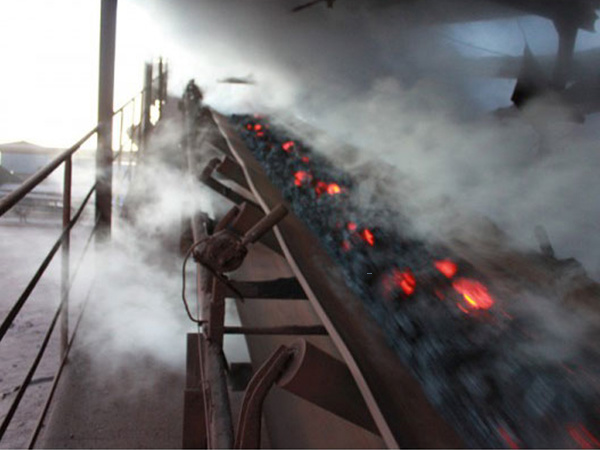
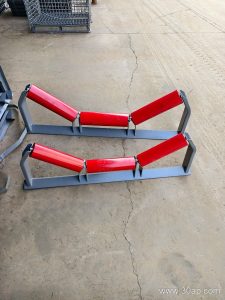
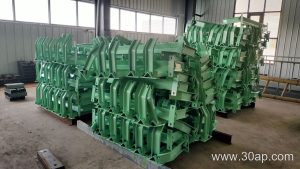
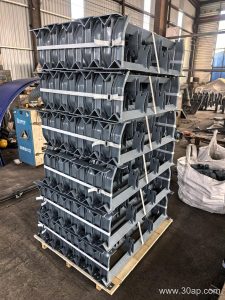
Steel plants use conveyors in several areas: ore receiving, sinter feed, coke handling, and limestone transport. The steel plant conveyor idler appears on the loading section, the carrying run, and the return run. In the loading zone, impact idlers with rubber rings absorb the force of falling material. Along the carrying run, three-roll troughing sets hold the belt in a trough shape so material stays centered. On the return side, flat or V-shaped rollers support the empty belt.
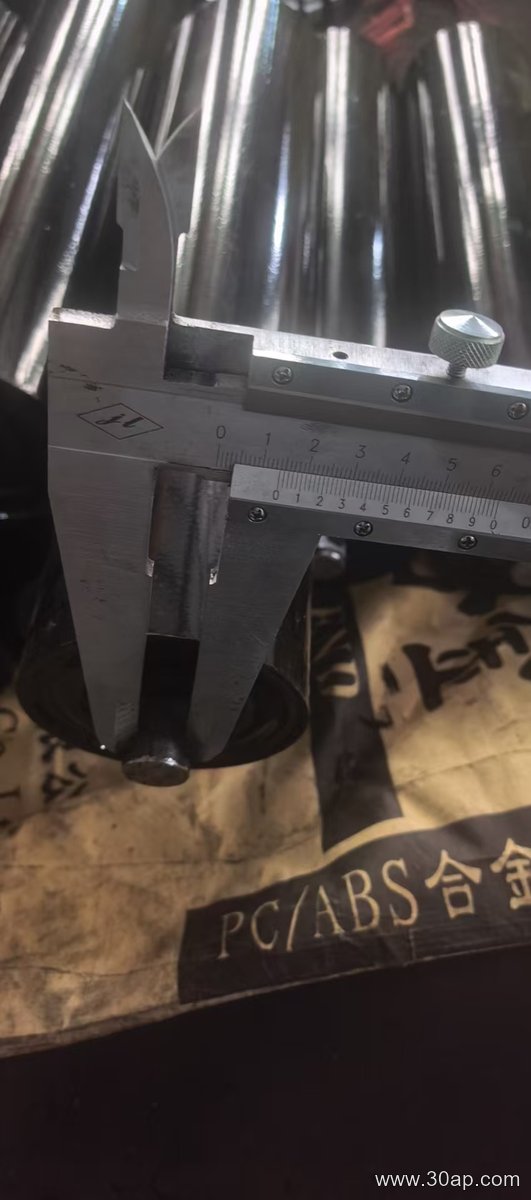
Transition idlers sit between the head pulley and the first full troughing set. They gradually change the belt from flat to troughed, reducing stress at the belt edges. Self-aligning idlers, including friction and tapered types, help correct belt tracking when material builds up unevenly or the belt drifts. Spiral idlers are sometimes used where sticky material tends to cling to the roller surface.
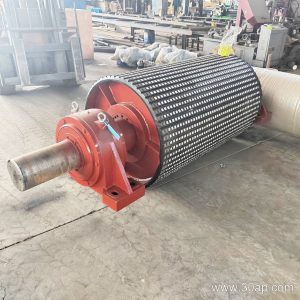
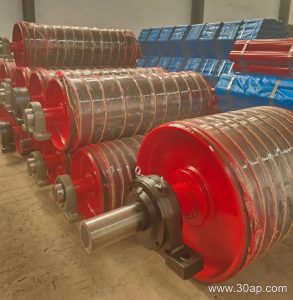
It is worth noting that drive pulleys, tail pulleys, and bend pulleys are not idlers. They are conveyor pulleys that transmit power or change belt direction. They are not interchangeable with idlers, and they should never be selected as a substitute for the supporting rollers described here.
Common Types and Configurations
Troughing idlers are the most common on the carrying side. A three-roll troughing set is typical for wider belts, while two-roll or single-roll arrangements may appear on narrower conveyors or special applications. The trough angle is usually 20, 30, 35, or 45 degrees. A steeper angle can increase capacity but may also affect belt training and material containment.
Return idlers support the empty belt. Flat return rollers are simple and effective for many belts. V-shaped return idlers help center the belt and shed material that might otherwise stick. Impact idlers, often with rubber rings, are placed under loading chutes to cushion the belt from falling lumps.
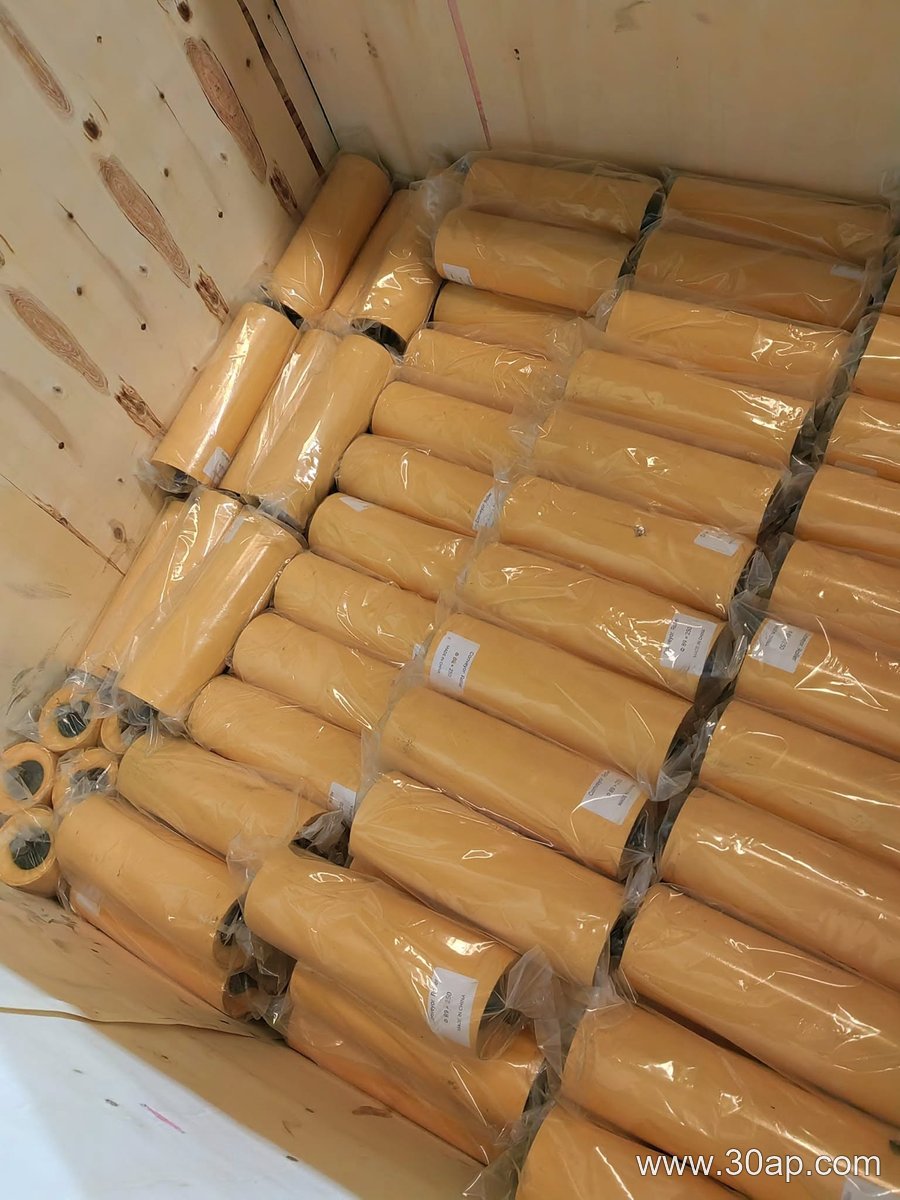
Self-aligning idlers are used where belt tracking is a persistent problem. They may be friction type or tapered type. A small forward tilt of about 1.5 to 2 degrees is sometimes built into troughing idlers to help with tracking, but this is a design detail, not a universal setting.
Roller Diameter, Belt Width, and Roll Length
Roller diameter and belt width are related but not locked together. Common roller diameters include 63, 76, 89, 102, 108, 127, 133, 159, 178, 194, and 219 mm. Belt widths range from B400 to B2400. A wider belt usually needs a larger roller and a longer roll, but the exact combination is determined by the conveyor design, load, speed, and space available.
Roll length changes with belt width, trough angle, and idler arrangement. For a three-roll troughing set, typical roll lengths are around 200 mm for B500, 250 mm for B650, 315 mm for B800, 380 mm for B1000, 465 mm for B1200, 530 mm for B1400, 600 mm for B1600, 670 mm for B1800, and 750 mm for B2000. These are common examples, not fixed rules. Side rollers and center rollers can differ, and the final length should come from the conveyor designer.
What Buyers Should Check Before Ordering
Before purchasing a steel plant conveyor idler, gather the following information: belt width, trough angle, roller diameter, roll length, bearing size or load requirement, and the position on the conveyor. Also consider the material being carried. Abrasive materials may call for thicker shells or special surface treatments. Sticky materials may need spiral or rubber-covered rollers. High-impact loading points may require impact idlers with rubber rings.
Ask about the sealing arrangement and the lubrication method. In a steel plant, dust and heat are constant challenges, so a well-sealed idler often lasts longer than a cheaper one with a basic seal. Check that the shaft and bracket fit the existing conveyor frame. A conveyor bracket that does not match can cause misalignment and premature failure.
Finally, remember that no single idler type or size fits every conveyor. The right choice depends on the specific duty. A roller that works well on a coal conveyor may not be suitable for sinter or ore. Matching the idler to the application is the most reliable way to reduce downtime and keep the belt running.