What a Three-Roll Idler Bracket Does on a Belt Conveyor
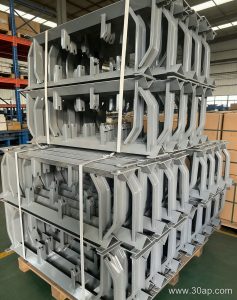
A three-roll idler bracket is the supporting frame that holds three idler rollers in a troughed arrangement across the carrying side of a conveyor belt. The two outer rolls are angled upward, and the center roll sits roughly horizontal. This configuration cups the belt into a trough shape, which keeps bulk material centered during transport. Without a properly aligned bracket, the belt may wander, spill material, or wear unevenly.
This bracket is sometimes called a three-roll idler frame or a troughing bracket. Those names describe the same product. It is not a drive pulley, tail pulley, or bend pulley; those are different components that transmit power or change belt direction. The three-roll bracket is a stationary support structure for idlers, and its job is to hold rollers at the correct angles and spacing.
How the Bracket Is Built
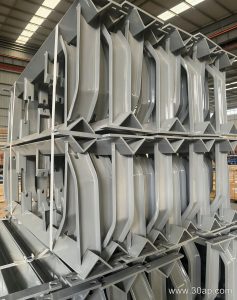
Most three-roll idler brackets use welded steel construction. Common materials include angle steel, channel steel, and folded steel plate. The frame usually has a base beam that bolts to the conveyor stringer, plus mounting pads or slots for each idler roller. The center roll position may be fixed or slightly adjustable, while the side roll positions determine the trough angle.
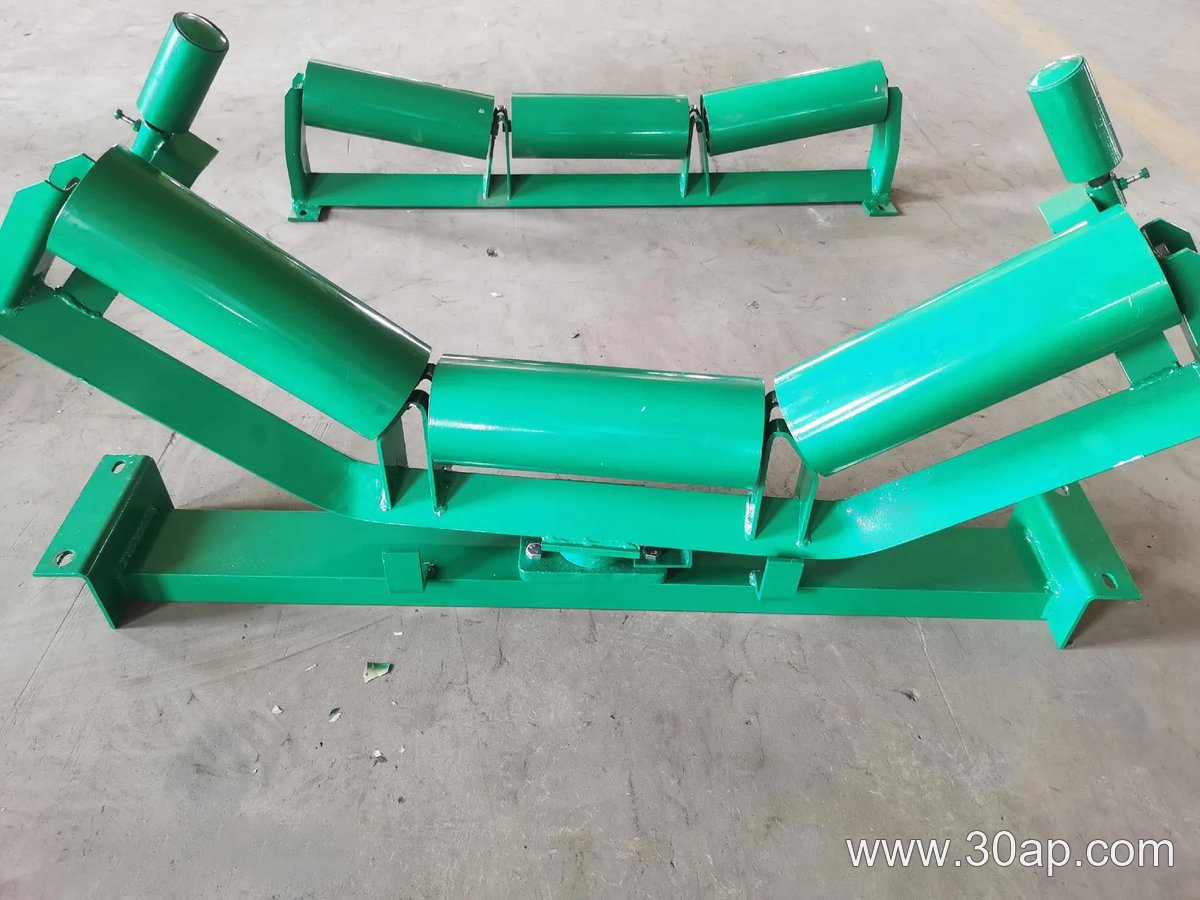
The bracket must be stiff enough to resist belt load and vibration without twisting. Poorly built frames can sag, which changes the trough profile and causes the belt to run off center. Good brackets also have clean mounting surfaces so the idler shafts sit square to the belt path.
Some designs include a separate adjustable bracket that allows the trough angle to be changed. A fixed bracket holds one angle, such as 20, 30, 35, or 45 degrees. Adjustable versions can move between these angles, which helps when a conveyor is repurposed or when material characteristics change. The trade-off is that adjustable brackets have more joints and fasteners, so they need periodic inspection.
Where Three-Roll Idler Brackets Are Used
These brackets appear wherever a conveyor belt carries bulk material. In a quarry or limestone mine, they support the belt through the loading zone and along the main run. In a coal washing plant, they help keep coal centered as the belt moves from screening to storage. They are also common in sand and gravel lines, crushing and screening circuits, cement plants, and power station coal handling systems.
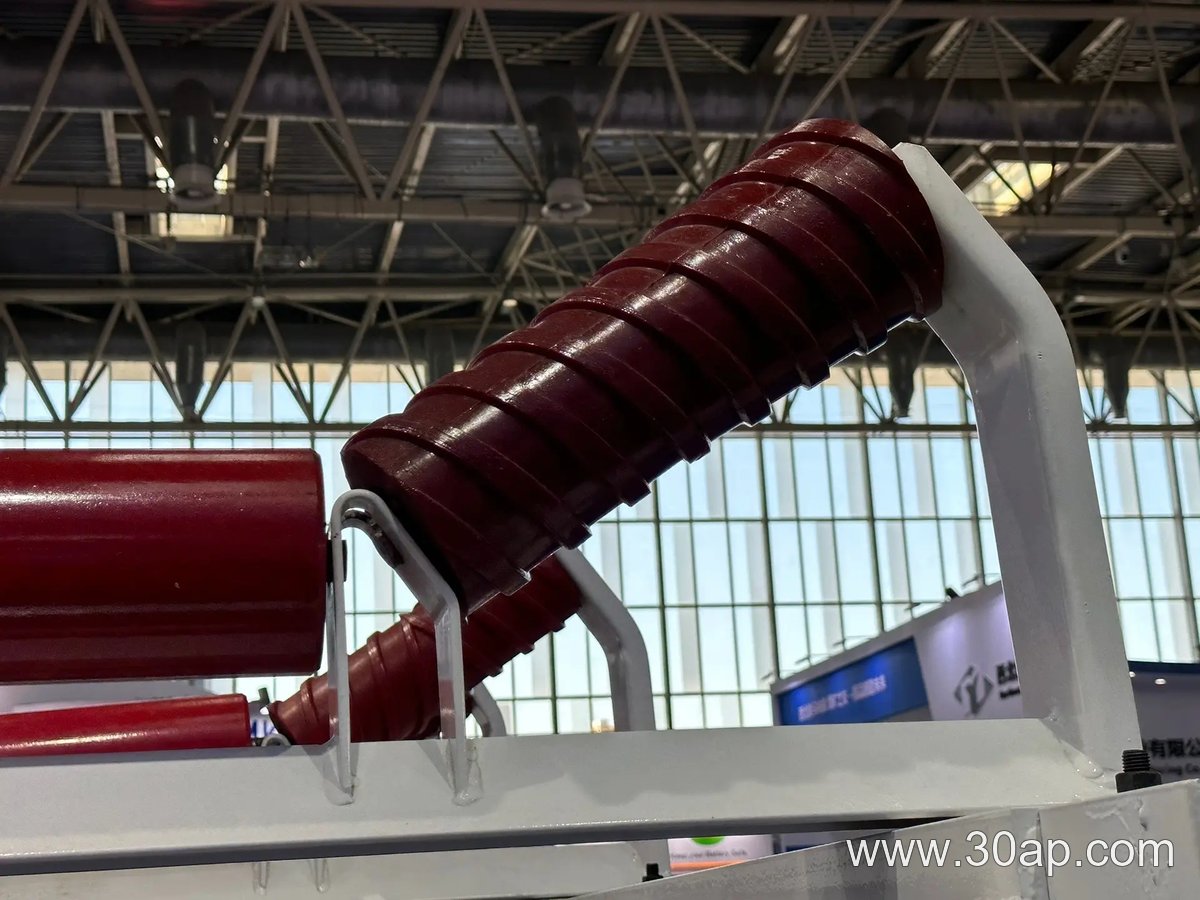
Brackets are not limited to heavy industry. They also work in fertilizer handling, grain silos, and tunnel muck removal. The common thread is a conveyor belt that needs a stable trough shape over a long distance. A three-roll idler bracket is often used on the carrying side, while a two-roll V-return bracket or a flat return bracket may be used underneath. That is a different support function, not a replacement for the three-roll carrying bracket.
Belt Width, Trough Angle, and Roller Diameter
Buyers often need to match the bracket to the belt width and the idler roller size. Common belt widths include B500, B650, B800, B1000, B1200, B1400, and wider. The bracket’s crossbeam length and mounting hole spacing usually change with belt width, because a wider belt needs a wider support span.
Trough angles are commonly 20, 30, 35, or 45 degrees. A 30-degree trough is a general-purpose choice for many materials, while a 45-degree trough may be used for fine, free-flowing material that tends to spill. The right angle depends on belt width, material characteristics, and conveyor speed. No single angle is mandatory for every application.
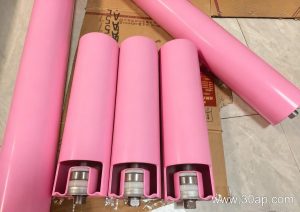
Idler roller diameters often include Ø89, Ø108, Ø133, Ø159, and Ø194. The bracket must accept the roller shaft and bearing housing used in that diameter. A larger roller diameter can reduce rotational speed and may suit higher loads, but the bracket must be designed for that shaft size. Do not assume that a given belt width automatically fixes one roller diameter. The bracket, roller, and belt are selected together based on load, speed, and material.
Fixed vs Adjustable Brackets
A fixed three-roll idler bracket is simple and rigid. It holds one trough angle and is a good choice when the conveyor design is stable and the material will not change. An adjustable bracket lets maintenance staff change the side roll angle within a range. This can be useful when a conveyor handles different materials or when the belt needs fine tuning to reduce spillage.
Adjustable brackets may also include a forward tilt, often about 1.5 to 2 degrees, on the side rolls. This slight forward lean helps steer the belt toward the center. However, tilt should not be overdone, because too much tilt can wear the belt edge. The bracket design must allow that tilt without weakening the frame.
What to Check Before Buying
- Confirm the belt width and the required trough angle. Ask whether the bracket is fixed or adjustable.
- Match the idler roller diameter and shaft mounting to the bracket. A Ø108 roller will not fit a bracket made only for Ø89 shafts.
- Check the mounting hole spacing and crossbeam length against the conveyor stringer. These dimensions vary with belt width and trough angle.
- Consider the material and environment. Wet, corrosive, or abrasive conditions may call for different steel treatment or thickness.
- Inspect the weld quality and mounting surfaces. A twisted bracket can cause belt misalignment even if the rollers are new.
- Ask whether the bracket is for the carrying side or the return side. A three-roll troughing bracket is not the same as a return bracket.
A three-roll idler bracket is a small part of a conveyor system, but it has a direct effect on belt tracking, material containment, and roller life. Selecting the right frame for the belt width, trough angle, and roller size keeps the conveyor running smoothly and reduces maintenance down the line.